Most Popular Pc 8800 Series Games - Page 5

Kagiana Satsujin Jiken
1983
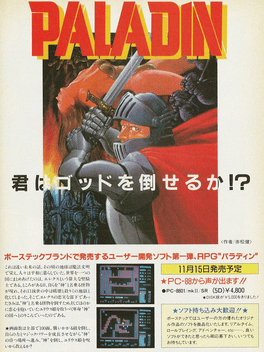
A strange request comes to Scotland Yard. Client Gilles Willcock receives a murder notice that's bound to happen at midnight. He calls out a detective, and seven people at the mansion wait nervously for escalation. Gilles locks him up at the second floor while detective hides in waiting at the first floor. At midnight gunshots are heard on the second floor, and a murder is seen through a keyhole. When detective finds the key and enters, there is no body.Paladin
1985
Seiko-chan SOS
1983
Seiko-chan SOS
1983
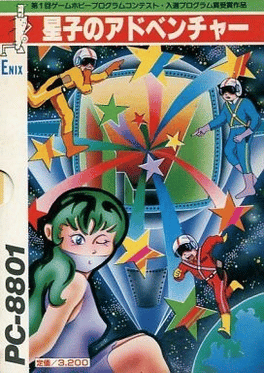
Seiko-chan was caught in the robot kingdom and it’s up to you to rescue her from being brainwashed. Robots appear one at a time in a large rectangular arena. They are stationary when they appear, but can randomly and suddenly teleport to other parts of the screen. You control a cross-hair, that you can use to target and shoot the robot, which is only vulnerable in the chest area.Underground Monster
1983
Underground Monster
1983
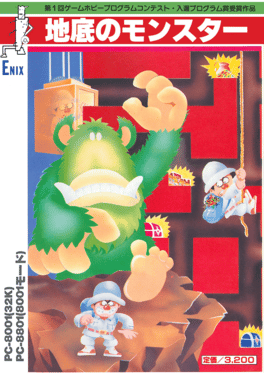
A maze game developed by Osamu Hasegawa and one of the winners of Enix's first Game Hobby Program Contest.Bird Land
1983
Horror House Part II
1983
Chatty
1988
Chatty
1988
Chátty is the third entry in System Sacom's Novel Ware series. It was meant to be the second title, but delays during development pushed its release date past that of the would-be third game. Its story is set in the future and involves a man who was framed for a crime he did not commit. In attempt to clear his name, the protagonist discovers a device that allows interdimensional travel, and ventures into a parallel dimension in search for answers. Unlike the previous Novel Ware game, Chátty is a more traditional Japanese-style adventure, with fewer and shorter conversations and text descriptions. Interaction with the environment and navigation are performed by selecting verb commands and combining them with objects from a menu list. There are no real puzzles, but it is possible to pick up objects, use them, and examine them in an inventory.Dome
1988
Dome
1988
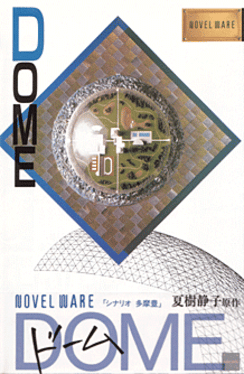
DOME is based on Shizuko Natsuki's novel of the same name. The original work as well as the game's plot focus on the construction of a nuclear shelter called "The Dome", capable of protecting humans from an impending atomic war. The player takes the role of an employee in an advertisement company, whose job is to raise people's awareness of the shelter's importance, and donate money to the project. Novelware was a concept to oppose tiresome gameplay and at the same time present serious text-intensive stories. Game scenario reached over 700 pages which was unseen before.Lunar Ball
1985
Majoriko Inbikai Inbizone
1988
Majoriko Inbizone (also known as Majoriko Inbikai, or “Majoriko in the Impure Zone”) is a side-scrolling action game with some mild RPG elements. Each of the game’s eight stages is open ended, as you hunt for keys to unlock the boss door, while defeating enemies to gain magic and gold. The game was developed by Natsume, in conjunction with Dynamic Planning, the studio owned by famed manga artist Go Nagai, known for his stylistic blend of horror and erotica. Majoriko Inbizone is actually fairly subdued though – it’s rather softcore, and while the first level has some grotesque imagery, the terror is undercut by the appearance of some goofy enemiesWhat's Michael?
1989
Battle Skin Panic
1990
1000-nen Oukoku
1986
1000-nen Oukoku
1986
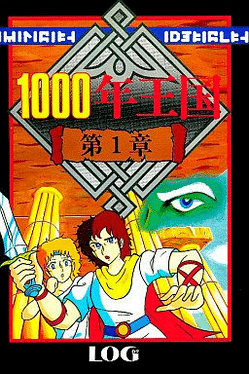
1000-nen Oukoku is a visual novel from Log where you play as Shou as he is tasked with saving humanity from the end of the world in 1999.Produce
1987
Mobile Suit Zeta Gundam
1986
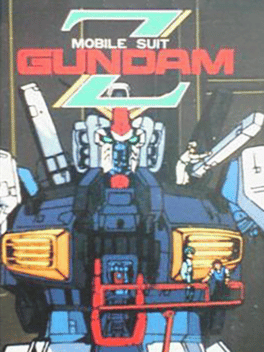
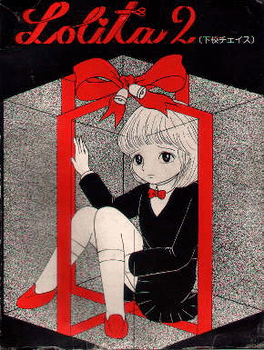
Zeta Gundam is an action game for the Fujitsu FM-7; it is based on the anime of the same name.Lolita 2
1983
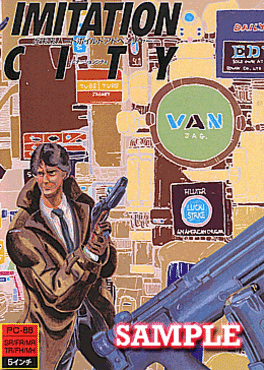
Imitation City
1987
Imitation City
1987
An early 1987 cyberpunk adventure game created by Jiro Ishii, who later went on to direct 428: In a Blockaded Shibuya in 2008 and write Time Travelers in 2012.The Dragon & Princess
1982
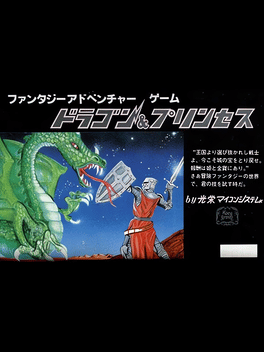
The Dragon & Princess is the first known RPG developed in Japan. It tasks the player with finding a king's stolen treasure. It is a hybrid between the RPG, adventure and strategy genres, and laid the foundations for tactical RPGs.Genesis: Beyond the Revelation
1985
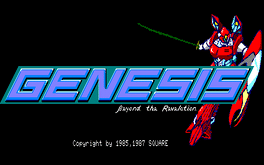
Squaresoft's first RPG, this was an early futuristic sci-fi RPG for the PC-8801 and PC-9801 computers, featuring a post-apocalyptic setting and isometric, tactical turn-based battles.