Most Popular Adventure Games - Page 672

Sekiryuu-ou
1989
Sekiryuu-ou
1989
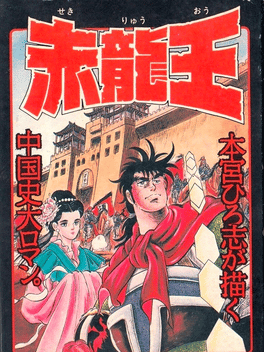
An adventure game for the NES published by Sunsoft. It is based on a Japanese manga set during a historical Chinese civil war. Sekiryuou (often translated as "Red Dragon King") is a traditional Famicom adventure game from Sunsoft, in which the player controls a protagonist via a series of menus in order to solve a series of puzzles. Though Sunsoft is credited as publisher, it is unclear if the game was made in-house or contracted to another developer. The game, and the manga it is based on, depict a period of ancient Chinese history between the Qin and Han dynasties, a few decades before the Three Kingdoms era began. As expected of a transitional period, there was plenty of intrigue and conflict leading up to the change of power that future novels and mangas could draw from.Shoukoushi Cedie
1988
Shoukoushi Cedie
1988
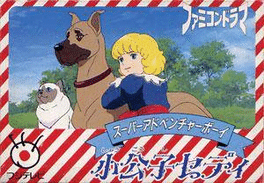
A NES adventure game based on the anime of the same name, which is an adaptation of Little Lord Fauntleroy. Shoukoushi Ceddie (sometimes Cedie) is the Japanese title of the 1886 Frances Hodgson Burnett novel Little Lord Fauntleroy, about a down-to-earth kid from New York discovering his heritage as the heir to an Earldom in England, moving to his inherited estate and learning how to become a nobleman. Fuji Television created a 43 episode anime series based on the novel in 1988, and this video game adaptation is based on that TV show. Fuji Television is perhaps best known in western video game circles for being responsible for Doki Doki Panic (the game the American/European Super Mario Bros 2 is based on) as well as airing GameCenter CX (or Retro Game Master). The game plays much like a regular Famicom adventure game: The player walks around, talks to people and finds items which are used to solve puzzles. However, rather than selecting destinations from a menu, the player manually walks around the different localShounen Ashibe: Nepal Daibouken no Maki
1991
Shounen Ashibe: Nepal Daibouken no Maki is an Adventure game, developed by Advance Communication Company and published by Takara, which was released in Japan in 1991.Pachio-kun 2
1989
Pachio-kun 2
1989
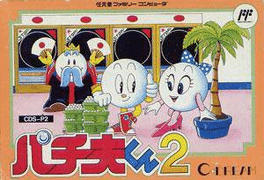
The second NES Pachio-kun game, about a sentient pachinko ball that loves playing pachinko. It was published by Coconuts Japan. Pachiokun 2 is the sequel to Pachiokun, and was also published by slot machine manufacturer Coconuts Japan as well as developed by contract developers Marionette and C Dream. As with the first game, the goal is to help a sentient pachinko ball named Pachio-kun bankrupt a series of pachinko parlors and liberate all his miniature brethren from their flashy mechanical gulags. The game introduces Pachio-kun's wife, presumably named Pachio-chan. If she's upset about her husband's gambling addiction, she never shows it.Pachio-kun 3
1990
Pachio-kun 3
1990
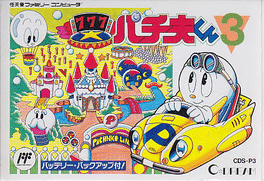
The third Famicom entry in the Pachio-kun series. Pachio-kun 3 is a Miscellaneous game, developed by Color Dreams and published by Coconuts Japan, which was released in Japan in 1990.Pachio-kun 4
1991
Pachio-kun 4
1991
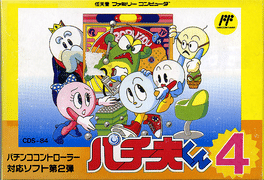
Pachio-kun returns for a fourth outing on the Famicom. Pachio-kun 4 is a Miscellaneous game, developed by Color Dreams and published by Coconuts Japan, which was released in Japan in 1991.Pachio-kun 5
1993
Pachio-kun 5
1993
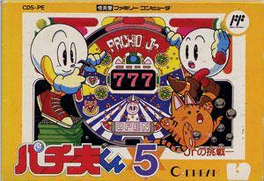
The final Famicom Pachio-kun game. Pachio-kun 5 is a Miscellaneous game, developed by Color Dreams and published by Coconuts Japan, which was released in Japan in 1993.Pro Yakyuu? Satsujin Jiken!
1988
A comedic adventure game that satirizes the heavy number of baseball and murder mystery games for the Famicom. It was developed and published by Capcom in Japan only. Pro Yakyuu? Satsujin Jiken! ("Pro Baseball? Murder Case!") is a slightly tongue-in-cheek parody of the Famicom's overabundance of Portopia style murder mystery adventure games and baseball simulators, especially the annual Pro Yakyuu Family Stadium releases. The player controls a professional baseball player that's been framed for a murder and must solve the case while on the lam. Capcom inserted various additional modes into the game, such as mini-games and a shoot-em-up sequence whenever the protagonist is caught by the cops. This game is perhaps notable for being released on the same day in Japan - December 24th 1988 - as another Capcom game: Rockman 2. One of these sort of overshadowed the other.Nishimura Kyoutarou Mystery: Blue Train Satsujin Jiken
1989
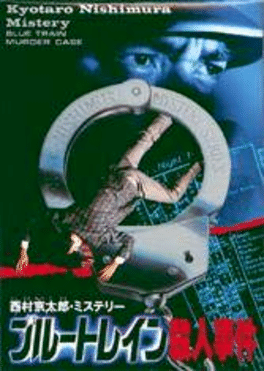
Nishimura Kyoutarou Mystery: Blue Train Satsujin Jiken is a mystery game released for the Nintendo Famicom in 1989. Nishimura Kyoutarou Mystery: Blue Train Satsujin Jiken ("Kyoutarou Nishimura Mystery: Blue Train Murder Case") is the first game in a series of murder mystery adventure games based on novels by famed Japanese mystery author Kyotaro Nishimura. It was developed by TOSE and published by Irem on the Famicom in Japan only. Along with other similarly themed franchises such as Tantei Jinguuji Saburo and Yamamura Misa Suspense, it invites players to solve the mystery by talking to witnesses and suspects and interacting with the environment to discover who is behind the murder. Kyotaro Nishimura's novels tend to focus on murders that occur on or around trains with this game being no exception. A body is found on a Blue Train - the name given to Japanese cross-country sleeper trains, i.e. those built to accommodate sleeping passengers - and the player character is brought in to solve the mystery.Nishimura Kyoutarou Mystery: Super Express Satsujin Jiken
1992
Nishimura Kyoutarou Mystery: Super Express Satsujin Jiken is an Adventure game, developed by TOSE and published by Irem, which was released in Japan in 1990. Sequel to the previous Nishimura Kyoutarou Mystery game, Blue Train Satsujin Jiken.Osomatsu-kun: Back to the Me no Deppa no Maki
1989
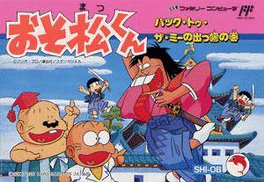
The second game based on the Osomatsu-kun anime and manga, released in 1989 for Famicom. Osomatsu-kun: Back to the Me no Deppa no Maki is an Adventure game, developed by TOSE and published by Bandai Shinsei, which was released in Japan in 1989.Ripple Island
1988
Ripple Island
1988
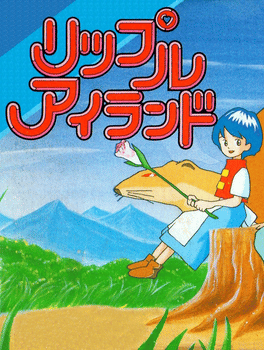
An adventure game for the NES published by Sunsoft. A boy named Kyle must rescue the princess of a kingdom where very small humans and animals peacefully co-exist. Ripple Island (occasionally seen translated as "Lipple Island") is a graphic adventure game where the player interacts with the world using a series of commands, such as "pick up", "walk" or "use". Rather than the usual murder mystery games which were the trend at the time, Ripple Island instead adopts a fantasy storybook setting where smaller humans and friendly animals, such as raccoons and rabbits, co-exist peacefully. The kingdom is threatened by the arrival of Gerogeru, a self-styled Emperor of Darkness and giant frog, after he kidnaps the princess. Kyle, a young boy and the game's protagonist, is attempting to rescue her. The game was never released outside of Japan. It was, however, re-released as part of a Japan-only PS2 compilation based on Sunsoft's works. It also received a manga adaptation.Masuzoe Youichi: Asa made Famicom
1992
Masuzoe Youichi: Asa made Famicom is an Adventure game, published by Coconuts Japan, which was released in Japan in 1992.Meitantei Holmes: Kiri no London Satsujin Jiken
1988
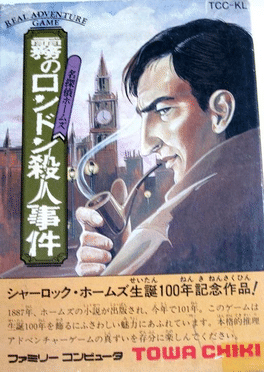
An adventure game starring Sir Arthur Conan Doyle's Sherlock Holmes developed for the NES by Towa Chiki. Meitantei Holmes: Kiri no London Satsujin Jiken ("Great Detective Holmes: Fog of London Murder Case") is a murder mystery adventure game where the player directs Sherlock Holmes around London, finding clues and interrogating witnesses and suspects. Like its many NES adventure game contemporaries, it adheres to the Portopia formula of text adventure whodunits. It is the sequel to Towa Chiki's earlier Sherlock Holmes game (Sherlock Holmes: Hakushaku Reijou Yuukai Jiken) and received a sequel (Meitantei Holmes: M-Kara no Chousenjou). None of these games were ever released outside of Japan.Meitantei Holmes: M kara no Chousenjou
1989
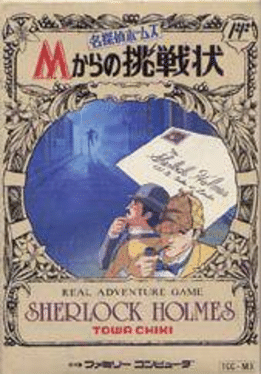
The third of three NES Sherlock Holmes adventure games from Towa Chiki and Another. M-Kara no Chousenjou is the third in Another/Towa Chiki's series of adventure games for the Famicom that star Sir Arthur Conan Doyle's famous sleuth, Sherlock Holmes. It follows Sherlock Holmes: Hakushaku Reijou Yuukai Jiken and Meitantei Holmes: Kiri no London Satsujin Jiken. As with the second of those games, M-Kara no Chousenjou has the player navigate a menu to talk to NPCs and witnesses, investigate areas of interest, find and pick up evidence and walk to various locations across Victorian-era London and other cities.Mito Koumon II: Sekai Manyuu Ki
1988
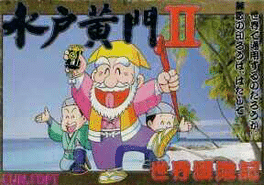
A NES action game developed by SunSoft and the sequel to Mito Koumon. It was never released outside of Japan. Mito Koumon II: Sekai Manyuuki is the sequel to Mito Koumon and is very similar in appearance and gameplay. As in that game, the player controls one of Mitsukini Tokugawa's retainers as they gather clues and evidence of crimes in the area while either avoiding or fighting off hostile NPCs. Unlike the first game, which was set entirely within Japan, Tokugawa is crossing the world solving issues instead. The first stage is America (specifically the Wild West, as would be chronologically accurate for the 17th century) though there are plenty of other locations to visit across the world as well, including even Transylvania.Business Wars
1992
Business Wars
1992
Business Wars is an Adventure game, developed and published by Hect, which was released in Japan in 1992.Bio Senshi Dan: Increaser to no Tatakai
1987
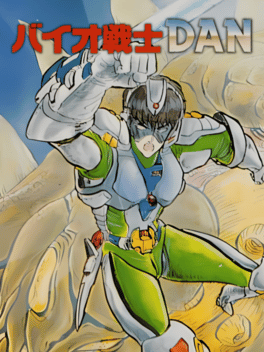
In the year 2081, the Earth was taken over by a group of hostile monsters under the command of the mysterious entity known as Increaser. A warrior named Dan has arrived from his time machine in the year 1999 in order to stop the invasion before it could spell devastation for the humans.Ankoku Shinwa: Yamato Takeru Densetsu
1989
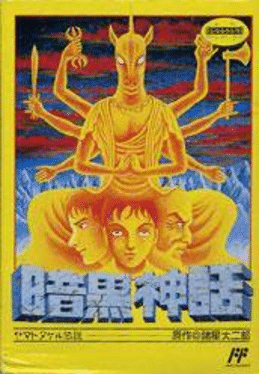
The game is based on old Japanese legends about Yamato Takeru, a legendary hero of ancient Japan. The game starts when Yamato Takeru is a thirteen-year-old boy. His father was killed under mysterious circumstances. Searching his things, the boy found a postcard that gave him his first clue for the investigation. From that moment, his adventure begins.Akagawa Jirou no Yuurei Ressha
1991
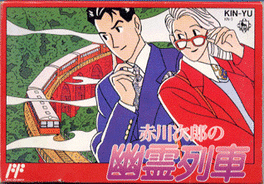
Akagawa Jirou no Yuurei Ressha is an Adventure game, developed by Mighty Craft and published by King Records, which was released in Japan in 1991.