New Arcade Games - Page 271

Centipede
1983
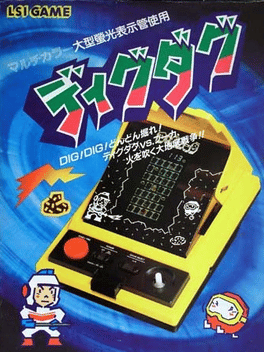
Dig Dug
1983
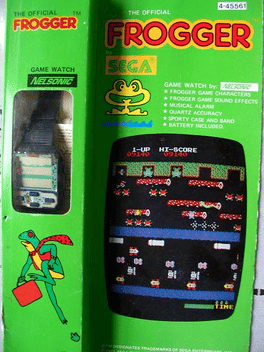
Frogger
1983
Frogger
1983
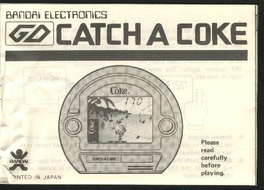
Your task in this arcade game is to guide a frog across a treacherous road and river, and to safety at the top of the screen. Both these sections are fraught with a variety of hazards, each of which will kill the frog and cost you a life if contact is made.Catch a Coke
1983
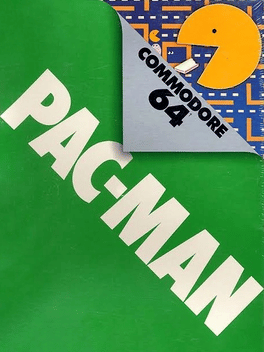
Pac-Man
1983
Pac-Man
1983
Pac-Man
1983
Molar Maul
1983
Molar Maul
1983
In this bizzare game from 1983, fight the unrelenting attacks of the Dentorium Kamikazium (deadly bacteria that assault the teeth) with your toothbrush and Imagico toothpaste, which contains a supply of the only substance known to combat the DKs: the newly developed chemical DKX 11.Popeye
1983
Popeye
1983
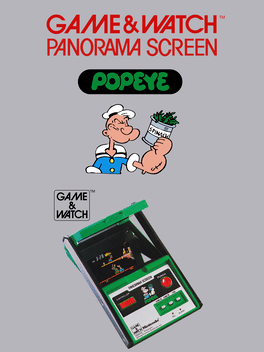
The Panorama Screen version of Game & Watch Popeye. It is a different game from the Wide Screen series Popeye.Snoopy
1983
Popeye
1983
Popeye
1983
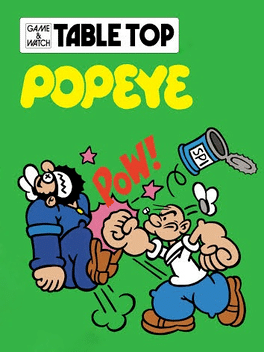
The Table Top version of Game & Watch Popeye. The game is the same as the Panorama Screen version.Boogie Woogi Jungle
1983
Boogie Woogi Jungle
1983
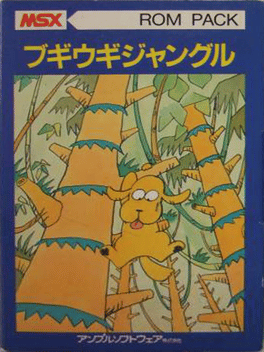
Boogie Woogi Jungle is an action game, where your character must collect a number of objects scattered around each screen before the timer runs out. Most of the objects are on ledges, requiring climbing up ladders and across rope bridges. Other characters are also running around the screen, and must be avoided to prevent losing a life. Graphically and game-play wise, it is very similar to Lode Runner, except that instead of digging holes to temporarily trap your pursuers, you can fire either horizontally or vertically to stun them.Schizoids
1983
Schizoids
1983
In this classic top-down space game from 1983, you can take on one of the most dangerous jobs in the galaxy: garbage disposal. Try to survive for as long as possible, while knocking the giant garbage pods into a black hole with your Space-Dozer.King Kong
1983
King Kong
1983
King Kong
1983
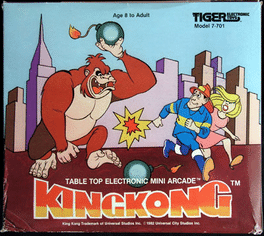
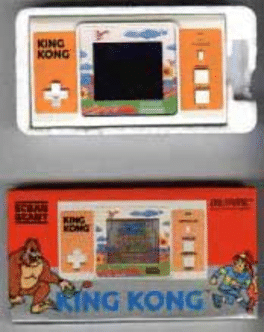
An LCD game inspired by Donkey Kong. It is part of the Large Screen line by Tiger Electronics.BurgerTime
1983
Pac-Man
1983
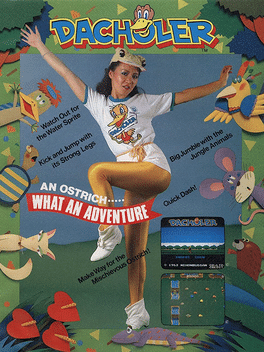
Dacholer
1983
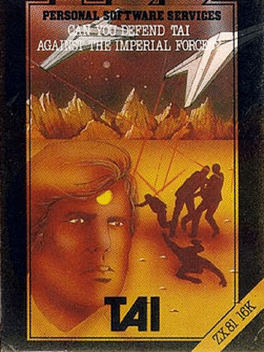
Tai
1983
Dragon Blaster
1983
Dragon Blaster
1983
The player controls a small character, which can move horizontally on the bottom of the screen and fire vertically. In the background, an animated castle, dragon, and house can be seen. On each stage, a man on horseback, an alligator, and 4 birds which scroll horizontally across the screen appear. These creatures fire upon the player, and the player must avoid incoming shots. If the player shoots all four creatures, the player advances to the next stage, which is identical to the previous. The player has a total of 3 lives, and when all are list, it's game over.