Most Popular Platform Games - Page 326

Toonsylvania
2000
Toonsylvania
2000
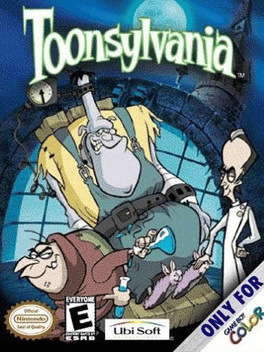
Having grown tired of being a mad scientist's assistant, Igor creates four inventions: the diving suit, the helmet lamp, the propeller helmet, and the fireproof helmet. Wanting to test them, he has Phil (a gentle Frankenstein-type monster) put them all on. Unfortunately, the combination of all four inventions causes Phil to explode. You must guide Igor through 15 levels as he searches for all of Phil's parts, as well as all four of his inventions to complete the quest. However, getting through the levels is no walk in the park, as enemies lurk behind every corner. Fortunately, there are plenty of weapons to collect and throw at them. Will Igor be able to restore Phil before the mad scientist comes home? Find the answer by playing TOONSYLVANIA for the Game Boy ColorTweety's High-Flying Adventure
2000
Are you ready to knock out some bad 'ol puttytats? You had better be ready for action if you want to survive the frantic, side-scrolling mayhem of TWEETY'S HIGH-FLYING ADVENTURE for the Game Boy Color. You play as the lovable Tweety Bird in an adventure to save an endangered orphanage. In an animated take on AROUND THE WORLD IN 80 DAYS, you travel to 10 different locales and collect pawprints from 80 cats spread across exotic foreign cities. You'll need to bop these kitty cats with weapons and power-ups like spatulas, plunger guns, oil slicks, banana peels, and more. Just be careful to avoid chomping plants, squirmy worms, bugs, bees, and butterflies along the way. Lola Bunny updates the action with humorous newscasts between levels as you run, jump, and fly your way to victory. You'll need quick, button-smashing reflexes and platform-hopping skills of the highest degree to save the kids in TWEETY'S HIGH-FLYING ADVENTURE.Zoboomafoo: Playtime in Zobooland
2001
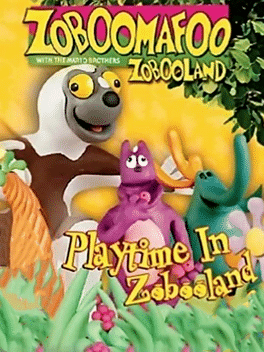
A talking lemur? The only place you might find such a thing is Zobooland, the magical place from the PBS series ZOBOOMAFOO. Embark on a nine-level quest to collect as many Animal Friend Cards as possible, a task that will require lots of interaction and cooperation with other creatures. Make your way across each side-scrolling level, trying to keep your energy up by eating Goobleberries. If you don't eat enough, you'll run out of energy and fall asleep losing one turn. Collecting 100 Goobleberries will earn you an extra shot at completing the game, but that won't be easy with so many other tasks to keep your mind on. The game is certainly designed for younger players, but three skill settings (easy, easier, easiest) allow the game's difficulty to expand as kids grow accustomed to the challenges. Though the journey is long, games can be saved with the use of a password.Spider-Man 2: The Sinister Six
2001
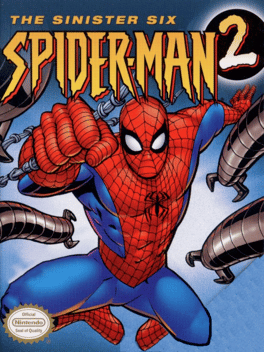
Spider-Man 2: The Sinister Six (or Spider-Man 2: Enter the Sinister Six in Europe) is a 2001 platform video game based on the Marvel Comics character Spider-Man. It was developed by Torus Games and published by Activision for the Game Boy Color. It is an alternative sequel to Spider-Man (2000) and mostly follows the events of the Game Boy Color version of that game. Though it has a similar format, it is not related to Spider-Man: Return of the Sinister Six (1992).Speedy Gonzales: Aztec Adventure
2000
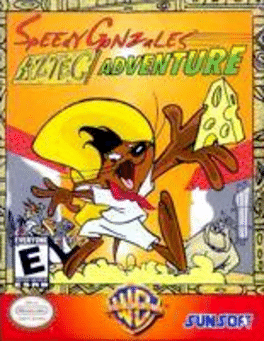
Sylvester has kidnapped all of the mice in Mexico and it's up to Speedy Gonzales to rescue them. To get all the mice back, Speedy must collect the cheese in 18 different stages. However, the cheese will not be easy to collect, as along the way Speedy will have to make death-defying jumps while avoiding spikes, lava, and bottomless pits. In addition to those hazards, there are a number of enemies that are glad the mice are gone and don't want Speedy to rescue them. As luck would have it, there are power-ups and weapons scattered throughout the stages. After completing several stages, Speedy will have to face and defeat a boss character. Will Speedy be able to collect all of the cheese and defeat his enemies? Find out by playing SPEEDY GONZALES: Aztec Adventure.Tazmanian Devil: Munching Madness
1999
LOONEY TUNES: TAZ MUNCHING MADNESS features Taz from the timeless cartoons from Warner Brothers in his first adventure on Game Boy Color. Playing the game gives the player the same feel as watching the cartoon show with Taz's signature twist and amusing moments. Presented in a 2D look, the graphics, and scenes on every level have a colorfully appealing view from the top down over the game play. Taz must embark on a mission to save his friend, Wendal T. Wolf from Bull Gator and his crony, Axl. Taz ventures away from his home in Tasmania and must pass through the Amazon Jungle, Amsterdam, Switzerland, the Greek Islands, China, Australia, and more. Those familiar with Taz's character on the Looney Tunes cartoons will recognize the fact that Taz hasn't lost his taste for strange and unusual objects as his food source and continues with that practice in his game. Taz literally has to eat his way through each level in order to advance to the next level. Food has significant importance how victorious Taz will be in his miJim Henson's The Muppets
2000
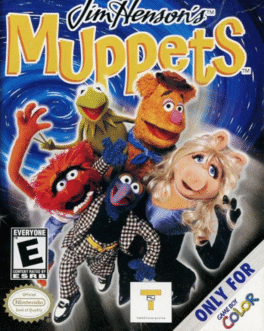
Dr. Bunsen Honeydew has developed a new time machine, so he invites all of the Muppets over to see the new invention. However, something goes awry and the Muppets are sent back in time. Fortunately, Kermit and Animal were running late and were not involved in the mishap. Now these two must travel back in time and rescue their friends. You will take control of Kermit and Animal as they travel through six different time periods that contain a total of 24 levels. Help Kermit defeat enemies with paper airplanes, and use his super jump to collect items. Animal will pound enemies into submission with drumsticks and will shake items loose with his stomp. Will the two heroes be able to save the gang? Find out by playing JIM HENSON'S MUPPETS.Rhino Rumble
2002
Rhino Rumble
2002
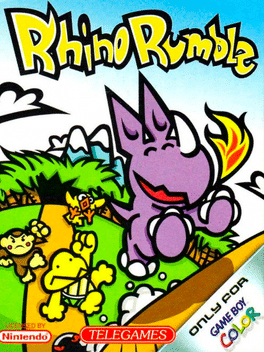
It's amazing what some animals will do just to get a drink of water. Take Rocky the Rhino, for instance: Positively parched (he ate way too many peppers at a local jungle party), the little fellow is willing to traverse 19 enormous levels in the hope of quenching his mighty thirst. Help the adorable Rocky get through seven unique worlds, fending off all who would stand in his way. Many of the jungle's inhabitants are convinced that Rocky will drink up the water supply, you see, so they're all working against you from the outset. Make your way through forests and caves, using unique artillery like fireball breath and belly jumps to squelch the attempts of your foes and get to the magical spring. In addition to your weaponry, you'll have the assistance of various boats, planes, trampolines, and wagons to reach the end of each level.Sabrina the Animated Series: Spooked!
2001
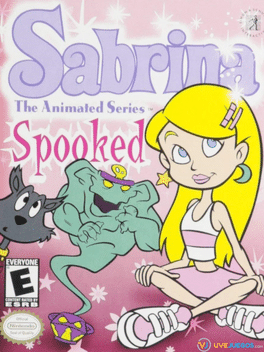
Sssomebody ssstop him! The comic book hero brought to life in inimitable fashion by Jim Carrey now has his very own handheld game on the Game Boy Color. The well being of Stanley's beloved Tina is at stake, and he's going to have to transform himself into the Mask in order to protect her. More than 20 bizarre enemies are out to stir up trouble in this bizarre epic such as motorcycle gangs, crocodile men, and others. Make your way through nine levels of excitement, using oddball weaponry like a giant boxing glove and a hunk of cheese to fend off your rivals and return Tina safely home. In addition to the standard gameplay, there are several hidden stages to uncover, most of which can be accesses by seeking out secret objects. Whether you're a fan of the comic book, the movie, or neither, you'll have your hands full with the crazy action of THE MASK.Sabrina the Animated Series: Zapped!
2000
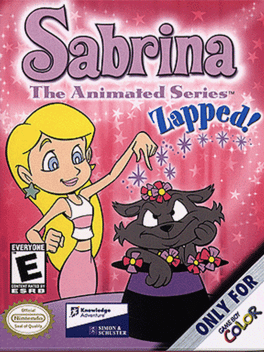
Sabrina has messed up again: she has turned all of the kids into animals. Now, she must travel through town and change the kids back. In order to turn the kids back, she must hit them and then use her magic on them. There are a number of power-ups available to help Sabrina on her quest, including quadruple jumps, a butt stomp, and warping abilities. She can also collect five stars that will allow her to change the kids back without having to stun them first. However, there are areas in each stage that Sabrina cannot reach. So she must find Salem, who can crawl through small spaces and use his tail to knock over blocks to clear a path for Sabrina. Getting through a level will require planning and skill, so put on your thinking cap. Help Sabrina return her classmates to normal in SABRINA THE ANIMATED SERIES: Zapped!Gex 3: Deep Pocket Gecko
2000
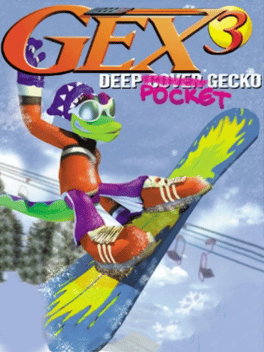
Even a lost island hideaway in the wet South Pacific isn't far enough away from the long arm of Rez. While GEX was whiling away the hours living on the fruits of his recent successes, the madman of the Media Dimension was working on his new hobby - secret agent-napping. Agent Xtra was now struggling for her freedom as a hostage in the lair of Rez. As a master of disguise, GEX had his work cut out for him. Another descent into bad TV movies is at hand. To the GEXCaves!Walt Disney's The Jungle Book: Mowgli's Wild Adventure
2000
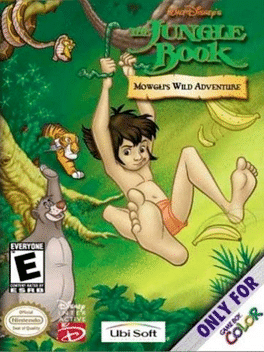
In Walt Disney's The Jungle Book: Mowgli's Wild Adventure, you must guide Mowgli on an adventure to become King of the Jungle. Mowgli must work his way through more than 20 levels of adventure, using his superior intellect. Instead of beating up monkey guards, Mowgli can use a banana to lure them away from their posts. However, there will come a time when fighting is necessary, and the man-cub can use a number moves to get rid of the enemies including a butt-stomp and a vicious spin-attack. Since the game is optimized for the Game Boy Color, the environments look like they could have been taken right from the film. Help Mowgli survive to adulthood in Walt Disney's The Jungle Book: Mowgli's Wild Adventure.M&M's Minis Madness
2001
M&M's Minis Madness
2001
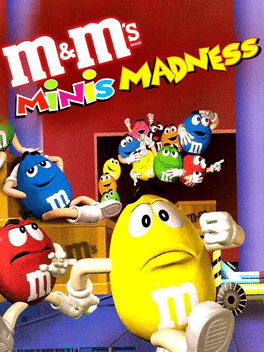
The Minis have escaped and are wreaking havoc on the M&M factory. It is up to four intrepid heroes Red, Green, Yellow, and Blue to capture the Minis and return the factory to normal. You must choose the appropriate character for each situation the heroes encounter, as they each have a special skill. Blue can swim, Green has a deadly kiss attack, Yellow can bounce high into the air, and Red can use a spin attack to destroy enemies. If you encounter an area the current character is not able to get past, you can switch to another characters with the select button. Learning how and when to use these abilities is key to conquering all 12 levels in the game. So play M&M MINI MADNESS and try to save the factory before the Minis destroy it.X-Men: Wolverine's Rage
2001
X-Men: Wolverine's Rage is a side-scrolling video game designed for the Game Boy Color. The game's plot centres around Wolverine as he pursues Lady Deathstrike, Sabretooth, and Cyber. Upon discovering schematics that enable her to construct a weapon capable of melting Wolverine's adamantium skeleton, Lady Deathstrike resolves to proceed with the machine. Wolverine must undertake any necessary actions to locate her and prevent the impending threat.Looney Tunes: Carrot Crazy
1999
Coming home after a long day at work, Bugs and Lola find their garden ransacked and all of their carrots stolen. Now the two must explore the Warner Bros. Lot to discover the identity of the carrot thief. You guide the bunnies through five worlds, collecting carrots that will allow the characters use special powers like the ability to walk on thin air and using their ears as a helicopter propeller. The two can also collect Super Carrots that will allow them to use their powers longer and Habanero Carrots that make them invincible. The player must switch between the Bugs and Lola to solve puzzles with each character's special skills. Try to find the carrot thief in Looney Tunes: Carrot Crazy.Action Man: Search For Base X
2001
Alex "Action Man" Mann makes a stop over onto the Game Boy Color where once again he must stop the world from falling into the clutches of the evil Dr. X. The player takes control of Action Man as they travel through seven different levels ranging for jungles to the Arctic, battling an army of robots with a variety of weapons and battle suits in search of Base X and stop Dr. X from launching a terrifying new weapon that could very well bring an end to the world. The gameplay is a standard side-scrolling action platformer where the player advances throughout the level, destroying enemies and avoiding pit falls. Along the way they can pick up more powerful guns as well as a bow and arrow and even different suits that can help them on their quest. Additionally, players can find these weapons and suits by taking different paths throughout the levels.Papyrus
2000
Papyrus
2000
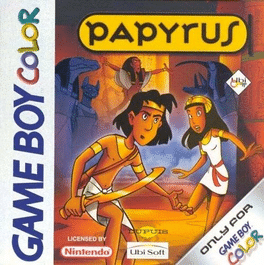
Papyrus is an Action game, developed by Planet Interactive and published by Ubisoft, which was released in Europe in 2000.Pitfall: Beyond the Jungle
1999
An evil force known as Scourge is manipulating the Red Lucense in order to take over the jungle. Now it is up to Pitfall Harry Jr. to use the Blue Lucense to restore peace to the land. You control Harry as he battles through 15 levels that span jungles, volcanoes, prisons, and caverns. Each world has unique variations; for example, you have to swing from vines in the jungle stages, while using a pickaxe to battle scorpions and other monsters. For some additional help, Harry has quick reflexes to allow him to dodge bullets and jump over some of the bad guys. In addition to Harry's innate skills, there are power-ups scattered throughout the levels including extra lives, gold bars, crystals, and extra health. Help Harry restore peace to the jungle in PITFALL: Beyond the Jungle.Return of the Ninja
2001
Return of the Ninja
2001
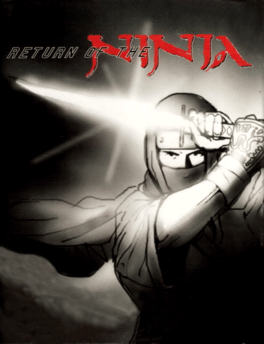
What your enemy fears the most is something it cannot see: You! A mysterious army has attacked the land of Koga and stolen an ancient and sacred scroll. As a highly trained ninja, it's up to you to find out who is behind the trouble and recover Koga's precious treasure. To accomplish this, you'll need to recover six secret ninja tools hidden from the invaders. The enemy army may outnumber you a thousand to one, but you are a master of stealth-- and every military leader knows that a blind enemy is a vanquished foe.A Bug's Life
1999
A Bug's Life
1999
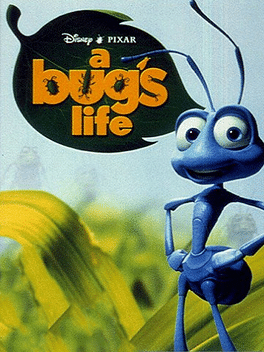
Based on the Disney/Pixar 3D animated film, you must guide Flik as he sets out to find a group of warrior insects to help his colony of ants to fight off the hungry grasshoppers. Unlike the other versions of this game, the GBC version is a 2D side-scroller. You must guide Flik in finding parts for his inventions. Along the way, you must avoid other enemy insects, including the grasshoppers, or hit them with berries.