Most Popular Puzzle Games - Page 120

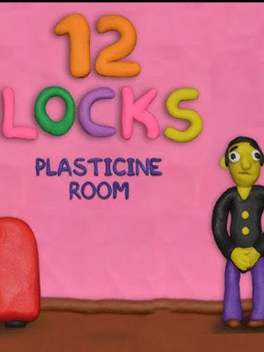
12 Locks: Plasticine Room
2019
12 Locks: Plasticine Room is an online puzzle game that challenges players to use their puzzle-solving skills to unlock 12 different locks to complete the game. The game is set in a plasticine room, where players must navigate their way through the challenges to unlock each lock. The puzzles require players to think creatively and logically, using their problem-solving skills to overcome each obstacle in their path. With each lock unlocked, players gain a sense of satisfaction and progress toward completing the game.Slot & Learn Country Names in Kanji
2024
How to Write “Argentina” in KANJI? Learn Country Names in KANJI with a Fun Puzzle Game!Unreal Match 3
2015
Unreal Match 3
2015
Unreal Match 3 is a match 3 game that's built from the ground up to help developers learn how to make mobile games using Unreal Engine 4.Numbskull
2008
Maze of Portals
2024
Mother's Day Journey
2024
Box Smash
2024
Escape From Bunker
2022
Escape From Bunker
2022
A near future in which mankind is threatened by a falling meteorite! And that to save humanity all are placed in bunkers, which are controlled by artificial intelligence! Something went wrong, and even after the danger has passed, the computer still decides that you have to stay locked up here forever...Ouroboros
2024
Rubik's Match
2024
OK! Puzzle Stars
2010
OK! Puzzle Stars
2010
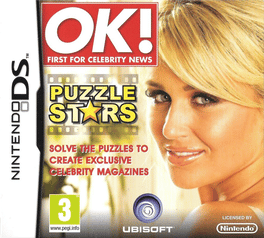
Inspired by the British celebrity magazine franchise 'OK!', 'OK! Puzzle Stars' puts the player as the role of an Editor in Chief, who must solve a variety of puzzles in order to send 12 OK! magazines to the shops. The game mainly utilises the Nintendo DS stylus for gameplay and includes puzzles like Wordsearches, Crosswords, Sudoku, Fitword and so on. The player is required to hold the Nintendo DS console sideways in order to play the game. The Start button is also used to pause a puzzle at any time and brings up the Pause Menu (which includes options to continue the puzzle, teach handwriting recognition to suit the player's handwriting mode, or to quit the puzzle). Every issue in the game includes 16 puzzles to solve and for every 4 solved, the player must then solve a special puzzle called a 'Puzzle Star' (which rewards the player a cover item for the current issue). When all 4 cover item elements are achieved for one issue, the player moves onto the next until all 12 are complete. For every puzzle complete, tPuzznic
1990
Puzznic
1990
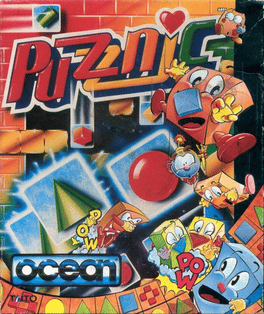
PC-9800 Series Sharp X68000 Commodore C64/128/MAX ZX Spectrum Atari ST/STE TurboGrafx-16/PC Engine DOS Amiga Family Computer PlayStation Amstrad CPC Nintendo Entertainment System MSXThis version removes the adult content present in the original game.Patchy Matchy
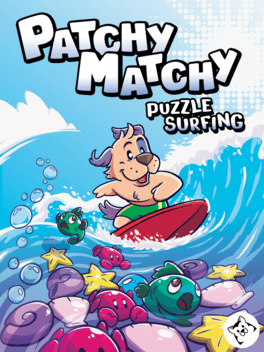
Cowabunga! Get matchy with Patchy, a surfer dude out to win the waves. Help Patchy break the raddest records by matching 4 sea creatures in a row to clear them from the ocean. Start a combo with a match of 6, and then keep matching fast to score bonus points. If you and Patchy can unlock all 17 achievements, you'll be the most mondo Big Kahuna the beach has ever seen!Buciyo 5
Buciyo 5 is an unreleased game which would’ve had the player choose between 5 different robots, each with a different peculiarity: voice, eyes, nose, ears, and brain, each of which would have allowed different gameplay mechanics and approaches to the game’s levelsToys
2003
Toys
2003
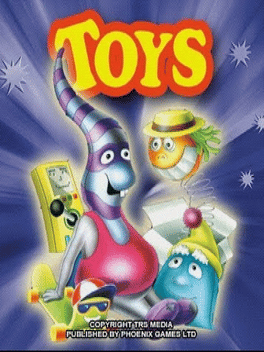
Toys features a Dingo Pictures animated film titled Toys: Das Geburtstagsgeschenk. The game also features six different sliding picture puzzles with 4 difficulty options (9, 12, 25, or 36 squares). There is also a coloring book mode where players can color in six different pictures. The game was later released on the PlayStation 2 as The Toys Room. It's the same game as the PlayStation version but adds a jigsaw puzzle mode and a pair matching mini game.Dejig: McKnight Art Collection
1997
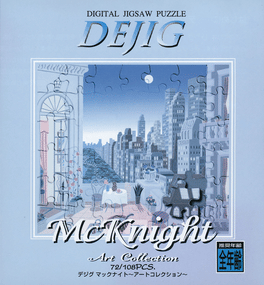
Dejig: McKnight Art Collection is a jigsaw game for the Sega Saturn released as part of the Dejig series.