New Pc 8800 Series Games - Page 5

Mario Bros.
1984
Minami Aoyama Adventure
1983
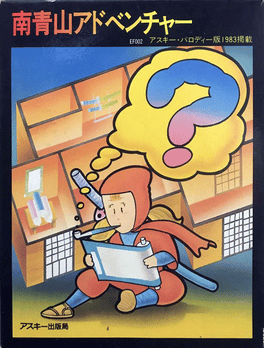
Minami Aoyama Adventure is the sequel to Omotesandō Adventure, released the following year. In this game, the player sneaks into the residence of Gunichiro Nishizaki, the founder of the ASCII Corporation, to commit another act of sabotage. In contrast to the first game, the sequel features color and a map feature.Happy Bushman
1983
Happy Bushman
1983
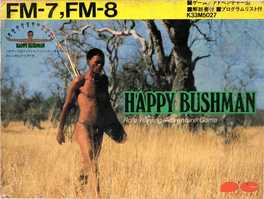
Based upon the 1980 film The Gods Must Be Crazy, Happy Bushman is a Japanese language graphical adventure where the player takes on the role of Namibian San farmer Xi, as he attempts to throw a Coke bottle off the edge of the world. All commands are via text entry.Poibos Part 1: Dasshutsu
1983
Poibos (a misspelling of Phoebus) is a Japanese-made role-playing game. The small paying window displays a rather abstract map on which the player can navigate the characters. The game begins with Jorg only, but up to six characters may join the party and participate in combat afterwards. The characters' stamina bar is depleted depending on the terrain they walk on, and they need to rest regularly. Turn-based battles require balancing offensive and defensive manoeuvres, as well as actively protecting weaker party members. The game has a fairly complex weapon system, with several weapon types, all of which (due to the protagonist's outlaw status) can only be acquired by stealing or as battle trophies. Weapon energy deteriorates over time, having major impact on battle performance.Ken to Mahou
1983
Ken to Mahou
1983
Set in a medieval world called Border Land, an evil wizard has besieged the kingdom, killing its benevolent ruler and taking the princess captive. With the land swept in chaos, the player must brave numerous challenges to defeat the wizard and restore peace. Nine character archetypes may be chosen as the player's avatar; each one is given a unique set of attributes, affecting their battle performance. Explore towns and castles for various recovery spots, while engage in one-on-one battles with varying physical attacks and magic effectiveness, based on the player's chosen class.Seiken Densetsu
1983
Seiken Densetsu
1983
The protagonist of Seiken Densetsu must explore dangerous wilderness in a fantasy land in order to locate and obtain four sacred swords, which allegedly grant immortality to whoever manages to possess them. This Japanese-made role-playing game is heavily influenced by early Ultima installments, having a nearly identical visual style, interface, and gameplay system. The protagonist explores an overhead world map, visiting towns where weapons, armor, items and food can be bought. Food rations are necessary to have for preventing the hero from starving. Experience points and gold are obtained from defeating enemies. Interaction is performed by pressing keys corresponding to commands, such as Move, Question, Enter, etc.Horror House
1983
Horror House
1983
Horror House is the very first graphical adventure game published by Nihon Falcom in 1983. The title was created by a student of Kindai University named Fujio Fujimori who had previously had several games published inside the pages of Japanese computer magazines like I/O Magazine, RAM and others at the time. Horror House would be the first in a trilogy of games released by Falcom that were classified as "occultic mystery adventure" games with Horror House Part II releasing in December and Monster House releasing the next year in 1984.Seiko-chan SOS
1983
Seiko-chan SOS
1983
Seiko-chan was caught in the robot kingdom and it’s up to you to rescue her from being brainwashed. Robots appear one at a time in a large rectangular arena. They are stationary when they appear, but can randomly and suddenly teleport to other parts of the screen. You control a cross-hair, that you can use to target and shoot the robot, which is only vulnerable in the chest area.Horror House Part II
1983
Panorama Toh
1983
Panorama Toh
1983
Panorama Toh (ぱのらま島 "Panorama Island"), released by Nihon Falcom for the NEC PC-8801 computer in 1983, departed from the standard RPG formula in various ways. It combined RPG gameplay with real-time combat, combined fantasy with sci-fi elements, and introduced survival mechanics. The game was designed by Yoshio Kiya, this was possibly the first action RPG. These innovative ideas about RPG design departed significantly from the turn-based norm at the time. It introduced real-time combat, sci-fi elements, a persistent open world with day-night cycle, and survival mechanics. This was a precursor to Falcom's seminal action RPG franchise, Dragon Slayer. In 1984, he would go on to create Nihon Falcom's Dragon Slayer franchise, which laid the foundations for the real-time, action RPG genre.Pac-Man
1983
Kagiana Satsujin Jiken
1983
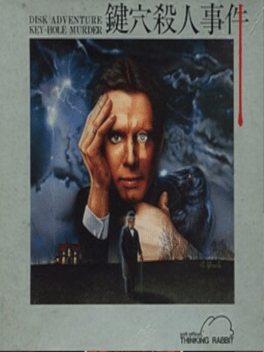
A strange request comes to Scotland Yard. Client Gilles Willcock receives a murder notice that's bound to happen at midnight. He calls out a detective, and seven people at the mansion wait nervously for escalation. Gilles locks him up at the second floor while detective hides in waiting at the first floor. At midnight gunshots are heard on the second floor, and a murder is seen through a keyhole. When detective finds the key and enters, there is no body.Fan Fun
1983
Bird Land
1983
Majo Moheka no Yakata
1983
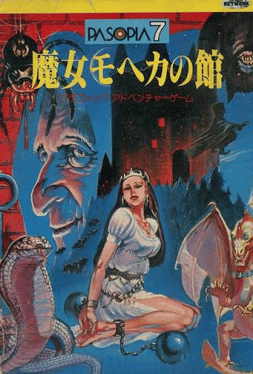
Majo Moheka no Yakata is a text adventure with graphics where Princess Seiko has been abducted by witch Moheka. Now it is up to you and your companion Dan to rescue the princess.Light Flipper
1983
Light Flipper
1983
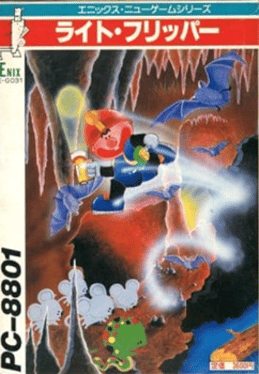
A game where you collect keys in an underground maze while trying to avoid mice. There are lightbulbs scattered throughout the levels which make the mice vulnerable for a brief moment.Lolita 2
1983
Underground Monster
1983
Underground Monster
1983
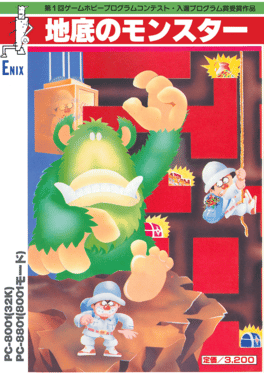
A maze game developed by Osamu Hasegawa and one of the winners of Enix's first Game Hobby Program Contest.Galaxian
1983