Most Popular Commodore C64 128 Max Games - Page 27

Mega Sports
1992
Mega Sports
1992
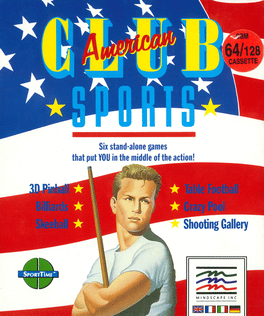
Mega Sports compiles some of Epyx's multiple-event sports games from the 80s. Some of these titles were converted to some of these systems specially for this collection, or were only ever released on other compilations for those formats.Skull
1984
Skull
1984
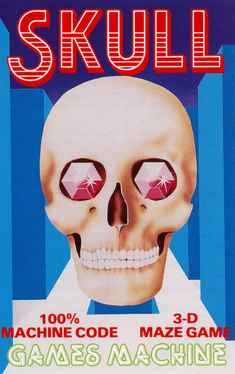
Skull sends you into a dangerous maze where you collect treasure while constantly avoiding deadly enemies. Sinister skulls roam the corridors and mean instant death if touched, while trap doors and holes can suddenly drop you into deeper, much tougher sections of the maze. At first a map helps with navigation, but it slowly disappears, forcing you to rely on memory, caution and a bit of luck. The appeal comes from exploration, memorizing routes and the ever-present risk of a fatal mistake – tense, challenging and heavily focused on awareness and nerve.Majik
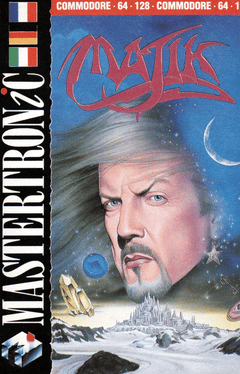
“Majik” tells the story of King Markham, who, on his deathbed, desperately hopes to see his only son and heir, Prince Gideon, one last time. Rumors claim that Gideon is being held captive by the sinister Domir, as he alone can unite the Clans of the Reaches and thwart Domir's reign. The wizard Piradon is tasked with rescuing the prince, but his magical powers are limited in the dangerous lands he must traverse. The game is a first-person adventure where players progress by completing tasks.International Rugby Simulator
1988
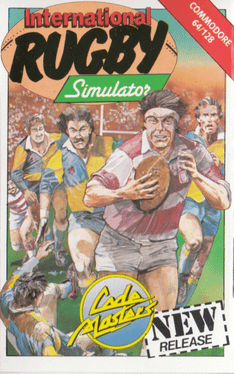
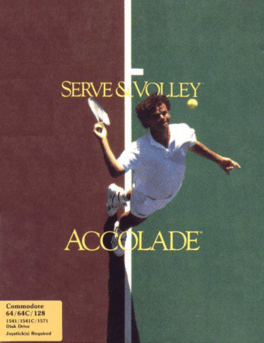
Seven-a-side rugby union is brought to life in this budget game. The action is viewed from the side, although kicks to the posts are played from a behind-the-posts perspective. Scrums and line-outs are incorporated for as realistic a game as possible given the player restriction. A tournament can be played with up to 8 players, with as many computer teams as required to fill the gaps.Serve & Volley
1988
Combat Crazy
1988
Maze Master
1983
Maze Master
1983
You lead your party of three into the dungeons to gain riches and ultimately find the Balrog which you have to kill.Magic Rufus
1993
Magic Rufus
1993
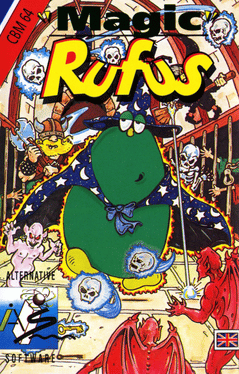
The sequel to Reckless Rufus. Antwicky, Rufus' homeland, has been taken over by evil witches. Rufus attempts to defeat them by putting on a cape and learning to use magic spells. Rufus moves around a landscape made up of platforms and ladders, avoiding or fighting enemies including witches, demons and vikings. First a number of prisoners must be freed from cages on each level, and then the exit must be found. Magic spells (which include weapons, and the key to open cages) can be bought from Spell Stalls or just found lying around. Chests provide coins to be spent at the Spell Stalls.Tarzan Goes Ape!
1991
Tarzan Goes Ape!
1991
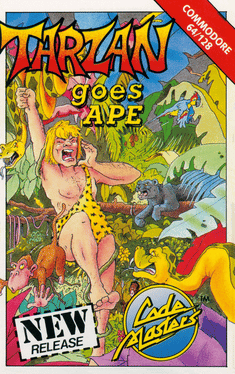
You play Tarzan, who the witch doctor has turned into a monkey. To change back to his human form, you need to collect six ingredients - necklace, mask, plant, crossbones, a bottle, and gem - and place them in his cauldron. While you are doing this, you deal with various forms of wildlife; such as snakes, birds, lizards, and cannibals; by stoning them to death. Fruit can be picked up for bonus points. There are two types of skulls that are scattered through each level. One that gives you reverse controls, and one that causes loss of life. When Tarzan has obtained all six ingredients, you proceed onto the next level. In between these, you play a bonus level where the object is to collect a number of gems before time runs out.Drink & Drown
1986
Drink & Drown
1986
A nightlife simulator, this game sees the player trying to impress his mates and the ladies while conserving enough money to let the alcohol continue flowing freely (but not so freely that he throws up on his shoes (too often) and blacks out) as he staggers from bar to bar. The primary factor influencing this status is selecting the correct (or often arbitrarily least-inappropriate) answer from a list of multiple-choice options to engage a given situation; points can also be won by stumbling across the bonus mixed drink order or managing to fire off the randomly-determined ultimate compound obscenity.Kenny Dalglish Soccer Manager
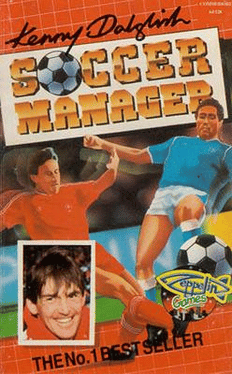
By 1989 Kenny Dalglish scarcely played for Liverpool, and was almost entirely concentrating on his role as manager, so a football management game with no arcade action featuring his license made sense. The game is purely icon- and menu-driven, perhaps the first step in dragging the genre into the 90s. Whichever team you took charge of start from the 4th division. Match highlights can be selected - these are viewed from the side and show goals and near-misses, although they can be turned off. You start with squads of over 20 players from which to choose your team of 11, each given a straightforward ability rating. Formations can be selected by placing each player in a precise position alongside the formation of the opposition team, using a fairly advanced system for the time. Via a separate menu you can consult with the chairman (to see if he's happy with your efforts), the physio (to check for injuries), the scout (who comes up with players you might like to purchase) and so on.I Play: 3-D Soccer
1991
I Play: 3-D Soccer
1991
I Play 3D Soccer is one of the earliest 3D football games. You take control of a single player, viewing the action from right behind his perspective. Signalling for your team-mates to pass you the ball is a key gameplay element - don't expect to just watch your team win with no contribution from you. When you gain possession (or press the button while not in possession) your player automatically turns to face the goal.P.C. Fuzz
1984
P.C. Fuzz
1984
You are police constable Fuzz, patroling the streets while on the lookout for cars, robbers and the occasional punk.Neuronics
1992
Neuronics
1992
Neuronics is a tile-matching puzzle game with similarities to Swap: The player is presented with a number of tiles with different symbols and colors. If two or more identical tiles are next to each other (diagonally does not count), they disappear. To make this happen, the player can swap two adjacent tiles. However, there is a time limit to consider and empty places left behind by removed tiles are not usable. The goal is to clear the whole field.KGB Super Spy
1989
KGB Super Spy
1989
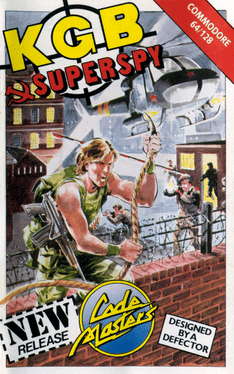
KGB Superspy sends you into a risky helicopter rescue mission behind enemy lines. Across several operations, you pick up scientists, carry them to safe houses, and eventually attempt the dangerous border flight to the West. Soldiers, tanks, jeeps, and jetpack enemies stand in your way, while fuel and energy always need careful attention. The mission becomes especially tense through disguised decoys, limited resources, and the constant shift between rescue, combat, and navigation.