New Turbografx 16 Pc Engine Cd Games - Page 4

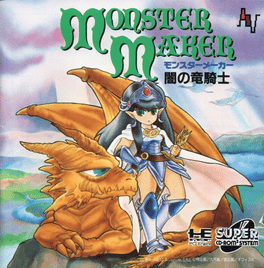
Monster Maker: Yami no Ryuukishi
1994
Yami no Ryūkishi is a Japanese-style role-playing game based on the setting and themes of the card game Monster Maker and its subsequent table RPG incarnation. The player takes control of a young girl named Raia, who finds out that she belongs to the race of half-elves. Blamed for attacks on her village, she is expelled from her homeland and sets off on a journey to find out the truth about her origins.Wizardry III & IV
1994
Star Breaker
1994
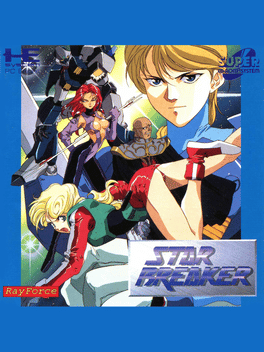
Star Breaker
1994
Star Breaker is a fairly traditional Japanese RPG, with top-down view, world map navigation, random turn-based battles, and all the other usual ingredients. Battles can be set on Auto for quicker pacing. Since the setting of the game is a mixture of sci-fi and medieval fantasy, character use a variety of weapons from swords to guns, as well as special psychic attacks. There are also some space ship combat in the game, and it is possible to upgrade the player's ship later on.Kakutou Haou Densetsu Algunos
1994
The world's greatest warriors, Jenius, Asasin, Arcer, Samohan, Greeze, Orga, Lobo, Blocken, Jyobei and Daibuster. Every single one of them has different attacks and set of techniques the player has to learn and master. Most of the fighters in Algunos use their bare hands but some also use weapons. Choose your fighter and take on the challenge.Sol Moonarge
1994
Sol Moonarge
1994
As earthquakes occurred in the kingdom of Itchy, and demons began roaming freely through the wilderness, the king realized that an ancient prophecy is about to be fulfilled, and the entire world is in danger. The valiant swordsman Soleil lives in the capital city, and the king entrusts him with the task of protecting the two Moon goddesses, and retrieving the Sun Sword, which are necessarily to prevent a magician known as Silver to use the Gears of Fate for his evil purposes... Sol Moonarge is a traditional Japanese-style RPG. As in most games of this genre, the player navigates the main hero and his companions on the top-down "world map", entering towns to buy weapons, armor, and items, as well as hostile locations which are necessary to complete to advance the plot in a linear fashion. Enemy encounters are random; combat is turn-based and viewed from first-person perspective. As in most Japanese RPGs, the characters level up automatically, after having accumulated a set amount of experience points; specific weaBakushou Yoshimoto ShinkiGeki
1994
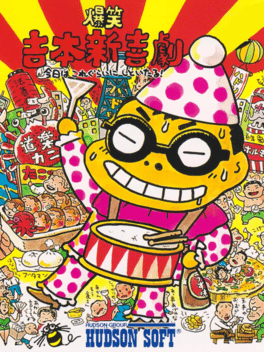
The game is based on the comedy TV show Yoshimoto no Shinkigeki, which in its turn is based on a theatrical comedy show popular in Osaka and its surroundings. The game stars characters that either look like the actors from the TV show and/or resemble characters played by them. The show consists of short episodes which are depictions of comical situations, and are not related to each other story-wise. Same can be applied to the game: there is no real story, just a stretch of hilarious and intentionally impossible situations the protagonists find themselves in.Championship Rally
1993
Championship Rally
1993
Championship Rally is a top-down racing game. The player can choose to control real rally cars: Toyota Celica, Nissan Pulsar, Lancia Delta, and others. There are three modes in the game: time attack, high speed rally, and "adventure mode", which takes the player through a championship in Senegal. Each mode allows the player to select a car and customize its steering, gears, brakes, etc. Car controls are fairly simple, with one button assigned to accelerating and another to applying brakes.YuYu Hakusho Yamishoubu!! Ankoku Bujutsu Kai
1993
Despite its premise, which is reminiscent of a versus fighting game, Ankoku Bujutsukai is an arcade-style shooter. The player selects one of the five characters (Yusuke, Hiei, Kurama, Kuwabara or Genkai), and is then taken to a series of one-on-one shoot-outs in a pre-determined order. The enemy is viewed from a first-person perspective, and the player moves a cursor to aim and shoot. The gameplay system is fairly simple, allowing the player to execute three types of attacks: regular shots, charged shots, and special attacks of limited quantity. Points are received for winning fights and can be used to raise the characters' hit points, speed, or number of special moves.Camp California
1993
Camp California
1993
Byron the surfing bear must rescue his lil' bro and their three friends and stop a crew of rats from destroying their beach and preventing a big rock n' roll concert. Featuring music from the Beach Boys, this radical adventure is cleans up the streets and hits the beach!Tenshi no Uta II: Datenshi no Sentaku
1993
The second entry in the Tenshi no Uta RPG series by Telenet.Shin Megami Tensei
1993
Shin Megami Tensei
1993
Shin Megami Tensei is a port of the original Super Famicom game and features new highly detailed cutscenes. The gameplay uses first-person navigation of dungeons and turn-based battles against demons. The player can recruit demons as allies by talking to them rather than fighting them, and two to three demons can be fused to create new demons.Downtown Nekketsu Monogatari
1993
The PC Engine Super CD-ROM version of Downtown Nekketsu Monogatari (known as River City Ransom in North America, Street Gangs in Europe), released on December 24, 1993, was published by Naxat Soft and developed by KID, the same team that did the PC Engine versions of Nekketsu Kōkō Dodgeball (Super Dodge Ball), Double Dragon II: The Revenge, and Downtown Nekketsu Koushinkyoku. This version features enhanced graphics, an arranged redbook soundtrack and fully voiced characters, with the voices of Kunio and Riki performed by Ryou Horikawa and Nobutoshi Canna respectively. The player's progress is saved in this version on the PC Engine's backup memory. The rest of the game is almost identical to the Famicom version.Flash Hiders
1993
Flash Hiders
1993
A martial artist from the Wallace tribe named Bang Bipot and a temperamental sorceress named Tiria Rossette are on a trek across the world. The duo runs across and all but adopts Erue, an emotionally fragile young man somehow connected to an assortment of thugs, bounty hunters, and stranger things.Yami no Ketsuzoku: Haruka Naru Kioku
1993
Harukanaru Kioku is a re-imagining of earlier Yami no Ketsuzoku games. The basic plot follows the events that began in the first installment, but it is told in an entirely different fashion, with different scenes, dialogues, etc. For example, the game begins a short while before the starting point of the first chapter, and contains conversations between the protagonist Miyu Izawa and the murder victim Marie, which were not present in the original story. The visual style of the game is also quite different, with bright anime-like graphics atypical of the previous entries.Iga Ninden Ga-ou
1993
Double Dragon II: The Revenge
1993
The PC Engine CD version of Double Dragon II by Naxat Soft is surprisingly modeled closely after the NES game, from featuring mostly the same levels down to the rule of having no more than two enemies on screen at a time. But it does mix and match different types together, and in general extends the stages with additional hoodlums. There are a few other notable structural differences – namely, the fight on the huge moving bulldozer at the end of the forest level is missing, but to make up for its omission, the Lee brothers actually have to fight Willy before they meet their own shadows like in the arcade game. They also get to face the Shadow Master (now without the cape) on any difficulty level, although you miss out on the second round in a church and the good ending with Marion revived unless you beat the game on the Hard difficulty mode.Kisou Louga
1993
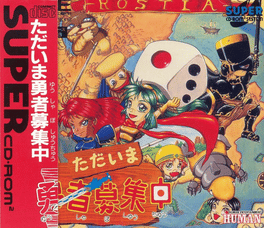
Tadaima Yuusha Boshuuchuu
1993
A unique, Japan-exclusive board game and turn-based RPG hybrid developed and published by Human Entertainment. The game released on the PC Engine CD-ROM in November 1993.