Most Popular Saturn Games - Page 11

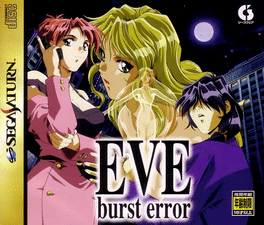
EVE burst error
1997
EVE burst error
1997
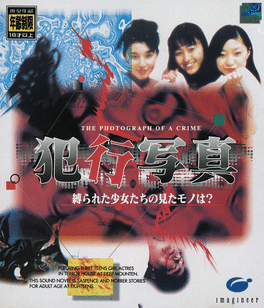
The Sega Saturn port of EVE burst error published by Imagineer. A premium edition released months later switched to their publishing label/subsidiary Imadio. This version added voice acting to the game along with an optional guide feature that can indicate, through a noise or flashing icon, when you should move to a new area or switch characters. The story and some CG scenes, along with the credit scene, were edited to be less obscene/graphic for the console release. Due to the game being split across multiple discs the second characters story is on another disc and switching between characters at any time is no longer available.Hankou Shashin: Shibarareta Shoujo-tachi no Mita Mono ha?
1996
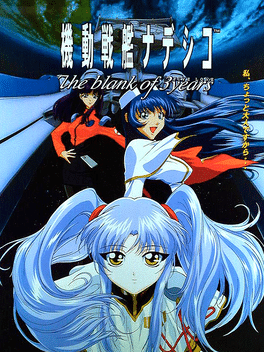
Sound novel developed by Imagineer for the Sega Saturn.Martian Successor Nadesico: The Blank of 3 Years
1998
Martian Successor Nadesico: The Blank of 3 Years is the second Martian Successor Nadesico game to be released. It is the direct sequel to the TV series, bridging the gap between the events of the final episode and Prince of Darkness.Stellar Assault SS
1998
Stellar Assault SS
1998
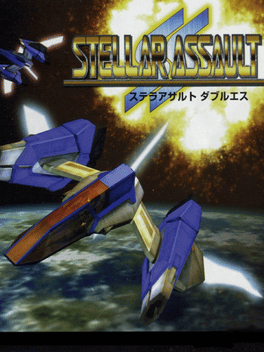
Stellar Assault SS is a Sega Saturn space combat simulator game developed and published by SIMS. An enhanced port of the titular 1995 Sega CS game Stellar Assault, it was released exclusively in Japan in February 1998. Like its predecessor, Stellar Assault SS is a "dogfight" shooter set in outer space, featuring first- and third-person viewpoints. While the core gameplay remains much the same, Stellar Assault SS is more story-driven, with support characters and voice acting. Ships and environments are also texture-mapped, while some levels take place on planets.Pappara Paoon
1995
Pappara Paoon
1995
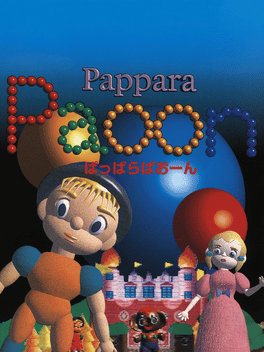
Pappara Paoon is a puzzle game where you in a tug-of-war try to beat your opponent by sending blocks over to the opponent's side.Wangan Trial Love
1998
Wangan Trial Love
1998
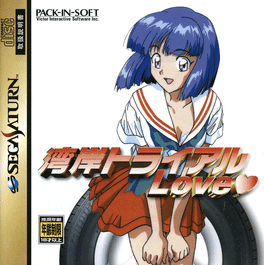
A combination of racing and dating simulator game, released for the Sega Saturn only in Japan in 1998.Virtual Kyoutei
1996
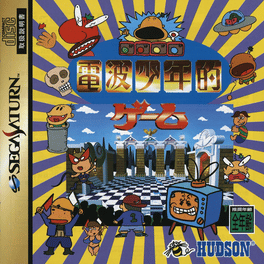
Denpa Shounenteki Game
1998
Denpa Shounen Teki Game (電波少年的ゲーム) is a party game for the Sega Saturn, consisting of 10 minigames. There is also a sequel or second part, Denpa Shounenteki Game 2.Jun Classic C.C. & Rope Club
1997
Jun Classic C.C. & Rope Club is a continuation of the T&E Soft New 3D Golf Simulation series. It is played at the Jun Classic Country Club and the Rope Club in Tochigi Prefecture. Unlike most other games in this series, this one offers two golf courses each of which have three different routes of varying difficulty. The game itself is visually similar to other T&E Soft golf games released around the same time as it runs on what is largely the same engine. Compared to the fixed viewpoint camera of the predecessors, this game features a cinematic camera, along with optional free roaming "golf cart" mode that can be activated from the menu.Metal Fighter Miku
1995
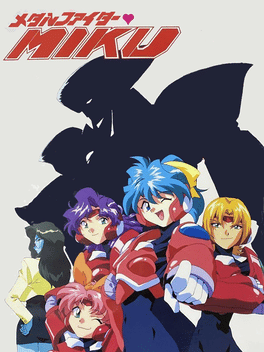
Metal Fighter Miku
1995
A single player adventure game based on the anime of the same name. A troupe of girls embark on pro-wrestling careers in the near future. Pro-wrestling has evolved into Neo Pro-wrestling, and combatants wear metal suits, becoming "Metal Fighters".PD Ultraman Link
1996
PD Ultraman Link
1996
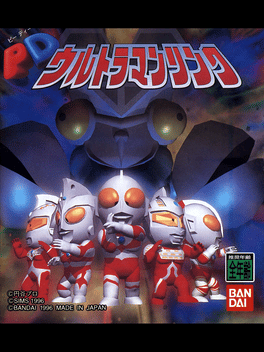
PD Ultraman Link is a falling-block puzzle game featuring the Japanese superhero Ultraman and many of his allies and foes. Blocks of various colors fall into the well in pairs; each block has two connections, and connecting three or more blocks together regardless of color will cause them to disappear. Any blocks above the ones removed will fall into the now-open space, potentially creating chain combos which will send garbage blocks that must be cleared twice to the opponent. Additionally, connecting four blocks of the same color will clear all blocks of that color from the board, while connecting four each of a different color together will clear all the garbage blocks on the screen by one stage. If the blocks stack past the line at the top of the well, that player loses the match. The game includes a single-player story mode, as well as a free battle mode against the computer or another player. There are 10 different characters to choose from: five Ultra Heroes and five aliens.Magic Knight Rayearth
1995
The balance in the magical world of Cefiro is supported by the prayers of the lovely princess Emerald. When the evil Sage Master imprisoned her, the existence of the entire world was endangered. Using her spiritual powers, the princess contacted three Japanese high-school girls, Hikaru, Umi, and Fuu, turned them into Magic Knights, and summoned them to Cefiro, where their goal is to save her and to restore the balance. This adaptation of the eponymous manga and anime series is an action game with light role-playing elements, somewhat similar in style to Zelda games. The protagonists are all the three girls, but the player can controls only one of them at a time. Each one has advantages and disadvantages, as well as different fighting styles: Hikaru uses swords, Umi a rapier, and Fuu a bow. The player advances through the game by exploring the world, talking to non-playable characters, and fighting enemies in real-time combat. There is no experience system; new abilities (among them swimming and jumping) are gainedThunder Force: Gold Pack 1
1996
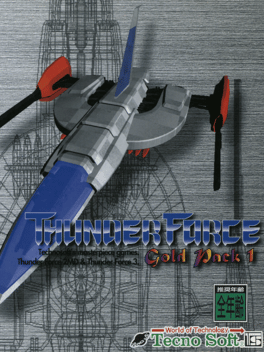
The first of two Saturn compilations for the Thunder Force series. It includes the Sega Mega Drive/Genesis versions of Thunder Force II and Thunder Force III along with an animated opening video.Nightruth: "Maria"
1996
Nightruth: "Maria"
1996
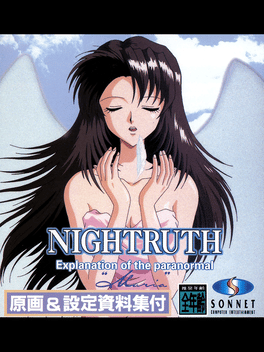
NIGHTRUTH: Explanation of the paranormal - "Maria" is a Sega Saturn visual novel developed by Sonnet Computer Entertainment and published by Varie. Released exclusively in Japan in December 1996, the game explores famous paranormal topics such as the Mary Celeste, and stars the titular protagonist from the earlier NIGHTRUTH: Explanation of the paranormal - #01 "Yami no Tobira", Maria. It was followed by a 1997 sequel NIGHTRUTH: Explanation of the paranormal - "Futatsu Dake no Shinjitsu".Nightruth: Futatsu Dake no Shinjitsu
1997
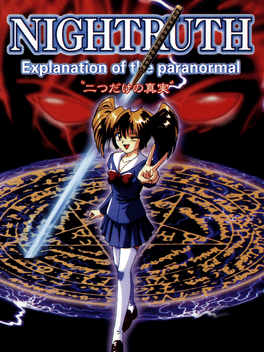
"Futatsu Dake no Shinjitsu" ("The Only Two Truths") is the third and final game in the Nightruth series, this time starring the youngest of Shinya's classmates, Ai Himekawa. The story focuses on her previously unexplained powers of precognition and telekinesis. Gameplay is again similar to the visual novel-style adventure presentation of the previous entries, featuring voiced and illustrated story sequences which occasionally branch via player choice into multiple endings. However, rather than featuring stories about famous supernatural phenomena, the focus this time is strictly on the main characters and their own personal stories.