New Sega Saturn Games - Page 21

Astal
1995
Astal
1995
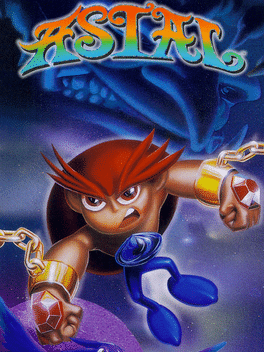
Somewhere in the universe, The Goddess Antowas created a world from a single jewel. On this world, Quartilia, she created the sky, earth, and air. To inhabit this world, she created two humans - from a green jewel, a girl: Leda, who has the power to make things live on Quartilia. And from a red Jewel, a boy: Astal, whose purpose was to protect Leda. Content with her creation, Antowas slept. While she slept, the evil Jerado tried to take over Quartilia. To ensure victory, Jerado created a warrior: Geist. Geist kidnapped Leda, and held her at the bottom of the ocean. In an effort to get her back, Astal tore Quartilia apart, awakening Antowas. As punishment, Antowas banished Astal to Quartilia's moon. Leda took pity on Astal, and gave him her jewel. Once Astal and Jerado were dealt with, Antowas went back to sleep. However, Geist was still free, and Quartilia was not restored from the changes Jerado wrought. From his prison on the moon, Astal witnessed Geist kidnap Leda again. Consumed with the need to protect her, heWorld Series Baseball
1995
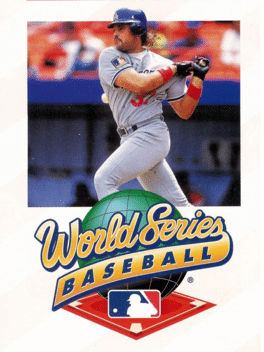
World Series Baseball, known in Japan as Hideo Nomo World Series Baseball, is a Sega Saturn baseball game developed and published by Sega. An entry in the titular World Series Baseball series of baseball titles, the game was first released in the United States in November 1995, with a worldwide release in the following months. In Japan, World Series Baseball game is sponsored by professional Japanese baseball player Hideo Nomo. The game later received a 1996 sequel, World Series Baseball II. This Saturn version is unrelated to the Sega Mega Drive and Sega Game Gear games of the same name - it is a brand new entry, despite not having a brand new name (although during development it was known as Grand Slam Baseball), which takes advantage of the system's 3D graphics. Japanese version possibly to make this distinction, being sponsored by Hideo Nomo. This of course, can cause further confusion, as there is a Nomo Hideo no World Series Baseball for the Game Gear also. It would not be the last game to disregard previoHouma Hunter Lime Perfect Collection
1995
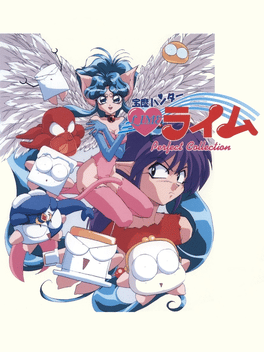
This collection contains: Hōma Hunter Lime: Special Collection Vol. 1 Hōma Hunter Lime: Special Collection Vol. 2Metal Fighter Miku
1995
Metal Fighter Miku
1995
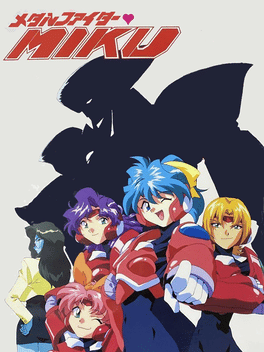
A single player adventure game based on the anime of the same name. A troupe of girls embark on pro-wrestling careers in the near future. Pro-wrestling has evolved into Neo Pro-wrestling, and combatants wear metal suits, becoming "Metal Fighters".SteamGear Mash
1995
Wing Arms
1995
Wing Arms
1995
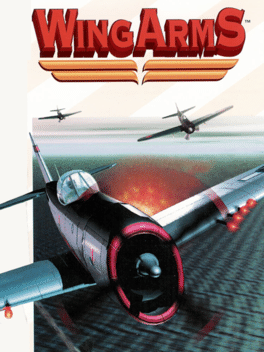
Wing Arms is a blend of flight simulator and action game for the Sega Saturn, released in 1995. In an alternate history set after WWII, the player has to fight a multinational company which wants to prevent the war from ending.Iron Storm
1995
Iron Storm
1995
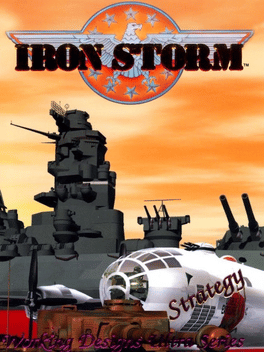
Iron Storm is a traditional turn-based strategy game. The original Japanese release was the second entry in Sega's Advanced Daisenryaku series, with gameplay very similar to that of it's 16-bit predecessor, changing some details and using 3D animations for the combat cutscenes. The game uses a hex-based map and features fog-of-war, weather, unit experience, unit upgrading, supply, and other common strategy wargame features. Unlike the previous game, three campaigns are available instead of one. Japanese, as well as United States forces can be commanded now in addition to German units. The scenarios that are played during a campaign can change depending on the battle results - a successful player may invade North America for example. There are also ten scenarios with pre-set forces separately available for selection in Standard Mode, during which the control of all involved armies can be switched to a human player.Magic Knight Rayearth
1995
The balance in the magical world of Cefiro is supported by the prayers of the lovely princess Emerald. When the evil Sage Master imprisoned her, the existence of the entire world was endangered. Using her spiritual powers, the princess contacted three Japanese high-school girls, Hikaru, Umi, and Fuu, turned them into Magic Knights, and summoned them to Cefiro, where their goal is to save her and to restore the balance. This adaptation of the eponymous manga and anime series is an action game with light role-playing elements, somewhat similar in style to Zelda games. The protagonists are all the three girls, but the player can controls only one of them at a time. Each one has advantages and disadvantages, as well as different fighting styles: Hikaru uses swords, Umi a rapier, and Fuu a bow. The player advances through the game by exploring the world, talking to non-playable characters, and fighting enemies in real-time combat. There is no experience system; new abilities (among them swimming and jumping) are gainedWinning Post EX
1995
Winning Post EX
1995
An enhanced version of the original Winning Post game, for PlayStation and Saturn.Shining Wisdom
1995
Shining Wisdom
1995
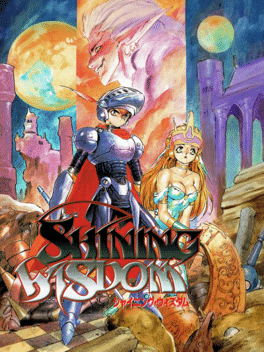
Once, long ago, a fearsome giant known as the "Dark Titan" rose from the abyss and nearly destroyed all Palacia before being bound by magic. Now, the Black Elf Pazort is scheming to rule the world by returning the Dark Titan from the depths of the abyss! But, there is hope. Mars, the son of the legendary warrior Jiles, begins his service in the King's guard at castle Odegan this very day. Guide him through the terrifying traps and devious dungeons as you struggle to seal the Four Elementals that can power Pazort's scheme! Your journey will not be easy. The Lily Pads of Sudden Discomfort lie near every watery path. Rainbow Stinger Scorpions block critical junctions. And, Pazort himself waits in the dank depths of the Catacomb Marsh, guarding the rising Titan. To succeed, you must wield special weapons, items, and power orbs with skill never before witnessed in the land. And succeed you must, for failure will result in the end of all mankind, and the loss of that important victory smooch from the princess.Worldwide Soccer: Sega International Victory Goal Edition
1995
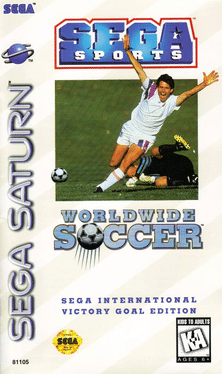
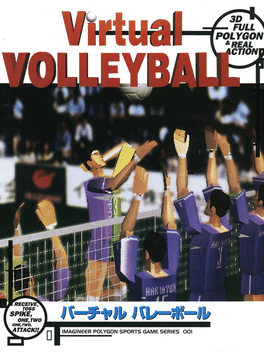
Focused on national teams (12, including Italy, Spain, Denmark, Netherlands, England, Argentina, France, USA, Germany, Romania, Belgium and Brazil), the game offers a 2.5D environment (polygonal stadium and sprites for players) and three camera angles (back, isometric and side) with four zooming levels. Modes include Exhibition, World League (either single or double, with 44 matches and a grand final to crown the Grand Champion), S-League (just one round, 11 matches), cup knockout and penalty shootout, the game keeping track of statistical information of each competition. Gameplay is regular arcade, with simplicity being privileged over tactical knowledge or complex controls, with the game offering the possibility to choose between three types of controls. Other options include the ability to choose one of four difficulty levels, length of each half (3, 6 or 15 minutes) and weather conditions (fine, rain or random).Virtual Volleyball
1995
Blazing Heroes
1995
Blazing Heroes
1995
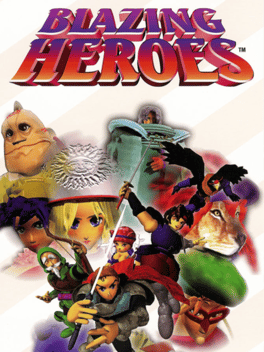
You are Aragon, the prince of Mystaria. Long time ago, your father was one of the twelve mighty warriors who opposed Sith, the evil being that once tried to open the sacred portals of Mystaria. In the ultimate battle, your father was slain by Sith, but his eleven companion captured the villain and banished him, depriving him of his forces. Sith spend many years in a remote prison, until he grew powerful again. Now he came back to Mystaria and took over the kingdom. It is now up to Aragon to find eleven companions in order to be able to defeat evil again. This is a strategy RPG along the lines of Shining Force series. Your party contains twelve characters, six of which can be used in battles. The turn-based battles are long and strategic - you move your characters on the battlefield, and the force of your attack depends on the amount of previous movement made by you. You can also use a variety of magic spells to hurt many enemies at the same time.Gakkou no Kaidan
1995
Gakkou no Kaidan
1995
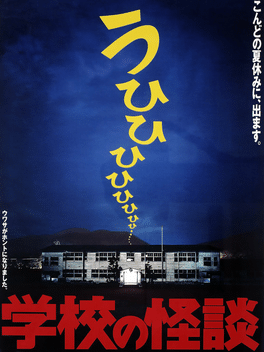
Gakkou no Kaidan is a game for the Sega Saturn console. It was released in 1995 to accompany the live-action movie Gakkou no Kaidan. It was available only in Japan, in Japanese.Heisei Tensai Bakabon: Susume! Bakabons
1995
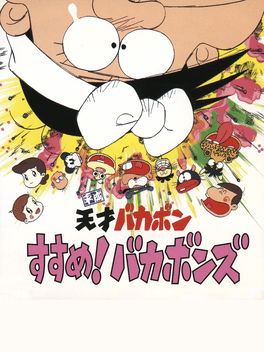
Heisei Tensai Bakabon: Susume! Bakabons is a competitive falling-block puzzle game based on the 1990 animated series Heisei Tensai Bakabon. Pairs of blocks in four colors drop from the top of the screen, and the goal is to line up two or more blocks of the same color, with another pair of a different matching color at either end. Any blocks on top of the ones cleared will fall into the open space, potentially comboing together into chains. Clearing multiple sets of blocks in a combo or chain will send garbage blocks to the opponent's playfield, and also charge up a super move that triggers automatically at a certain threshold which can clear a large number of blocks from the playfield. The game has a single-player story mode in which Bakabon's dad, refusing to wake up in the morning, gets sucked up by his wife's vacuum cleaner and sent to a strange puzzle world where he must defeat the other characters from the show in puzzle battles. There is also a two-player versus mode with nine playable characters.Battle Monsters
1995
Battle Monsters
1995
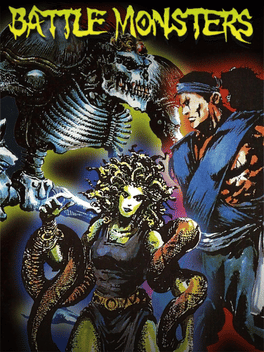
There’s a rumble in hell… and you’re invited. Twelve psychotic monsters fight fist-and-fang in the darkest, goriest head-to-head combat ever! In bone-chilling interactive, multi-leveled environments, the beasts of the undead trade clawfuls of sickening supermoves in their bid to rule the underworld. Overflowing with guts, droll and slime, Battle Monsters is multi-hit, mid-air fighting blood lust… Feeling lucky, freak?Shinobi Legions
1995
Shinobi Legions
1995
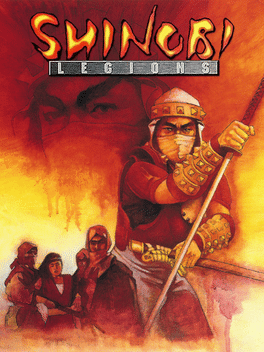
star 6Shinobi Legions, known as Shinobi X in Europe and as Shin Shinobi Den in Japan, is fifth and final game in original Shinobi series. It was developed and published by Sega in 1995 for Sega Saturn.