Most Popular Fds Games

Yume Koujou: Doki-doki Panic
1987
star 7While two children, Poke and Piki, are reading a story, a monstrous hand suddenly appears from inside the pages and kidnaps them. When the rest of the Dream Factory family hear their cries of help, they jump into the story and help save them from the evil Wart. The game was released as part of the Yume Koujou '87 event (sometimes referred as Dream Machine, in English), which was sponsored by Fuji TV, and stars its mascots. The game was edited and released as Super Mario Bros 2. Due to Nintendo of Japan feeling like their version of Super Mario Bros 2 would be too difficult and outdated by the time it got to the United States.All Night Nippon Super Mario Bros.
1986
star 7All Night Nippon Super Mario Bros. was a promotional item given out as a contest prize by the Japanese radio show All Night Nippon to celebrate its twentieth year on the air. It is mainly a graphical hack of Super Mario Bros., although a handful of levels are from Super Mario Bros. 2. Some of the games sprites have been changed to look like famous Japanese celebrities and other people related to the All-Night Nippon program.Date de Blackjack
1988
Date de Blackjack
1988
Date de Blackjack is a Miscellaneous game, developed and published by Hacker International, which was released in Asia in 1988. It is an adult blackjack game by Hacker International in which you will play a girl in poker. Upon winning enough, you will have interactions with her in which she slowly undresses.Fuuun Shaolin Kyo
1987
Fuuun Shaolin Kyo
1987
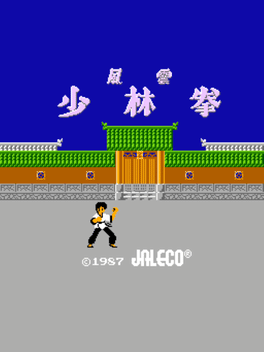
An early fighting game from Jaleco, developed for the Famicom Disk System in 1987.Fuuun Shaolin Ken
1987
Fuuun Shaolin Ken
1987
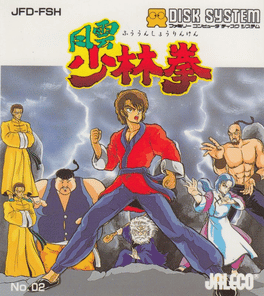
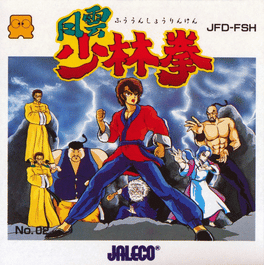
Fuuun Shaolin Ken is a kung fu fighting game set in ancient China. The player stars as a lone martial artist who sets out in a fighting tournament to defeat thirteen unique masters of their particular martial arts styles. After the first thirteen are defeated, the player will have the chance to fight thirteen more masters but the difficulty of the matches are increased.Monty on the Run
1987
Monty on the Run
1987
In 1987, Jaleco procured the rights to publish Monty on the Run in Japan on the Famicom Disk System. Rather than stay close to the source material, Monty on the Run was drastically changed for this release. Renamed Monty no Doki Doki Daisassou, or "Monty's Heart-Pounding Great Escape", the game plays much more like a straightforward NES platformer. It still retains some aspects of the original, such as a version of Hubbard's famous theme and obtaining necessary escape items.Gal's Dungeon
1989
Fuuun Shourin Ken
1987
Fuuun Shourin Ken
1987
Fuuun Shourin Ken is a 1987 one-on-one fighting game developed and published by Jaleco for the Family Computer Disk System. In 1988, a followup titled Fuuun Shourin Ken: Ankoku no Maou was released, which combined on-on-one fighting gameplay with visual novel cut scenes and choices to determine how the story plays out. This game is commonly mistaken as "Fuuun Shaolin Kyo" throughout the internet. This is not the correct pronunciation of the title in Japanese.Moero TwinBee: Cinnamon Hakase wo Sukue!
1986
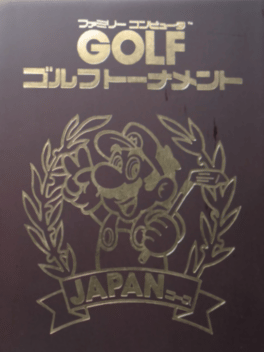
Moero TwinBee: Cinnamon Hakase wo Sukue! is the second game in the TwinBee series.Family Computer Golf Tournament: Japan Course
1987
A special release of Golf: Japan Course, given out on a golden disk to around 5,000 runners-up in a tournament involving said game. In addition, it features a redesigned title screen that removes the text "Family Computer" and adds the text "nyūshō", or "prize-winning", at the bottom of the title screen.Sutte Hakkun
The original version of Sutte Hakkun, developed for the Family Computer Disk System, presented on the Nintendo Development Seminar by the developers who would later stablish indieszero. It was never released to the public.Seiken Densetsu: The Emergence of Excalibur
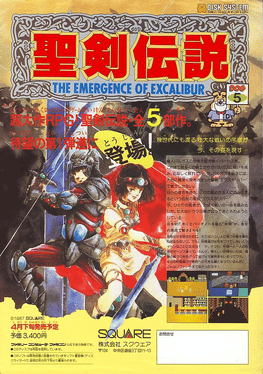
Seiken Densetsu: The Emergence of Excalibur, originally known simply as Excalibur, is a cancelled action role-playing game for the Famicom Disk System that was developed by Square, during a time when the company led a union known as the Disk Original Group (DOG). It would have been the first Seiken Densetsu title. The "Seiken Densetsu" name would not be used again until 1991 when Square released Seiken Densetsu: Final Fantasy Gaiden for the Game Boy, also known as Final Fantasy Adventure in North America and Mystic Quest in Europe; this would later serve as the start of Square's (later Square Enix's) Mana series of role-playing games.Knight Lore
1986
Knight Lore
1986
This version of the game extensively modifies the graphics and sounds. It is the only version of the game that has color graphics. While the original game took place in a dungeon, this version takes place in a forest.Palps
Palps is a cancelled Famicom Disk System game. The game would have involved a mixture of programming and gameplay. It is believed that the player would have not have been controlled by themselves, but rather that the player would program how they react to other things around them.Tonkachi Mario
1987
Tonkachi Mario
1987
Tonkachi Mario is a bootleg kaizo ROM hack of Super Mario Bros. made with Tonkachi Editor, an unlicensed code editor for the Famicom. It is currently the earliest known ROM hack of Super Mario Bros, alongside being the first hack of the kaizo genre, dating back to 1987.