Most Popular Playstation Games - Page 84

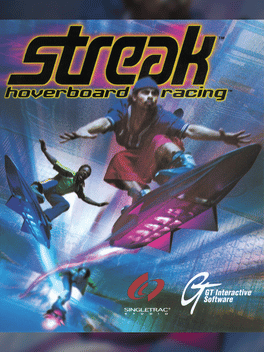
Streak: Hoverboard Racing
1998
Command your anti-gravity hoverboards with reckless abandon in Streak: Hoverboard Racing from SingleTrac. Race through a dozen levels the likes of Barnum's Alley Agua Escondido and Windway Park pulling off outrageous ticks and stunts in zero-G madness. Featuring a training mode to get everyone up to speed and and a host of beat thumping tunes to ride out the air current with. Pick form a variety of course and a smattering of scoring methods including timed, timed stunts and stunt goals. Go head-to-head or against the computer with dual shock compatibility so you can experience every bump and grind.Sports Superbike 2
2002
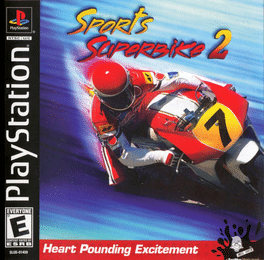
Sports Superbike 2
2002
Sports Superbike 2 lets players experience motorbike racing on 15 tracks against up to 20 computer-controlled opponents or compete against another human via split screen action. In Single Race mode, players select from Unlicensed, License A, or License B difficulty settings, with novice, amateur, or professional assistance (braking and steering). Initially, only unlicensed racing is available and the others are unlocked by taking and passing "skill tests." Race lengths include three, five, or ten laps, or a full 100 kilometers. Races in inclement weather are not available in novice mode, and many tracks are unlocked only after completing Championship mode at various difficulty settings.Soul of the Samurai
1999
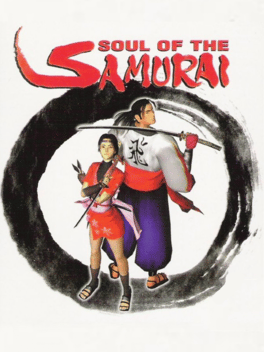
Soul of the Samurai
1999
Claim your destiny as a proud warrior and honor your ancestors in Soul of the Samurai for Sony's PlayStation. It's the end of the Edo Period in Old Japan and forces are plotting against the Shogunate. The most powerful of the Shogun's lieutenant's, Kizumi Danmasa, has made a pact with a demon to destroy him and seize control. But the forces of light are already moving against Kizumi. On the side of good, but unknowing of his role, is the samurai, Kotaro Hiba, who has returned to the village of his youth to visit his parents' grave. Things have changed, people are wary of him and his parents' grave has been ransacked. All roads seem to lead to Kizumi's castle. The story really begins when you find a young woman being attacked by unruly guards and intervene on her behalf. Enter Lin of Sekirei, Bakafu spy. After a quick scuffle with the crazed town guards, you exchange remarks and head your separate ways. This will not be the final meeting between you two...Space Shot
2001
Space Shot
2001
Shooter Space Shot is a conventional flight shooter that offers a variety of weapons and equipment including missiles, boosters, and overdrives. Players must rack up impressive scores to earn the ability to save their progress but the game is designed to adjust itself on-the-fly to present a challenge matched to the player's demonstrated skill level. Like many good traditional shooters, this release prides itself on offering enormous boss characters at the end of each level.Runabout 2
1999
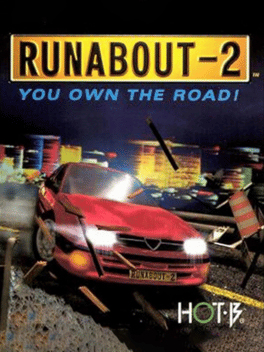
Runabout 2
1999
Sporting game developers at Hot-B deliver this urban racing game for the PlayStation. Players will pilot as many as 31 different vehicles as they work through 13 high-energy, high-stakes missions. A variety of strategies can be used to complete missions, some of which focus on speed and precision while others require banging, bumping, and violent crashes. Players may want to tune up their vehicles between missions, adjusting suspension, brakes, tires, and acceleration for spot-on performance.Rock 'em Sock 'em Robots Arena
2001
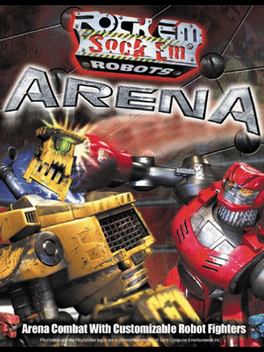
In this one-on-one fighting game based on the famous plastic robot fighters, players not only get to pit various Rock 'Em Sock 'Em Robots up against one another, they also get to customize their bots' various parts to make them even more steel-twisting and destructive than before. Players initially have 12 different robots to choose from before they head off to the arena. With names such as Slamurai, Sir Haxalot, and General Warfare, it's easy to see that Mattel Interactive is going for a bit of a tongue-and-cheek feel. While the names aren't overly serious, the fighting is less comedic, with the robots throwing all of their various armaments at their opponents in order to assure destruction. These weapons are varied, from swords to bombs to Gatling guns. Each robot starts with a different set of weapons, and depending on the mode you're playing, their attacks can be altered and switched around.Red Asphalt
1998
Red Asphalt
1998
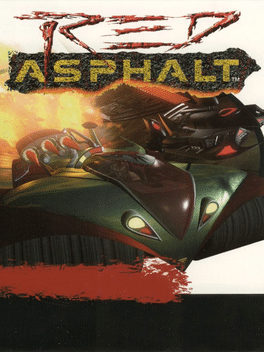
Red Asphalt incorporates both racing elements and combat. Using a skillful combination of both, your objective is to overcome your opponents and face off against Draenek in the Arena of Death -- the fifth and final world. There are 24 tracks in all, spanning apocalyptic city streets and other futuristic settings. Before your dangerous journey begins, you'll need to choose one of six different characters to play as. Each comes with three varying abilities; the driving skill affects a character's handling ability and top speed, tactical affects weapon lock-on times and aggression is that character's strength. Among the characters is the dangerous Motormouth that thrives on death and annihilation; Thula Crimstone, a future leader of the Starian Empire; Jackal, a war-torn being that wishes to destroy all those that bring war against his people; and the spiritual Hiroki. Throughout the game, they'll earn experience points that increase ability points.Razor Racing
2001
Razor Racing
2001
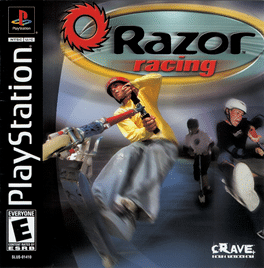
Razor Racing, the follow-up to Razor Freestyle Scooter, brings the popular sport into the realm of race competition. Combining speed with elements from the previous title, players take their scooters and hit one of three locales in an attempt to become a racing legend. Each location (city streets, mall, and an industrial compound) is composed of three separate sections. In the first round, players qualify for the race by completing three laps within the allotted time. Next, players race by challenging two other opponents in a three-lap challenge. Completing these two objectives will open up the area's skatepark, and by beating the park's overall score, a new member will be added to the racing team.DBZ: Dead Ball Zone
1998
DBZ: Dead Ball Zone
1998
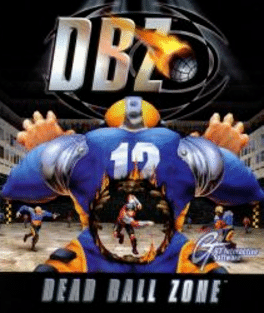
This high speed futuristic sports game pits two teams of armed psychotics against each other in a brutal (and lethal) fight to launch a ball into the opponents net over, around, or through the opponent. Players are armed with a variety of weapons (chainsaws, grenades, machine guns, etc...) and a full range of unarmed combat moves (including the good old-fashioned crotch kick) all of which can be used to defend the goal but remember, the best defense is a good offense. DBZ also has many of the features you would expect from a typical sports game including player development, league and season management, and stat tracking (scores, kills, etc...).Power Spike: Pro Beach Volleyball
2000
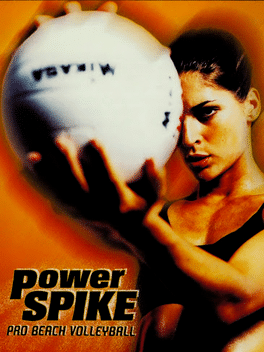
Put away that suntan lotion, because you're not going to need it for this beach volleyball game. That's not to say the action isn't hot, as you form a two-person team and battle the superstars of volleyball. Licensed by the FIVB, POWER SPIKE PRO BEACH VOLLEYABALL features over 40 real heroes of the pro circuit, such as Gabrielle Reece and Sinjin Smith. You'll play in real-life environments set in 14 different locations spanning the globe. Travel to Sydney, Osaka, Los Angeles, and lots of other great cities as you spike and dig your way to hard-fought victory. If you'd like to see how your own creations fare against the world's best, create your own player based on a list of physical traits and abilities, then pick a partner and serve it up. Real volleyball physics are in place, making every bump and spike look and feel like the real thing. The graphics and animations will rock your world as you play in several competitive modes. If you have a Multi-tap and four controllers, you can even play a four-player extravagaTomb Raider Anthology
2001
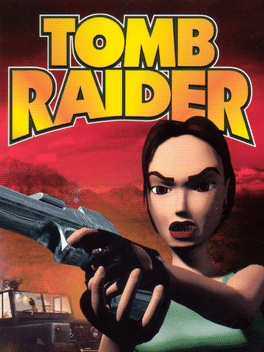
Tomb Raider Anthology is a Russian CD and DVD-ROM Compilation that regroups 8 Tomb Raider games.Duke Nukem: Total Meltdown
1997
Aliens have landed in futuristic Los Angeles and it's up to the Duke to bring the pain and show them the door. After the initial entries of side-scrolling platform games, Duke Nukem 3D introduces a first-person perspective to the series and turns the game into a full-fledged shooter with 2.5D graphics. Duke's arsenal includes pistols, pipe bombs, laser trip mines, Nordenfelt guns, a chain gun and various rocket launchers, but also his mighty foot to kick enemies. The game sports a high level of interactivity. Many objects in the environment can be broken or interacted with, such as pool tables, arcade machines, glass, light switches and security cameras. The protagonist is also able to hand strippers a dollars to have them remove their top.Hokuto no Ken: Seikimatsu Kyuuseishu Densetsu
2000
This game was released only in Japan and is based on the Manga and Anime series of the same name.Punky Skunk
1996
Punky Skunk
1996
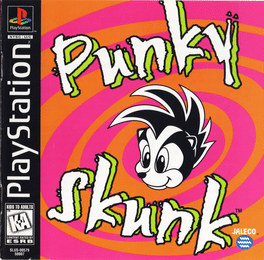
Punky Skunk is not your ordinary skunk: he's an extreme-sports loving critter trying to save his friends from a kidnapping wolf named Badler. So begins this adventure of a hip skunk and his 30 levels of platforming action, taking him through the sky, across land, underneath the ground and over water. Multiple paths and bonus levels will offer some variety in this throwback to 2D platform games of the past. In order to succeed, Punky must use various moves to fight enemies, avoid traps and find the flagpole signifying the end of the level. In addition, you'll be able to collect stars and 1-ups for extra lives, green orbs to replenish health, and gear icons outfitting Punky with one of six pieces of equipment: Paraglider, Inline Skates, Skysurfer, Pogo Stick, Jetpack or Diggers. Besides using the gear, Punky can either jump or attack enemies with his "spray." Skunk got you stumped? Not to worry, you can resume progress at the start of each cleared stage if you have a memory card.Blast Lacrosse
2001
Blast Lacrosse
2001
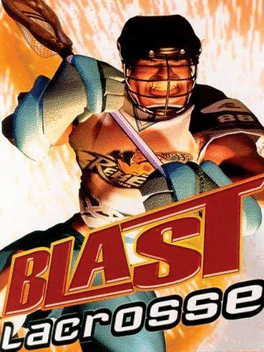
Blast Lacrosse is an indoor lacrosse video game released on May 23, 2001 for Sony's PlayStation. It is officially licensed by and based on the National Lacrosse League and includes all nine teams of their 15th season, including mascots.[1] It is also licensed by the Professional Lacrosse Players' Association. The game features in-game advertisements for Shamrock Lacrosse and STX. The cover features an Ottawa Rebel player wearing #88. This is the only lacrosse related video game ever on Sony's PlayStation: PSP, PS1, PS2, and PS3 The style of play is very similar to the arcade style of NBA Jam and NFL Blitz where, if a player scores a hat trick they become "on fire" and play better until stopped. The game is voiced by play-by-play man, and sports radio host, Scott Ferrall.TFX
1996
TFX
1996
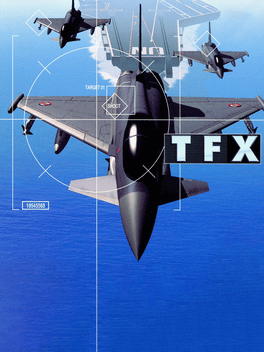
TFX - Tactical Fighter Experiment (aka TFX) was one of the precursor combat flight simulators that helped to define the standards of modern combat flight simulators, together with Tornado, F14 Fleet Defender and the Falcon series. TFX was programmed by the British company Digital Image Design and published by Ocean Software in 1993.Total Drivin
1998
Total Drivin
1998
Total Drivin is a racing game with five different classes of cars (4x4 Buggies, Dakar Rally, Sports, Indy and Rally) in six different locations (Moscow, Easter Island, Scotland, Hong Kong, Egypt and Switzerland). Each location has six different tracks to master with a total of 36 tracks. The different tracks actually are variations of the same track only slightly different. For example drive with different car type, reverse direction, ramps added or safety rails removed, different weather conditions etc. You can choose to drive with 1 of 8 different teams, each with different driving behaviour, providing 40 cars in total. There is multiplayer for 2 to 4 players, using split-screen and a link cable. The game also features typical 1990's rave music. When your car rolls over the game will turn you right side up again, but if your car drives into water or falls into lava the game instantly ends.Yusha: Heaven's Gate
1996
Yusha: Heaven's Gate
1996
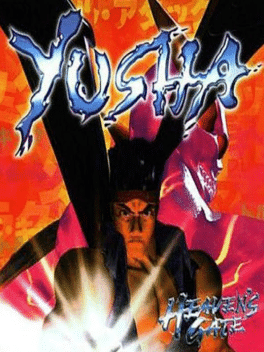
Yusha: Heaven's Gate is a 3D fighting game with an arcade and Vs. mode. The player can choose from one of the eight combatants that are available at the start, with a few more characters being available once their unlocked. Each character has a different nationality, specialty, and lineage. Each character represents either a good or an evil alignment and depending on the character chosen, it affects which final boss the player will have to fight against. Defending, punching and kicking are on three separate buttons. There are variations of each of these moves depending on how quick the button is pressed. Consistently damaging or taking damage from an opponent will add to a sol or lunar (depending on the character the player is playing as) power gauge. When this gauge is filled, the player is temporarily invincible and allows the player to use strong power assault moves.Gamera 2000
1997
Gamera 2000
1997
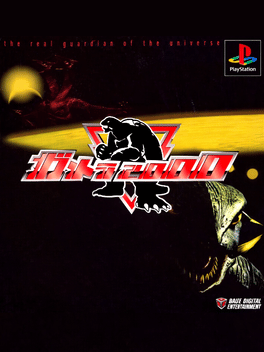
Alien monsters and other gigantic nightmares threaten earth. Fortunately for us a special force has been assigned to deal with them which includes the mighty Gamera as an ally. The game puts you in the shoes of Jack, the star pilot behind the jet fighter designed to take out these nasties. Together with Dr. Mikanuki you take to the skies as swarms of monsters attack you mercilessly through several stages. Gameplay-wise Gamera 2000 plays like Panzer Dragoon, as you don't have direct control of your jet, but instead try to aim at the incoming monsters from all directions and shoot them down while the jet follows a pre-set path. Facing bosses requires you to target specific weak points while your fighter circles around and at all times you can call Gamera to aid you by instructing it to shoot its homing attacks, as well as a charged attack that clears all enemies on screen. Some stages switch the action to ground level, as you pilot a futuristic bike, but the gameplay remains the same. Features polygonal graphics aGungage
1999
Gungage
1999
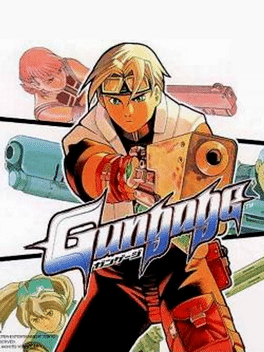
Gungage is a futuristic third-person shooter where you battle strange creatures from Dark Moon, an alternative world threatening to invade Earth. Start with one playable character and unlock three others, each with distinct traits plus unique psychic powers. The story branches differently depending on your character choice, though all use the same level layouts. Collect special powers throughout missions set in diverse environments from deserts to laboratories, facing enemies ranging from prehistoric beasts to futuristic robots and tanks. Defeat giant bosses to complete each level across easy, medium, and hard difficulty modes.