Most Popular Famicom Games - Page 14

Lin Zexu: No Smoking
1996
Lin Zexu: No Smoking
1996
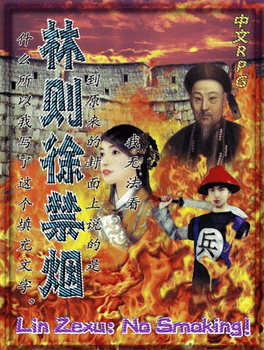
Lin Zexu: No Smoking is an Action Role-Playing game, developed by Fuzhou Waixing Computer Science & Technology, (a chinese gaming company known for making unlicensed Famicom games and other electronics), in 1996. The game was translated to English by pacnsacdave in 2017.Shikinjou
1991
Shikinjou
1991
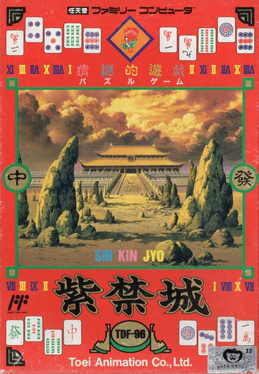
Shikinjou, or Shikinjoh, is a puzzle game inspired by Mahjong Solitaire and Sokoban. Like most Mahjong Solitaire variants, it takes its name from a region in China: in this case, the former Imperial Palace of China, also known as The Forbidden City. The goal of the game is to get the protagonist, who is a jiang shi by default, to the exit. To do this they must push mahjong tiles out of the way. Most mahjong tiles will disappear once they touch one or more of the same type, and these tiles will also vanish along with it. Some, like the dragon or wind tiles, are barricades that will transform any tile that comes into contact into another barricade. The player can also switch graphical modes, which changes all the tiles, the protagonist, and even the background and UI. These graphical modes include alternative themes like space, medieval knights, and Japanese ninja (with shogi tiles replacing the mahjong tiles).Puzslot
1992
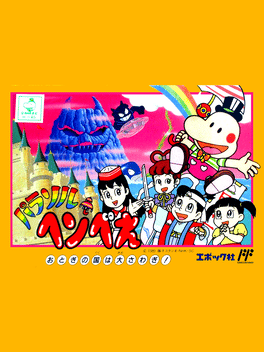
Parasol Henbee
1991
Parasol Henbee
1991
This game is based on the Anime series of the same name and was released only in Japan for the Nintendo Famicom. Not to be confused with the Game Boy title of the same name.Super Rugby
1989
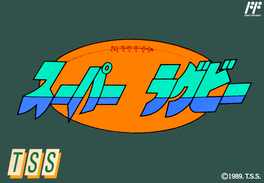
Super Rugby
1989
Super Rugby is a rugby game released for the Famicom by ZAP and TSS. Though it shares its name with the Super Rugby international rugby union, the latter was formed years after this game's release so the name is coincidental. It is also not to be confused with the 1994 Super Famicom game Super Rugby. The game uses a top-down perspective of the pitch with the two sides oriented vertically, and the player is able to assign points to various stats before playing a match to focus on certain areas of their playstyle. Options include a one-off "Training" exhibition match, a "League" game which pits the player against several CPU teams, and a "Vs." mode for two human players to compete.Karaoke Studio Senyou Cassette Vol. 2
1988
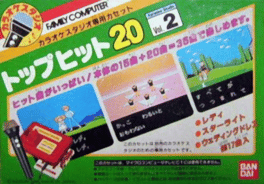
Karaoke Studio Senyou Cassette Top Hit 20 Vol. 2 is the second add-on for the Karaoke video game Karaoke Studio, featuring twenty additional songs. It cannot be played without the original cartridge and microphone peripheral. All the game modes themselves remain unchanged.Karaoke Studio Senyou Cassette Vol. 1
1987
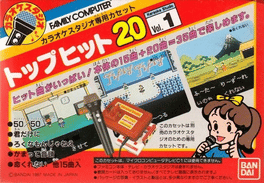
Karaoke Studio Senyou Cassette Top Hit 20 Vol. 1 is the first add-on for the Karaoke video game Karaoke Studio, featuring twenty additional songs. It cannot be played without the original cartridge and microphone peripheral. All the game modes themselves remain unchanged.Honshougi: Naitou 9 Dan Shougi Hiden
1985
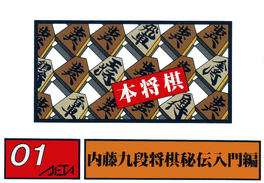
This game lets players play the Japanese board game Shōgi. Shōgi is a game that is played in a similar way as chess. Players take turns moving their pieces in a strategic manner with the main goal of capturing their opponents pieces and putting their opponents king piece into checkmate. The game features several different game modes. These different game modes offer different opponent difficultly levels, timed games, and also some which let the computer player make the first move instead of the player.Honoo no Toukyuuji: Dodge Danpei
1992
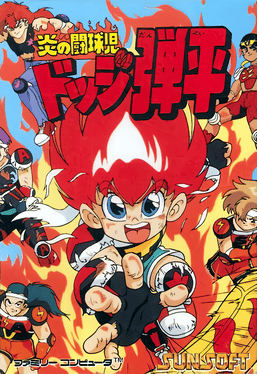
Hono no Toukyuji: Dodge Danpei is a Sports game, developed and published by SunSoft, which was released in Japan in 1992.Hanafuda Yuukyou-den: Nagarebana Oryuu
1991
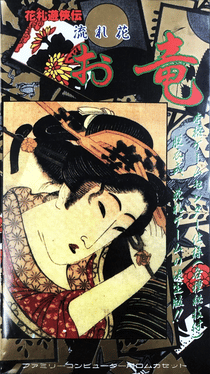
Hanafuda Yuukyou-den: Nagarebana Oryuu is a logical game with elements of erotic images. Naturally, you will see them only after victory. Hanafuda is a style of Japanese playing cards used to play a variety of games. Hanafuda translates to 'flower cards'. The name also refers to some games played with the cards.Great Deal
1991
Great Deal
1991
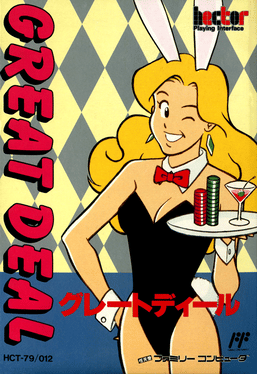
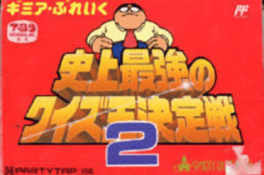
Similar to poker, your deck consists of the four different suits with values from 2 to ace, plus one joker card, so 53 cards in total. You don't hold them in your hand, though, but they fall down from the top of the screen into a play field 5 places wide and 5 places high, filling the bottom first. And your job is to arrange them into combinations such that they disappear and do not fill up the screen.Gimme a Break: Shijou Saikyou no Quiz-ou Ketteisen 2
1992
Gimme A Break: Shijou Saikyou no Quiz Ou Ketteisen 2, released for the Famicom in 1992, is the second game in a series by Yonezawa PR21 based on a real Japanese game show. This game is significantly better than the first game in the series, but also much harder. If you can't read Japanese very fast and if you are not going to cheat using save states, then this game is going to be a huge problem to beat. But it seems like a native Japanese speaking person would find this game to be a lot of fun. The game flow is the following. You choose a region of Japan that your character lives in. Then you will compete in the regional quiz championships. This is composed of a qualifying quiz that you have to get 10 questions right to pass, then you compete against the other contestants from your region that also passed the qualifying test. If you get first or second place, you will move on to the national level of the game. Again, you must pass a qualifying quiz. Then you will compete against the other contestants that made itGimme a Break: Shijou Saikyou no Quiz-ou Ketteisen
1991
Gimme a Break: Shijou Saikyou no Quiz-ou Ketteisen is a quiz game released for the Famicom (NES) in Japan, and is based on an actual Japanese game show that aired from 1989 to 1992. Players can answer trivia questions against AI or human opponents, with the ultimate goal of challenging the game's Quiz King.Gambler Jiko Chuushinha 2
1990
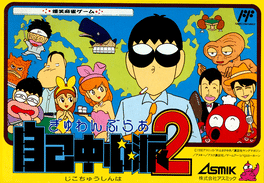
Unrelated to the titles with the same name on the Sega CD and Super Famicom, this was a direct follow-up to the original Gambler Jiko Chuushinha on the original Famicom.Little Magic
1990
Little Magic
1990
Little Magic is a Strategy game, developed and published by Data East, which was released in Japan in 1990.CrossFire
1990
CrossFire
1990
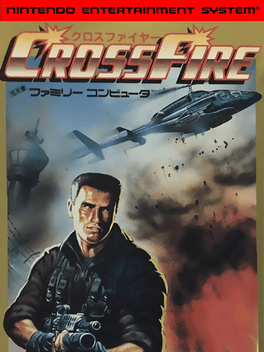
Despite sharing a name with the American release of Super Airwolf and sharing a publisher, CrossFire is a very different game; whereas the Genesis game is a top-down Commando-style run-and-gun, the Famicom game is a single-plane side-scroller, more akin to Contra with brawler implements.The Best Play Baseball II
1990
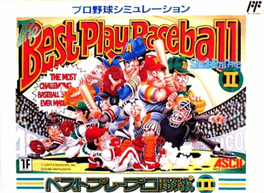
Best Play Pro Yakyuu II is a Sports game, developed and published by ASCII Entertainment, which was released in Japan in 1990.The Best Play Baseball '90
1990
Best Play Pro Yakyuu '90 is a Sports game, developed and published by ASCII Entertainment, which was released in Japan in 1990.Airwolf
1988
Airwolf
1988
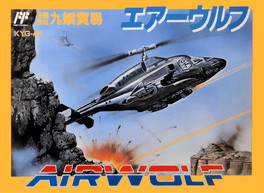
Airwolf, based on the Donald Bellisario 80s TV show about a hi-tech military helicopter solving Cold War era missions, is a horizontal shoot-em-up. Kyugo Boueki originally created it for the Arcades in 1987 and it would receive an NES home version the following year. It is not to be confused with the 1989 Airwolf licensed game from Beam Entertainment and Acclaim. The player receives their mission via an introductory cutscene, chooses the weapon load-out for the Airwolf that best suits the kind of resistance they're likely to face (so an emphasis on bombs if there's expected to be a lot of ground units) and is sent off to complete the mission. For the boss battles, the game will occasionally switch to a first-person view in which the controller guides a set of crosshairs on screen. The goal of these battles is to shoot down each element of the boss (guns, etc.) as well as any projectiles the boss sends the player's way.