New Family Computer Games - Page 32

Idol Hakken-den
1989
Idol Hakken-den
1989
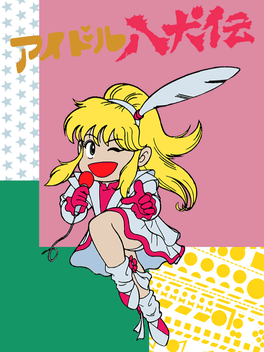
Idol Hakken-den is a Japan-exclusive text adventure video game developed by Natsume and published by Towa Chiki in 1989 for the Family Computer. Erika, an aspiring musician and pop idol, must foil a plot that could ruin her music career. As a Japanese adventure game, players must select through menus of dialogue in order to determine her future. Friends (and sometimes rivals) of Erika give her advice on what to do next. There are six songs in the game; all of them belonging to the J-pop genre. Erika must master them all in order to become the greatest idol in all of Japan. Lyrics are not sung by a voice actor; they are shown on the bottom of the screen instead.Moulin Rouge Senki: Melville no Honoo
1989
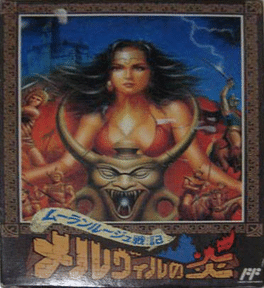
Moulin Rouge Senki: Melville no Honoo is a strategy game released in 1989 for the Nintendo Famicom. Moulin Rouge Senki: Melville no Honoo ("Record of Moulin Rouge War: Melville's Flame") is a strategy war sim with RPG elements for the Famicom. The player controls a party of heroes with an entire army under their control, and fights other armies and random encounters with monsters. To begin the game, the player must purchase and equip their army before setting out. The game's battles play out in turn-based formations, and each formation acts separately and can target different formations on the enemy's side. For instance, the archers can aim for any of the four rows of enemy forces, though front-line melee fighters are far more limited.Splatterhouse: Wanpaku Graffiti
1989
star 7.5Revived by his girlfriend's grief and a flash of lightning, Rick must chase down the Pumpkin king and save his beloved Jennifer once and for all! A parody of the bloody horror beat-'em-up Splatterhouse, Wanpaku Graffiti assumes a much cuter appearance but retains the same fast-paced action of the original.Racer Mini Yonku: Japan Cup
1989
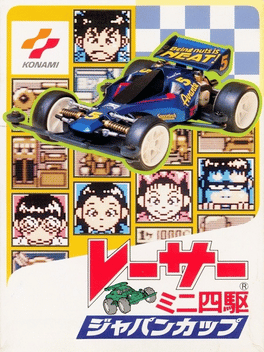
star 7A board game/racing game hybrid based on a miniature RC car toyline. It was developed and published by Konami exclusively for the Japanese Famicom. Racer Mini Yonku: Japan Cup ("Yonku" refers to four-wheel-drive vehicles) is a board game with racing sections in which the player constructs their own RC 4WD car and then races it against CPU opponents in various events, often taking terrain handling into account. It was based on the then-popular mini RC car toy fad in Japan. The title screen credits Tamiya, a Japanese toy manufacturer that focuses on model kits and RC vehicles, and their logo frequently appears in-game. The game was developed by Konami for the Famicom and was never released outside of Japan. The player and the CPU opponents take turns moving over a board and acquiring money and parts for their RC car. Money collected can also be used to purchase new parts. The players' vehicles then race automatically, with the one with the best upgrades usually coming out on top.Tenkaichi Bushi: Keru Naguuru
1989
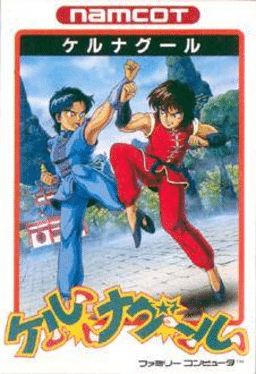
Become the strongest warrior in the world! With the support of your mother and amazing martial arts skills, roam the world to find quests and opponents to hone your skills and become the legend of fighting.Hissatsu Dojo Yaburi
1989
Hissatsu Dojo Yaburi
1989
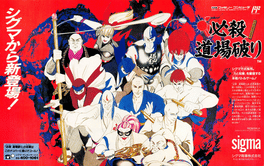
An RPG/Fighter hybrid developed and published by Sigma for the Famicom. It was never released outside of Japan. Hissatsu Dojo Yaburi is an RPG where players fight opponents in Yie Ar Kung-Fu style martial arts battles. The player needs to train for tournaments by encountering and defeating various foes, gaining XP all the while. When strong enough, they can fight a group of enemies one after the other in the tournaments that take place in towns. The player can also walk around towns interacting with friendly NPCs. This was Sigma Ent Inc.'s first Famicom game: Previously, they had only worked on Arcade games.Meimon! Daisan Yakyuu-bu
1989
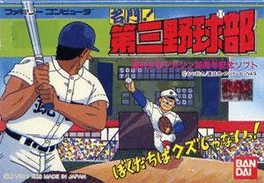
A Famicom baseball game developed by Human and published by Bandai. It superficially resembles Namco's Famista series. Meimon! Daisan Yakyuubu ("Meimon! The Third Baseball Club") is a baseball sim for the Famicom that is based on a manga and anime of the same name about an underdog highschool baseball team and the drama that surrounds them. The player can access the game's story mode, which depicts scenes from the manga, by selecting "Dramatic Mode" from the title screen menu. This also adds character portraits to the main game mode. The game itself is a fairly standard NES baseball game. The pitching/batting perspective is from directly behind the batter, and the player moves the entire group of fielders simultaneously whenever the ball is hit. Graphically, the many super-deformed athletes resemble those of Namco's Famista (the series upon which RBI Baseball was based), which was very much the leading baseball franchise at the time.Moeru! Onii-san
1989
Moeru! Onii-san
1989
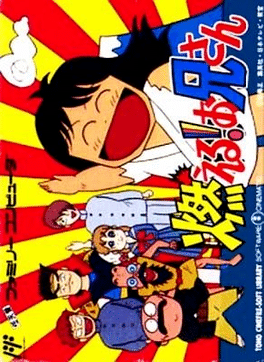
A Famicom game based on a manga of the same name. The game stars Kenichi as the main character, while featuring Hidou, Rocky, and Shiranui as playable characters in some levels. The goal of the game is to rescue Yukie from a dragon simply named Dra Gon. The game was re-branded with a circus theme and released in North America under the name Circus Caper, also published by Toho. The RPG element with the final boss was removed, the stages and bosses are in different order, and many graphical and musical changes were made to better resemble a circus theme.Cosmic Wars
1989
Cosmic Wars
1989
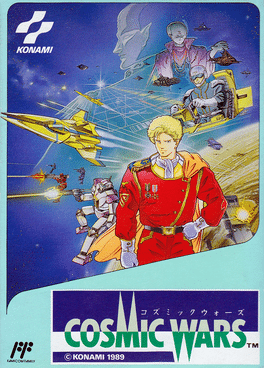
Cosmic Wars (コズミックウォーズ Kozumikku Wōzu?) is a turn-based strategy video game produced by Konami in 1989 which is based upon the characters and conflicts of the popular Gradius series. It was released only in Japan. The game received a sequel in 1997, with Paro Wars, which is the Parodius equivalent of this game. The object of Cosmic Wars is to utilize an army composed of Gradius characters (Vic Vipers, and Big Cores) and battle enemies in various star systems. The player can be either the Bacterion Empire or the forces of Gradius. There are many different unit types, ranging from small fighters to large capital ships.Famista '89: Kaimaku Ban!!
1989
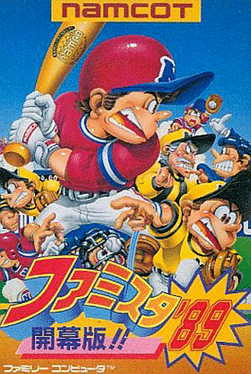
Famista '89: Kaimaku Ban!! is a Sports game, developed and published by Namco, which was released in Japan in 1989.Shin Moero!! Pro Yakyuu
1989
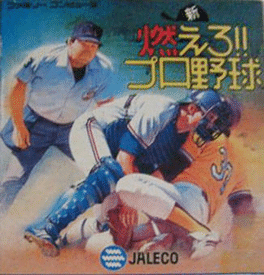
The third game in TOSE/Jaleco's NES Baseball series and the sixth Moero game overall. Though most of the Moero!! Pro Yakyuu games were released in the US as Bases Loaded, this one was not. Shin Moero!! Pro Yakyuu (New Burning!! Pro Baseball) is the sixth of Jaleco/TOSE's Moero!! series of sports games (it's occasionally referred to as Moero 6!! Shin Moero!! Pro Yakyuu) and the third in the series to be associated with baseball. The first two Moero!! Pro Yakyuu games saw localizations in the US as Bases Loaded and Bases Loaded 2, but Shin Moero!! Pro Yakyuu was skipped. What eventually became Bases Loaded 3 was instead the fourth Moero!! Pro Yakyuu game, Moero 8!! Pro Yakyuu '90 Kandouhen. The biggest difference between the previous Moero!! Pro Yakyuu/Bases Loaded games and this one is the slanted perspective for batting and pitching. Instead of the camera being behind the batter or pitcher, the player can see both from an angle, with the two situated diagonally from each other. Likewise, the baseball diamond is sOishinbo: Kyuukyoku no Menu 3-bon Shoubu
1989
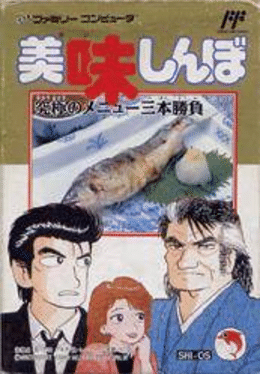
Oishinbo: Kyuukyoku no Menu 3-bon Shoubu is an Adventure game, developed by TOSE and published by Bandai Shinsei, which was released in Japan in 1989.Perfect Bowling
1989
Perfect Bowling
1989
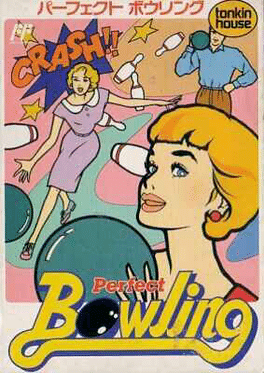
Perfect Bowling is a Japan-only Famicom bowling game, in which the player competes with other computer opponents. Each of the opponents has their own name, appearance and style of play. The game seems to take place in the future, with lanes restocking pins with lasers and certain characters dressed in strange, futuristic (or at least an 80s interpretation of futuristic) fashions. This is a complete departure from its box art, which seems more reminiscent of the 1950s and 60s. The game allows for a lot of precision-based options in order to bowl effectively. This includes rotating the ball to put spin on it, selecting the power and hitting the power gauge just right. The player can also select which hand they favor and the weight of the ball during the character creation process.LaSalle Ishii no Child's Quest
1989
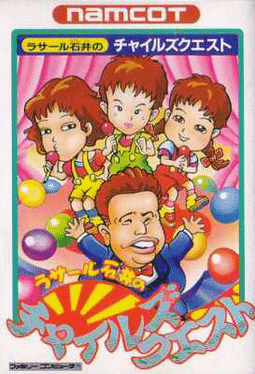
LaSalle Ishii no Child's Quest is a Role-Playing game, developed and published by Namco, which was released in Japan in 1989.Kyuukyoku Harikiri Stadium: Heisei Gannen-ban
1989
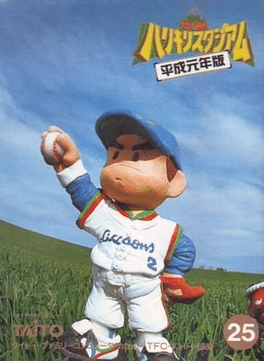
Kyuukyoku Harikiri Stadium Heisei Gannen-ban is a Sports game, developed by WinkySoft and published by Taito Corporation, which was released in Japan in 1989.Igo Shinan
1989
Igo Shinan
1989
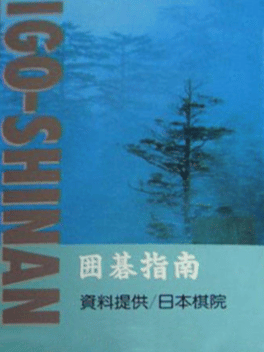
A Go simulator from Hect for the NES. It would be followed with four annualized sequels.Murder Club
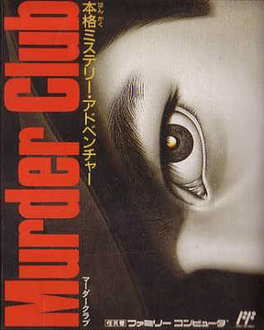
1989
Big TV Mary Bar
1989
Big TV Mary Bar
1989
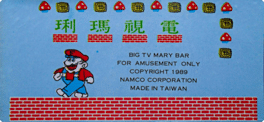
Big TV Mary Bar is a Famicom game based on the Taiwanese "Xiao Ma Li" gambling machines in 1989. It is well-known for featuring Fortran (who is based strongly on Mario) and the phrase "Push Start To Rich". The objective of the game is to gain as many credits as possible, mainly through betting on the numerous icons you'd find on a slot machine.Keiba Simulation: Honmei
1989
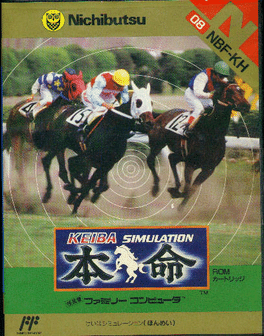
A horse racing simulation game from Nichibutsu, developed for the NES in Japan only. Keiba Simulation: Honmei ("keiba" is the Japanese word for horse-racing, and "honmei" is a term meaning a favorite to win) is a Famicom horse-racing simulation game from Nichibutsu, often known as Nihon Bussan. In fact, the box art states the former as developer and the title screen states the latter. As a true simulation game, there is no racing (at least that the player can control) or gambling. The player instead can fiddle with the parameters for each race and the horses competing, changing their stats such as fatigue, age and the weight of the jockey. Then players can watch a race with these settings play out and observe the winner. It is possible the goal of this game is to recreate the likely output of an actual race based on as much information as the player is able to muster in order to assist them with their gambling, though its more likely the game is for racing enthusiasts.Dragon Buster II: Yami no Fuuin
1989
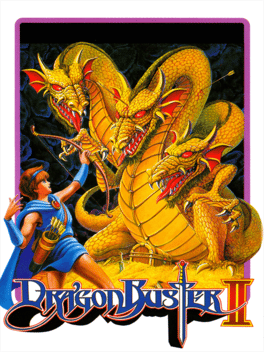
Centuries ago, Dragons and Demons roamed the country and brought terror into the lives of all people. However, a local legend states that the Sword of Thruth can restore peace to the land. It turns out that the almighty weapon is kept by the most ferocious dragon who ever lived but this doesn't stop the young Carl from willing to take on the challenge. He is small but the best archer the land has ever seen!