New Games - Page 11134

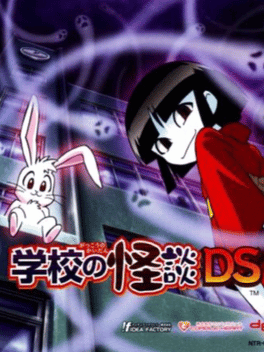
Gakkou no Kaidan DS
2008
Gakkou no Kaidan DS
2008
Gakkou no Kaidan DS is a game of the Gakkou no Kaidan Game Series. It was released only in Japan in July 17, 2008 for the Nintendo DS.Gundam Battle Universe
2008
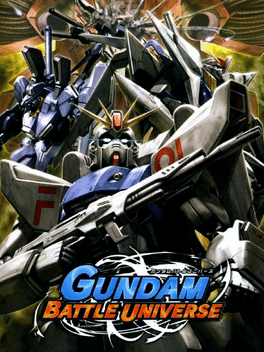
The fourth sequel of Gundam Battle series was released on July 17, 2008 in Japan. It features over 200 MS units (including F91 in Mobile Suit Gundam F91 and Ξ Gundam in Mobile Suit Gundam: Hathaway's Flash) can be selected; two UC stories (Mobile Suit Gundam ZZ and Mobile Suit Gundam: Char's Counterattack) become as a part of the campaign. On the other hand, every characters have 2 personal abilities (passive which is activated for all times and additional which is activated when player's HP gauge is at 30%). This game can inherit the Gundam Battle Chronicle's save data. The game also let players use the adhoc function to help each other in the normal campaign mode, unlike the previous games, which multiplayer mode is only available in the main menu.PapiJump
2008
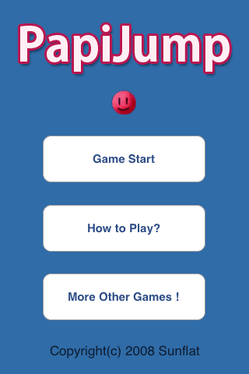
PapiJump
2008
PapiJump is a simple (yet addictive) platforming game. Mr. Papi wants to go higher! Tilt your device back and forth to make sure he doesn't fall off of the moving platforms.The Political Machine 2008
2008
star 7.9Take your place inside the Political Machine. Tackle today's most controversial issues, battling your opponents for the hearts and minds of the American voter. Only you can take your candidate all the way to the White House.Dragoon X Omega II
2008
Dragoon X Omega II
2008
Centuries ago, the hubris of man led him to tamper with the realm of the gods, and a pestilence swept the land. Some fled to the south, building a great wall to seal themselves away. . This land came to be known as Hylis. The Shogonite are the Warrior class of Hylis, gifted in arms and PSI. They are led by two generals: Sargon and Tyris. The loggers began to vanish near Endengard, it was Sargon who was sent to investigate on behalf of Lord Higa. In the forest north of the town, Sargon and his men were ambushed in the night by a horde of strange beasts. At the brink of victory, his own men turned upon him, and he was forced to kill every one of them. Barely surviving this ordeal, Sargon made his way back towards Hylis Keep, to tell Lord Higa of This grave turn of events. So it began.Dragon Quest V: Hand of the Heavenly Bride
2008
star 7.7Dragon Quest V uses basic role-playing video game mechanics seen in the rest of the series, which includes leveling up by gaining experience points through battle, first person turn-based battles, and equipping weapons and armor. Something new to the Dragon Quest series is the ability to tame monsters into the player's party. The monsters can be used in battle and level-up like the human characters. Monsters sometimes request to join the Hero after battles if the party is strong enough. There are a total of 71 monsters that are capable of joining the Hero's partyLode Runner
2008
Lode Runner
2008
An unreleased version of the game for the Atari Lynx was discovered in 2008 on an old Atari Corp. hard drive and was eventually released by Video 61. The Bungeling Empire has stolen a huge cache of gold from its rightful owners, and your mission is to infiltrate its treasury and recapture it. This entails progressing through 150 screens of platforms, ladders and ropes. The Empire has sent robotic guards down to protect the gold, and contact with any of these will cost you a life. Your method of escaping them is to press fire to dig a hole in their line of movement, thus causing them to fall in briefly, allowing you to move across the gap safely. Once all the gold has been collected, a ladder allowing you to move onto the next screen is added. Completing these screens often requires forward planning and precision.EA Sports Fantasy Football Live Draft Tracker
2008
The Live Draft Tracker imports league and team information from the website, tracks the draft, and then uploads completed draft results back to the website saving the commish a lot of time and effort. Live Draft Tracker is packed with EA Expert analysis on the top players in the draft and highlight videos from Madden NFL 09.Double D Dodgeball
2008
Double D Dodgeball
2008
star 4Double D Dodgeball is a topdown retro style dodgeball game developed by YUKE'S Co. Ltd. exclusively for Xbox Live Arcade.Sift Heads 0: The Starting Point
2008
Sift Heads 0: The Starting Point is a free sniper game. Vinnie's adventure begins when his evil cat rips Teddy's head off. Pick up a gun and shoot the evil cat to avenge Teddy`s death. Show no mercy!Defender of the Favicon
2008
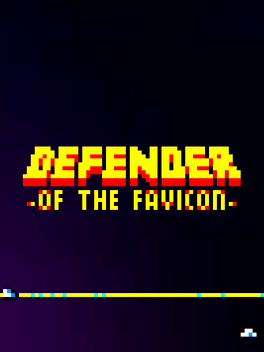
The menace come from above! Protect the humanoid population from the waves of aliens coming to abduct them. Thankfully the shield of your Defender can take a few hit.Space Chimps
2008
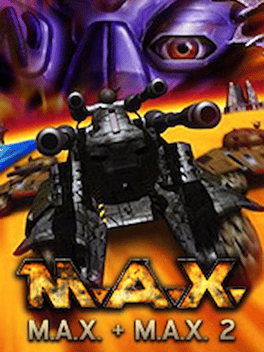
M.A.X. + M.A.X. 2
2008
Super Stardust HD Team Add-on Pack
2008
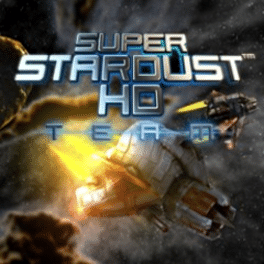
This is an upgrade pack for Super Stardust™ HD. You must already own the full title to make use of this upgrade. Give your trigger finger a boost with the new Team Pack! Team Pack features Split-Screen Versus mode and Split-Screen Co-op for Super Stardust™ HD, the reinvigorated, High Definition version of the asteroid-blasting format that’s been a classic since the early days of video arcade games. Split-Screen Co-op allows players to work together at blasting the asteroid menace, while Split-Screen Versus features game modes including ‘Deathmatch’ and ‘King of the Hill’ for up to four players. The pack also features a Ship Editor feature that allows gamers to customize their spacecraft, as well as enhanced visual effects.NCAA Football 09: All-Play
2008
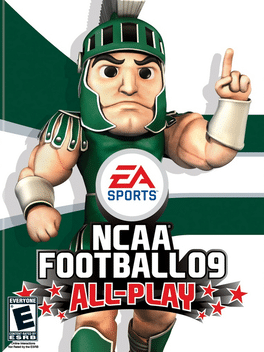
NCAA Football 09: All-Play debuts on the Wii with stylized gameplay that is quick and easy for fans to jump in and out of great head-to-head action. The game features All-Play controls, a multiplayer social experience that allows novice users to compete against advanced players and still enjoy success. All-Play controls are designed for the more novice fans, but also feature a traditional default setting for the more seasoned veterans. NCAA Football 09: All-Play features nearly 200 schools.Die2Nite
2008
Die2Nite
2008
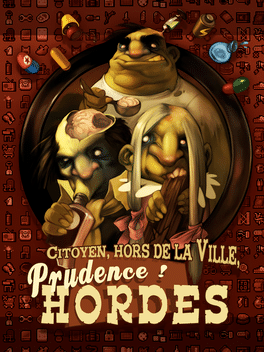
Browser-based game where you play a survivor in a town of 40 players, where you will have to work together to survive the longest possible against the relentless waves of zombies attacking every night. You have a pool of action points each day, that you can spend to improve the town, gather resources, explore the surroundings etc. Teamwork is the key to build the vital improvements the town will need to survive. Rogue-like elements allow you to unlock perks that you will be able to use in your following games.PopCap Hits! Vol 2
2008
PopCap Hits! Vol 2
2008
star 8A second disc of PopCap classics released for the PlayStation 2, containing Zuma and Heavy Weapon.Underwater Attack
2008
Underwater Attack
2008
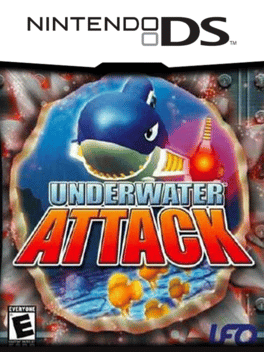
Humanities last hope against the Chaos Empire, control a top-secret attack fighter and destroy the Crimson Star.