New Games - Page 12121

Namco Museum
2001
Namco Museum
2001
star 6.3Namco Museum packs five historic arcade games into one retro gaming package: Ms. Pac-Man, Galaxian, Galaga, Pole Position and Dig Dug.Rayman Advance
2001
Rayman Advance
2001
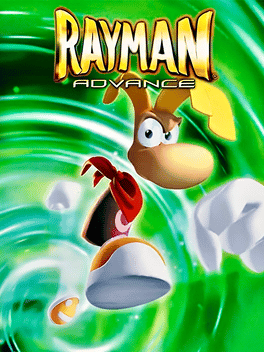
star 7.7Rayman Advance is a GBA game. It is basically a port of Rayman 1, however bears some minor changes. The evil Mr. Dark has stolen the Great Protoon, kidnapped all of the Electoons and defeated Betilla the Fairy. Rayman has to travel through 5 worlds before finally meeting up with Mr Dark and defeating him.Iridion 3D
2001
Iridion 3D
2001
In the distant regions of our galaxy, far beyond the darkest limits of the Orion Nebula, a deadly force has bee unleashed upon the universe and is heading straight for Earth. Get ready to travel forward to a time, when the fate of the universe rests in the palm of your hands! - See more at:Army Men Advance
2001
Army Men Advance
2001
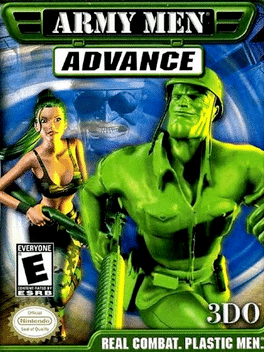
star 7Plastro, the infamous leader of the Tan Army, has recruited alien forces from another world to aid in his ongoing war against the Green Nation. It's up to Sarge and Vikki G. to jump into action to save their troops from a variety of unknown enemies, and then track down Plastro himself for a final confrontation!Yami no Koe
2001
Yami no Koe
2001
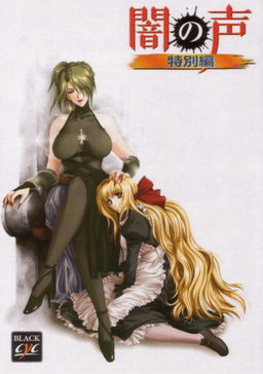
A group of six people--two teachers, two male and two female students--rents a yacht, only to find a stowaway, a girl named Tachikawa Nanami. Shortly after, violent seas wreck their ship and force them ashore an island. What are the intentions of the beautiful woman named Sayoko and her maid K, who offer them shelter in her mansion until the ferry arrives in 30 days? What are Nanami's intentions? Time is running out.Candy choppers
2001
Candy choppers
2001
The first released Heretic level for Paul Corfiatis, replaces E2M1 and is very smallLittle Shaker: Summer Adventures
2001
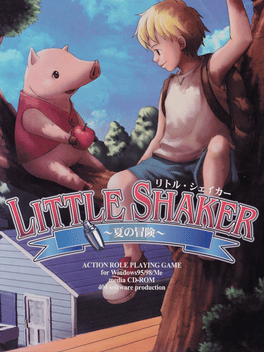
A young boy named Cliff spends his dull vacation at home in Ritztown, a village on the outskirts of Clank City. One day, though, the family receives a mail-order package that would change his life. Using this new magical shaker and recipe book to synthesize items with various powers, Cliff concocts a medicine that turns the lonely village elder's pet pig into the speaking bipedal Piggy! This gives Cliff the courage to continue helping his neighbors and exploring the wider world. It was the most exciting vacation he'd ever have. Little Shaker is a 2001 Windows action-RPG where you play as Cliff, adventuring around Ritztown, Clank City, and various locales as his summer goes from boring to bombastic. You collect ingredients and key items to create new ones using the titular tool, then use them to solve puzzles and complete quests. The game has you exploring a world of Americana, from grassy overworlds to many "dungeons" like the Ritztown cemetery. Talking to NPCs not only advances your connections with them, but wilGilbert Goodmate and the Mushroom of Phungoria
2001
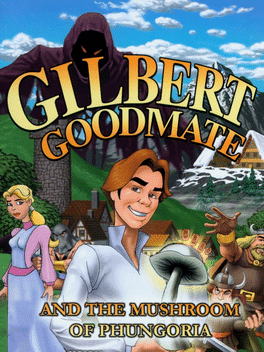
star 8A 2001 point-and-click adventure game, re-released on Steam on June 23, 2015.Inspector Gadget: Gadget's Crazy Maze
2001
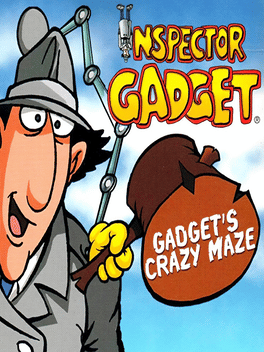
star 5.1Inspector Gadget: Gadget's Crazy Maze isn't the type of game one would expect when taking on the role of the bumbling, multi-functional detective of the 1980's cartoon. Rather than an action title like its Game Boy Color counterpart, this incarnation of Inspector Gadget is best described as a puzzle game with limited action elements. According to the story of Gadget's Crazy Maze, Inspector Gadget's mysterious arch-nemesis is up to no good once again. This time, the MADD ringleader Dr. Claw has been creating mind-control crystals on his secret moon base, then tossing them down to Earth. If the crystals lay dormant for a short amount of time, they will activate, taking control of the consciousness of the whole world. To make sure no one disturbs them, Dr. Claw has spread them all around four different areas and inserted his vile henchmen to protect them.3D Game Pack
2001
3D Game Pack
2001
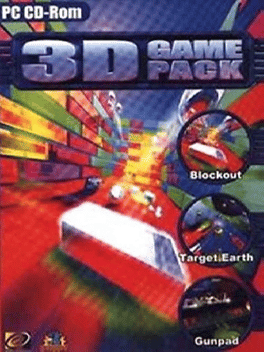
3D Games Pack contains this three games from Megaware: - 3D Blockout - Target Earth - GunpadTiteuf
2001
Titeuf
2001
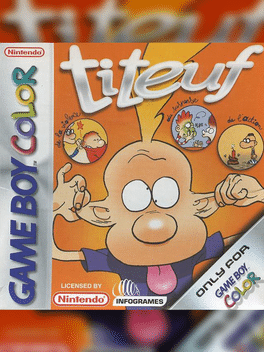
Titeuf is a party game for Gameboy. Nadia's picture was torn to thousand pieces. So you go on a treasure hunt with your friends. For each successful challenge, you win a piece of the picture. Playable alone or in multiplayer, 21 minigames are waiting for you.Dance Dance Revolution ExtraMix
2001
This "Extra Mix" follows the tradition of other Dance Dance Revolution titles: players have to press (or dance to) the corresponding arrows that scroll across the screen. A wide selection of techno and club music comes on this release: roughly fifty songs are available either from the start or by accomplishing specific challenges. Dance Dance Revolution: Extra Mix features the standard Solo as well as Diet, Training, Challenge, Endless and "Nonstop Order" modes.Phantasy Star Online Ver. 2
2001
star 8.9The realm of Phantasy Star Online has increased. Phantasy Star Online Ver. 2 includes all of the original content, and expands the world with more levels, more features, and more evil to combat. Master the Ultimate Difficulty setting, survive the Challenge Dungeon, and reign as the champion of Battle Mode. The evolution of the original revolutionary gaming experience continues.Maken Shao: Demon Sword
2001
Maken is a man-made life form created to delve into the human soul and cure mental disease. Take control of this creature in an adventure that takes you across the globe in a battle against a terrorist organization led by a Chinese god. A 3D action adventure - Maken Shao lets you possess the bodies of key game characters, unlocking their memories and special attacks as you struggle to uncover who is behind a sinister conspiracy to change the fate of humankind forever.Gangsters 2: Vendetta
2001
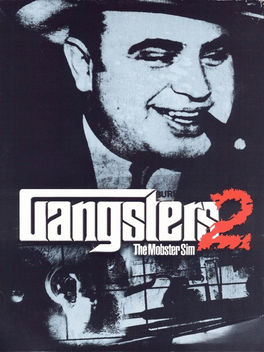
star 9Set from late 1928-early 1929, the game follows a character called 'Joey Bane' whose nickname is decided by the player e.g. Joey 'Scarface' Bane. The character's father is murdered at the beginning by a mob controlling most of New Temperance, the leader of the mob is Frankie 'Hammer' Constantine. The player progresses through the game by defeating different gangs and gang leaders that are all connected to the killing of Joey Bane's father.Capcom vs. SNK: Millennium Fight 2000 Pro
2001
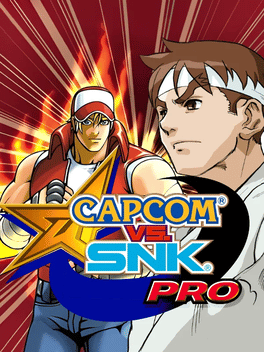
star 7.8An updated version of the original Capcom vs. SNK titled Capcom vs. SNK Pro was released on the Arcade Sega NAOMI GD-ROM hardware (2000), Dreamcast (2001) and PlayStation (2002), the latter suffering from slight load times between rounds and downgraded graphics and sound due to hardware limitations. New additions included Joe Higashi (from Fatal Fury) and Dan Hibiki (from Street Fighter Alpha), new moves for existing characters, and new modes of play.WWII Online
2001
WWII Online
2001
star 7.2WWII Online isn't just another WW2 game—it's a massive, player-driven battlefield where your tactics and strategy shape the outcome of a global conflict. Dive into the action on a single server capable of holding thousands of players, hosting epic World War II battles. Join our dedicated community, form your squad, and experience the most immersive and authentic WWII combat simulation ever. OVERVIEW OF WWII ONLINE World War II Online is a Massively Multiplayer FPS simulation game set in the Western Front of WWII. It’s hosted on a huge single map, and there’s virtually no limit to the number of players who can join the battlefield and fight as infantry, tankers, pilots, or captains. BEWARE: WWII Online is a simulator classified as a serious game with a mature community. You cannot play this game solo; cooperation between all online players is required to create action and achieve objectives. The game recommends at least 10 hours of practice, sticking with game veterans or an active squad. Ideally, your gameEldorado Gate Volume 5
2001
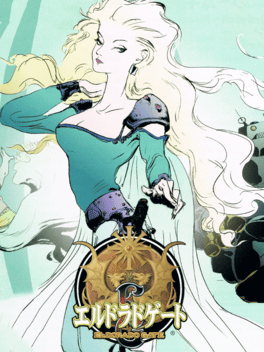
El Dorado Gate is console gaming's first serial RPG series, where each Dreamcast GD-ROM contains 3 seperate (though interrelated) adventures, each telling a story of one of the series' 12 characters. There's 7 volumes in all, the first few introducing the characters whilst the later volumes flesh out how their stories are related, leading to the finale. Part of Capcom's experiment of serializing an RPG over a year with one part every other month.