New Games - Page 13605

Monkey Academy
1983
Monkey Academy
1983
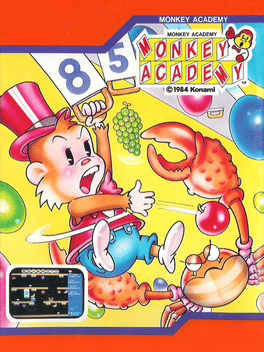
This platform game is about solving arithmetic problems. In the equation one number is missing, you 'll have to find the right number. This game is aimed at young children to help them learn arithmetic problem solving or playing with numbers. Some monkeys are minding their own business when they see a number missing from their arithmetic problem. Who took it? Another monkey, a crab? And where could it be? The only way to find that out is to go looking for it. Guide your monkey across the screen and up and down platform levels. Watch out for the crab! If its claws bite you, you lose a monkey. Jump up and pull down shades to find the missing number. When you find it, catch the number bar. Then send it up to your helper monkey. Find three missing numbers and earn bonus points!Paris Attack
1983
Spider Kong
1983
Spider Kong
1983
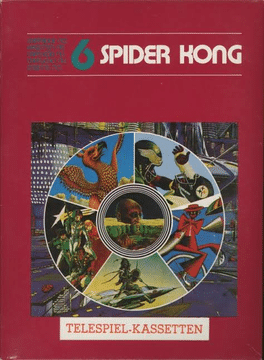
Spider Kong shares very similar gameplay to Donkey Kong, where the player is required to climb ladders and avoid obstacles to get to the top. In Spider Kong, however, the enemy throwing objects at you is not an ape but a giant spider.Pepsi Invaders
1983
Pepsi Invaders
1983
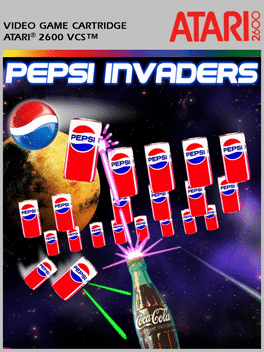
This is one of the more interesting Atari collectibles. Coca-Cola commissioned a game from Atari to give to their Atlanta employees. In this case, Atari redesigned Space Invaders so that you shoot the letters "P E P S I" instead of space creatures. There were 125 copies of this game made. There is no real box for this one, just a flimsy Styrofoam shell. So it isn’t really a prototype, but it wasn’t a commercially available game either. And no, Coca-Cola does not have any copies left.Quadrun
1983
Quadrun
1983
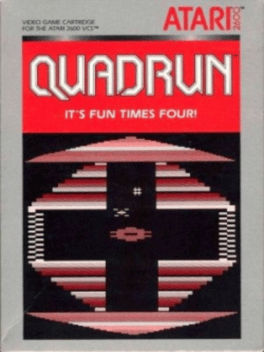
Go around the edges of the screen to shoot up at the Captors, rescue Runts, and catch your bullets in this very difficult, and equally rare 2600 action/shooter.Parachute
1983
Apples and Dolls
1983
Apples and Dolls
1983
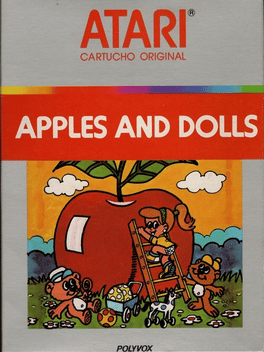
Apples and Dolls is a bootleg versions of "I Want My Mommy" and "Open Sesami". You must construct ladders to get to the apple at the top of the screen and advance to the next level. Catch the magic dot that flies around the screen to knock out the enemies.Pac-Kong
1983
Pac-Kong
1983
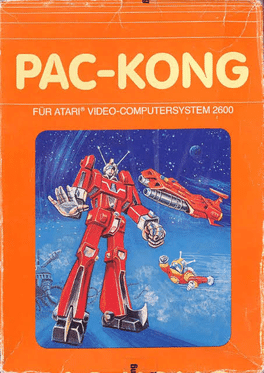
Pac-Kong plays very similar to Donkey Kong. The player controls an "adventurer" (called Kong in some versions of the game) and has to reach the treasures the evil octopus hid away. Each level consists of a series of platforms that are interconnected by ladders. The only action the player can take besides moving around is pressing fire to make the hero jump. This is necessary to get across the gaps between some of the platforms. At the same time, the player has to avoid the smaller octopi as well as clouds of poison gas which move around the screen randomly. Once the player reaches one of the treasure chests at the top of the screen they won the level and a new round starts.Phantom Tank
1983
Phantom Tank
1983
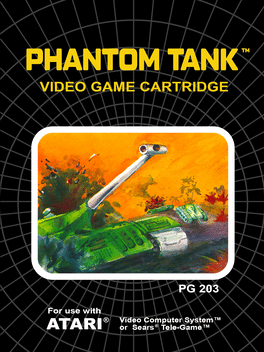
In Phantom Tank (German: Phantom-Panzer), the player takes control of an assault vehicle in order to defend their "energy base" at the bottom of the screen from the attacking phantom tanks. The game consists of three phases: the first phase takes place in a city and looks like a maze. It offers relative protection with the building walls. The second phase has the enemy tanks crossing two bridges over a river, but there's practically no cover. In the third and final phase, it's an all-out battle with the phantom tanks aggressively charging in on the player's base and no obstacles to stop them.Boomer Rang'r
1983
Boomer Rang'r
1983
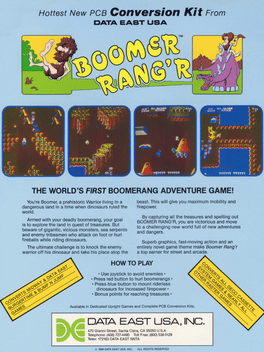
A caveman runs around tossing his boomerang at enemy cavemen and prehistoric creatures. Pick up potions to spell out BOOMER RANG'R to move to next level. For even more fun, kill a dinosaur rider and mount his dinosaur!Regulus
1983
Regulus
1983
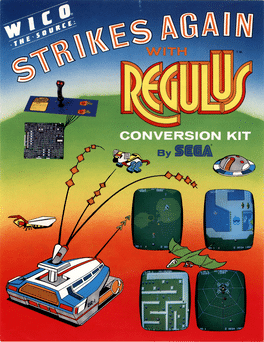
Regulus is an arcade shoot-'em-up game released for Sega System 1 hardware in 1983. Players control a tank, capable of moving in eight directions. One button fires forward, while another launches bombs further up the screen. The play area continuously scrolls upwards and players need to avoid enemies and obstacles.Senjyo
1983
Senjyo
1983
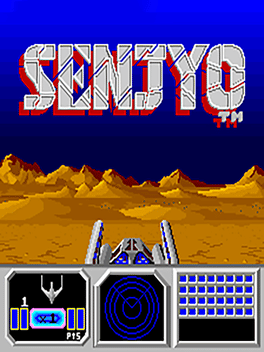
The title of this game translates from Japanese as 'Battlefield'. The simple gameplay involves the player controlling a fixed turret on a tank shooting oncoming alien enemies through a cross-hair target. A certain number of enemies must be destroyed to progress to the next stage. The original arcade cabinet was a cocktail table.Mega Zone
1983
Mega Zone
1983
This game has flavors of several different video games rolled into one. It is mostly like Xevious, being an overhead shooter against a plethora of enemies, each with a unique characteristic. Unlike Xevious, however, that only allowed you to travel in one straight path, Mega Zone periodically allows you to choose different paths. For most of the game, the player's ship flies along a river. When the river forks, the player has the option of following either fork. The game also has elements of Scramble, in that the player fights through numerous zones in the struggle to reach the end. Where Scramble has a progress bar at the top, Mega Zone gives the player a map, and shows the player the progress along the map between lives. The main enemies of Mega Zone are giant robot eyeballs. Easily enough destroyed, they still pose a menace. Smaller eyeballs leave teardrops when destroyed, which when picked up, give bonus points and wipe out all enemies on the screen.The Glob
1983
Q*bert's Qubes
1983
Q*bert's Qubes
1983
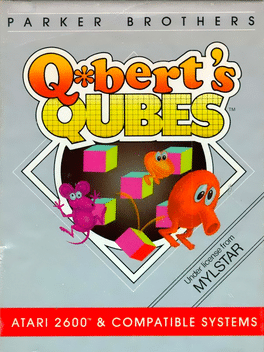
The game features Q*bert, but introduces new enemies: Meltniks, Soobops, and Rat-A-Tat-Tat. The player navigates the protagonist around a plane of cubes while avoiding enemies. Jumping on a cube causes it to rotate, changing the color of the visible sides of the cube. The goal is to match a line of cubes to a target sample; later levels require multiple rows to match.Fax
1983
Fax
1983
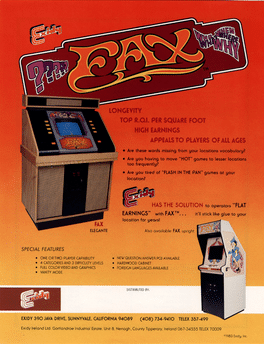
Fax is a trivia game which asks questions about a number of topics, including: General Knowledge, Sports, History and Entertainment. This was released by Exidy in 1983 and written by Vic Tolomei and Larry Hutcherson hopeful to play on the Trivial Pursuit craze as it was released over a year earlier than the registered Trivial Pursuit versions (produced by Bally/Sente). The game came in what was essentially a jukebox cabinet (complete with a woodgrain finish), which lent itself to possible markets outside of the typical arcade setting. It had a 9-inch monitor mounted in the center, logo on the bezel itself and a row of buttons on each side of the screen to accommodate two player simultaneous play. Fax used unique compression to hold nearly 3700 questions in as small of storage as possible. Exidy also sold several EPROM replacement kits that provided new questions but they are nearly impossible to find today.Mouser
1983
Mouser
1983
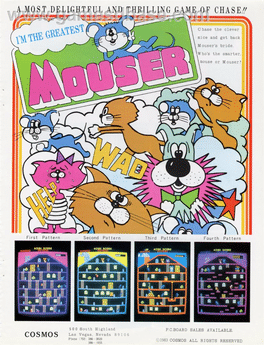
Mouser is UPL's answer to Nintendo's Donkey Kong. As the cat protagonist, you must rescue your sweetheart from a gang of bad mice. Your girlfriend is held captive on the top of a series of platforms, and before you can reach that platform, you must capture a number of mice, after which a ladder to the top appears. The mice will try to hinder you by throwing items at you; on the first level, they throw flower pots, later on they throw spanners and bombs. Also spread out on the levels are fish, which will speed you up and grant you limited invincibility.Dingo
1983
Dingo
1983
Big Ted the koala is so fond of fruit that he has cultivated an enormous melon patch in the jungle. But unfortunately the patch has been invaded by a pack of evil dingoes that love nothing more than stomping on poor Ted's melons and creating a lot of havoc in the process. Big Ted has to harvest the fruit as fast as he can to save them from the invading marauders. Big Ted has to run around the melon field to collect all the fruit to advance to the next level. Meanwhile he has to avoid the nasty dingoes who will terminate him upon contact and take away one of his three lives. Ted can defend himself by picking up fruit to throw at the Dingoes to stun them for a few seconds, but the dingoes can also pick them up and throw back at him, which can prove fatal. Thrown fruit is wasted and thus can not be used as further projectiles or to increase the score.3D Time Trek
1983
3D Time Trek
1983
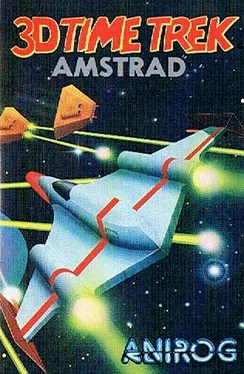
The protagonist is one of the few survivors of the attack on the Corillian planet by alien pirates. Driving a well-equipped spaceship with long-range sensors, he hunts down pirates, whose forces consist of spaceships scattered across a sector of space.Demon Knight
1983