New Simulator Games - Page 423

Hamster Paradise 2
2000
Hamster Paradise 2
2000
Give the hamster you got a cute name. Basically care! If you grow up lovingly, your hamster will grow bigger and bigger. Grow carefully by feeding and taking a walk. If you take a walk with your hamster, there will be many events. You can get money by clearing the mini game. Use this money to buy food, toys, and birdhouses for your hamster. Hamsters can get married when they grow up. If you grow your hamster well, new species may be born.AIV: A-Ressha de Ikou 4 - 15th Anniversary
2000
As a celebration of their 15 year anniversary, Artdink re-released a few games as a 15th anniversary edition. This re-release of AIV was programmed to run on Windows 98 as well as previous versions, which hadn't been able to play this game prior.Train Simulator: JR Higashi-nihon Keihin Tohoku-sen
2000
Another entry in the Train Simulator series of FMV games by Ongakukan, featuring the JR East Keihin Tohoku Line between Kamata and Omiya.Aitakute... Your smiles in my heart
2000
Aitakute... Your smiles in my heart is a dating simulation game released for the PlayStation on March 16, 2000Pachi-Slot Aruze Oukoku Pocket: Ward of Lights
2000
Pachi-Slot Aruze Oukoku Pocket: Ward of Lights is a Miscellaneous game, developed and published by Aruze, which was released in Japan in 2000.Sanyo Pachinko Paradise 3
2000
Pachinko Paradise 3 is the third title in Irem's long-running pachinko simulation series. It features reproductions of three pachinko machines made by Sanyo Bussan: CR Wan Wan Paradise SK, CR Wan Wan Paradise SE, and CR Wan Wan Paradise S5. There are two modes available: Tsūjō (Normal) mode allows the player to modify a wide range of settings for each machine, while Jissen (Battle) mode challenges the player to win as many balls as possible on the default settings with a limited starting pool and time limit. There is also a View mode where the various animations that play on the in-game display can be freely viewed. There is no story mode.Theme Park Roller Coaster
2000
Enhanced release of Sim Theme Park (EU: Theme Park World) for the PS2. Theme Park Roller Coaster aims to deliver a complete amusement park experience. Players can build the coaster of their dreams, and then ride it from a first-person perspective. From that same perspective, you can explore eight environments across four different themes (Lost World, Halloween World, SpaceZone, and Wonder Land), and uncover several hidden mini-games to accompany Theme Park's new physics system and realistic weather effects. As an added bonus, visitors to your creation have brand new features as well: including original skeletal animations and facial expressions that convey their moods. There's even a redesigned interface that was specifically developed for the Dual Shock 2 controller, and an interactive help system to get you well on your way towards building the park you always wanted.Densha de GO! 3 Tsuukinhen
2000
Densha de Go! 3 Tsuukin-hen (loosely translated to "Go by Train! 3 Commuting Edition", also known as "Let's Go by Train! 3") is an electric train driving simulation game developed and released by Taito for arcades in Japan on March 2000. The sequel to the 1998 game Densha de Go! 2 Kousoku-hen, Densha de Go! 3 uses updated arcade hardware for improved 3D graphics (such as a higher-resolution user interface and improved models for both the trains and environment) while revamping the scoring calculation, adding online leaderboards, adding multiple time-of-day options (including morning, noon, evening, and night), and including two additional game modes ("Family Mode" for beginner players and "Tetsujin Mode" for advanced players). It features a new set of real-life train routes, including the Sasaguri Line, the Kagoshima Main Line, the San'yō Main Line, the San'in Main Line, the Chūō Main Line, and the Chūō-Sōbu Line. The game later received an update on October 2000, known as Densha de Go! 3 Tsuukin-hen: DaiyF/A-18E Super Hornet
2000
F/A-18E Super Hornet
2000
Welcome to the world of the most lethal, high performance multi-role strike-fighter ever designed - a plane so classified and so advanced that before today only the U.S Navy's elite pilots have ever flown it. Now it's your turn...AeroWings 2: Airstrike
2000
Whereas the first AeroWings game was all about flight acrobatics, AeroWings 2: Air Strike is a fighter jet game. The most important modes selectable are free flight, which as the name implies gives you freedom to fly what you want (land it in the middle of a freeway if you'd like or next to skyscrapers) and over what type of weather and the split-screen versus mode (2 player). In addition to those modes, the game features training in over 30 fighter training missions and 15 tactical challenges. Successful completion of these challenges will unlock additional fighters (including the XF-3 Super Recipro, F-2B Support Fighter or F-15DJ Aggressor 2 to name a few) and decals/paint for the plane models. As far as the realism goes, the game is customizable with options for either Standard or Professional Flight controls. The main difference between the two being the inclusion of more realistic G-Forces on your plane. It's also important to note that the controls are nearly identical to the first game with one or two buttoSeventh Cross Evolution
2000
A life simulation which shows how organisms evolve. Take control of one of life's earliest lifeforms and, depending on what environment and habitat you prefer to use, watch as your organism starts to evolve and adapt to its surroundings. You control your organism from a third person perspective and you can choose what it feeds on and how it kills its prey and, depending on the method you choose, your organism will evolve to make killing and eating that kind of prey easier.Neues
2000
Neues
2000
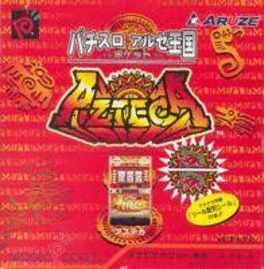
One day a forest inspector found in the forest a droid girl, without knowing who created it or why it was left there he decided to bring her to his house. The girl droid got his own feelings and ideas but what is more important she wants to become human not only by her feelings but of fact. But your character is just a human and can't help her to become human, but she will do it by herself. The game features a year of time to make the droid girl change, to do that the player can asign her different activities or jobs to do every week, but the player have to be careful with the stress levels not to get so much high. With the different jobs and interacting with different people the girl droid will change in one direction or another until the year finish and the player will see the results of his job.Pachi-Slot Aruze Oukoku Pocket: Azteca
2000
A Pachi-Slot game in the Pachi-Slot Aruze Oukoku Pocket series.The Sims
2000
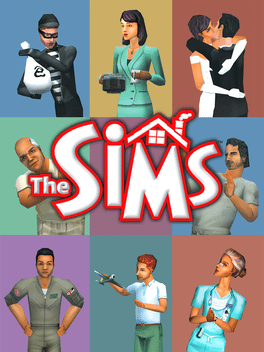
The Sims
2000
star 8.2The Sims is a life-building simulation with emphasis on intimate details of individual characters rather than expansion of an entire society or civilization. You are in control of nearly every aspect of the lives of the individuals who make up your chosen population in the neighborhood. Characters are developed from the ground up and you infuse and mold them with personalities, looks, desires, moods, urges, living arrangements, career and personal choices, life styles, and reactions.Jet de GO! Let's Go By Airliner
2000
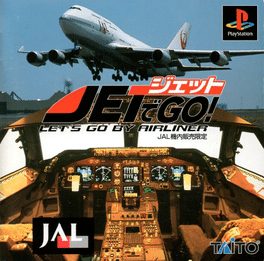
Jet de GO! is a spin-off from the famous Densha de GO! series by Taito. Instead of trains, this title focus exclusively on flying planes. Players can take off and land with a Jetstream 31 turboprop, a mid-range Boeing 767 or a long haul Boeing 747. The game modes include Flight mode, Cruise mode and Lesson mode.Eagle One: Harrier Attack
2000
star 6.3Aloha... Hawaii is under siege from terrorist fanatics. As Eagle One, command the searing action and fly 5 different attack aircraft, including the versatile Harrier Jumpjet, in 25 adrenaline-pumping missions. Turn'n burn, baby... it doesn't get much Harrier than this.That's QT
2000
That's QT
2000
That's QT is a fashion designer simulation game. Players design their own clothing brand while running a successful business in the city.Koneko mo Issho
2000
Koneko mo Issho
2000
Koneko mo Issho is a Video Game developed by Bomber Express and published by Sony Computer Entertainment Inc. It was released on January 27, 2000 for the PlayStation, and is the second game in the Doko Demo Issyo Series. An expansion of the previous game aimed at a younger audience, it features Toro Inoue as a kitten and serves as a prequel of Doko Demo Issyo. It is an add-on disc, meaning save data for Doko Demo Issyo is required on the PlayStation in order to play it.Roommania #203
2000
Roommania #203
2000
Roommania #203 is a simulation game first released for Dreamcast in 2000 and later released on PlayStation 2 in 2002. It follows the life of Neji Taihei, a student living out a mediocre existence in Japan. The game is described as an 'intervention' simulator, where the player takes the role of God whose task is to make Neji's life more meaningful. The game's writer and composer Tomoko Sasaki cited an obsession with internet webcams as her inspiration for the game's story and mechanics. A sequel was released for the PS2 in 2003, New Roommania Porori Seishun.Densha de Go! Nagoya Tetsudou-hen
2000
A release not seen in arcades, this Densha de Go! entry focuses on Meitetsu's railroad lines in Nagoya, including the series' only monorail. You play as a train engineer which serve the Meitetsu Nagoya line in Japan. There are many kinds of trains that you can drive, from express trains to monorails. Some trains are locked until you finish a mission, for example you can only drive monorails until you've finished the commuter and express train missions. All of the game parts, except the menu and station names, are in Japanese. In addition or the Meitetsu Nagoya Line, coverage includes Meitetsu Inuyama Line, Meitetsu Minomachi Line and Meitetsu Monkey Park Monorail Line. This was the first version to feature a monorail, and also featured a Meitetsu hybrid light rail route which ran both on regular train lines and as a sort of urban tram on special lanes in city streets. Part of the gameplay of this required the user to stop for regular traffic signals and avoid car traffic. This was the Densha de Go player's first