Most Popular Sport Games - Page 231

MTV Sports: Pure Ride
2000
MTV Sports: Pure Ride is a Sports game, developed by Visual Impact and published by THQ, which was released in 2000.MTV Sports: Skateboarding Featuring Andy Macdonald
2000
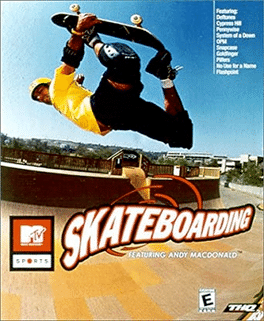
MTV SPORTS: Skateboarding Featuring Andy Macdonald puts the excitement of performing a 360-kickflip in the palm of your hand. Choose from four different skaters, including Andy Macdonald himself. Get used to the board and the controls with the Free Ride mode and, when you are ready for some action, try to meet the quotas for each of the 18 stages in the game. Some require that you earn a set amount of points, which you do by collecting the MTV icons, which are spread throughout the arena. To collect each one, you must perform a different trick. Other stages have more demanding quotas including navigating an obstacle course, collecting balloons, and crashing through items. Now you can skateboard anywhere with MTV SPORTS: Skateboarding Featuring Andy Macdonald.Pro Darts
2002
Pro Darts
2002
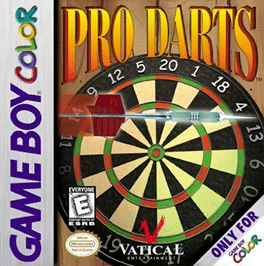
PRO DARTS brings the greatest of all British pub games to the Game Boy Color. You can play as eight different characters (two have to be unlocked), each with unique ratings in strength, nerve, and accuracy. Once you have selected your character, use the Practice mode to learn the rules of the six different games Cricket, 301, 301 Double Out, Around the World, 501, and 501 Double Out. When you are ready for some competition, you can challenge the computer to a game on three different difficulty settings. If your friends want to get in on some of the action, you can challenge them to a game without having to use a link cable. No matter how you play, you must aim the dart and use a power meter to send it flying. Play PRO DARTS, and get all of the darts action you could ever want.Pro Pool
2000
Pro Pool
2000
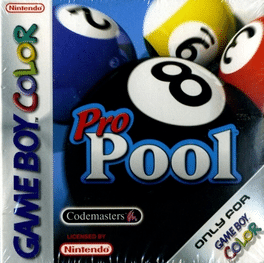
Exciting billiards action comes to the Game Boy Color with PRO POOL. Play a match against the computer or a friend, or play the Single-Player Speed Match and try to clear all of the balls off of the table as quickly as possible. In Hustle mode, you take the role of a pool hustler, traveling from bar to bar placing bets on games. Ultimately, you want to win enough money to buy your own bar. In all of these modes, six different games can be played: 8 Ball, 9 Ball, 6 Ball, 3 Ball, straight pool, and speed pool. And the competition will never get stale thanks to the 64 different computer opponents to play. Plus, an outstanding physics engine makes this the most realistic pool game available for the Game Boy Color. Try to become a great hustler with PRO POOL.Extreme Sports with the Berenstain Bears
2000
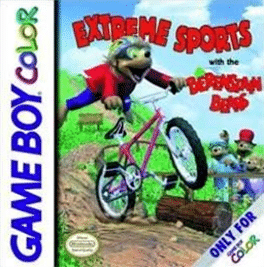
Get extreme with Mama, Papa, Brother, and Sister Bear in their first Game Boy Color game, EXTREME SPORTS WITH THE BERENSTAIN BEARS! In this single-player game you'll control the members of the family as they participate in an assortment of extreme sports events. Use Brother or Sister Bear in kayaking, dirt boarding, biking, and luge, or take the whole family in the river rafting and toboggan sequences. All of the events take place from an overhead perspective, which provides the best view of the playing field. In each event you can perform a wild range of tricks and stunts to gain speed and shave seconds off the clock. Can you beat the high scores and become the best bear you can be? Well-animated characters set on colorful, detailed backgrounds ensure a bright presentation.Hole in One Golf
1999
Hole in One Golf
1999
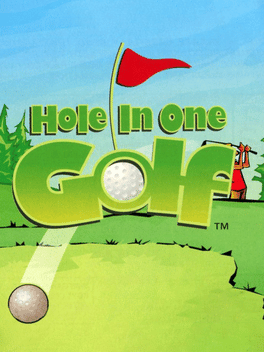
It's a quiet day on the links. You tee up your ball, and drive it 200 yards down the center of the fairway, leaving a 150-yard approach shot. After taking the approach shot, the ball stops rolling 3-feet from the pin. On the green, you sink the relatively easy putt, and you start your round with a birdie. While most golfers never have days like this, they can with HOLE IN ONE GOLF. Get out on three different courses and try to get the lowest score possible. However, the courses are located in rural areas, so you never know when birds, squirrels, or bears will come onto the course and mess with your shots. Try to play the round of your life with HOLE IN ONE GOLF.Arthur's Absolutely Fun Day!
2000
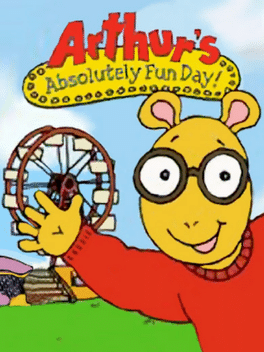
Based on the PBS children's cartoon, ARTHUR'S ABSOLUTELY FUN DAY offers up a ton of fun for fans of the show. In this single-player game for Game Boy Color, you play as Arthur, who wants to go to the ultimate amusement park, Wonder World. There are over 15 mini-games in Arthur's neighborhood (including air hockey, shooting hoops, cooking pancakes, and a whole lot more), each with its own style of gameplay, from simple timing exercises to mild puzzle solving. You get stars for completing them and once you have enough, you will earn a free pass to Wonder World, where all the mini-games are available for you to play whenever you like. ARTHUR'S ABSOLUTELY FUN DAY is an ideal choice for a younger gamer.Sesame Street Sports
2001
Sesame Street Sports
2001
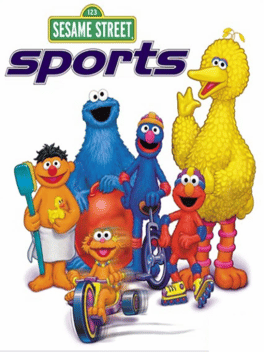
Good sportsmanship is the name of the game in this delightful series of sporting events. All of your favorite SESAME STREET characters are the competitors in these original contests, and winning (for once) is not the most important thing. Take the adorable athletes through six big time sporting events: Guide Grover through a unicycle race, lead Elmo into a roller skating contest, and push Ernie past the rapids in his own bathtub. Big Bird is along to conduct all of the post-game interviews, putting the emphasis of the events squarely on fun and fair play rather than heated competition. The game's controls are easy top learn allowing little gamers to get the hang of things quickly and an in-game tutorial teaches the ins and outs of each wacky sport. The excellent graphics and familiar faces make the game look and feel just like an episode of the classic kids' show. Hand-held sports have never been so fun!Billy Bob's Huntin'-n-Fishin'
1999
In BILLY BOB'S HUNTIN' AND FISHIN' for Game Boy Color, you play the role of a hapless guy named Billy Bob, who is trying to impress a girl. She'll ask Billy Bob to fetch her rabbits or bass, and it's up to you to help Billy Bob get them. Obviously, to get the things she wants you'll have to either go hunting or fishing. Not so fast though, because you need bullets for hunting, bait for fishing, and a license to do either of the two activities. Luckily, you can earn these items by playing a variety of mini-games. The games vary in their gameplay, but the usual assortment of speed and reflex tests are the common thread. You'll need to clear four mini-games each to go hunting and fishing. Once you've finally cleared them and gotten the items you need, you'll head out to catch your real prize. BILLY BOB'S HUNTIN' AND FISHIN' is for one player and is compatible only with Game Boy ColorRoad Champs: BXS Stunt Biking
2001
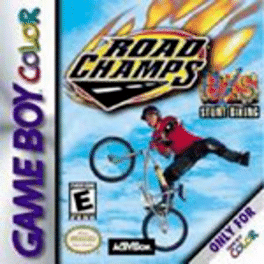
Stunt biking makes an appearance on the Game Boy Color with ROAD CHAMPS BXS STUNT BIKING. When you start the game, you will have to progress through a 26-stage Training mode that teaches you how to perform all 50 moves in the game. After getting through training, you will be able take on a Single-Run, Career, or Tournament. The Single-Run mode allows you to work one course and master stringing tricks together, while Career mode has you compete in competitions to move from the amateur ranks to the world of the professionals. You can also compete in the Tournament mode to become the world champion. There are total of 64 unique levels spread throughout the game do you have what it takes to master ROAD CHAMPS BXS STUNT BIKING?NBA 3 on 3 Featuring Kobe Bryant
2000
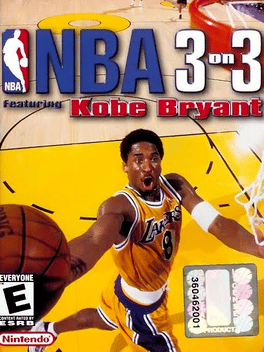
Experience the wide-open nature of three-on-three basketball with NBA 3-ON-3 FEATURING KOBE BRYANT. You can choose your squad from all of the NBA teams that include actual rosters. Once you have chosen your favorite team, play a Pick-Up game to get accustomed to the game style and controls. When you are ready for some competition, try to win the NBA championship in a 14, 28, 56, or 82-game Season mode. If you don't want to waste your time playing a full season, you can go straight to the Playoffs. No matter what mode you play, the rules of the game can be adjusted, including shot clock violations, backcourt violations, and the maximum number of points that can be scored. If you want to put yourself into the game, you can with the Create-A-Player option. Now you can try to conquer the NBA in NBA 3-ON-3 FEATURING KOBE BRYANT.NBA Jam 2001
2001
NBA Jam 2001
2001
Get even more arcade-style basketball action with NBA JAM 2001. Choose from all 29 NBA teams -- over 140 professional players in all. Get used to the controls and action with the Practice mode, and when you are ready for some real action, try to become NBA champion by playing through the Season. If the Season is giving you a headache, you can skip it and go straight to the Playoffs. No matter what mode you play in, there will be plenty of fastbreaks and rim-rattling jams. Throw even more action into the game with the Fun mode that includes Hot Spots, Hang Time, Half Court Dunks, and On Fire. You can also unlock secret teams like the East and West All-Star teams. Get all of the basketball action you want in the palm of your hand with NBA JAM 2001.NBA Show Time: NBA on NBC
2000
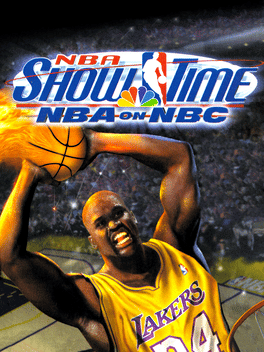
Take on all of the action of two-on-two basketball with no rules in NBA SHOWTIME: NBA on NBC. Choose from all 29 NBA teams, featuring over 100 professional players then hit the hardwood and work on your moves in the Practice mode. When you want some competition, work your way through the Season to the Championship. If you don't want to bother with the Season, skip it, and leap right into the Playoffs. With over 30 different slam-dunk animations, you are going to see something new every time you play. If you can get a player to sink three buckets in a row, watch him light up the scoreboard while he is on fire. If you enjoy wild basketball action, you will love the action in NBA SHOWTIME: NBA on NBC.International Superstar Soccer 99
1999
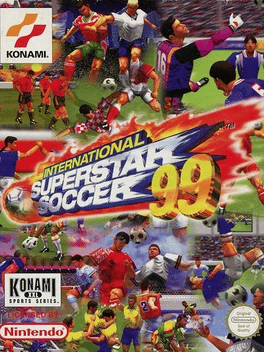
So, you don't think realistic international soccer is possible on the Game Boy Color? Think again; INTERNATIONAL SUPERSTAR SOCCER 99 has all of the rules, physics, and intensity of the real thing. You can play as any of 32 worldwide squads, competing for the rights to the International Cup. Choose whether you want to play three, five, or seven-minute halves, and decide whether you want your overtime decisions to be made Golden Goal or Extended Time-style. The gameplay and decisions are so detailed, you can even select your starting lineup and reserve players, pick a formation, and set up your own strategies. You can engage in any number of exhibition games (alone or against a friend), but the real fun begins in International Cup mode, in which you claw your way up from a ranking of 32nd in the world. Beginners and seasoned veterans alike will get plenty of mileage out of the game, as there are three different difficulty settings to master.Ronaldo V-Soccer
2001
Ronaldo V-Soccer
2001
Based on the European hit, RONALDO-V FOOTBALL, this game is the pinnacle of soccer experiences for the Game Boy Color. Endorsed by international legend, Ronaldo Luis Nazario de Lima, RONALDO V-SOCCER brings Brazilian soccer traditions to the rest of the world. Boasting more than 100 real teams from around the globe, the game is set to an awesome Samba soundtrack and graced by colorful graphics. See how you fare over the course of an entire tournament in the comprehensive Simulation mode, or enjoy the rush of jumping right into things in Arcade mode. Either way, you're in for a highly realistic soccer experience with motion-capture animation and lifelike game physics. You can set up the rules and conditions any way you'd like, and you'll even have the ability to tailor your strategy to your opponent's style pulling from a complete playbook. Play alone, or compete against a friend.All Star Tennis 2000
1999
All Star Tennis 2000
1999
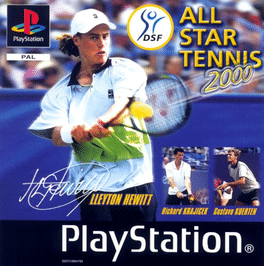
This is a cartoon style tennis challenge that requires all your skill! Pick a character and journey through the game's tournament mode, or simply try your hand in free mode. Choose from different court surfaces and different match setup options. Offering games for one to four players, All Star Tennis is a great way to enjoy the action on centre court.Snoopy Tennis
2001
Snoopy Tennis
2001
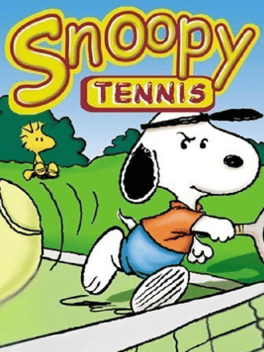
It's a tennis game, Charlie Brown! The PEANUTS gang have packed up their rackets and headed to the courts for some fun tennis action in SNOOPY TENNIS for Game Boy Color. Choose from an initial selection of four characters Snoopy, Charlie Brown, Linus, and Lucy and take to one of four courts: clay, hard, and two different grass courts. Five gameplay modes await you: in Normal mode you play a quick best-of-three or best-of-five match up against a computer or human opponent; Sudden Win gives you an instant victory if you gain two games on your opponent; in Point Race mode, you'll race to see how many points you can score in a minute; Special mode throws a variety of power-ups into the mix; and Championship mode has you battling several opponents in order to become champion and unlock four new characters and courts. In addition, three different difficulty levels allow players of all skill levels to enjoy the game. SNOOPY TENNIS is for Game Boy Color only.Tennis no Ouji-sama: Aim at the Victory!
2003
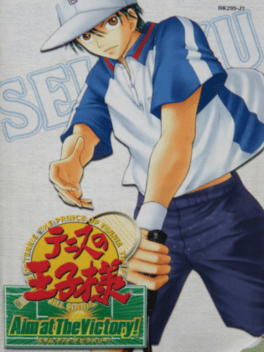
Tennis no Ouji-sama: Aim at the Victory! is a Sports game, developed by KCEJ and published by Konami, which was released in Japan in 2002.Tennis no Ouji-sama: Genius Boys Academy
2002
Tennis no Ouji-sama: Genius Boys Academy is a Sports game, developed by KCEJ and published by Konami, which was released in Japan in 2002.Tennis no Ouji-sama 2003: Cool Blue
2003
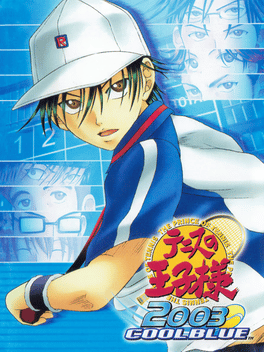
Tennis no Ouji-sama 2003 is a Sports game, published by Konami, which was released in Japan in 2003.