New Adventure Games - Page 461

The Fear
2001
Kids Station: Digimon Park
2001
Digimon Park is an interactive game for children part of the Kids Station series. The player can choose a digimon and make it evolve increasing his stats. The game also features a collection of mini-games.Leiji Matsumoto 999: Story of Galaxy Express 999
2001
An adventure game for the PlayStation based on Leiji Matsumoto's Galaxy Express 999. You assume the role of Tetsurô Hoshino, a young boy that witnesses the murder of his mother by Count Mecha, a cyborg who hunts humans for sport. In his quest for revenge, Tetsurô meets Maetel, a mysterious lady who offers him a pass for the prestigious "Galaxy Express 999", a space train that travels from Earth to the Andromeda galaxy. There Tetsurô could get a mechanized body for free and thus be able to challenge Count Mecha.Disney's Goofy's Fun House
2001
star 6.8Goofy must explore each a part of his home which consists of 15 distinct rooms. Each room includes elements such as a blender in the kitchen or table saw in the garage that the player can interact with. The main focus of play centers around collecting the 50 film canisters and certain objects Goofy has misplaced throughout his home. In addition to this, there are several mini-games that may be accessed via the paintings in the rec room of Goofy's house if the player finds all the objects that are needed. There's mini-games that range from golf and fishing to skiing and driving (based on How to play...) . After Goofy completes each mini-game and finds a few special items found somewhere in the house, a corresponding cartoon like: How to Play Golf will be unlocked. The game is considered "Completed" when the player completes all the mini-games, finds all of the cartoon-specific items, and collects at least 50 film canisters, unlocking the final cartoon.Disney's Mickey Saves the Day: 3D Adventure
2001
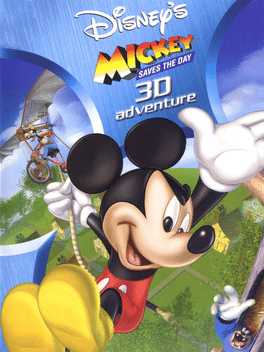
Mickey Saves the Day is an adventure game, with 3D characters against 2D-rendered backgrounds, for children. Players can choose to be Mickey or Minnie Mouse and many Disney characters make an appearance, such as Goofy, Donald and Daisy Duck, Pluto and Ludwig von Drake. The game is entirely mouse-controlled and the cursor changes when an object can be interacted with. It can either be used or picked up to be stored in an inventory, shown as Mickey's hat at the bottom of the screen. Puzzles are solved by talking to other characters or through items. All visited locations are added to map to move around town.Casanova: The Duel of the Black Rose
2001
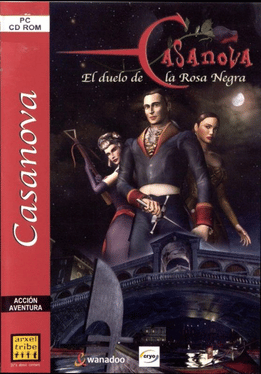
As the name implies, this game puts you in the role of a lady-charming, swashbuckling, sword-wielding rogue during the Enlightenment era. In a mix of action and adventure, you'll play the good-looking Giacomo Casanova in Venice, Italy. It is a story of love, ambition, political conflict and vengeance in an 18th century Mediterranean locale. While at sea, his ship is attacked by cutthroat pirates and his mother is murdered. The gameplay begins while Giacomo, the only survivor, is recuperating in Venice in the home of the Duke of Grimani. He vows to seek out the murderous pirates to avenge his mother's death. Soon he discovers that her murder may be part of a much deeper plot linked to a conspiracy to take over the country's current leadership. Plenty of women wander the streets of Venice who can be charmed by the handsome Casanova's wit and audacity. Conversation choices effect how others respond to you, and the wrong answer could get your face slapped instead of kissed. Many spontaneous sword fights happen to keExodus Guilty Neos
2001
Mikeneko Holmes: Ghost Panic
2001
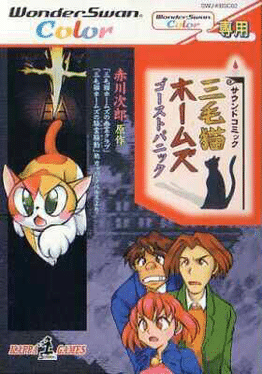
Mikeneko Holmes: Ghost Panic is an Adventure game, developed by Koto and published by Koubunsha, which was released in Japan in 2001.DT: Lords of Genomes
2001
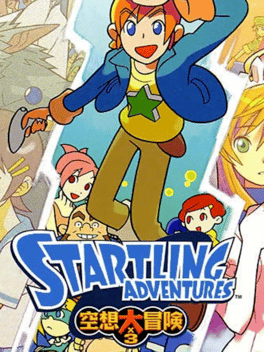
Startling Adventures
2001
Startling Adventures
2001
Startling Adventures is an adventure game, developed and published by Capcom, which was released in Japan, 2001 for the original PlayStation console. The game contains three stories.SuperLite 1500: Makikou
2001
Makikou Mystery Adventure is a first person perspective adventure game in which the player takes the role of a is a member of the group that studies the occultism. They plan to go in haunted tours and participate in the group and go to Kyoto with other 2 members. They visited 2 places, an Edo castle and Seimei Abe. The game features 2 different stories that takes places in those 2 places and different game endings (most of them bad ones in wich the player character will die) depending of the player choices during the game.Bounty Hunter Sara: Holy Mountain no Teiou
2001
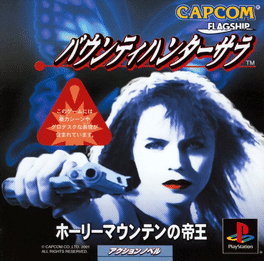
The year is 2060, and the huge city Neo Tokyo overflows with gangsters. The police is helpless - the criminals form well-organized group that are threatening to take power in the whole city. Only freelance bounty hunters, brave and reckless people who are willing to do a dangerous job to earn some money, dare to face the crime world of Neo Tokyo. You play as Sara Fitzgerald, one of such bounty hunters. The game plays as a digital novel, with still shots of real actors on an appropriate mystery/sci-fi background; you interact with the game world by making decisions for Sara. There are many different paths to take in the game, and in the end the player receives a "detective rank" according to the decisions he has taken.Road to India: Between Hell and Nirvana
2001
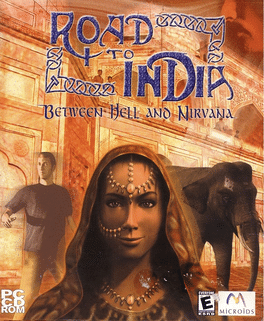
Road to India is an adventure video game in which the player assumes the role of an American student named Fred Reynolds, who has travelled to India to find his girlfriend, Anusha, who was kidnapped by thugs. In the game the player has only three days to find the girlfriend, where they visit places such as New Delhi and the Taj Mahal. Each day is broken up into two parts: reality and the dream.Resident Evil Gaiden
2001
Resident Evil Gaiden
2001
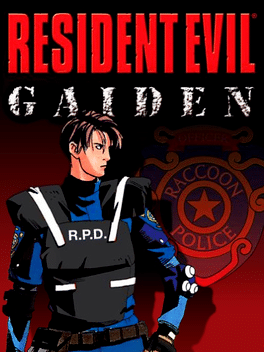
star 5.5Resident Evil Gaiden is a Resident Evil game for the Game Boy Color. It is non-canon, as its plot is contradicted by the main series in key parts and its events are ignored. The game features three playable characters and consists of exploring areas, collecting items and combating enemies in the process. Unlike previous entries in the series, Resident Evil Gaiden assumes a top-down perspective for the environment portions that, upon approaching an enemy, changes to a first-person combat mode with a reticle constantly moving to the left and right. To attack, the player has to press the action button while the reticle is in range of the enemy.The Legend of Zelda: Outlands
2001
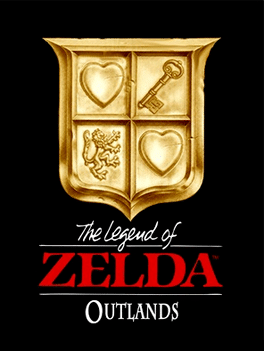
The Legend of Zelda: Outlands, also known as Zelda Challenge: Outlands, is a ROM hack of The Legend of Zelda (NES). It changes the whole game map with a new one, with new dungeons and challenges.Detective Conan: Yuugure no Ouju
2001
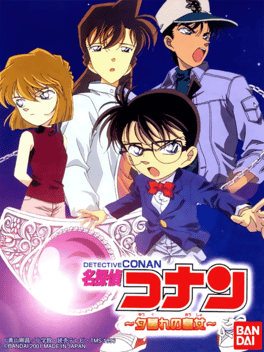
Cursed jewels, the party, and murder. And in the middle of it all, our shrank detective, Kudou Shinichi, who now goes by the name of Conan Edogawa. The player gathers clues by listening to other characters, gathering key words, and most importantly, deducing the truth behind the mystery. The game can be linked with the previously released Meitantei Conan titles for WonderSwan which will effectively alter the story and add a branching path. Notebook with data is compatible with the one from previous works can also be imported.Sabrina the Teenage Witch: A Twitch in Time!
2001
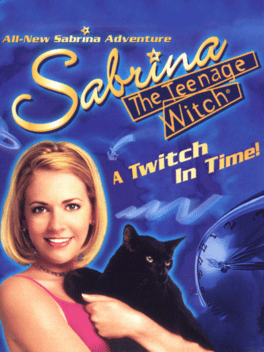
Sabrina has been delighting fans with her benign brand of arcane mischief since she was first featured as an Archie comics character in the late 1960s. This title is based directly on the version of the character from Sabrina: The Teenage Witch on ABC and the WB networks. Melissa Joan Hart provides the voice and likeness of Sabrina in this 3D adventure based on the live-action television series. A third-person perspective allows players to guide Sabrina around a large interactive game environment. Real-time gameplay keeps the challenges fresh and the action moving. Sabrina's aunts and her cat Salem are also featured in the game. The game's plot is about when Salem was trying to get his file from the Witches' Council he broke a clock to release Chaos. Now Sabrina has to save the day while dressing up in ridiculous outfits and fighting stationary enemies.Disney Learning: Phonics Quest
2001
Disney Learning: Phonics Quest challenges kids to enhance and master their phonics skills while taking a magical journey with Mickey and his friends. Using state-of-the-art voice recognition technology, kids will actually be able to speak their answers out loud as they master a variety of phonics-based, multilevel learning activities.Happy Lesson
2001
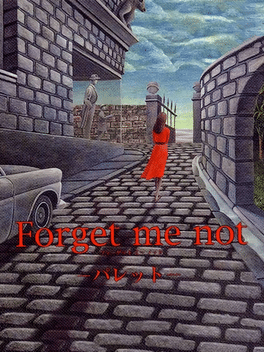
Forget Me Not: Palette
2001
Forget Me Not: Palette is a PlayStation remake of a freeware adventure game originally made with RPG Maker 95.