Most Popular Adventure Games - Page 646

Asteka
1984
Asteka
1984
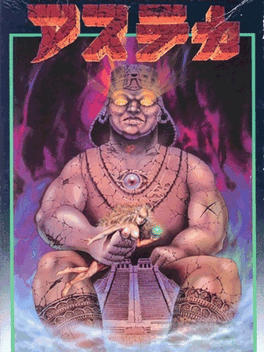
Asteka (アステカ) is an early graphical adventure game that was created by Tsuneyuki Miyamoto at Nihon Falcom. The title was initially released for the NEC PC-88 and was later ported to other Japanese computers. While exploring the Palenque ruins in southern Mexico, the player takes the role of an archeologist where they use the game's katakana text parser to interact with the world and solve puzzles. The game was technically impressive for its time due to how quickly it could load new images, similar to Falcom's Demons Ring, and for its use of digitized photographs for some of its graphics. Asteka was most likely released on April 13, 1985 according to early advertisements. However, even Falcom contradicts itself on the title's exact publication date. Falcom's official corporate timeline on their website says Asteka was released in February 1985 while their 2017 pop-up museum, along with the Falcom Chronicle anniversary book, claims it was released on April 10, 1984. A direct sequel to Asteka was released inWhere am I?
2012
Where am I?
2012
Created in 48 hours for the Ludum Dare 24 game jam with the theme of Evolution. It is a psychological horror game by Agent Parsec, creator of Slender: The Eight Pages.Fun! Fun! Pingu
1999
Fun! Fun! Pingu
1999
'Fun! Fun! Pingu' is a Japanese PlayStation title based on the children's animation series 'Pingu'. The game follows Pingu in his escapades based on different episodes of the show, as he finds and picks up different items and talks with different citizens of Antartica. Alongside the release, various Pingu-branded PSX merchandise like controllers and memory cards were made.Secret of Evangelion
2006
Secret of Evangelion
2006
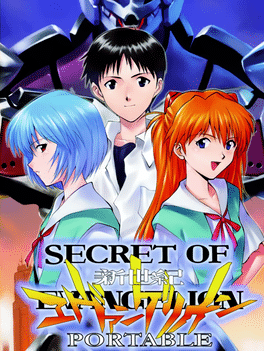
An RPG/adventure retelling the end of the Evangelion storyline, introducing the new characters NERV investigator Kenzaki Kyouya and dummy-plug research scientist Kaga Hitomi. In the game, you play as a new character, Nerv agent Kyouya Kenzaki, an old college friend of Kaji's. Throughout the game, you must uncover mysteries surrounding the Evangelion plot, as well as mysteries involving yourself. There are multiple routes, which seem to depend how much information you uncover. The end credits, which scroll like Evangelion Death, features a backdrop of the LCL Sea from End of Evangelion set to Soul's Refrain (10th Anniversary Version) from Evangelion: Decade.Durarara!! Relay
2015
Little Adventurer II
2017
Little Adventurer II
2017
Third-person 3D casual games.which is suitable for people of all ages.Control your little adventurer to help NPC find his items.Knock down the little monster.Or you need to start again.Dark Parables: Goldilocks and the Fallen Star - Collector's Edition
2017
Who is trying to destroy the Kingdom of Barsia?Prisonscape
An RPG where players take on the role of a new inmate who must learn to surviveDr. Slump: Arale-chan
1983
Dr. Slump: Arale-chan is a game based on the Dr. Slump manga for the Arcadia 2001.One Piece: Mezase Kaizokuou!
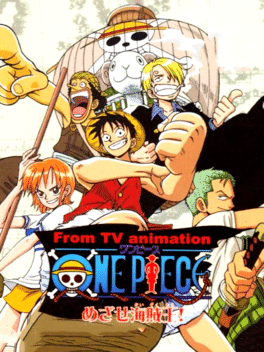
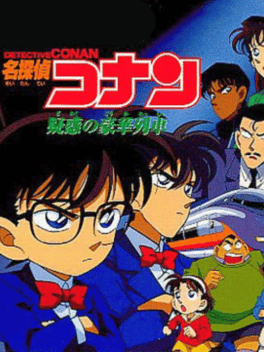
One Piece: Mezase Kaizokuou! is an early release in the One Piece video game series based on the popular manga about fun-loving pirates.Detective Conan: Giwaku no Gouka Ressha
1998
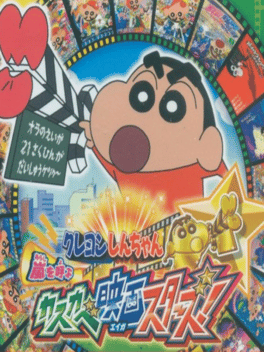
An adventure/detective game based on the anime Detective Conan.Crayon Shin-chan: Arashi wo Yobu Kasukabe Eiga Stars!
2014
Crayon Shin-chan: Arashi o Yobu Kasukabe Eiga Stars! is a Role-Playing game, developed by Inti Creates and published by Bandai Namco Games, which was released in Japan in 2014.A Song for Viggo
A point-and-click adventure game about the aftermath of a parent accidentally killing their child.Gambling Apocalypse Kaiji
2000
PlayStation game based on Nobuyuki Fukumoto's manga series about gambling.Kekkaishi: Kokubourou no Kage
2007
In Kekkaishi: Kokubourou no Kage players will play the role of the enchantment masters Momura Yoshimori and Yukumura Tokune who defend "Usen", fighting against the terrifying "monster". In order to guard the hero of "Wu Sen", you need to search for "Demon" in "Wu Sen Academy" under the night and use enchantment to destroy it. This process requires the four major steps of "square encirclement", "fixed foundation", "knot" and "destroy". First, after finding the enemy, quickly use the Wii remote control handle to draw the direction where the enchantment will be generated. This is the "square"; the "fixed base" is to specify the location of the enchantment. After completing the square, press the A button to proceed. Set the foundation", the longer the key is pressed, the larger the bounds will be after completion; the "knot" is the formation of an enchantment. After setting the enemy's foundation, you can quickly raise your arm to complete the "knot" and close the set enemy. Even if you are successful in the enchantmenRayman Activity Center
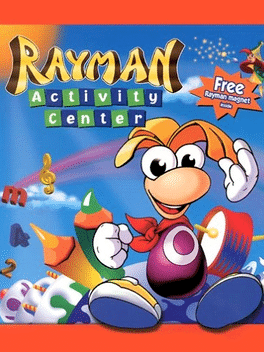
1997
Rayman Activity Center is an educational video game published by Ubisoft for the PC. It is a spin-off of the original Rayman game, and aims at children.