Most Popular Pc 9800 Series Games

Touhou Rei'iden: The Highly Responsive to Prayers
1996
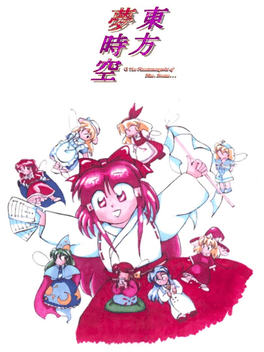
star 5The game introduces the Shrine Maiden Reimu Hakurei, who frantically attempts to persuade a bouncing Yin-Yang Orb to hit various on-screen targets, "cards" and "bosses" alike. Reimu can knock and maneuver the Yin-Yang orb around by whacking it with her gohei, slide-tackling it, and firing shots at it. Enemies will be trying to hinder your progress by firing at you, but you can cancel out their shots with your own, or even deflect them by swinging your gohei. Only the Yin-Yang orb can damage the enemies, however, so simply firing your shots at enemies will have no effect. As a last resort, Reimu can use a "bomb", once per life, to hit all cards on the screen. There is no guarantee that any given card will be hit, and will often fail to damage a boss. The game consists of several stages of increasing difficulty, with a boss fight occurring every five stages. To complete a stage, the player should clear all cards or defeat the boss. Reimu will lose a life whenever she is hit by an enemy projectile or the yin-yang orbTouhou Yumejikuu: Phantasmagoria of Dim. Dream
1997
star 6.8This game is a vertical danmaku shooting game, where two characters engage in danmaku gameplay within individual and separate play areas (aka. split-screen). Upon meeting certain conditions, players are able to unleash a variety of character-specific Spell Attacks upon their opponents in an attempt to whittle down their remaining health points. In Story Mode, the player will face nine opponents, each more capable than the previous. Phantasmagoria of Dim.Dream also features a Match Play Mode where the player may face off against AI opponents or compete against other players, as well as watch AI vs. AI matches.Touhou Gensoukyou: Lotus Land Story
1998
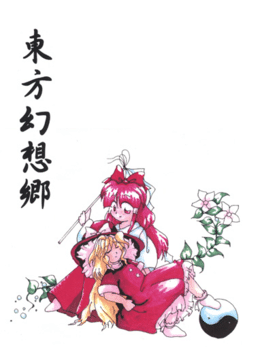
star 7.9This game features two playable characters to choose from, with two different attack types each. Reimu Hakurei can pepper a wide area of the screen with weaker attacks, while Marisa Kirisame relies on her power to compensate for her narrower attack spread. The bombs also exhibit unique behavior and damage amounts depending upon the character chosen. Lotus Land Story is the first game in the Touhou Project to feature bombs that auto-collect items, graze counting, the ability to move more slowly by holding the shift key, and a non-trivial scoring system that involves the collection of special dream items that boost the player's ultimate scoring potential. The game's scoring system also marks the series' first instance of score bonuses for the elimination of bullets following the defeat of mid-bosses and bosses.Touhou Kaikidan: Mystic Square
1998
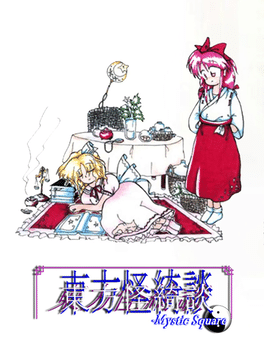
star 7.9Mystic Square allows the player to select from among four unique protagonists, each hailing from one of the 2 prior danmaku shooting games in the series. Series mainstays Reimu Hakurei and Marisa Kirisame are joined by former enemies Mima and Yuuka Kazami for a journey reaching to the depths of the Makai. Mystic Square also marks the first appearance of Alice Margatroid as an opponent, who later stages a comeback in Perfect Cherry Blossom. Although limited by the PC-98 hardware, Mystic Square is the most refined of the PC-98 Touhou titles, and features gameplay quite similar to Windows Touhou games. It employs a variant of Lotus Land Story's Dream Bonus system, rewarding the player for taking risks (i.e. collecting point items from the top of the field area). Its rank system, however, is more lenient than Lotus Land Story's.Touhou Fuumaroku: The Story of Eastern Wonderland
1997
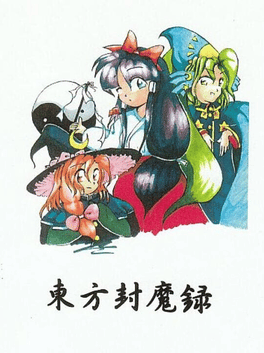
star 6.9The Story of Eastern Wonderland casts the player as the Shrine Maiden Reimu Hakurei and offers three distinct attack types to choose from: a wide-range type with weak attack power, a mid-range type with moderate attack power and auto-targeting capabilities, and a narrow-range type with high attack power but lowered movement speed. The bombs also exhibit unique behavior depending on the type chosen. As the first danmaku shooting game in the Touhou Project, the Story of Eastern Wonderland introduces many features that are now hallmarks of the series as a whole: relatively small hit boxes, boss characters who are not much larger than the player character however are highly mobile, a power-up system, variable-worth point items, an unlockable Extra Stage, and a semi-complex scoring system. The game also marks the first appearance of Marisa Kirisame, who would become a major character in the series, appearing as often as Reimu Hakurei herself.Corpse-Party
1996
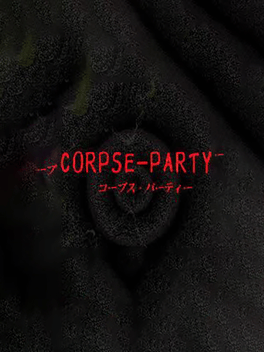
Corpse-Party
1996
star 7.1A group of friends unknowingly perform an occult ritual that traps them in an otherworldly elementary school. Here, the vengeful spirits of young children threaten their lives and their sanity, and the only hope of survival is to uncover the chilling details behind the murders of those trapped before them...Carmen Sandiego in Japan
1989
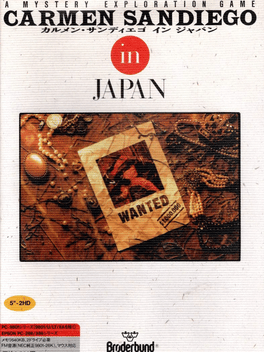
Carmen Sandiego in Japan – Hannin Sagashite Nihon Zenkoku is a 1989 spin-off entry in the Carmen Sandiego franchise. It was developed and published by Brøderbund Japan for the NEC PC-9801. The title functions as both an adventure game where players chase and capture Carmen, and an educational game where players learn about geography and history of Japan.Choujikuu Yousai Macross: Love Stories
1994
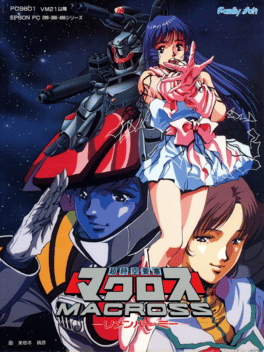
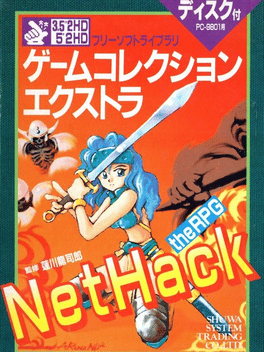
Sequel to Choujikuu Yousai Macross: Skull Leader and the third turn-based strategy Macross game developed by Family SoftNetHack
1993
D'ark Gaiden
1993
D'ark
1992
Märchen Veil II
1986
Märchen Veil II
1986
Märchen Veil II is the second part of the story that began in Märchen Veil I. The bereaved king of the Lake Country seeks the help of the powerful goddess Lua as he tries to remove the curse that has befallen his son. However, the prince feels it is his duty to defeat the evil wizard responsible for the curse, and he embarks on a journey to gather mysterious artifacts that will help him achieve this goal.Fuzoroi no Lemon
1994
Fuzoroi no Lemon
1994
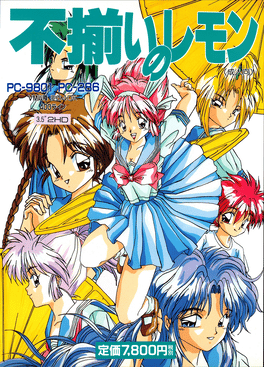
Machida Haruko, nicknamed "Faru", is a young girl who was living together with her sister Mei. Mei has mysteriously disappeared, and one day Faru received a package, which contained a video showing her sister, tortured by unknown people, crying in agony. The young heroine heads to the high school Mei studied in. She tries to get a job there, in order to investigate the circumstances of her sister's disappearance, and bring her home safe...Uchuu Bouken Shoujo Nami: Davie Jones - Umi no Akuma
1992
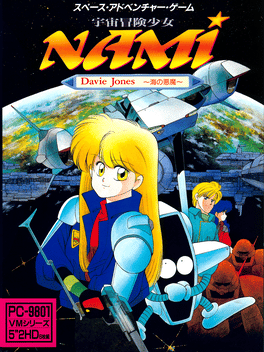
In 2991 in addition to speed of light space navigation humankind acquired the technology of hyper jump system (HJS) from ruins of ancient alien civilization. The government now succeeded in production of minimized versions of such hyper portals and one such device was planted in the suitcase of space delivery company pilot Nami.Fantasy Knight
1988
Fantasy Knight
1988
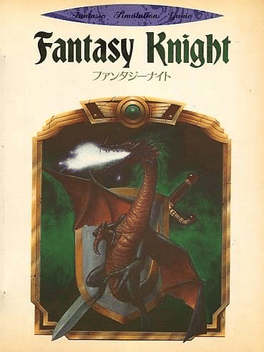
Fantasy Knight is a strategy game, developed and published by SystemSoft, which was released in Japan in 1988.Span of Dream
1990
HHG Heart Heat Girls
1993
HHG Heart Heat Girls
1993
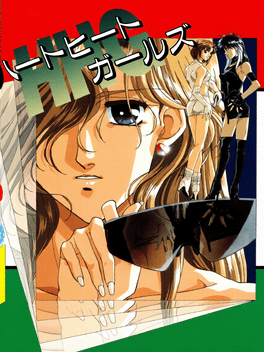
HHG is set in a futuristic world, in which humans co-exists with androids, highly advanced cybernetic organisms. However, this co-existence is anything but peaceful, since android are going rampant, and a special police force known as ACP ("Anti Criminal-cyborg Police") is specifically assigned to deal with them. Two young and lovely police officers, Angelica and Apple, receive a S.O.S. signal from two army pilots, who were attacked by a mysterious female cyborg who called herself Patricia von Kreuzel. Upon arriving at the crime scene, the heroines find no survivors. Together with their colleague, a young detective named Keith, they must investigate and solve this case.