New Shooter Games - Page 421

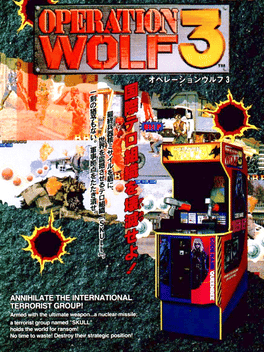
Operation Wolf 3
1994
Operation Wolf 3
1994
An improved game compared to the original. This update features more realistic characters plus three levels of difficulty: easy, hard, and extra hard. The game also has five fighting levels.Lord of Gun
1994
Lord of Gun
1994
This is a unique gun game that allows you to choose the area you would like to enter as well as the level, ranging from easy to difficult. You can enter shooting galleries or various scenic screens. You must shoot enemies and beasts without killing hostages or the cute animals.Cheese Chase
1994
Cheese Chase
1994
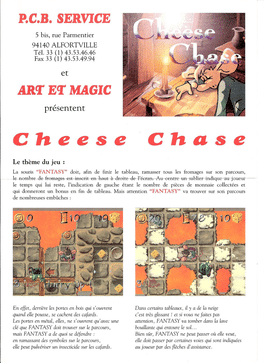
You play a mouse who must avoid rats and bombs while collecting cheese in a maze. You are able to open and close doors to help you elude your enemies. The game uses an overhead perspective with very big sprites and a multi-directional scrolling playfield.Invasion...: Level 1 - Contamination
1994
This is level 1 of a 9 level storyline episode. You thought it was all over after you finished the grand tour in hell after Episode 3 -- Inferno. Well, Mars Base has sent in an urgent distress call and this time you are called again for one final encounter against the... INVASION!Cyberdogs
1994
Cyberdogs
1994
If anyone remembers the top-down shooters Loaded or Chaos Engine, Cyberdogs is the same basic gameplay. You must choose your character and his weapons that you will fight with. In your mission you must destroy the enemy and retrieve the lost items.Magic Carpet
1994
Magic Carpet
1994
star 7.4Magic Carpet is a video game released by Bullfrog Productions in 1994. Its graphics and gameplay were considered innovative and technically impressive at the time. A revised edition, Magic Carpet Plus, included the Hidden Worlds expansion pack which added 25 levels and a winter-themed tileset. The title also had a sequel released in 1995, Magic Carpet 2. Magic Carpet was considered by critics to be a revolutionary game for its time.Traffic Department 2192
1994
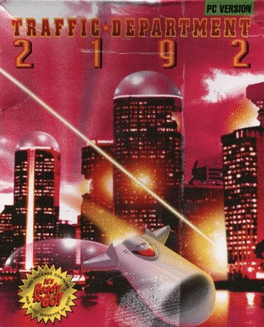
Traffic Department 2192 is a top down shooter game in which the player pilots a futuristic "hoverskid" about a war-torn city. The game emphasizes story, with cutscenes before each mission following the arc of troubled pilot Lt. Velasquez. There are three episodes containing twenty missions each, with varied mission objectives.Fantastic Journey
1994
Fantastic Journey
1994
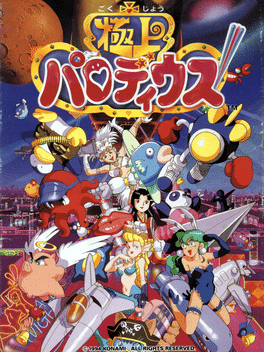
Overall, the gameplay is identical to that of its predecessor, Parodius! From Myth to Laughter, with several new characters to choose from. Also new, if you play a two-player game, the second player will have a different set of characters to select. They are clones of the first player characters, except with different names and slightly altered sprites or changed color palettes. These characters include: Vic Viper/Lord British, Pentaro/Hanako, Twinbee/Winbee, Takosuke/Belial, Hikaru/Akane, Mambo/Samba, Michael/Gabriel and Koitsu/Aitsu.Cotton 100%
1994
Cotton 100%
1994
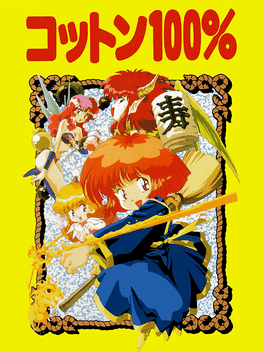
Cotton 100% is a side scrolling shooter by Success and Datam Polystar, and likely sequel to the arcade game Cotton originally released in 1989. Previously only available in Japan under the title of Märchen Adventure Cotton 100%, It received an aftermaket release in the West under the new title.Iron Angel of the Apocalypse
1994
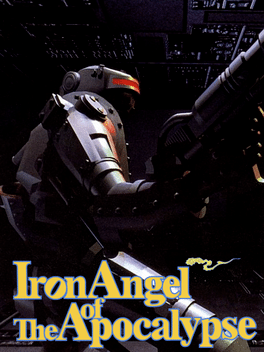
You play a character known as Tetsujin. You are a cyborg/robot creation of an evil scientist. The scientist intended to use you to wipe out the human race, but instead you decided to turn against your maker and escape. The story unfolds as you fight your way to the top of a skyscraper to confront the mad scientist.Alligator Hunt
1994
Alligator Hunt
1994
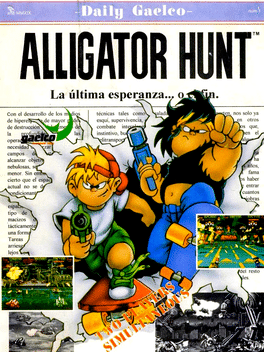
Alligator Hunt is a shoot 'em up arcade game released by Spanish company Gaelco in 1994. Reptilian-looking aliens are invading earth and is up to the bravest soldiers (skateboarding kids!) to stop the invasion and destroy the enemy base. Features gameplay similar to Cabal and Blood Bros.Raptor: Call of the Shadows
1994
star 7.7It's the BEST IBM shooter yet! A fast paced slugfest, with a pulse-pounding sound track, and jaw-dropping VGA animation & cinematics. In the future as a mercenary flying the super-tech Raptor, you'll be sent on interplanetary missions to knock off top competitors of MegaCorp. Battle against hordes of relentless enemies. Spend the bounty you receive from their demise to expand your devastating arsenal, which can be upgraded with 14 hard core weapons! "Raptor has some of the hottest graphics ever seen in a shareware game, and blows away most commercial games, too! The graphics will amaze you and the sound will astound you. It's a super star!" -- Interactive Entertainment Raptor sets the new standard for PC shooters. This game will do for shooters what Wolfenstein did for 3D games. Incredibly smooth VGA graphics and animation are only half the story. The heart-pounding music in Raptor will leave you breathless, especially if you have a high-end sound card like the Roland or Wave Blaster. (Raptor supports the Midi muSteam-Heart's
1994
Steam-Heart's
1994
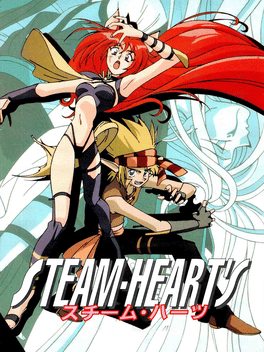
Steam Heart's is a 2D sci-fi vertically scrolling shoot-em-up with erotic content. The game takes place in the far future, on an alien planet dominated by seven elf-like or catgirl princesses that have fallen under the spell of a unique virus that has driven them mad and threatens to destroy the planet if all the rulers declare all-out war. Only Blondia Varady (nicknamed "Blow") and his sister Fallandia have been spared from the disease and must pilot their fighter ships in order to penetrate deep into the domain of each princess, destroy their war machines, and administer the antidote. Fortunately for Blow, the antidote has been synthesized into his reproductive organ, so that means there is only one way to inoculate the girls.... The player controls the fighter ship through vertically scrolling stages, trying to destroy every ship that crosses its path and reach the end boss. The ship has a primary weapon that can be constantly upgraded by collecting power-ups, and a secondary slot for all sorts of collectibleCorridor 7: Alien Invasion
1994
The year is 2012. A team of U.S. scientists returns from Mars with a small, metallic object - the first hard proof that life exist beyond our planet. Rushed to a top secret underground facility, through a maze-like series of hallways and test chambers, the object is secured in the lowest level laboratory - at the end of Corridor 7. Subjected to gamma radiation, the sphere explodes - transformed into a radiating gateway, linking our world with another. An army of creatures emerges from the pulsating vortex. The Alien Invasion has begun. You are Special Forces Agent, sent to eliminate all invaders, floor by floor - by whatever means possible. Wage a ferocious battle through the overrun military base and reach your destination. Down Corridor 7 looms the fate of the entire human race.Lethal Enforcers II: Gun Fighters
1994
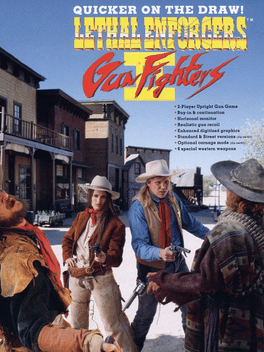
star 7.9Lethal Enforcers II: Gun Fighters is a 1994 arcade and prequel to the original Lethal Enforcers. In contrast with the first game's modern law enforcement theme, Lethal Enforcers II takes place in the American Old West.A.S.P.: Air Strike Patrol
1994
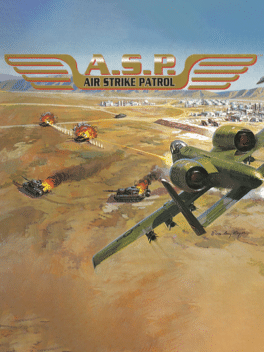
Playing as a jet pilot of the "Coalition" force, players take control of either an F-15 Eagle, or an A-10 Tankbuster jet. The mission is to neutralise the offensive forces of the Zarak army, who have recently invaded a smaller neighbouring country. The Zarak army has many ground units, including tanks, stinger-missile launchers, SCUD missiles and armored vehicles. To accomplish the ultimate goal of defeating the Zarak army, players venture out on numerous missions (called "sorties") that have varied and specific objectives. Typically, various installations such as radar sites, air bases or ground units are the target. Other missions include disabling an oil-pipeline and destroying SCUD launchers before they fire. Pre-mission screens ask the player to select from the two planes. Then, the player can specify the armament to carry into the sortie. Air-to-ground and air-to-air missiles are available for each of the planes. Here, a strategic choice between countering either air units or ground units has to be made, asWolfenstein 3D
1994
Wolfenstein 3D
1994
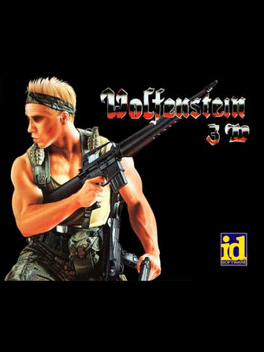
The SNES version of Wolfenstein 3D has modified episodes and storyline, along with heavy censorship. The changes make this version a different game from the original DOS game, and was used as the basis for the Atari Jaguar, Macintosh, 3DO and Apple IIgs ports. A Macintosh version would later unite both the SNES storyline and the original DOS storyline in a single release. The Japanese version has even more censorship than the Western release, with a storyline changed even further.NebulasRay
1994
NebulasRay
1994
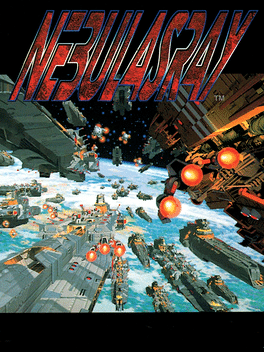
NebulasRay (ネビュラスレイ Nebyurasurei?) is a vertical scrolling shooter arcade game that was released by Namco in 1994 (but was first referred to, in the Katakana syllabic writing system of the Japanese language, in the ending for Tinkle Pit in 1993); it runs on the company's NB-1 hardware, and the players assume control of two spaceships called the "Fighting Rays" (red for Player 1, blue for Player 2), through six areas (Exeo, Evergrenes, Lost Marinarc, Sandvurn, Stream Drive, and Master Fortress), along with an "extra" one called the "Challenging Area" (which is the same as the first one, but the players will only have one life to get through it, for their remaining lives will have been added to their scores, after defeating the sixth area's boss). Nebulas Ray has many 3-D elements and very detailed graphics.Super-X
1994
Bloodshot
1994
Bloodshot
1994
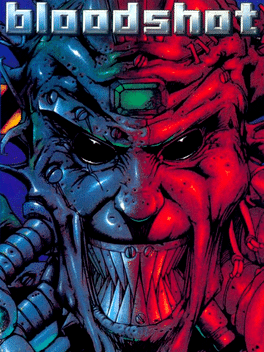
Bloodshot, known as Battle Frenzy in Germany, is a Sega Mega Drive and Sega Mega-CD game developed by Domark. It is notable for being a 3D first person shooter - one of the few available for the Sega Mega Drive and the only game of this genre for the Sega Mega-CD. The game takes up most of the screen, with much smaller borders than similar games such as Zero Tolerance, a very impressive technical achievement. A two player splitscreen mode is also available. However, the game also suffers from slowdown and some of the texture data of the Mega Drive version looks corrupted but this was fixed with the Mega-CD version.