Most Popular Ps2 Games - Page 329

Hana no Star Kaidou
1987
Hana no Star Kaidou
1987
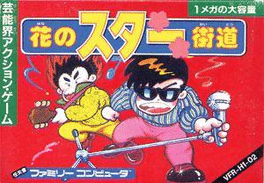
Hana no Star Kaidou (which can be loosely translated as "Blossoming Star Highway") is an action game for the Famicom that was developed and published by Victor Musical Industries in 1987. It is about two musicians who dream of obtaining a recording contract and becoming big stars. The player must control both Moero and Goro on the screen at one time. They run, jump, and attack simultaneously. Each one has their own life count, and the game is over as soon as one of them loses all of their lives. Because of the unituitive controls, and unforgiving game mechanics, this game is considered quite difficult and generally not fun to play.Hi no Tori Houou-hen: Gaou no Bouken
1987
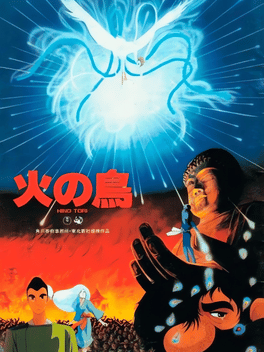
Hi no Tori Hououhen: Gaou no Bouken is a licensed action platformer with block placing mechanics, based on Osamu Tezuka's Phoenix (Hi no Tori) manga series.Heisei Tensai Bakabon
1991
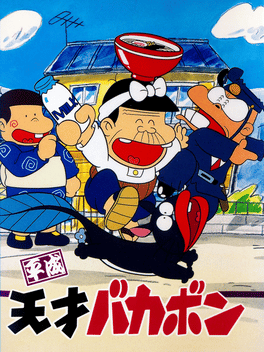
A former genius has now become very eccentric and senile. His family deals with all the crazy problems he and his old friends cause around the neighborhood.Kaiketsu Yanchamaru 2: Karakuri Land
1991
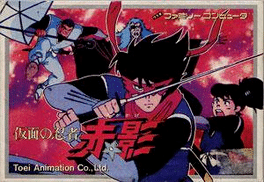
Kaiketsu Yanchamaru 2: Karakuri Land is an Action game, developed and published by Irem, which was released in Japan in 1991.Kamen no Ninja Akakage
1988
Kamen no Ninja Akakage is an Action game, developed by Shouei and published by Toei Animation, which was released in Japan in 1988.Kanshakudama Nage Kantarou no Tokaido Gojuusan-tsugi
1986
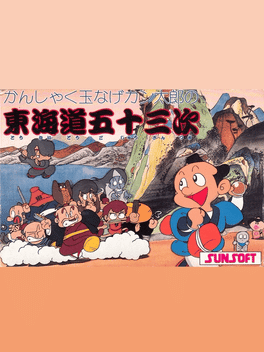
Although commonly referred to as Toukaidou Gojuusan-tsugi, the full name of the game is Kanshakudama Nage Kantarou no Toukaidou Gojuusan-tsugi, which can be roughly translated as "explosive throwing Kantarou and the 53 stations of the Toukaidou". To further explain the main character's name is Kantarou, and he throws bombs at his enemies. He is attempting to travel from Kyoto back to Edo (known today as Tokyo) to see his girlfriend Momoko. To get there, he is traveling through the Toukaidou highway which is composed of 53 checkpoints along the way. However, an unscrupulous merchant is attempting to capture Kantarou and steal his explosive technique secrets. Toukaidou Gojuusan-tsugi is a horizontally scrolling action game developed by Sunsoft in 1986. It was never released outside of Japan. On June 29, 2001, the game was released for the Windows platform as part of Sunsoft Classic Games 2 along with Ikki (which was itself rereleased as a budget title in 2004). On December 27, 2001, the game was released on the PlayNagagutsu wo Haita Neko: Sekai Isshuu 80-nichi Daibouken
1986
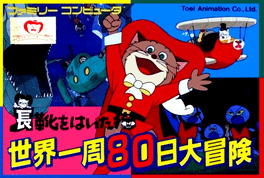
Nagagutsu wo Haita Neko: Sekai Isshuu 80-nichi Daibouken is a 1986 video game based on the third film of The Wonderful World of Puss 'n Boots that was released exclusively in Japan for the Family Computer. Four years later, the game (with several modifications) was released in North America under the title Puss 'n Boots: Pero's Great Adventure. The main character is the Puss in Boots character from the tale; a cat named Pero (Toei Animation's mascot) He is also known as 'Perrault' in the game, as that was the name of the original author of the Puss In Boots story; Charles Perrault. He is known for helping an impoverished master attain wealth through the use of trickery.Tokoro-san no Mamoru mo Semeru mo
1987
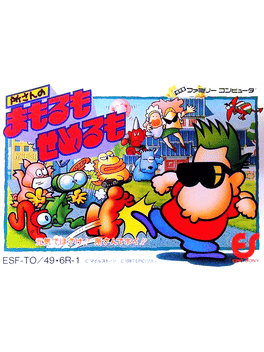
An action platformer game by Sony label Sony Epic Records that was only released in Japan on June 27th, 1987. It is named for and features the real-life Japanese celebrity Tokoro Jouji. Tokoro-san no Mamorumo Semerumo is an action platformer that stars real-life Japanese musician/comedian/voice-actor Tokoro Jouji, a.k.a. George Tokoro. Armed with a water pistol with a finite supply of water, Toroko-san must make his way across various levels either shooting or avoiding the various enemies along the way. This game has some notoriously poor game design, such as ammo replenishing items being hidden, which means the player needs to shoot randomly to find them which simply depletes their finite ammo supply even faster. If the player takes too long in any one world, a massive vision-obscuring storm will roll in and make the game considerably more difficult to play. The game, however, does feature an early example of a non-linear stage selection progress as different paths become available after defeating each boss.Pizza Pop!
1992
Pizza Pop!
1992
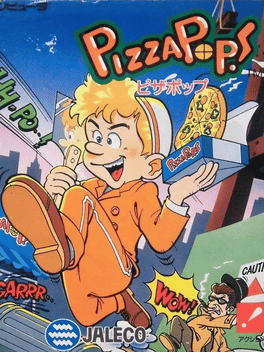
The Pizza Boy must deliver pizzas to various dangerous locations in order to make enough money to buy his girlfriend an engagement ring. He is thwarted by many enemies, including his romantic rival who appears frequently to take him down. Points are scored at the end of each stage based on completing stages quickly, defeating enemies and recovering extra pizzas.Zooming Secretary
2012
Zooming Secretary
2012
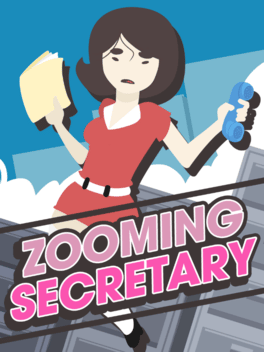
Part platformer, part puzzle, part workplace simulator and entirely satirical is what Zooming Secretary is. Playing the role of a secretary in her trial period at a new job, you have to work your way through an increasingly difficult week without being fired for failing to answer calls on time.Battle Kid 2: Mountain of Torment
2012
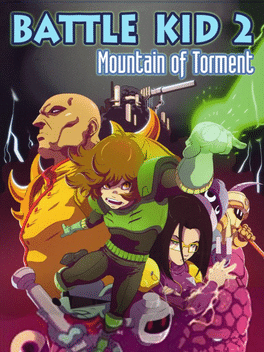
The sequel to Battle Kid: Fortress of Peril by Sivak Games. Battle Kid 2 is a homebrew game, sold via Retrozone on unlicensed NES carts.Kero Kero Keroppi no Daibouken 2: Donuts Ike ha Oosawagi
1993
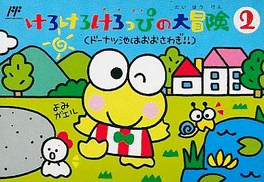
Kero Kero Keroppi no Daibouken 2: Donuts Ike ha Oosawagi is a Japan-exclusive action video game video game for children that was released on the Family Computer console in 1993. This video game has Sanrio's character searching for lost children who have been kidnapped by monsters. Essentially a standard Super Mario Bros. clone, the player controlling the cartoon frog has to leap around platforms jumping on baddies or killing them with his croak weapon. Each bonus level involves matching characters from the Sanrio franchise in a format similar to the card game Concentration. Intermission screens show the progress of the character throughout the game. Levels range from the forest to a seaside setting.Perman Part 2: Himitsu Kessha Madoodan wo Taose!
1992
"Paaman (or quite possibly Parman) is a comic in Japan which is done by the same guy who did Doraemon. Like that wasn’t already obvious just by looking at ‘em. All of the four characters that you have the choice of controlling have the amazing ability to fly in an amazingly awkward fashion. I don’t think there’s any difference in who you want to pick though. What’s awkward about flying is, if you’re flying Up and want to go Left, you don’t just automatically go Left when you hit the control pad… you go diagonally, then you go left. And you don’t sit still if you let go of the control pad, you have to hit A to stop. And then you have to hit A again to fall to the ground and walk around like normal. Which is all very weird. But you can jump REALLY high, so that’s cool. There’s a side view, where you can fly, like what I was just talking about, and there’s a top view, where you walk around inside of buildings and stuff. You can’t fly though, but you can jump, which is pretty useless. What’Sir Ababol
2014
Sir Ababol
2014
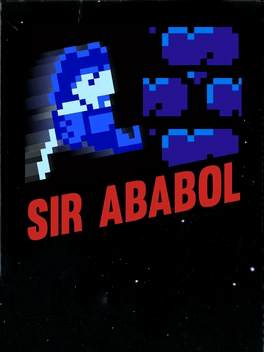
Sir Ababol controlled through the Monegros for all ababoles. To progress in your adventure you'll have to go find a set of keys that you can use to open doors and access other locations. Once you've gathered 24 ababoles finish your mission. Jump up the bat, dogs and warriors to kill them, and avoid touching the water is bad. To recover some encouragement, you can eat one of the chicken thighs "monegro's fried chicken" magic they appear scattered around the stage. Briconsejo: be patient and do not go crazy! Sir Control Ababol Monegrian accross the fields and gather flowers ababol 24. To be Able to progress in your journey you'll need some keys you will be Able to use to open several doors to gain access to different sections. You can jump on the baddies to get rid of them, too. Be patient, think before you jump, and you'll be successful!Tiger Jenny
2015
Tiger Jenny
2015
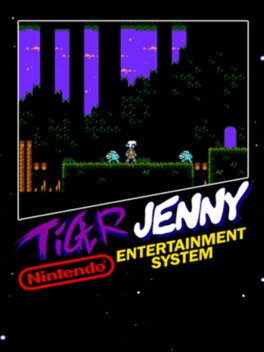
Tiger Jenny is a NES game set in the same universe as "Ittle Dew" it takes place a thousand years before the events of that game. Battle your way through the forests to seek vengeance on the Turnip Witch who dwells in her castle. Note that this game actually runs on the real hardware, it's not just an imitation. Therefore the release is in nes rom format so you'll need an emulator to play it.Toad's Adventure
2011
Toad's Adventure
2011
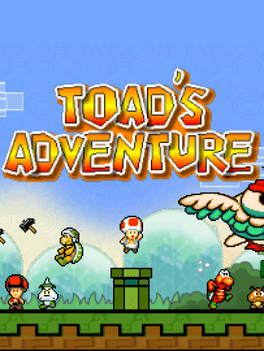
Toad's Adventure is a fan game featuring the Mario universe character Toad. It is a side scroller platformer.GeGeGe no Kitaro: Yokai Daimakyou
1986
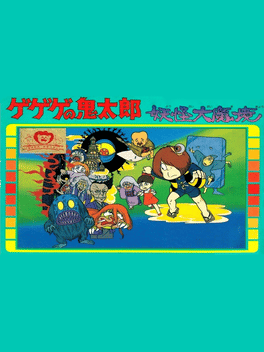
GeGeGe no Kitaro: Yokai Daimakyou, known as Ninja Kid in the West, is an NES game developed by TOSE and published by Bandai. It was based on the manga series GeGeGe no Kitaro. This game was followed by a sequel titled Gegege no Kitarou 2: Youkai Gundan no Chousen, which was released the following year only in Japan also by Bandai. It was the eighth best selling Famicom game of 1986, selling 1,250,000 copies. The original Japanese version is notably different from the American version (Ninja Kid). The main character is Kitarō, and his main weapon is his hair rather than darts. His sub-weapons are a flying finger instead of shuriken, his vest instead of the feather, and a geta instead of a boomerang. All of these weapons function the same as the ones of the protagonist of the American version, Kyo; they just use different sprites. The fireball sub-weapon remains the same. Certain levels are inhabited by "western" film monsters like Frankenstein's Monster and Count Dracula; the boss of these levels is the characterLala the Magical
2016
Lala the Magical
2016
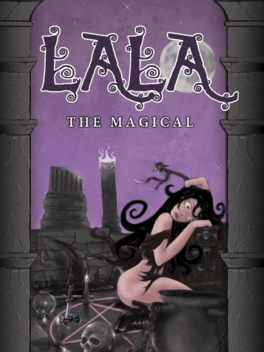
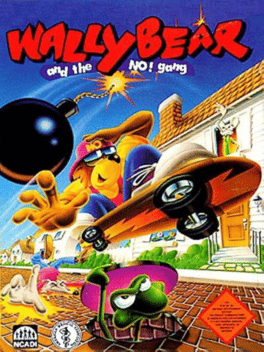
In the ancient ruins (province of Badajoz) lives Lala with her teacher. She is learning magic but still has a long way to go. “Tell me about the Sky Palace” – asks Lala, and her teacher tells her again about the three Power Gems hidden inside. “I’d love to see them”, but Lala’s teacher would say no… “It’s too dangerous, and powerful magic is required to traverse the palace”. But now the teacher has left for a few days and Lala is bored… “His Magic Wand should provide a power that’s strong enough to be able to cope with the perils hidden inside the Sky Palace. Problem is, the Wand is locked in a special vault, and the lock is also magical!” Not only she needs to find the key, but become stronger collecting eight magic potions. Let’s get busy! Help Lala get the Wand and travel to the Sky Palace to find the three Power Gems! Just because she’s bored!Wally Bear and the NO! Gang
1992
Wally Bear and the NO! Gang is a side-scrolling platformer designed to teach kids the dangers of doing drugs, gang banging and hanging out with the wrong crowd. Most obstacles can be avoided, but Wally can also bop enemies on the head with his skateboard. The game features seven levels to traverse and a total of two power ups to find all while racing against the clock to help out your friends.Puss 'n Boots: Pero's Great Adventure
1990
Pero is Puss 'n Boots of storybook fame and he's caught up in a whirlwind adventure, traveling through time and around the world! True-blue Pero has been "cat-apulted" back through time by the terrible Count Gruemon. Now Pero must cross many dangerous lands to defeat Count Gruemon and recover the Time Machine which will return Pero home. It's a "cat-astrophe!"