New Playstation 3 Games - Page 296

Chuugokuryuu II
1997
Chuugokuryuu II
1997
A solitaire mahjong game where the object is to match 3 of a kind, using a limited amount of tiles. This game is known in China as "Zhong Guo Long 2" and in Japan as "Chuugoku Ryuu II" (translated from Japanese as 'China Dragon II').Satella de Picross
1997
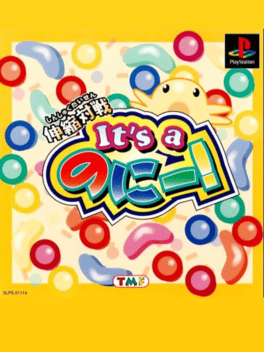
Shinshuku Taisen: It's a Noni!
1997
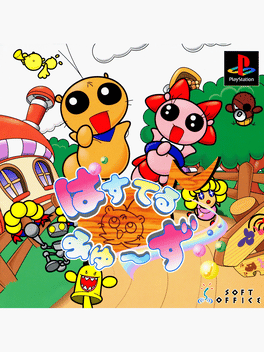
Shinshuku Taisen It's a Nonii! is a puzzle game. The game features four differents playable characters that the player can choose at the beginning of the game which one he will use during the game.Sega Ages: Columns Arcade Collection
1997
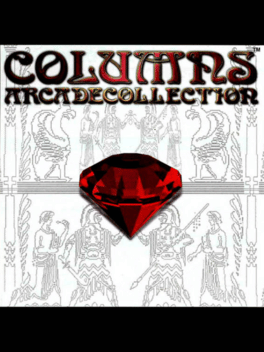
Sega Ages: Columns Arcade Collection is a compilation of four Columns arcade titles.Puzzle Star Sweep
1997
Puzzle Star Sweep
1997
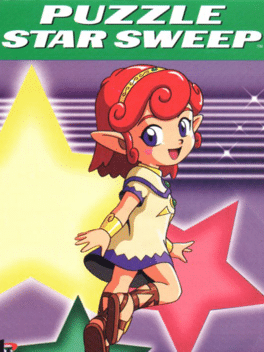
star 4.8PlayStation Port of Star Sweep. In this vaguely Tetris-like game, players score points by eliminating "star blocks." A star block is a colored rectangle with a star on one end of it, and blocks are eliminated when the stars of two like-colored blocks touch each other. While the game is being played, star blocks and obstacles rise from the bottom of the screen while the player moves and rotates a cursor which determines where additional star blocks will be thrown into play from off-screen. The game features single-player and competitive play as well as a story mode featuring boss creatures and a bizarre plot -- apparently the whole game is actually a sport in which children poke a creature known as a star pig with sticks in order to make it vomit star blocksSokoban Basic
1997
Sokoban Basic
1997
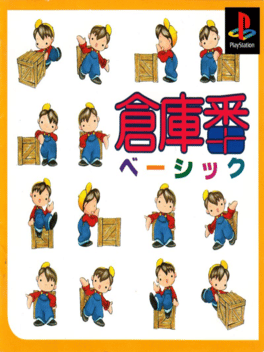
Soukoban Basic is the first Playstation game of the classic puzzler based on the gaffer in charge of a warehouse needing to get the stock correctly stashed. Unfortunately the stock can only be pushed around requiring a bit of lateral thinking to get the warehouse in order.Psychic Force Puzzle Taisen
1997
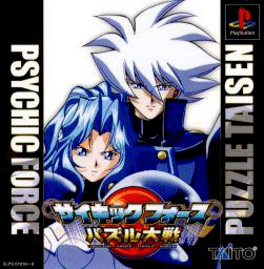
Psychic Force Puzzle Taisen is a puzzle spin off of the Psychic Force series, it was only released in Japan.The Irritating Maze
1997
The Irritating Maze
1997
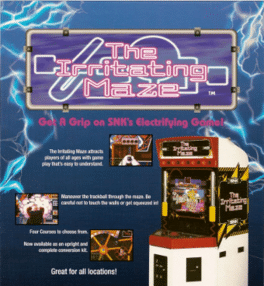
The Irritating Maze quite literally lives up to its name. It's a maze, of sorts, and it's one hell of an irritating game. In fact, it is one of the most irritating games that most will ever come across. But it does have its charms, namely its offbeat gameplay. The graphics are bright and colorful, with a lot of eye candy everywhere. Depending on your point of view, this may or may not be a good thing, as all that coloring and eye candy has been designed specifically to distract you from beating the level. All that glitter is isolated to the areas immediately surrounding the track, and if you look off the beaten path you'll notice that the graphics there are quite sparse and simplistic. The sound and music are passable, though not particularly good. The Irritating Maze's songs sound like generic puzzle game music and are generally pretty forgettable, but they do fit the game's mood. You'll hear an announcer's voice at certain points of the game telling you that you've passed a checkpoint or something like that. THarry the Handsome Executive
1997
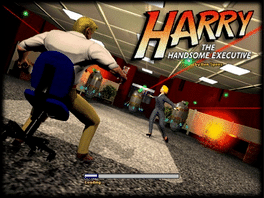
Harry the Handsome Executive is a shareware action game published by Ambrosia Software. Players must slip into the modestly priced loafers of Harry (the handsome executive) as he pilots his state-of-the-art swivel chair into battle against AOL disc throwing coworkers, killer robots, and the upper management of ScumCo itself.Tetris for Windows CE
1997
Tetris for Windows CE was a game released for various devices running Windows CE.Lights Out
1997
Lights Out
1997
A puzzle game for the Game.com. Based off of the electronic toy game of the same name.Tetris Plus 2
1997
Tetris Plus 2
1997
A puzzle game where you arrange the bricks to make horizontal rows of bricks so an explorer can get to the exit.Tetris Plus
1997
Money Idol Exchanger
1997
Jangou Simulation: Mahjong-dou 64
1997
Jangou Simulation: Mahjong-dou 64 is a Miscellaneous game, developed by Art and published by Video System, which was released in Japan in 1997.Pastel Muse
1997
Lose Your Marbles
1997
Lose Your Marbles
1997
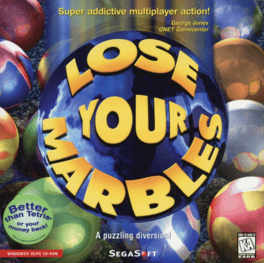
Lose Your Marbles is a puzzle game where the goal is to create matches of colored marbles to fill either the CPU's or another player's board with marbles.Tetrisphere
1997
Tetrisphere
1997
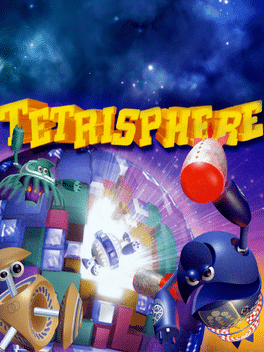
star 8.4Tetrisphere is a variant on Tetris in which various shapes are shifted across a wrapped three-dimensional grid resembling a sphere, and then destroyed. The objective of the game changes depending on the mode, but generally consists of removing layers of shapes to reach the playing field's core. Despite very little domestic advertising, Tetrisphere enjoyed moderately good sales and a mostly favorable critical reception. Reviewers praised the game's originality and the musical score composed by Neil D. Voss.The Bombing Islands
1997
The Bombing Islands
1997
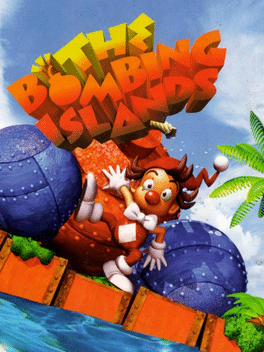
Clown World is in trouble. Mysterious blue bombs have appeared all over the planet, and King Clown needs help. In a royal decree, the king beckons for Kid Clown, a hero of past Kemco games, to clean up these bombs in all six continents. The strange, yet brave little clown sets out to blast the bombs away before the planet explodes. Clearing these bombs will not always be easy, as they have been arranged in puzzles across 60 different levels. Kid Clown must act wisely, because each level has only one igniter bomb that can detonate the bombs surrounding it. To successfully complete a level in one try, Kid Clown must arrange the bombs so that a chain reaction takes place. He also has to get a safe distance away from the reaction or he will explode.