Most Popular Playstation 3 Games - Page 429

Slingo Quest
2006
Slingo Quest
2006
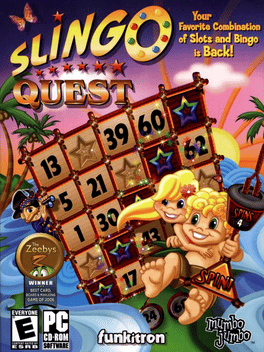
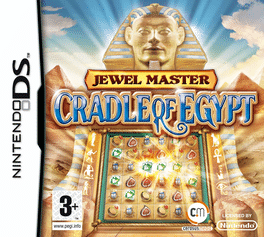
Slingo Quest combines two classics, slots and bingo, in the ultimate puzzle game. Spin the traditional 5-reel slot machine, then match the numbers on your card down, across or diagonal, and you've hit a Slingo! Create as many Slingos as you can in 20 spins with the help of fun power-ups in this tropical adventure.Jewel Master Egypt
2009
Sudoku the Puzzle Game Collection
2011
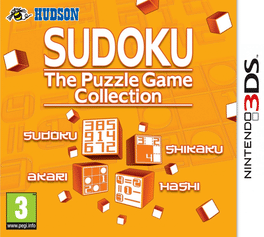
* Put yourself to the test and tackle Japanese puzzles as you’ve never seen them before in Sudoku – The Puzzle Game Collection for Nintendo 3DS. * Tackle 600 puzzles that include Sudoku and other Japanese favourites Shikaku, Hashi and Akari. * Unlock hints by using the Play Coins you acquire whilst walking around with your Nintendo 3DS in Sleep Mode. * Watch puzzles come to life in a new way thanks to the unique graphical capabilities of the Nintendo 3DS system.Renketsu Puzzle Tsunagete Pon!
1998
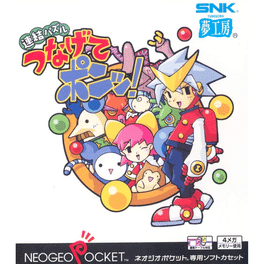
Renketsu Puzzle Tsunagete Pon! is a game where blocks have to be dissolved. New blocks constantly scroll into the screen from the top. The game is over when the first blocks reach the bottom of the screen.The Irritating Maze
1997
The Irritating Maze
1997
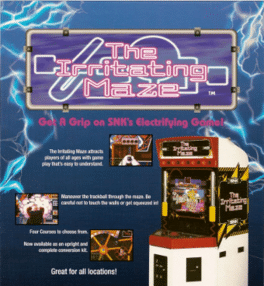
The Irritating Maze quite literally lives up to its name. It's a maze, of sorts, and it's one hell of an irritating game. In fact, it is one of the most irritating games that most will ever come across. But it does have its charms, namely its offbeat gameplay. The graphics are bright and colorful, with a lot of eye candy everywhere. Depending on your point of view, this may or may not be a good thing, as all that coloring and eye candy has been designed specifically to distract you from beating the level. All that glitter is isolated to the areas immediately surrounding the track, and if you look off the beaten path you'll notice that the graphics there are quite sparse and simplistic. The sound and music are passable, though not particularly good. The Irritating Maze's songs sound like generic puzzle game music and are generally pretty forgettable, but they do fit the game's mood. You'll hear an announcer's voice at certain points of the game telling you that you've passed a checkpoint or something like that. TPuzzle de Pon! R
1997
Puzzle de Pon! R
1997
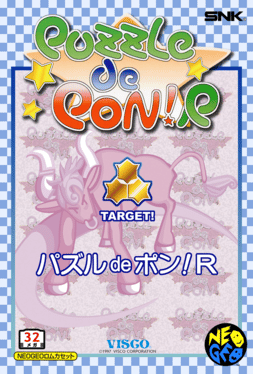
The update/sequel to the original Puzzle de Pon! It's a puzzle game similar in style to Puzzle Bobble. The goal is to clear the bubbles surrounding the drop token, rather than just clear the stage.Puzzle Bobble VS
2003
Puzzle Bobble VS
2003
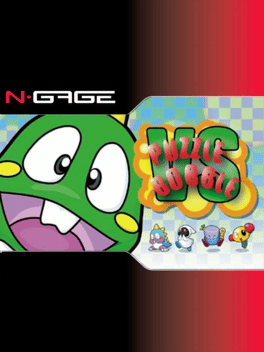
Bubble poppin' action on the N-Gage. Oddly called Puzzle Bobble even in The States (as opposed to the previous nomenclature of "Bust-A-Move").Blow Up!
1987
Blow Up!
1987
In Blow Up! the player takes on the role of Joe Kowalski who must navigate his way to the exit in six progressively more difficult caverns. The game has similar gameplay as Boulder Dash, and each cavern must be completed within five minutes. Along the way, Joe will encounter various enemies. There are grabbers who will jump on Joe and slow him down. Darth Vader heads who move around more quickly and will shoot at you. Walking grenades will explode when you come too close to them. The green virus will spread around when it is unleashed and it will make you sick when you come into contact with it. Joe will turn pale white, his energy will drain and he can only move around slowly. Joe can fight back by dropping rocks onto them, or by shooting them or by using mines to blow up enemies or walls.Buster Block
1985
Buster Block
1985
Buster Block is a maze game where the player needs to go through 25 levels and destroy monsters by pushing blocks onto them. Energy is lost when the player collides with a monster or gets pushed by a block. The game is based on the two BBC Micro titles Pingu and Rubble Trouble and uses 16 types of blocks; those from the games it is based on along with blocks that can go around corners. There are six different monsters and the game's 400 rooms are not random, but designed individually. Energy can also be gained back, along with bonus points.Flappy Limited '85
1985
Flappy Limited '85
1985
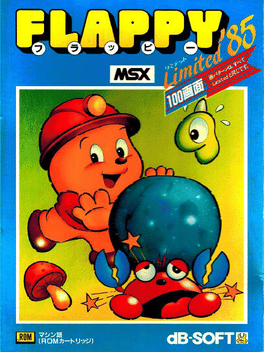
1985 re-release of "Flappy" for the MSX, but instead of 57 levels this has 100.Mole Mole
1985
Mole Mole
1985
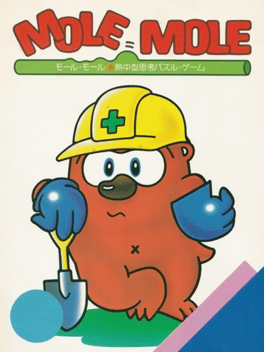
Mole Mole is a puzzle game in which the player has to navigate a rather anthropomorphic mole through top-down single-screen stages, with the goal of reaching the exit after having collected all the fruits on the screen.Mole Mole 2
1986
Mole Mole 2
1986
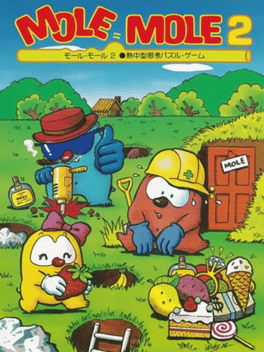
The sequel to "Mole Mole" in which you you navigate through single-screen stages, with the goal of reaching the exit after having collected all the fruits on the screen.Kitahei
1986
Ultra Bust-A-Move
2004
Ultra Bust-A-Move
2004
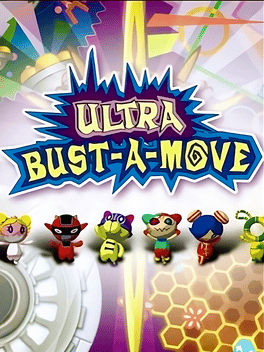
Puzzle Bobble (Japanese: パズルボブル Hepburn: Pazuru Boburu?), also known as Bust-a-Move in North America, is a 1994 tile-matching arcade puzzle video game for one or two players created by Taito Corporation. It is based on Taito's popular 1986 arcade game Bubble Bobble, featuring characters and themes from that game. Its characteristically cute Japanese animation and music, along with its play mechanics and level designs, made it successful as an arcade title and spawned several sequels and ports to home gaming systems.V
2017
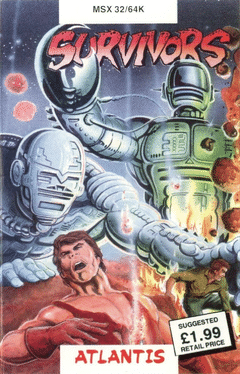
The Survivors
1986
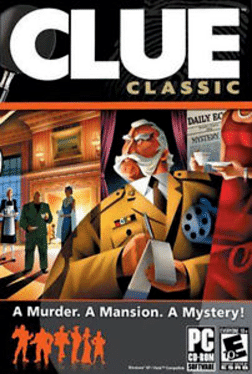
Clue Classic
2008
Clue Classic
2008
Clue Classic is a video game based on Hasbro's Cluedo franchise. It was developed by Games Cafe and published by Reflexive Entertainment on June 3, 2008. The single-player interactive game was inspired by the artwork in the 2002/2003 Classic Detective Game version, featuring the original six characters, weapons and nine original rooms. Producer was Rob Adams, designer was Rob Adams, programmer was Chad Sterling, lead Artist was Erin Miller, and Music & Sound was by Staffan Melin and David Chan.Dragon's Eye Plus: Shanghai III
1991
Dragon's Eye Plus: Shanghai III (ドラゴンズアイ プラス 上海III) is a 1991 game by Home Data for the Sega Mega Drive released exclusively in Japan. It is a member of Activision's Shanghai series of mahjong solitaire games — to be precise, it is a port of the Japanese version of what the Western market got as Shanghai II: Dragon's Eye; the numbering discrepancy was because of a Japanese Shanghai II that had already been made. Activision were not happy with this version of the game, and instead produced their own Shanghai II: Dragon's Eye for the Western market.