Most Popular Playstation 3 Games - Page 425

Bit Generations: Soundvoyager
2006
Bit Generations: Soundvoyager is a Game Boy Advance video game released in July of 2006. It was developed by skip Ltd. and published by Nintendo. The game was unfortunately never released outside of Japan. The game can be played entirely without looking at the screen, as the point is to listen to the sounds that are emitted from the Game Boy Advance's speaker. It should be noted, however, that it is quite a challenge to listen to the noises coming from the speaker, and that it's a lot easier to hook up ear phones or hook the GBA up to a stereo. It will also be very helpful to be in a quiet space.M&M's Break 'Em
2007
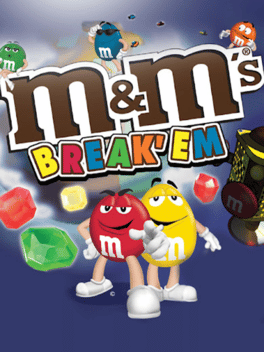
M&M's Break 'Em
2007
Mr. Runch, a rotten and dangerous peanut, fiercely determined on being one of the M&M's, just escaped the reject bin where he was discarded as ghastly! He's on the loose in the Galaxy, and trying to kidnap and trap all of the M&M's into crystals until he can get what he wants: the chance to become a real M&M's candy!Sea Trader: Rise of Taipan
2003
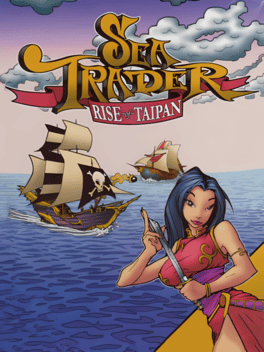
Raise your sails and rouse your crew. It's time to discover new lands on the first commodities trading game for GameBoy Advance. Captain your own ship, with a band of wacky sailors at your command. Become the supreme Sea Trader as you trade in silk, grain, currency and black market goods to increase your wealth. Fight off pirates when they try to steal your goods, or even attack other ships to plunder their spoils. And when you're victorious, carousing is optional.Planet Monsters
2002
Planet Monsters
2002
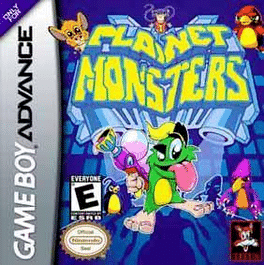
There is only one rule with this game - Be the last one standing no matter what! Planet Monsters must confront themselves in eight unique countries each of 5 levels. Four monsters can play at once, so arm yourself with traps, blocks, jelly guns, grenades...and a great sense of humor!Turbo Turtle Adventure
2002
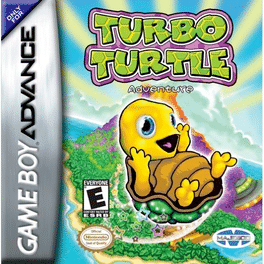
Help Turbo Turtle win his freedom to once again swim the sea. Trapped on the 'Isle of Mazes' you must guide Turbo Turtle through deceitful labyrinths and nasty traps. Collect keys to unlock doorways, avoid the super magnets and utilize the turbo boost feature to try and beat your fastest time. This innovative title blends the basic balancing act of Super Monkey Ball with the mind-bending key-and-switch puzzles found in the Zelda games.Tringo
2006
Tringo
2006
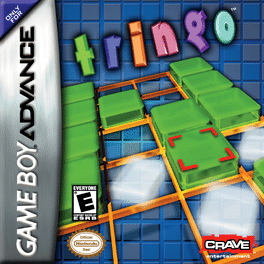
Tringo combines elements of puzzle games and bingo in a challenging brain-twister. Players start with a blank board on which they must place 35 game pieces that appear one by one during the timed turns. Points are scored by fitting the pieces to form solid blocks and clearing the blocks from the board. You've got to move quickly but carefully because missed pieces lose points. Tringo was developed first by Nathan Keir within Second Life, a virtual world that encourages players to create their own content. Brought to the GBA, this handheld version is optimized for portable play for quick play and multiplayer gaming.Ultimate Puzzle Games
2005
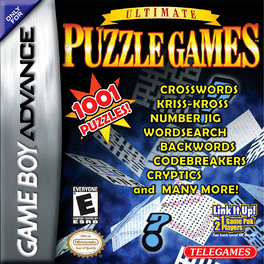
Part of the Telegames Ultimate series of handheld pick-up games. Ultimate Puzzle Games includes a collection of an incredible 1001 puzzle challenges. Playable games include Crosswords, Kriss-Kross, Number Jig, Wordsearch, Backwords, Codebreakers, Cryptics, Diamonds and more. Features include 2-player link play and downloadable multiplayer.Dr. Sudoku
2006
Dr. Sudoku
2006
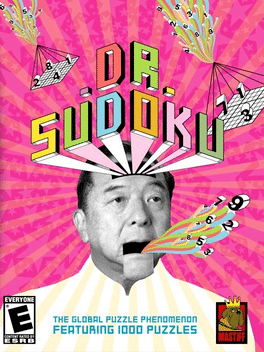
Sudoku is the puzzle phenomenon from Japan, a game that looks like a math problem, but is in fact a twisting puzzler. The rules are simple: start with a grid consisting of nine three-by-three squares in which some of the numbers are already supplied. Fill in the blank squares so that each column, row, and three-by-three grid contains a number from 1 to 9 with none repeated. Dr. Sudoku for the Game Boy Advance is the first of a series of Sudoku products from Mastiff. The GBA title features 1,000 hand created puzzles, Original Mode (which lets you create you own Sudoku puzzles,) a tutorial mode, help for those moments when you really are stuck, the ability to "pencil in" possible solutions, and a puzzle problem creation mode.Zooo: Action Puzzle Game
2005
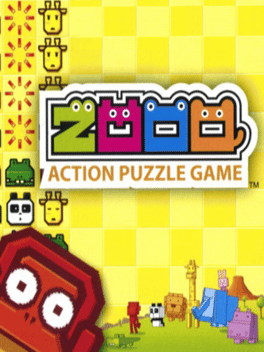
Help control the zoo animals by strategically swapping them around to create rows of the same animals and eliminate them from the board. A well kept zoo is a good zoo so keep them all in line and manage your board well!Guru Logic Champ
2001
Guru Logic Champ
2001
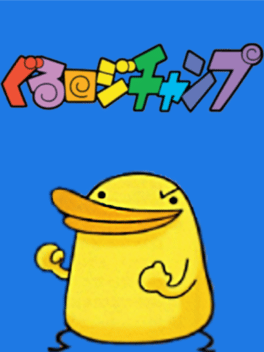
Guru Logic Champ is a Japanese-only Game Boy Advance puzzle game developed by Champ Team and published by Compile.Sudoku Fever
2006
Sudoku Fever
2006
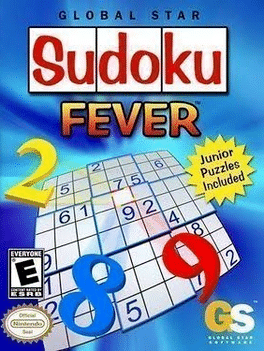
Sudoku is the puzzle phenomenon from Japan, a game that looks like a math problem, but is in fact a twisting puzzler. The rules are simple: start with a grid consisting of nine three-by-three squares in which some of the numbers are already supplied. Fill in the blank squares so that each column, row, and three-by-three grid contains a number from 1 to 9 with none repeated.Burning Paper
1993
Burning Paper
1993
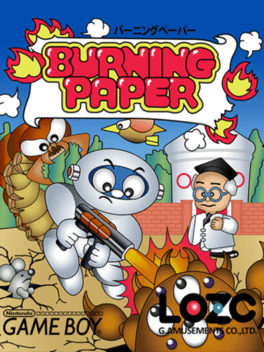
Burning Paper is a Puzzle game, developed by Pixel and published by LOZC G. Amusements, which was released in Japan in 1993.Chiki-Chiki Tengoku
1995
Chiki-Chiki Tengoku
1995
Chiki Chiki Tengoku is a Puzzle game, published by J-Wing, which was released in Japan in 1995.Block Kuzushi GB
1995
Block Kuzushi GB
1995
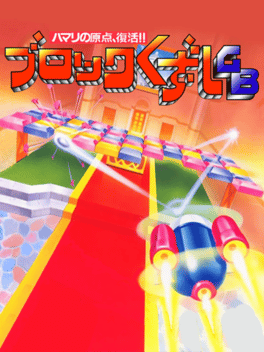
Block Kuzushi GB is an Action game, developed by OeRSTED and published by Pow, which was released in Japan in 1995.Wild Snake
1994
Wild Snake
1994
A deadly nest of snakes. And only you can keep them from getting out! Maneuver each new snake so it touches another of the same kind, making the venomous viper disappear. Sound easy? As long as you con keep matching up snakes, you're in control. But when those poisonous reptiles pile close to the top, you better run for your life! Both Sega Mega Drive and Sega Game Gear versions of WildSnake were advertised for release, but both were cancelled for unknown reasons. Pototypes of both have since surfaced.Franky, Joe & Dirk... On the Tiles
1993
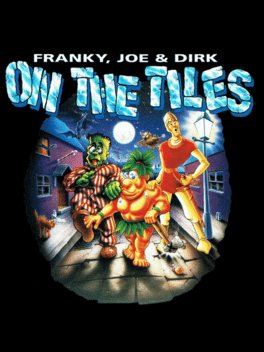
The Joe and Mac, Dragon's Lair and Dr. Franken franchises combine in this tile sliding puzzle game. A rather bizarre concept given the source material but does the gameplay stand on its own merits?Stop That Roach!
1994
Stop That Roach!
1994
Stop That Roach! is an Action game, developed and published by Koei, which was released in 1994.Brain Drain
1998
Brain Drain
1998
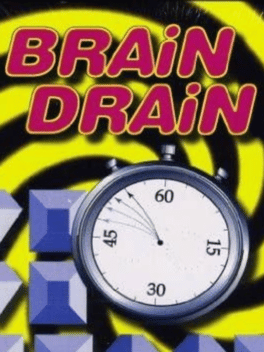
Brain Drain is a puzzle game in which the player has to recreate a pattern, consisting of different symbols like apples or hearts, which is shown in the corner of the screen. The main playing field consists of said symbols, but randomly switched around. The player controls a frame which encloses four of the symbols. When pressing a button, the symbols are rotated clockwise around the frame. Of course the levels have to be solved within a time limit. In the higher difficulty levels, the player also has to deal with so-called special effects which occasionally kick in during play, e.g. some symbols get hidden by "?" blocks, symbols rotate on their own or the controls are reversed. Three power-ups can be earned by completing bonus levels or finishing a level really fast: clock (stops time for 20 seconds), flash (skips the current level) and credit (gives a second try after time has run out). Clock and flash have to be activated manually; credits is applied automatically. Besides the regular playing mode, there is alsLocksmith
1991
Locksmith
1991
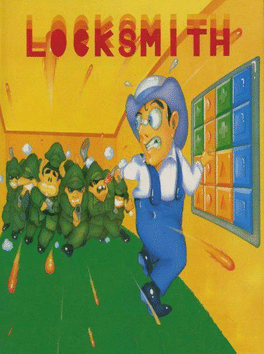
Unbelievable! Someone created the most complicated locks in the world. Captain Red-Hat Jack was assigned to grab the enemy's defense information centre's distribution plan, but firstly he must to resolve the series unbelievable locks to achieve his assignment. So time, intelligence, nervous and exciting will come with Jack always during the spy's war. Do you think he will finish this impossible mission? The answer is "you're better to help Jack!"3D Block
1989
3D Block
1989
This is an adaptation of Blockout, which in itself is a 3D version of Tetris. This is emphasized with the cartridge itself, having the artwork ripped from the original game. In this version the well is 5x5x10 cubes large and the size never changes, unlike the official versions. The controls are somewhat unorthodox, as unlike most other games, the Select button pauses the game while Start speeds up the block so that it moves to the bottom of the well faster. The block designs themselves are the same as in the arcade version of Blockout.