New Pc 9800 Series Games - Page 8

Aggregate
1994
Agalta
1993
Agalta
1993
A fairly traditional Japanese RPG developed by the doujin circle Fenrir with all the familiar ingredients of the JRPG genre, There is, however, a real-time element in the combat, similar to the ATB system of Final Fantasy series.First Queen III
1993
First Queen III
1993
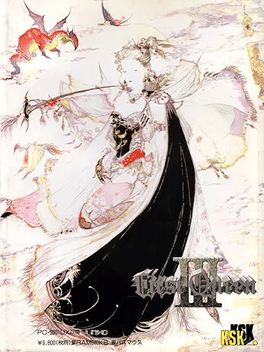
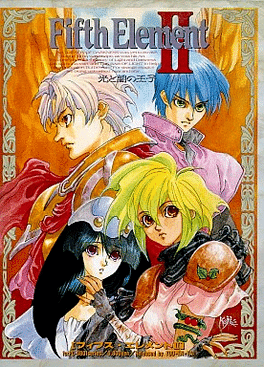
First Queen III is a Strategy game featuring artwork by Yoshitaka Amano. It was developed and published by Kure and released in Japan in 1993.Alvaleak Boukenki
1993
Ike Ike Dendai Bus
1993
Solid Lancer
1993
AIDS Watashi o Aishite... Jin'ai Seijin
1993
Main hero is an ordinary salary-man of 25 years old. He has a girlfriend, but they have not spent much time together since the beginning of the week. Now hero gets a bonus payment at work. How will she spend the money?Godzilla
1993
Godzilla
1993
Godzilla is a game for the NEC PC-9800 series developed by SystemSoft and released in 1993.Yougekitai: Jashin Koumaroku
1993
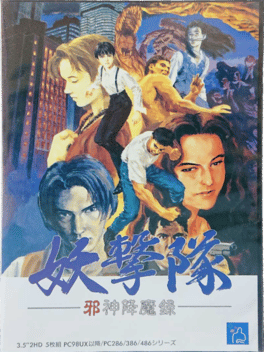
As the newest member of a paranormal detective group operating in the greater Tokyo area, it's your responsibility to help keep modern-day Japan safe from demons, monsters, ghosts, and various mythological figures. Manage your coworkers' schedules to conduct research & development, investigate reports of local anomalies, and venture out to fight and detain evildoers. Succeed at these tasks and you might come closer to solving the mysteries and conspiracy behind this earthly invasion! Yougekitai is a 1993 Telenet DRPG/strategic simulation game where you run an agency of professionals tracking and containing dangerous entities in bubble-era Japan. The game switches between your headquarters, where you oversee day-to-day operations, and dungeons where you & your party fight enemies and explore for items or information. Character abilities range in exploration and combat, from forensics to ESP powers. While the game's story has a set cast, your selection of team members is randomized upon starting a new game, and missRegional Power III
1993
Regional Power III
1993
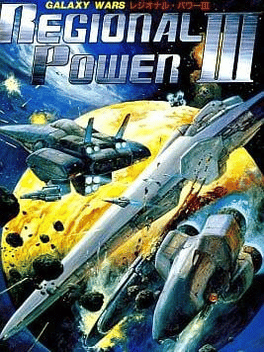
Regional Power III is a space strategy game. The player can either create an own scenario in a randomly generated map (setting the values for the number of planets and difficulty), or follow the campaign mode consisting of several scenarios, the first of which is set in the Tullaze star system and puts the player in control of the nascent Toran Federation.Night Walker: Mayonaka no Tantei
1993
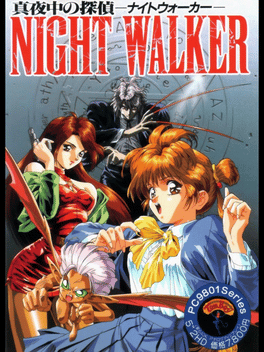
a 16-color PC-9801 eroge released by Tomboy in December 1993. Nightwalker is an adventure game, focused mostly on character interaction and problem solving. While the main characters of this game have the same names and similar appearances to their anime equivalents, their personalities are generally more easy-going and their backgrounds are less tragic (they all have living relatives). In comparison to the anime, the game is fairly lighthearted, with Shidō and Guni providing comic relief. Nightwalker was initially developed as a spin-off project of the adult game Bishōjo Audition: Find an Idol released by Tomboy in February 1993, with the character Rihoko Ayukawa from that game reappearing as a heroine. However, in the process of refining the setting, the heroine's name was changed to Riho Yamazaki, her design was changed, and the story and setting were separated from the previous work. The concept of the world of Nightwalker itself is based on illustrations from 1992.Doppyun Donpisha
1993
Doppyun Donpisha
1993
Hero is an aspiring photograph to cover women photo sessions. But he actually is tired of those neat photos and wants to shoot usual girls outdoors in their natural environment and without being caught by the police. He looks up to a colleague who agrees to accept the hero as his apprentice if he made nude photos of a list of girls.Mobile Suit Gundam: A Year of War
1993
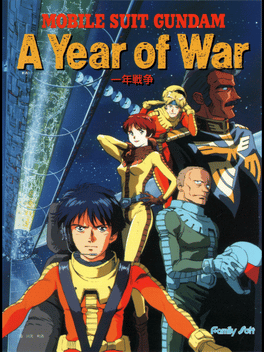
Mobile Suit Gundam: A Year of War is a 1993 turn-based strategy game for the PC-98 developed and published by Family Soft Co., Ltd.Madou Monogatari ARS
1993
Madou Monogatari ARS
1993
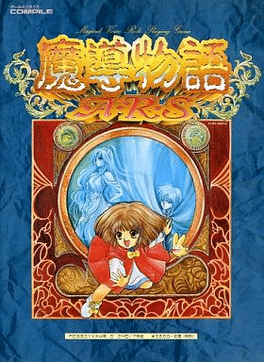
Madou Monogatari ARS is a prequel to Madou Monogatari 1-2-3, like Madou Monogatari 1-2-3, it is a trio of first-person dungeon crawlers. Each chapter is devoted to a different playable character.Dead of the Brain 2
1993
Dead of the Brain 2
1993
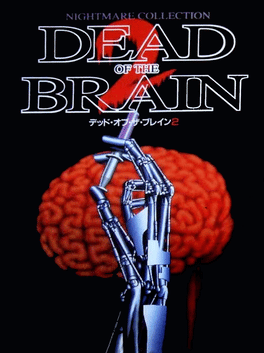
The sequel to Dead of the Brain, from Japanese developer Fairytale. Time has passed, but are the zombie dead really gone?Hamlet
1993
Hamlet
1993
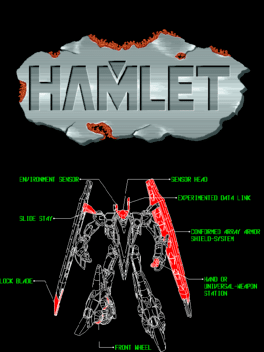
Hamlet is a first-person perspective game, set in the huge 3D maze-like eponymous facility. The auto-map is always visible, showing the player the character's position. Enemies and important objects are also visible on the radar. Whenever an enemy approaches, the playable robot is unable to move. The shooting is actually done in turn-based style; the player can only shoot once the robot's attack meter has filled up, and the rate of shooting depends on the robot's (or enemy's) agility. However, the game doesn't pause when the shooting occurs, creating the illusion of real-time combat. Though the game looks like a first-person shooter, it is, in its core, an RPG. Player-controlled robot receives experience and levels up after having defeated certain amounts of enemies. Attack, defense, speed, etc. get increased with each level up. It is possible to find and equip various kinds of weapons: a basic gun with infinite ammo, but low damage; powerful rocket launchers which cause high damage, yet have limited ammunition, e