New Sega Mega Drive Genesis Games - Page 38

Ferrari Grand Prix Challenge
1992
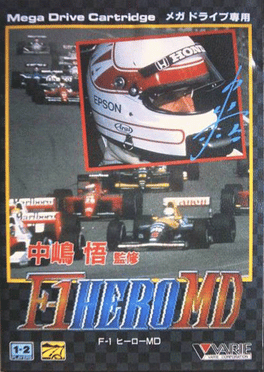
A racing game bearing the Ferrari brand. It is a regional port of Nakajima Satoru Kanshuu F-1 Hero MD.Fire Pro Wrestling Gaiden
1992
Fire Pro Wrestling is a long-running professional wrestling video game series originating from Japan, started in 1989 by Human Entertainment and continued by Spike in 2000. The series is distinguished by its grappling system, which is primarily based on timed button presses and strategy. Another signature feature of the series is its Edit mode, a character creation feature with many options to customize appearances, wrestling moves and A.I. behavior.Divine Sealing
1992
Divine Sealing
1992
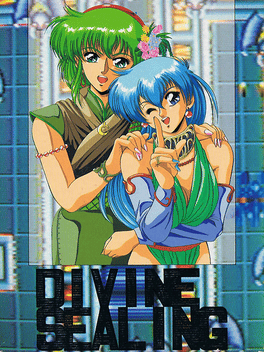
Falchion is an ace pilot in the Space Defense Force, and the pilot of a space ship known as Divine. On his way back to his home planet, daydreaming about girls, Divine's computer picks up a transmission from a nearby planet. Answering the transmission, it turns out to be a distress call from a beautiful woman on the Water Planet. "Save me..." she pleads, "and I will lend you my power." Falchion, lonely bachelor in space that he is, can't say no to a pretty face, and flies off towards the Water Planet.Uncharted Waters
1992
Devilish: The Next Possession
1992
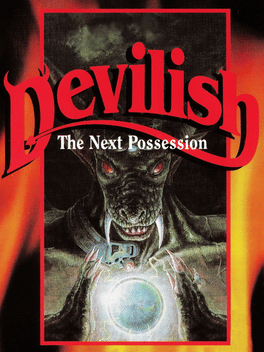
"Devilish" is different from other paddle games by letting you play with two paddles. The lower one behaves just like a usual paddle - you use it to prevent the ball from dropping down. The upper one can move and turn, allowing you to hit the ball from different angles and from different parts of the screen. You advance through levels by destroying bricks and enemies, going up until the level boss enemy appears.Magical Taluluto-kun
1992
Magical Taluluto-kun
1992
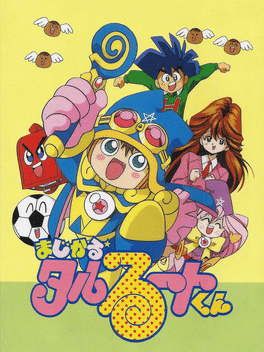
Magical Taluluto-kun is a 1992 action game for the Sega Mega Drive by Sega and Game Freak to tie into Tatsuya Egawa's/Shueisha's Magical Taruruuto-kun manga, which had been recently turned into an anime by Toei Animation. C jumps; C in mid-air lunges forward. By default, B attacks. When standing next to an object, B will grab that object; B again throws it at enemies. Objects can only be used in the area they are found. You get a new magic power after every stage; hit Start to bring up a menu to choose one and A to use.A-Ressha de Ikou MD
1992
A-Ressha de Ikou MD
1992
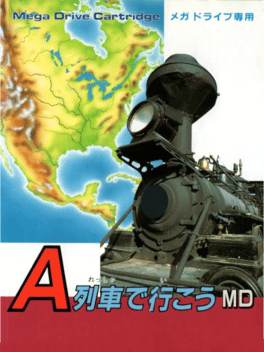
A-Ressha de Ikou MD is an entry in Artdink's A-Ressha de Ikou series of railroad simulation games, otherwise known as Take the A Train or simply A-Train. A Ressha de Ikou MD was released exclusively on the Sega Mega Drive in 1992, being ported by MNM Software (according to founder Mikito Ichikawa). The game refers to games created by Artdink in 1989 and 1991, which may suggest elements were taken from A Ressha de Ikou II or A Ressha de Ikou III released around that period. Like most entries in the series, A Ressha de Ikou MD was not released outside of Japan, although A Ressha de Ikou III, rebranded as A-Train was brought to western computers by Maxis, also in 1992.Thunder Pro Wrestling Retsuden
1992
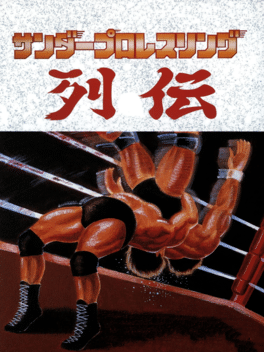
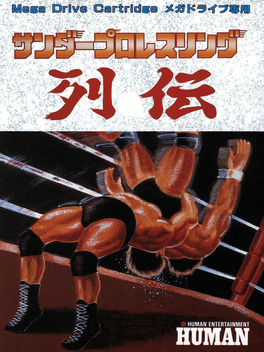
Thunder Pro Wrestling Retsuden is an entry in Human's Fire Pro Wrestling series. The game is a typical wrestling game presented in an isometric view with the entire ring visible on screen at once. Each button combination does something different depending on what situation you are in at the time. A North American release under the name Jesse "The Body" Ventura Wrestling Superstars was planned by DreamWorks, but was never released for unknown reasons.Steel Empire
1992
Home Alone
1992
Captain Planet and the Planeteers
1992
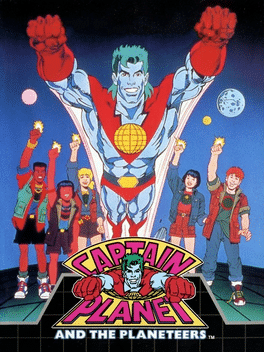
Fight real ecological threats through nine levels of deadly pollution. Five eco-heroes summon Earth, Fire, Wind, Water and Heart to defend our planet from destruction! With magic energy, they combine forces to summon Captain Planet, the champion crusader for Earth safety!Olympic Gold: Barcelona '92
1992
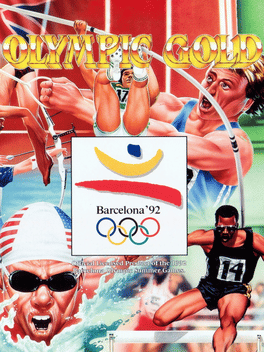
star 7.4Each computer athlete has a fictional name and nationality (choosing from UK, France, Germany, Italy, Spain, USA, Japan and the Unified Team, everyone with its own anthem snippet) and actual strengths and weaknesses: J. Balen, for instance, is a frequent 100 m and 110 m hurdles record breaker but only an average hammer thrower. Also, each computer controlled player seems better in a particular event depending on his country: Germans usually take the top spots in archery, Italians on swimming, Russians on pole vault, Americans on sprinting and so on.Alisia Dragoon
1992
Alisia Dragoon
1992
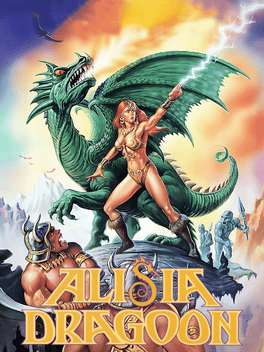
star 8The pace is intense. Enemies come at Alisia from everywhere. And nowhere. Battle hordes of crazed barbarians, mow down mobs of poisonous centipedes, and slay squadrons of winged gargoyels. Blast enemies in waves or one by one with multi-directional, auto-targeting laser fire. Recruit killer companions like the DragonFrye, Ball O'Fire, Thunder Raven and Boomerang Lizard. Use them to hurl blistering boomerangs, fireballs, and electrical attacks. With Alisia's super-tough fighting skills, fry enemies to a crisp. And prove once and for all that you can go hand-to-hand with evil and come out the champion!Toxic Crusaders
1992
Toxic Crusaders
1992
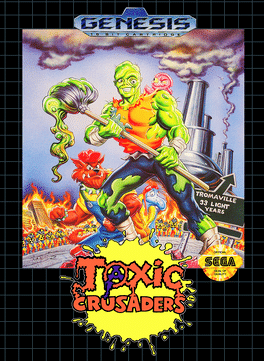
It's Clean Up Time! Only a complete and helpless nerd like Melvin Junko could be such a klutz that he would run into a vat of Grossolium 90, a terribly toxic waste by-product of the Island City Chemical Plant. Now the wimpy nerd Melvin has mutated into Toxie, a hideously deformed creature of super-human size and strength. But all is not lost, Toxie, with his newfound power, has joined forces with Major Disaster, Nozone, Headbanger, and Junkyard to form the Toxic Crusaders. No, not the ultimate heavy metal band, you moron! This motley crew is sworn to defend Tromaville and the rest of the U.S. from the polluting ways of Dr. Killemoff and his Radiation Rangers! It won't be any easy mop up operation, but with your help the Toxic Crusaders are sure to make a clean sweep of the six levels of sludge, slime, goop and grime, while washing Killemoff and his filthy friends off the face of the earth forever!Batman Returns
1992
Batman Returns
1992
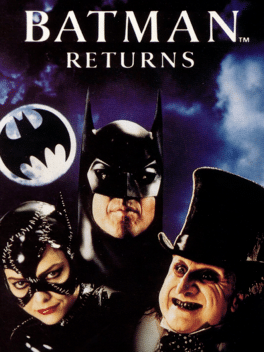
star 7.2Batman Returns is a beat-em-up side-scrolling game designed for the Sega consoles. It was published by Sega.Traysia
1992
Traysia
1992
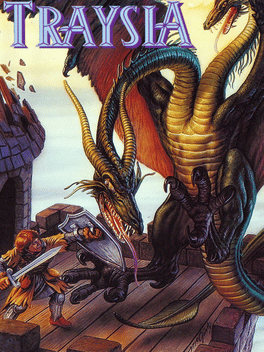
In Traysia the player controls a young man named Roy, who lives in the town Johanna. All his life Roy has been dreaming about leaving the town and going to explore faraway lands. Now, finally, his chance has come. His uncle, a travelling merchant, is going on a journey, and Roy decides to leave with him. His girlfriend Traysia gives him a pendant, to remind him of her... will Roy be able to escape from all the dangers that await him on his long journey and to see Traysia again?Syd of Valis
1992
Syd of Valis
1992
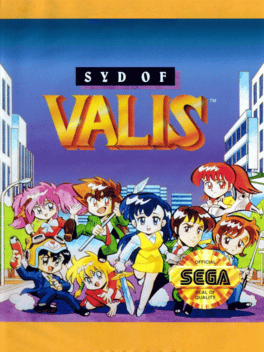
Yuko Ahso looks like an ordinary grammar school student, but she is actually the Valis Warrior. "I defeated King Rogles of the Dark World with the Valis sword which was given to me by Queen Valia, but my friend Reiko died in the process" Yuko went home by train after that terrible fight. She didn’t have the slightest idea that she would be summoned to fight again. "Yuko..." said a familiar voice. “Reiko," said Yuko, "is that you? But I thought you..." Reiko quickly admonished, “Go and see Queen Valia, Yuko. Emperor Megas has threatened Dream World and our friend Vecanti. When Yuko was told of Vecanti’s great danger, a burning desire moved Yuko to action. She has risen to crush Megas’ ambition!Chibi Maruko-chan: Waku-waku Shopping
1992
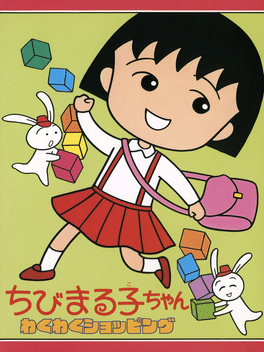
Chibi Maruko-chan: Waku-waku Shopping is the 8th video board game based on Momoko Sakura's Chibi Maruko-chan slice of life manga and anime about a troublemaking grade-schooler and her friends and family. Maruko and her classmates Tamae, Kazuhiko, and Sueo move around a board and increase/decrease their money and happiness totals depending on where they land. Other squares might produce random effects or offer items to buy.Sorcerer's Kingdom
1992
Sorcerer's Kingdom
1992
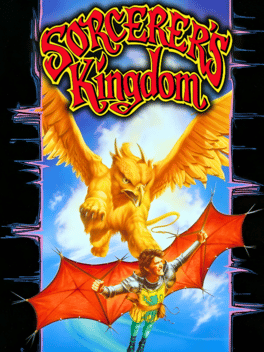
The ear-splitting cry of a Griffin wracks your brain and echoes down the long dark corridors of Sorcerer's Kingdom. Only your sense of duty to your King gives you the courage to venture forth. As you defeat foe after foe in this precarious land, you feel your muscles growing stronger and your reflexes getting swifter. Up ahead you finally glimpse the daylight and run for fear of what is closing in behind you. You find yourself at the edge of a towering cliff where your only hope for escape is to don your magical wings and fly...