Most Popular Arcade Games - Page 9

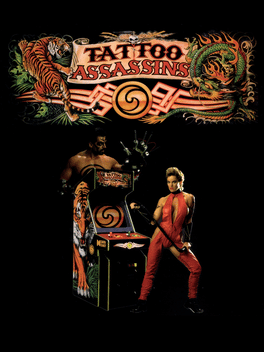
Tattoo Assassins
star 2.1Tattoo Assassins was a Mortal Kombat "clone" which never got officially fully released due to the waning popularity of Arcades in the late 90s. The game was essentially completed before it was cancelled, though it has some minor gameplay and sound glitches, and prototype cabinets were released to test markets in 1994.Fighting Vipers
1995
Fighting Vipers
1995
star 6.6Fighting Vipers is a 3D fighting video game created by Sega AM2. While it shares the game engine with AM2's Virtua Fighter 2, it distinguishes itself with enclosed arenas and an armour mechanic. The game is primarily designed for Western audiences, incorporating a U.S. setting and embracing more freeform styles of martial arts.Major Havoc
1983
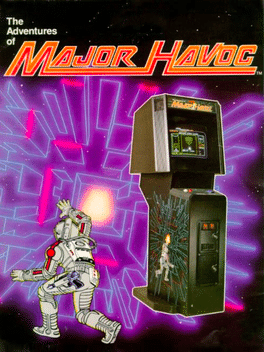
Major Havoc
1983
star 3.6Long ago the evil Vaxxian Empire overran the galaxy. Most of humanity was enslaved and abducted to the Vaxxian homeworld. A few humans, who were scientists, managed to escape. At the current moment (according to the timeline of the game), the Empire has since collapsed. However, numerous Vaxxian space stations, all blindly controlled and defended by robots, still remain in the galaxy, mindlessly pursuing their original orders. The small band of scientists who initially escaped managed to clone the great human hero Major Havoc, in order to fly his Catastrofighter through a wormhole in space, so that he may lead a clone army against the dreaded Vaxxian robots, and to liberate the remnants of humanity by destroying the enemy reactors. The player controls Major Havoc, the leader of this very band of clones.Dungeon Magic
1994
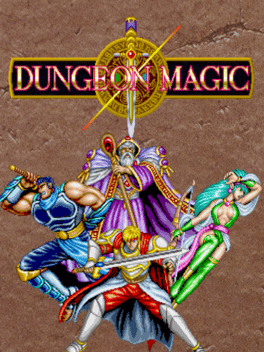
Dungeon Magic
1994
star 7.4The evil magician has brought an evil spirit back to life and is plotting to seize control of the kingdom, and has kidnapped the princess for use as a sacrifice. Four warriors venture into the world of magic to save the princess of the kingdom from the wicked magician: Ash the knight, Gren the roving warrior, Cisty the elf, who whole family was destroyed by the evil spirit in the past, and the old magician Vold with the magic staff must now set off to save the princess.Bubbles
1982
Bubbles
1982
star 5.8Bubbles is an action game with puzzle elements where the player controls the protagonist, a soap bubble, from a top-down perspective. The object is to clean a kitchen sink by maneuvering the bubble over ants, crumbs, and grease to absorb them. The bubble will grow larger the more objects it absorbs. The player is impeded by enemies—brushes, razor blades, roaches, and sponges—that are deadly to the character. Except for razors, enemies also compete with the player to absorb objects in the sink. Once the bubble reaches a certain size, it will acquire a smiling face and become invulnerable against brushes and sponges; contact with those will reduce the bubble's size to the point it becomes vulnerable again. After all the objects are gone, the player will progress to the next level if the bubble is large enough. If the bubble is not large enough at that point, or if the player enters the drain while the bubble's too small, a life is lost. Once the bubble becomes large enough, the drain in the center of the sink wil005
1981
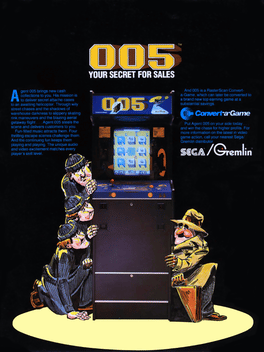
005
1981
star 4.5005 is a 1981 arcade game by Sega, in which the player's mission is to take a briefcase of secret documents to a waiting helicopter. It is one of the first examples of a stealth game. The player controls a spy who must avoid the enemies as he makes his way through buildings and warehouses, where he will have to dodge the enemies' flashlights and use boxes as hiding spots.Alligator Hunt
1994
Alligator Hunt
1994
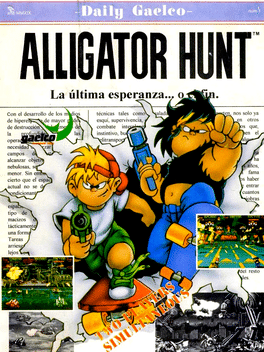
star 6.6Alligator Hunt is a shoot 'em up arcade game released by Spanish company Gaelco in 1994. Reptilian-looking aliens are invading earth and is up to the bravest soldiers (skateboarding kids!) to stop the invasion and destroy the enemy base. Features gameplay similar to Cabal and Blood Bros.Bagman
1982
Bagman
1982
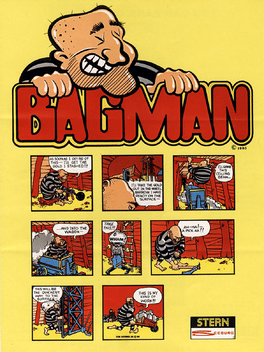
star 5.1The objective of the game is to maneuver the bagman through various mine shafts, picking up money bags and placing them in a wheelbarrow at the surface of the mine. The player must avoid pursuing guards, moving ore carts, and descending elevators. The player may temporarily stun the guards by striking them with a pickaxe or by dropping money bags on them when they are below the player on the same ladder. The player may move between the three screens which make up the level via shafts and on the surface.Cloak & Dagger
1983
Cloak & Dagger
1983
star 5.6Agent X must progress through a series of floors to retrieve a set of stolen plans and destroy Dr. Boom's underground bomb factory. Avoid the explosives, bomb converters, forklifts, robot guards, acid pits, and death-ray shooting eyeballs. The game was featured in the motion picture of the same name.Liberator
1982
Liberator
1982
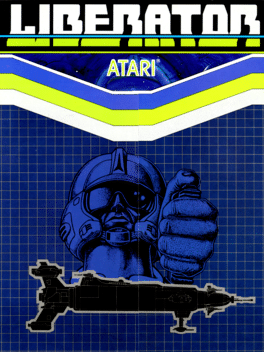
star 5.5Liberator is commonly described as the opposite of Missile Command. The objective of Missile Command is to defend your bases from a space-based attack. Liberator's objective is the exact opposite, destroy enemy bases as you orbit their planet. Liberator was released by Atari in 1982. The arcade game was not very popular and only 762 arcade machines were ever made.Food Fight
1983
Food Fight
1983
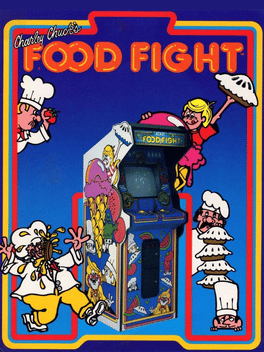
star 6.2Food Fight (also styled as Charley Chuck's Food Fight) is an arcade game released by Atari, Inc. in March 1983. The player guides Charley Chuck, who is trying to eat an ice cream cone before it melts, while avoiding four chefs bent on stopping him. The game sold 1,951 video game arcade cabinets.Computer Space
1971
Computer Space
1971
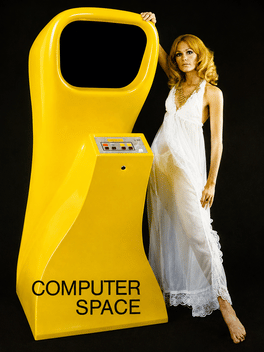
star 3.9Computer Space is a video arcade game released in 1971 by Nutting Associates. Created by Nolan Bushnell and Ted Dabney, who would both later found Atari, Inc., it is generally accepted that it was the world's first commercially sold coin-operated video game of any kind, predating the Magnavox Odyssey's release by six months, and Atari's Pong by one year. It was first location tested at The Dutch Goose in August 1971, then debuted at the MOA show on October 15, 1971, and then officially released in November 1971. Though not commercially sold, the coin operated minicomputer-driven Galaxy Game appeared around the same time, located solely at Stanford University.Blade Master
1991
Blade Master
1991
star 7Blade Master is a scrolling hack and slash arcade game released by Irem in 1991. Two selectable heroes, Roy and Arnold, try to save their land from hordes of monsters. There are items to break and power-ups to collect, typical of this genre in the 1990s.Gun Force II
1994
Gun Force II
1994
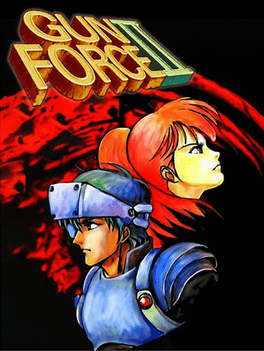
star 7.5Gun Force II is a run and gun arcade video game developed and originally published by Irem on September 1994. It is the sequel to the original GunForce and one of the last arcade games released by the company.Air Duel
1990
Air Duel
1990
star 5.1The player selects from a jet fighter or helicopter, shoot enemies in the air and ground, collect power-ups, and defeat bosses to advance levels. The game differs from most others in the genre in that you can change the aircraft you use at the start of each level. The jet fighter always shoots straight forward; power-ups increase the width and strength of its shots. The helicopter fires thinner and weaker shots, but turns in the direction it moves (similar to the later Zero Gunner), giving it great range; powerups increase the strength of shots, as well as the number of bullets per shot (adding a small "spread" effect to the shot while moving around). Both the fighter and the helicopter also start with three bombs which wipe out everything in their path, including enemy shots. These bombs are also unique compared to similar games, in that they produce a line of small horizontal blasts that can be "directed" at the line travels across the ground, by pressing left and right (similar to the helicopter's shots). AdditDeath Race
1976
Death Race
1976
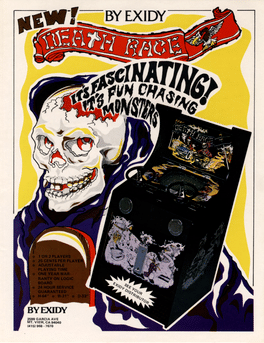
star 4.9Death Race is a vehicular combat game that puts your car in an open space with gremlins. Your goal is the crash into the gremlins so you can brutally and cruelly kill them. Upon dying, they scream. In the spot where the gremlin once was, a cross-shaped gravestone will be left. This clutters the playing field, making it harder to move around. There are dotted lines on the sides, representing two narrow "safe" zones on the left and right sides of the screen for the gremlins, as your car will crash on contact with the dotted lines.Tank
1974
Tank
1974
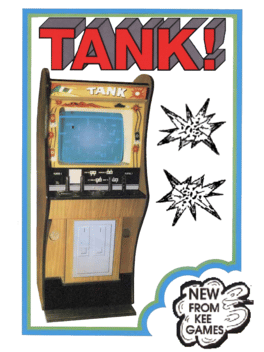
star 5.8Players move their tanks through a maze on screen, avoiding mines and shooting each other. The tanks are controlled by two joysticks in a dual configuration. Pushing both joysticks will move the player's tank forward, and pulling them both back causes the tank to stop. Moving the right joystick forward while pulling the left joystick back will cause the tank to turn right, while reversing the motion will cause the tank to turn left. The players are represented by one black and one white tank sprite, and mines are denoted by an "X". Points are scored by shooting the opponent or when a player runs over a mine; the player with the highest score at the end of the time limit wins the game. Tank was also one of very few games to be ported onto 1st generation consoles, usually under the title "Tank Battle".WWF Superstars
1989
WWF Superstars
1989
star 6.9WWF Superstars is an arcade game manufactured by Technōs Japan and released in 1989. It is the first WWF arcade game to be released. A series of unrelated games with the same title were released by LJN for the original Game Boy. Technōs followed the game with the release of WWF WrestleFest in 1991.Beatmania
1997
Beatmania
1997
star 8.2Beatmania is a rhythm game developed by Konami. It is the first game in the BEMANI series ( which it was named after: BEatMANIa ). It is one of the few music games developed by the internal studio GMD (Game Music Division). Beatmania is played with a controller with one turn table and 5 keys, three white and two black. On the screen you will see bars moving from the top to bottom in columns representing each of the keys and the turntable. When the bars reach the judgement line it is time to scratch. The game contain 7 songs, which is the lowest number ever in the BEMANI franchise.Crisis Zone
1999
Crisis Zone
1999
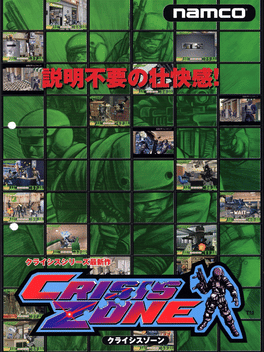
star 6.9Crisis Zone is a light gun arcade game released by Namco in 1999, a spin-off of the Time Crisis series. As a feature, it handles a large machine gun type controller instead of a handgun like the conventional work. In 2004, the Playstation2 version was released with Guncon2 support.