New Famicom Games - Page 41

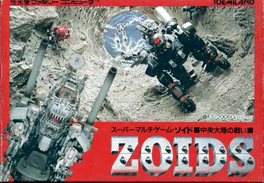
Zoids: Chuuou Tairiku no Tatakai
1987
Based on the popular Tomy/Hasbro toy license, Zoids: Chuuou Tairiku no Tatakai is an RPG/Shooter hybrid developed for the Famicom by the notorious Micronics.Family Trainer: Meiro Daisakusen
1987
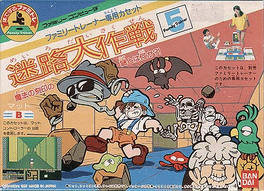
A Famicom game developed by Bandai as part of their Family Trainer series, which all use the Family Trainer (Power Pad) accessory. The goal is to explore mazes. The fifth in Bandai's series of Family Trainer games, created for the accessory with the same name (or Power Pad in the US). Unlike the others, which tended to be athletics/exercise games, Meiro Daisakusen ("Epic Maze Battle") is a maze-exploring light RPG where the goal is to walk and jump around mazes to find items and, eventually, the exit. The game's controls are dictated entirely by the Family Trainer/Power Pad. Different buttons will either cause the protagonist to jump, walk forward, walk backwards, turn left or right or switch their position to the left, right or center of the screen. While searching for the exit, players must be mindful of the various enemies that also inhabit the mazes, most of which must be avoided by jumping over them or running past them.Mugen Senshi Valis: The Fantasm Soldier
1987
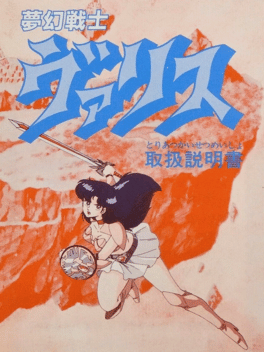
The Famicom port follows the same basic story, but instead of a series of separate stages, all of Vecanti is now one big, interconnected world. The gameplay differs considerably from the other versions, being more akin to a side-scrolling action role-playing game. It is a more difficult game due to its larger maze-style levels with multiple paths, and a lack of a password or save feature.Spelunker II: Yuusha he no Chousen
1987
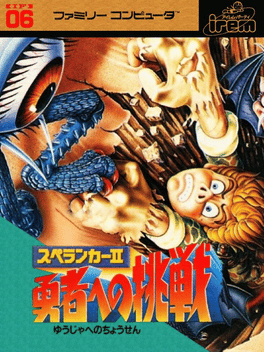
Spelunker II: Yuusha he no Chousen is a Japan-exclusive action video game released for the Family Computer in 1987. An unofficial translation to English was made as a ROM hack. Despite being titled as a sequel to Spelunker, Spelunker II: Yūsha e no Chōsen features vastly different gameplay. There was a separate arcade sequel, titled Spelunker II: 23 no Kagi, which features similar gameplay to the first Spelunker game as well. The two Spelunker II games are separate entries in the series and are not related.Tenka no Goikenban: Mito Koumon
1987
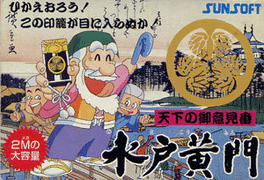
This is an adventure game based on a TV show about a retired governor and his retainers going around solving problems in Edo period Japan. The game allowd players to assume the role of one of the retainers as they go around investigating the town. Occasionally this involves fights with corrupt officials, evil samurai and gangsters. There's also a female ghost that will drain the player character's life if it comes into contact with them. The game is noted for its many instances of speech samples. It also has a considerable amount of text. The game consists of seven stages. Players control Kaku-san (Kakunoshin), a jujutsu user, in the odd-numbered stages and Suke-san (Skesaburo), a katana user, in the even-numbered stages, and go around the action stages to collect evidence of evil deeds. The use of certain items allows the player to switch to a ninja or a servant for a certain period of time. The ninja can go undercover and the servant can interview the townspeople. In every stage, there is evidence that can onlyMiracle Ropit's Adventure in 2100
1987
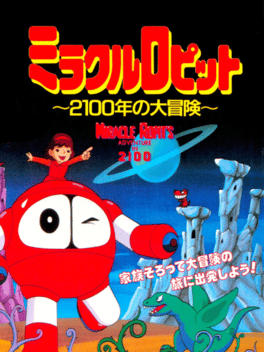
Miracle Ropit's Adventure in 2100 is an action platformer featuring the titular robot, piloted by a young girl. When the robot is hit, it will break down and dump the girl out. The girl cannot shoot enemies, and will die after 30 seconds if she cannot restore the robot, which requires special items. The game often requires shooting at or jumping on certain unmarked spots repeatedly, either to uncover secrets or even to make progress in a stage at all. In order to reach the true ending, two loops of the game must be beaten.Mirai Shinwa Jarvas
1987
Mirai Shinwa Jarvas
1987
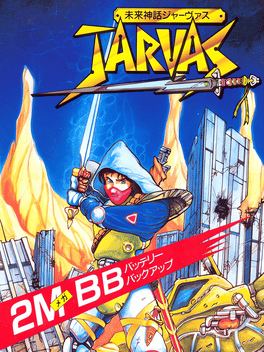
Mirai Shinwa Jarvas is a RPG developed and published by Taito. It is about a man named Jarvas who travels back in time from the future to conquer the world of the past and become the leader. You must get people to join your side and take over enemy castles. This game is generally considered pretty bad by most. When you begin the game, you are given no information about where you are and where you should attempt to go. Once you find a town, you must join a guild. You can only increase your level by returning to the guild once you have accumulated enough experience.Hokkaido Rensa Satsujin: Okhotsk ni Kiyu
1987
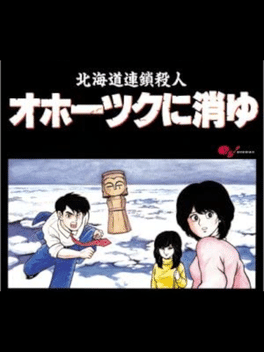
A man's corpse is discovered near a sea wharf in Tokyo Bay. While the police investigates, a 2nd and 3rd murder occurs one after another. You begin your investigating with Shunsuke Saruwatari, a detective from the Kushiro station, and seek the truth to discover the criminal's motivation. An examination of the relation between the victims exposes a important details from the past.Bats & Terry
1987
Bats & Terry
1987
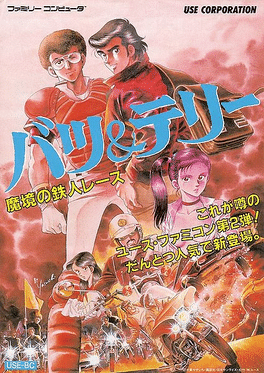
The player controls a baseball superhero named Batsu (Bats) who must use baseballs to defeat his opponents. Being hit once reverts him to "normal" Terii (Terry), who swats at his opponents using a baseball bat. Opponents include machinery, humanoids, and animals. Killing opponents while in Terii form results in a larger energy bar.Fantasy Zone
1987
Booby Kids
1987
Booby Kids
1987
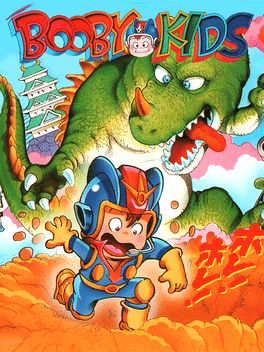
During the prehistoric era of humanity, cavemen and dinosaurs compete for ultimate supremacy. A young boy has to collect important treasure without being killed by the rampaging dinosaurs. All he can do is attempt to temporarily paralyze them with a specialized dinosaur trap. All treasures must be collected before admittance to the next level is possible. One hit from either a dinosaur, caveman, or other type of enemy instantly kills the player.Takahashi Meijin no Bug-tte Honey
1987
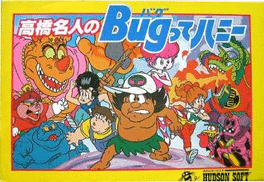
An adventure platformer game starring Master Takahashi of Adventure Island fame. It is based on an anime which in turn was based on the Adventure Island games..Family Trainer: Jogging Race
1987
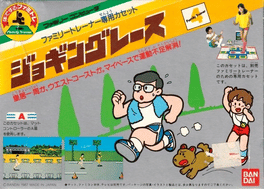
An exercise game created for the Family Trainer (the Japanese name for the NES Power Pad) developed by Human and published by Bandai. Jogging Race is the fourth game created by Bandai for the Family Trainer (US: Power Pad) accessory for Famicom systems. It was one of the many games that used the peripheral that did not see a release outside of Japan. As with other Family Trainer games, the emphasis was on receiving a work out using the Famicom, a conceit that would later find greater success with the Nintendo Wii and the Wii Fit games. Specifically, Jogging Race is about jogging through areas of a simulated Tokyo using the pad to simulate the exercise. The background scrolls by slowly, accurately matching the scale of the distances found in the real location, and will occasionally include additional details like other joggers. There is also a second mode named Marathon, in which the player competes in a long distance race with other CPU runners.Tokoro-san no Mamoru mo Semeru mo
1987
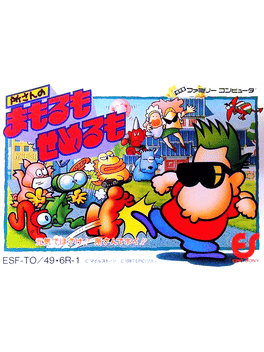
An action platformer game by Sony label Sony Epic Records that was only released in Japan on June 27th, 1987. It is named for and features the real-life Japanese celebrity Tokoro Jouji. Tokoro-san no Mamorumo Semerumo is an action platformer that stars real-life Japanese musician/comedian/voice-actor Tokoro Jouji, a.k.a. George Tokoro. Armed with a water pistol with a finite supply of water, Toroko-san must make his way across various levels either shooting or avoiding the various enemies along the way. This game has some notoriously poor game design, such as ammo replenishing items being hidden, which means the player needs to shoot randomly to find them which simply depletes their finite ammo supply even faster. If the player takes too long in any one world, a massive vision-obscuring storm will roll in and make the game considerably more difficult to play. The game, however, does feature an early example of a non-linear stage selection progress as different paths become available after defeating each boss.Youkai Club
1987
Youkai Club
1987
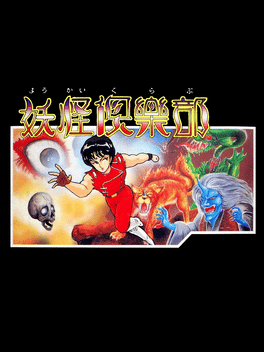
Youkai Club is an Action game, developed by TOSE and published by Jaleco Entertainment, which was released in Japan in 1987.Sanma no Meitantei
1987
Sanma no Meitantei
1987
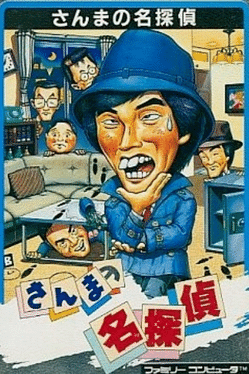
Sanma no Meitantei is a murder mystery detective adventure game developed and published by Namco for the Famicom in 1987. In the vein of Portopia Renzoku Satsujin Jiken, the player must visit several locations associated with the murder victim, to discover clues which will open up more locations in order to find more clues until ultimately, the identity of the murderer can be confirmed. The game is played entirely in Japanese and was never translated into English. The summary of the story is that while the president Yoshimoto held a party at his villa, Katsura Buntin was found to have been killed in the vault. On top of that, the "Star of Africa" diamond that was stolen from the vault. As detective Sanma Akashiya's assistant, you must help him determine the perpetrators of the incident. The game features a mini game which is a parody of Galaxian, and contains sound effects from other Namco hits such as Dig Dug and XeviousFamily Jockey
1987
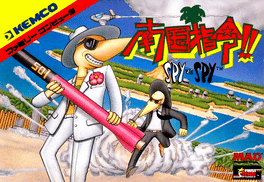
Nankoku Shirei!! Spy vs. Spy
1987
Spy vs Spy: The Island Caper is a competitive multiplayer game where the goal is to recover all the vital items and leave before the other player does the same. It's a tropical-themed variant on the original. The Island Caper plays almost identically to the original Spy vs Spy game, just with a graphically updated island theme. Instead of rooms full of fixtures that items might be hidden behind, the player must search beaches on islands for items buried in the sand. Specifically, they need to assemble a missile from its parts, presumably so it can be launched at the opponent spy's home country. Finding the missile will allow the victorious spy to escape the island via a submarine (which inexplicably also includes an attractive woman). There are also traps which, like in the original, can be placed in spots where missile parts might be to fool opponents into killing themselves. The game was released on many of the home computers and consoles active at the time. Curiously, it also received a Japan-only NES port namMorita Kazuo no Shogi
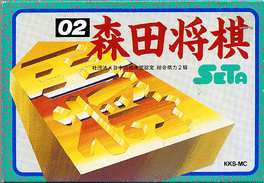
1987
A Famicom Shogi game developed by Random House and published by Seta. Morita Kazuo no Shogi ("Kazuo Morita's Shogi") is a Shogi game from Random House. The game's namesake, Kazuo Morita, is a famous Japanese Shogi player that had previously been attached to several Shogi games prior to this one. Furthermore, Random House (not to be confused with the famous book publisher) is his development company. As well as playing regular Shogi against an AI opponent, the player has a few options regarding the set-up of the pieces. There is a mode where they place all the tiles on the board themselves, in case they wish to continue an existing game or maybe replay a famous match at its turning point.Pocket Zaurus: Juu Ouken no Nazo
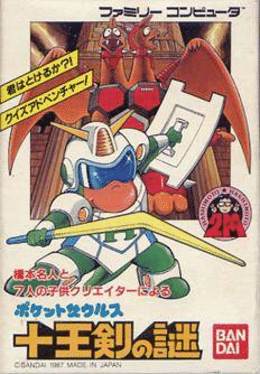
1987
A young man is changed into a lizard and must chase his aggressor through time in this Famicom platformer from Bandai.