Most Popular Famicom Games - Page 28

Q-Boy
1994
Q-Boy
1994
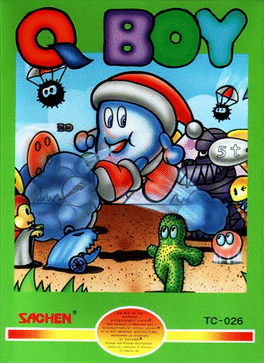
Q-Boy is an unlicensed platform video game developed and published by Thin Chen Enterprise/Sachen, released for the Family Computer in March 5 1994. Not to be confused with the Famiclone game console of the same title.Golf-ko Open
1989
Dezaemon
1991
Dezaemon
1991
Dezaemon is a game designing application that lets aspiring developers create their own vertical scrolling shoot-'em-up. Players have control over how their ship looks, design how their levels (up to three) will look, and also create a title screen. Players can also compose their own background music and create a list of credits to give credit to the designers of their game. There is also a sample shoot-'em-up available to play titled E.D.I.T.. It contains 3 stages of a simple vertical-scrolling space shooter where players shoot down waves of enemies and fight a boss enemy at the end of each stage. Items can also be collected which can increase their ship's speed or give their ship a defensive shield. Other items can upgrade the ships' weaponry from a vulcan cannon to either lasers or missiles.Fudou Myouou Den
1989
Fudou Myouou Den
1989
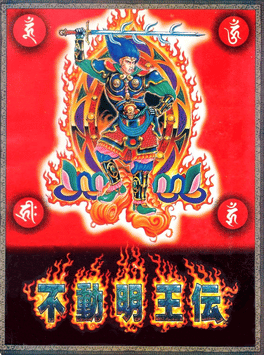
In a land of impossible evils... all paths lead to the Dark Lord! A beautiful princess cries out in terror, and a world despairs in darkness. Only you, the hero warrior Victar, can traverse chasms of fire and mountains of doom to battle the fiendish gatekeeper and confront the Dark Lord. In your cunning and skillful hands, the Demon Sword grows with a magical power more lethal than all the wretched weapons of the Dark Lord's legions. Gather your courage, grasp your blade and release the power that is yours to control!Famicom Study Box
1991
Famicom Study Box
1991
The StudyBox, released by Fukutake Publishing Co, Ltd., was much like a tape player for the Famicom. The accessory was small enough to fit on top of the Famicom, to plug into the connector. Also like a tape player, the top of the StudyBox would open to reveal the compartment where tapes were played. The StudyBox itself did not have the standard Play, Stop, Pause, Fast Forward and Rewind buttons on the system, as would be expected with a tape player. Instead, the student (presumably) would use the Famicom controller and on-screen cues to play the tapes. We don’t exactly know what the tapes would do. The purpose of the StudyBox was to make the Famicom more educational, giving students the ability to learn about whatever information was contained on the tapes. The tapes were, of course, only sound and voice, without visuals to accompany the studying.Softball Tengoku
1989
Softball Tengoku
1989
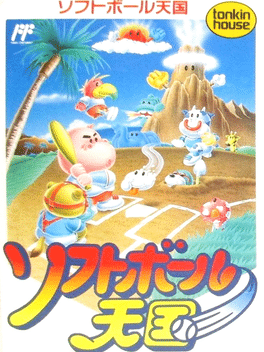
With 60 characters with different abilities and appearance, this is softball unlike you ever experienced before. Batter, pitch, catch, get the team you create to the big leagues. With different stages and unique abilities, no match is ever the same!Magic Kid Goo Goo
1992
Magic Kid Goo Goo
1992
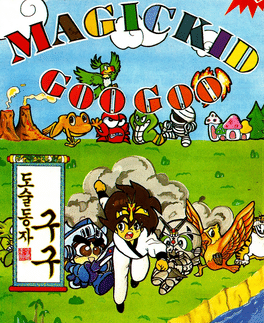
If you like Korean Famicom games, this one should be right up your alley. It's made by some of the guys who went on to form Open Corp (the team that made Buzz & Waldog), and that game's DNA is really obviously present in this one - those same sound effects ripped off from Tiny Toon Adventures, a similar aesthetic, etc. In a lot of ways this game is simpler, but in many others it's actually a way more ambitious game, complete with a shop system, minigames, lots of character upgrades, etc. The ROM size is even twice that of Buzz & Waldog!Hit Marmot
1991
Hit Marmot
1991
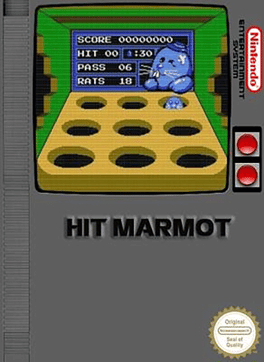
Hit Marmot is an Action game, developed by Mega Soft and published by NTDEC, which was released in Asia in 1991.Super Contra X
1994
Super Contra X
1994
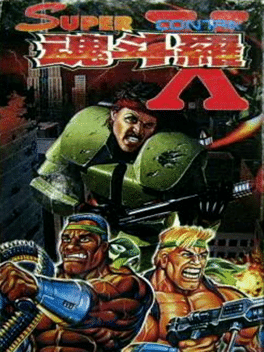
Super Contra X is a pirate based off the Contra series, created by Chengdu Tai Jing Da Dong Computer Co sometime in the 1990's (likely in 1994).Super Momotaro Dentetsu
1992
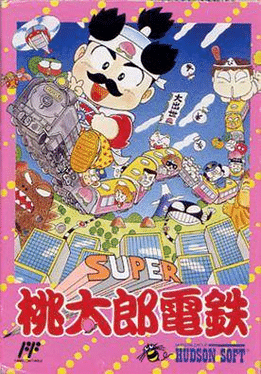
A train-based boardgame for the PC Engine, Famicom, and Game Boy. Super Momotarou Dentetsu is a train and conveyance-based board game with financial elements that features Hudson's Momotarou character, based on the Japanese folklore hero of the same name. It is the second game in the Momotarou Dentetsu series and the first to be released on a 16-bit console - the PC Engine - hence the "Super" in the title. Several years after its PC Engine release, Super Momotarou Detetsu was also released on the Nintendo Famicom and Game Boy. It received a sequel in Super Momotarou Dentetsu II and a large number of successors. The goal of the game is to travel the map and acquire territory through business deals, similar to Monopoly or Itadaki Street. Players have to contend with each other for limited resources, as well as CPU threats like the God of Poverty.Takeshi no Sengoku Fuuunko
1988
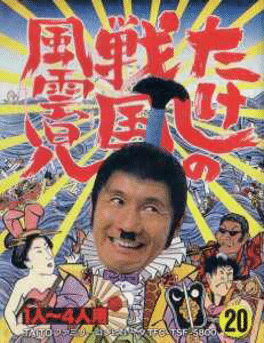
A Sengoku period board game simulation starring Beat Takeshi. Takeshi no Sengoku Fuuunko is a board game simulation starring Japanese comedian-turned-actor "Beat" Takeshi Kitano. Similar to the Game of Life, players move around a board earning money and occasionally encountering events such as a minigame - in which the player can increase their wealth should they succeed - or a penalty. The game has a Sengoku era theme running throughout, from its samurai characters to the tattooed gambler that rolls a dice for determining how many places a player can move around the board that turn. Beat Takeshi appears frequently while the game is being played dressed in traditional Sengoku era clothing. The game is presumably in reference to the TV show Takeshi's Castle, which also starred Beat Takeshi and had a Sengoku era theme.Tamura Mitsuaki no Mahjong Seminar
1990
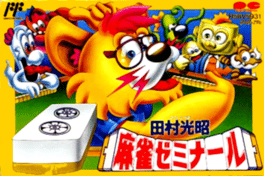
Tamura Mitsuaki no Mahjong Seminar is a Miscellaneous game, published by Pony Canyon, which was released in Japan in 1990.Tanigawa Kouji no Shogi Shinan III
1989
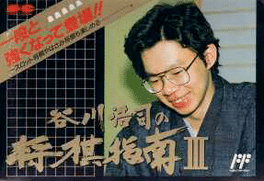
A third shogi instructional game starring the expert player Tanigawa, this one was a Famicom exclusive. Tanigawa Kouji no Shogi Shinan III ("Kouji Tanigawa's Instructional Shogi III") is a Shogi game with numerous tutorials and the third in the series presented by Tanigawa Kouji, a real-life Shogi expert. It also features different playing modes, including one where the choice of tiles to move is determined by a slot machine. Unlike its immediate predecessor, which was released on both the MSX and the Famicom Disk System, Shogi Shinan III was exclusive to the Nintendo Famicom and did not see any ports.Tenka no Goikenban: Mito Koumon
1987
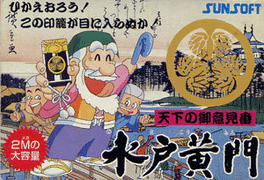
This is an adventure game based on a TV show about a retired governor and his retainers going around solving problems in Edo period Japan. The game allowd players to assume the role of one of the retainers as they go around investigating the town. Occasionally this involves fights with corrupt officials, evil samurai and gangsters. There's also a female ghost that will drain the player character's life if it comes into contact with them. The game is noted for its many instances of speech samples. It also has a considerable amount of text. The game consists of seven stages. Players control Kaku-san (Kakunoshin), a jujutsu user, in the odd-numbered stages and Suke-san (Skesaburo), a katana user, in the even-numbered stages, and go around the action stages to collect evidence of evil deeds. The use of certain items allows the player to switch to a ninja or a servant for a certain period of time. The ninja can go undercover and the servant can interview the townspeople. In every stage, there is evidence that can onlyTetsudou-ou
1988
Tetsudou-ou
1988
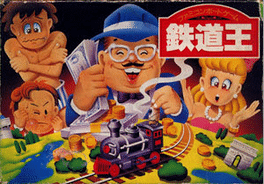
A board game simulation similar to Monopoly, but with railroads. Its name means "Railroad Baron". It was only released in Japan, for the Famicom, and has two sequels. Tetsudou-ou (occasionally with the subtitle "Famicom Boardgame") is a competitive railroad tycoon-type game where the goal is to own a lot of railroad stations and make a lot of money while bankrupting the other players. Tetsudou-ou also borrows elements from the Game of Life board game, specifically the lucky/unlucky event that follows every turn and can completely reverse a player's fortunes. Tetsudou-ou would be followed by Tetsudou-ou '96 and Tetsudou-ou 2, both for the Sony PlayStation. The original game would also see a mobile phone platform remake, named Tetsudou-ou NEO.Toki no Tabibito: Time Stranger
1987
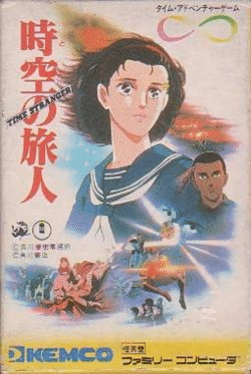
An adventure game based on an anime film of the same name, published for the Famicom by Kemco. Toki no Tabibito "Time Stranger" is an adventure game with a heavy emphasis on text commands and dialogue, similar to other NES adventure games like Portopia Serial Murder Case or Hokkaido Serial Murders: Fade to Okhotsk. Unlike Portopia and its sequels, there is very little detective work to be done. The player simply visits important people throughout Japanese history as a time-travelling cop, answering their questions and incrementally moving forwards through time towards the present. Most of the game is depicted in a first-person mode where the other person sits across from the main character, who then asks and answers questions. There are a few third-person sequences where the player must get back inside their spaceship-like time machine before it leaves. While there are a few branching paths depending on dialogue choices taken, the game's narrative is fairly linear.Touhou Kenbun Roku
1988
Touhou Kenbun Roku
1988
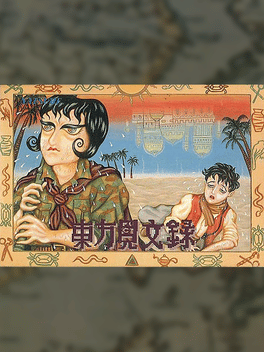
A sci-fi/comedy NES adventure game developed and published by Natsume in Japan only. Touhou Kenbun Roku ("The Travels of Marco Polo") is an adventure game that uses the then-ubiquitous NES adventure game system of having a series of menu commands with which to interact with the world. As a text-heavy Japanese adventure game, some fluency with the language is required in order to play it. The game depicts a troublemaker sent from the future back to 1275, when Marco Polo was in the midst of his explorations.Tokyo Pachi-Slot Adventure
1992
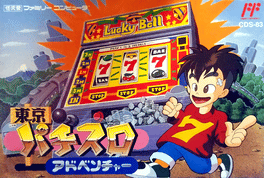
Tokyo Pachi-Slot Adventure is a Miscellaneous game, developed by Color Dreams and published by Coconuts Japan, which was released in Japan in 1991.Tower of Radia
1991
Tower of Radia
1991
Radia Senki: Reimeihen is a Tecmo-developed action RPG released for the Famicom exclusively in Japan. As an amnesiac, the player wanders around the game world with a party in tow as they fight monsters in real time and learn political secrets in the story. Radia Senki: Reimeihan (literally "Chronicles of the Radia War: Dawn") is an action RPG developed by Tecmo for the Famicom. Only garnering an official release in Japan, Radia Senki puts players in the shoes of an amnesiac protagonist who can be named. While in search of his own memories, the protagonist soon encounters other characters such as Darth, a man out for revenge, and a mysterious princess and together they roam the game world in search of answers to various questions that plague their lives. As per the times in Tecmo's development antics, the game features cinematic cutscenes and musical stylings similar to that of their critically-acclaimed Ninja Gaiden. Radia Senki features gameplay mechanics that are unconventional for its period, only being commonTsuri Kichi Sanpei: Blue Marlin-hen
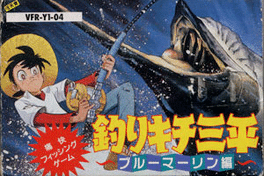
1988
A fishing sim based on a manga license for the NES. It was developed by Victor Interactive and never released outside of Japan. Tsurikichi Sanpei: Blue Marlin-hen is a fishing sim based on a manga and eventual anime named Tsurikichi Sanpei, following the adventures of a preternaturally gifted young fisherman and his travails in various fishing competitions. The game is centered around one of these fishing competitions, where Sanpei has a limited amount of time to catch the largest blue marlin out of all the competitors. The player must make careful judgements and use their limited time wisely to find and hook the largest marlin they can before the competition ends. The first game based on the Tsurikichi Sanpei license, Blue Marlin-hen was released on the NES and the MSX around the same time in 1988. Later, there would be a sequel of sorts for the MSX only in 1989 and a PS1 game much later in 2002. In order to catch anything, the player must choose one of several regions of sea in which to fish. Areas which look