Most Popular Famicom Games - Page 30

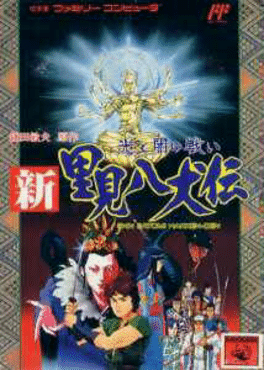
Shin Satomi Hakkenden: Hikari to Yami no Tatakai
1990
Shin Satomi Hakkenden: Hikari to Yami no Tatakai is a Role-Playing game, developed by Micronics and published by Toei Animation, which was released in Japan in 1989.Shogi-Meikan '92
1992
Shogi-Meikan '92
1992
Shogi-Meikan '92 is a Miscellaneous game, developed and published by Hect, which was released in Japan in 1992.Shogi-Meikan '93
1993
Shogi-Meikan '93
1993
Shogi-Meikan '93 is a Miscellaneous game, developed and published by Hect, which was released in Japan in 1992.Shoukoushi Cedie
1988
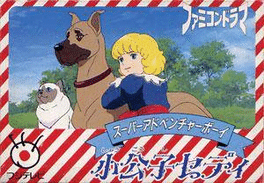
Shoukoushi Cedie
1988
A NES adventure game based on the anime of the same name, which is an adaptation of Little Lord Fauntleroy. Shoukoushi Ceddie (sometimes Cedie) is the Japanese title of the 1886 Frances Hodgson Burnett novel Little Lord Fauntleroy, about a down-to-earth kid from New York discovering his heritage as the heir to an Earldom in England, moving to his inherited estate and learning how to become a nobleman. Fuji Television created a 43 episode anime series based on the novel in 1988, and this video game adaptation is based on that TV show. Fuji Television is perhaps best known in western video game circles for being responsible for Doki Doki Panic (the game the American/European Super Mario Bros 2 is based on) as well as airing GameCenter CX (or Retro Game Master). The game plays much like a regular Famicom adventure game: The player walks around, talks to people and finds items which are used to solve puzzles. However, rather than selecting destinations from a menu, the player manually walks around the different localSpace Shadow
1989
Space Shadow
1989
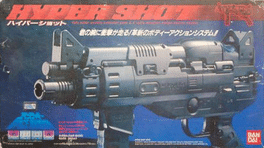
A sci-fi Light Gun game from Bandai that came packaged with the Hyper Shot Light Gun for the Famicom. Space Shadow is an on-rails sci-fi Light Gun game from Bandai that takes its inspiration from the claustrophobic killer aliens movie Aliens. The player walks down an octagonal hallway and shoots any hostile extra-terrestrial life that bursts forth from one of the side-passages or the ceiling. Space Shadow was the pack-in game for the Bandai Hyper Shot, a sub-machine gun shaped Light Gun for the Famicom. Despite the fact that Light Gun games tended to do far better in the US, neither the Hyper Shot nor this game were ever released outside of Japan.Super Chinese 3
1991
Super Chinese 3
1991
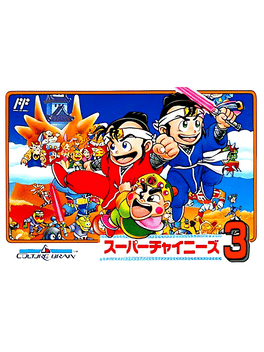
Super Chinese 3 is a Role-Playing game, published by Culture Brain, which was released in Japan in 1991. Final Famicom game in the series.Super Mogura Tataki!! Pokkun Mogura
1990
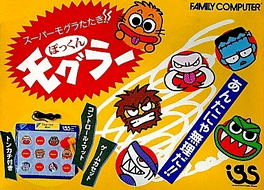
Super Mogura Tataki!! Pokkun Mogura is a Miscellaneous game, published by IGS, which was released in Japan in 1989.Pachinko Daisakusen 1
1991
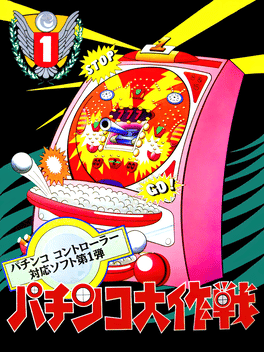
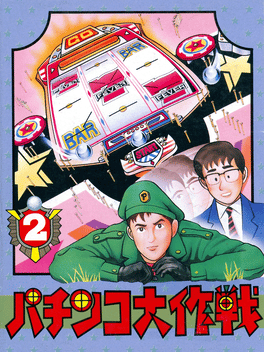
Pachinko Daisakusen 1 is a Miscellaneous game, developed by Color Dreams and published by Coconuts Japan, which was released in Japan in 1991.Pachinko Daisakusen 2
1992
Pachinko Daisakusen 2 is a Miscellaneous game, developed by Color Dreams and published by Coconuts Japan, which was released in Japan in 1992.Pachio-kun 2
1989
Pachio-kun 2
1989
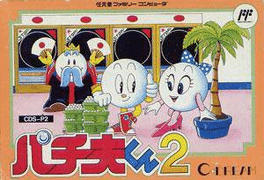
The second NES Pachio-kun game, about a sentient pachinko ball that loves playing pachinko. It was published by Coconuts Japan. Pachiokun 2 is the sequel to Pachiokun, and was also published by slot machine manufacturer Coconuts Japan as well as developed by contract developers Marionette and C Dream. As with the first game, the goal is to help a sentient pachinko ball named Pachio-kun bankrupt a series of pachinko parlors and liberate all his miniature brethren from their flashy mechanical gulags. The game introduces Pachio-kun's wife, presumably named Pachio-chan. If she's upset about her husband's gambling addiction, she never shows it.Pachio-kun 3
1990
Pachio-kun 3
1990
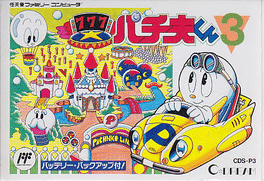
The third Famicom entry in the Pachio-kun series. Pachio-kun 3 is a Miscellaneous game, developed by Color Dreams and published by Coconuts Japan, which was released in Japan in 1990.Pachio-kun 4
1991
Pachio-kun 4
1991
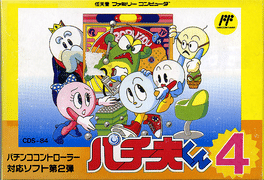
Pachio-kun returns for a fourth outing on the Famicom. Pachio-kun 4 is a Miscellaneous game, developed by Color Dreams and published by Coconuts Japan, which was released in Japan in 1991.Pachio-kun 5
1993
Pachio-kun 5
1993
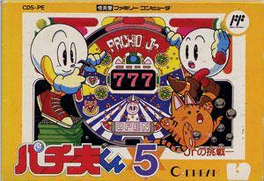
The final Famicom Pachio-kun game. Pachio-kun 5 is a Miscellaneous game, developed by Color Dreams and published by Coconuts Japan, which was released in Japan in 1993.Paris-Dakar Rally Special!
1988
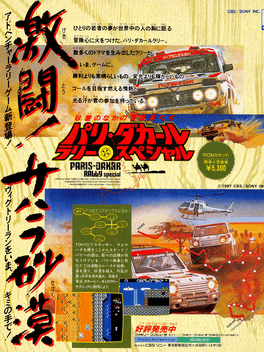
A NES game based on the famed Paris-Dakar Rally, developed by ISCO. While ostensibly a racing game, the style of gameplay tends to change per level. Paris-Dakar Rally Special! is an unusual racing game in which the player must successfully win the Paris-Dakar Rally. However, in order to do so, the player is faced with a wide variety of odd challenges to overcome, a scant number of which actually involve racing.Peepar Time
1990
Peepar Time
1990
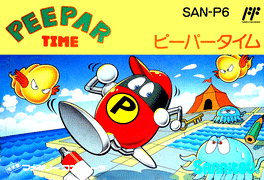
Peepar Time is a Puzzle game, developed and published by Sanritsu Denki, which was released in Japan in 1990.Pescatore
Pescatore is a puzzle game, developed by Tierheit and meant to be published by Sunsoft. It was cancelled, but was briefly revealed to the public in spring of 1991 at Nintendo's Shoshinkai Show. The gameplay in Pescatore borrows the gameplay from PuyoPuyo and changes the rules slightly to require less skill and more luck.Plasma Ball
1992
Plasma Ball
1992
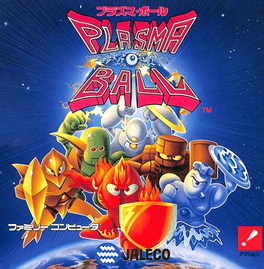
Plasma Ball is an Action game, developed and published by Jaleco Entertainment, which was released in Japan in 1992.President no Sentaku
1990
President no Sentaku
1990
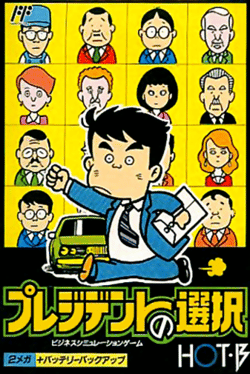
President no Sentaku is a Strategy game, developed by Another and published by Hot-B, which was released in Japan in 1990.Pro Yakyuu Family Stadium '87
1987
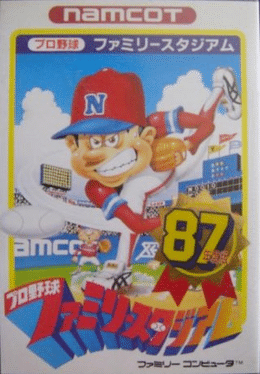
Not so much a sequel to Pro Yakyuu Family Stadium than an enhanced rerelease with updated rosters. It was published by Bandai for the Famicom in late 1987. Pro Yakyuu Family Stadium '87 is the second game in Namco's long running Family Stadium series, also known as Famista. It's a traditional baseball game that allows one human player against the CPU, two competing human players and two competing CPU players in a "Watch" spectator mode. Rather than being a full sequel to Pro Yakyuu Family Stadium the game is instead an updated version of the original, which was reflected in its lower price at release. It adds a few features and updates the official rosters for the athletes, but is functionally identical to the original Family Stadium. This specific type of annualization would become common practice for sports game franchises such as Madden NFL and NHL. It's worth noting that this game is unrelated to R.B.I. Baseball 2 from Tengen. The original R.B.I. Baseball and Family Stadium were one and the same, the formerPro Yakyuu? Satsujin Jiken!
1988
A comedic adventure game that satirizes the heavy number of baseball and murder mystery games for the Famicom. It was developed and published by Capcom in Japan only. Pro Yakyuu? Satsujin Jiken! ("Pro Baseball? Murder Case!") is a slightly tongue-in-cheek parody of the Famicom's overabundance of Portopia style murder mystery adventure games and baseball simulators, especially the annual Pro Yakyuu Family Stadium releases. The player controls a professional baseball player that's been framed for a murder and must solve the case while on the lam. Capcom inserted various additional modes into the game, such as mini-games and a shoot-em-up sequence whenever the protagonist is caught by the cops. This game is perhaps notable for being released on the same day in Japan - December 24th 1988 - as another Capcom game: Rockman 2. One of these sort of overshadowed the other.