New Games - Page 12156

Hangaroo
2001
Hangaroo
2001
Play the classic Hangaroo game and figure out the words and phrases by guessing the letters! Try to guess the phrase without failing four times! Or else the friendly kangaroo will be hanged mercilessly!TOCA Touring Car Championship
2001
Fight the pack to gain position without losing control of your car as you race on nine different original tracks of the British Touring Car Championships. This game features eight different game modes, such as single race, championship, time trial, and party play.Puzzle Master 2
2001
Puzzle Master 2
2001
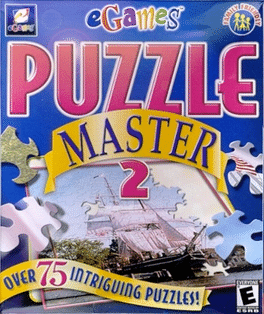
Puzzle Master 2 is an exciting full-featured jigsaw puzzle game in the Game Master Series. Using over 75 fantastic images provided, you can create jigsaw puzzles from 4 to 4,000 pieces. There are 5 different levels of difficulty to challenge the novice and expert alike! You can even create your own puzzles with your favorite images and music. The puzzles look so real and the music sounds so great! The hints, trays, shuffle and color arrangement features help you solve even the most challenging puzzlesMata Nui Online Game
2001
Mata Nui Online Game
2001
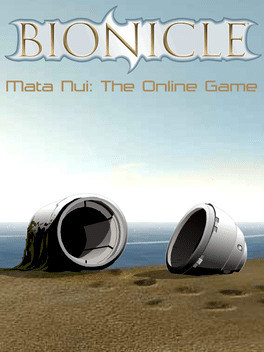
A modular Flash point-and-click adventure game developed and updated throughout 2001 by Templar Studios LLC. for the LEGO Group, Mata Nui Online Game (or MNOG) is a game that brought the world of Bionicle to life.Sword and Fairy Inn
2001
Sword and Fairy Inn
2001
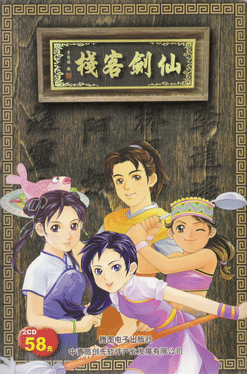
Sword and Fairy Inn (Xianjian Kezhan) is based on the Chinese role-playing game Xianjian Qixia Zhuan. The game has the same protagonist, the young swordsman Li Xiaoyao, and is in a certain way a parody of Sword and Fairy. In this game, Li Xiaoyao still works for his aunt, doing various jobs in the inn. The game also features the female characters from the RPG - Li Xiaoyao's sweetheart Zhao Ling'er, Lin Yueru, and Anu. Unlike most installments in the series, "Sword and Fairy Inn" is not a role-playing game, but a simulation. The player's goal in the game is to cook meals, prepare rooms, and generally take care of the guests. The game has an internal clock, and the hero should do his job well to please his aunt. When Li Xiaoyao is not busy with the inn, he can explore nearby locations or have a date with Ling'er. There are many items to be found, which can be later used for cooking and other purposes. The game has pre-rendered backgrounds and "super-deformed" graphics for characters.Super Real Mahjong
2001
Detective Conan: Norowareta Kouro
2001
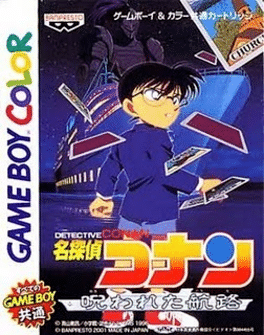
Detective Conan: The Cursed Sea Route was developed by Banpresto. It is also the third and final entry of the Conan franchise for the Game Boy Color.The Ward
2001
The Ward
2001
The Ward is a point and click adventure video game. The story follows the fictionalized version of events of the Apollo 19 mission from 1979. Two of the crew member are found dead, with the protagonist, David Walker, finding himself in an extraterrestrial laboratory. Throughout the story, the protagonist realizes he is meant to be the mythical Ward, in order to resolve the conflict between two alien races; the Greys and the Reptillians. He sets out to help humanity from total annihilation, but also aids Greys in their war against their former masters, the reptillians. During the course of the adventure, he uncovers many secrets and histories of the universe.Airport Inc.
2001
Little Nicky
2001
Little Nicky
2001
Satan wants to appoint a new ruler in Hell. However, nobody meets his high standards, so the dark prince must remain atop Hell's throne. Displeased by their father's lack of confidence in them, Adrian and Cassius leave Hell and go to Earth to create a new Hell. Since Satan has no time to deal with Adrian and Cassius, he sends his other son Nicky to stop them. You take the role of Nicky as he travels through 24 levels, where he must collect a certain number of items or destroy demons. However, the key to making it through all of the levels is Nicky's power. When Nicky gets close to fire, his powers increase. He will run faster, jump higher, and spit fireballs. Should he get too hot, Nicky will be unable to control his powers until he cools down. Help Nicky capture Adrian and Cassius in LITTLE NICKY.Animal Breeder 4
2001
Animal Breeder 4
2001
Animal Breeder 4 is an RPG/Breeding game developed and published by J-Wing for the Game Boy Color platform. Animal Breeder 4 was only released in Japan.NBA Jam 2001
2001
NBA Jam 2001
2001
Get even more arcade-style basketball action with NBA JAM 2001. Choose from all 29 NBA teams -- over 140 professional players in all. Get used to the controls and action with the Practice mode, and when you are ready for some real action, try to become NBA champion by playing through the Season. If the Season is giving you a headache, you can skip it and go straight to the Playoffs. No matter what mode you play in, there will be plenty of fastbreaks and rim-rattling jams. Throw even more action into the game with the Fun mode that includes Hot Spots, Hang Time, Half Court Dunks, and On Fire. You can also unlock secret teams like the East and West All-Star teams. Get all of the basketball action you want in the palm of your hand with NBA JAM 2001.3-D Ultra Pinball: Thrillride
2001
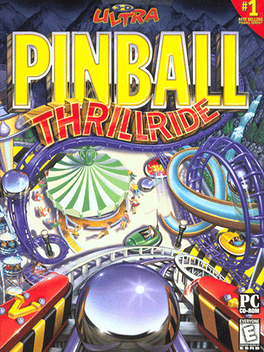
All the bells, whistles, and sirens of the pinball games of yesteryear come to the portable system with 3D ULTRA PINBALL: Thrill Ride. This colorful title takes all the fast action of pinball and combines it with features that only a videogame can provide. The full-sized table features multiple screens of action, with all of the staples of pinball intact. Bumpers, ramps, stoppers, and flippers litter the table, along with a variety of special bonus chutes that will take you to one of several special pinball challenges. 3D ULTRA PINBALL is highlighted by brightly colored graphics, with excellent detail on the board and its various parts. The game also features realistic ball physics and gameplay elements, so don’t bump too hard or you’ll get a "TILT"! 3D ULTRA PINBALL: Thrill Ride will test your skills and push your reflexes to their limits.Moomin's Tale
2001
Moomin's Tale
2001
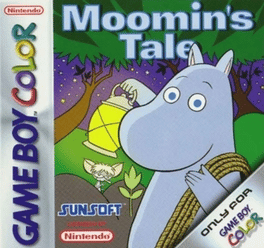
Moomin's Tale is an Action game, developed by Pixel and published by SunSoft, which was released in 2000.