New Games - Page 12167

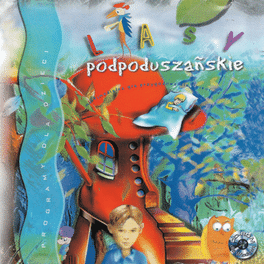
Lasy Podpoduszańskie
2000
Urban Mercenary
2000
Urban Mercenary
2000
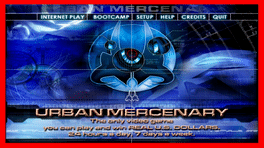
Urban Mercenary was one of the first multiplayer games where you could get real money in online tournaments. The game allowed players to bet and split the money among the winners and earn actual money for fragging online. The game used GLQuake - modification of Quake Engine and was available for free downloading on developer's website. However, the servers of the game are offline for several years and developer's website is dead, so now the game is abandonware. Game has bots so you can play it offline.In-Flight Tetris
2000
In-Flight Tetris
2000
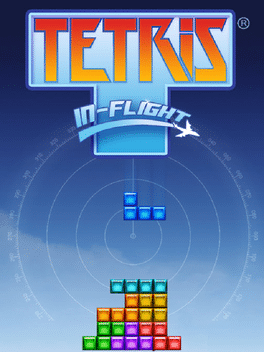
One of the most popular games in the world and bound to be an everlasting classic, Tetris is without a doubt one of the most challenging and addictive game available out there. Whether you're a beginner or an advanced player, this game will provide you with hours of entertainment. Line up the falling pieces to form lines. When you run out of space, the game ends. Make Tetris combos to get more points. In-Flight Tetris is a Tetris game available to play in some passenger airplanes. It is currently sold to airlines by Global Eagle as part of their Airgames catalog. In-Flight Tetris uses standard Guideline rules for gameplay, and it uses either touch or built-in remote controls. Game interface is mostly based on Tetris Zone. There are four modes available: Marathon, Fourty Lines, Ultra, and Battle 2P. Scores are saved on a leaderboard.NFL Blitz 2001
2000
NFL Blitz 2001
2000
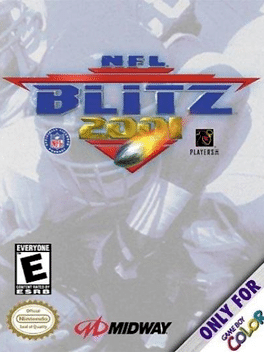
Holding strong to its "No Refs, No Rules, No Mercy" roots, NFL Blitz 2001 sacks the competition with huge hits and wild celebrations that make simulation football games seem tame.Holiday Racer
2000
Holiday Racer
2000
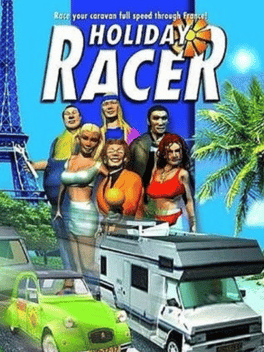
Holiday Racer is another entry in the Davilex Racer series where the player takes part in a TV show. The price is a free trailer pitch in Monaco. But of course the player has to work for it - in this case the task is to win six illegal street races in Aachen, Paris, Lyon, Marseilles, Monaco and Nice. There are five humorous exaggerated persons to choose, e.g. a hippie or a stressed family father. The races are heavily action oriented and include power-ups which either increase the top speed, freeze other cars or repair the own vehicle. Between the races the player can invest earned points in better tires, engines or gearboxes; he also can gamble for other equipment. The available vehicles are no regular cars but jet ski trailers or jeeps. When beating the game with all vehicle types the player unlocks a special car.Goldie
2000
Goldie
2000
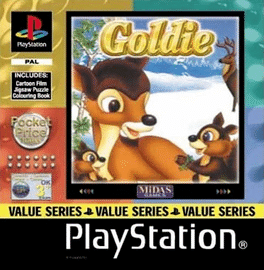
Join Goldie the deer and friends in a search for her missing mother, A strange bear may hold the key to the mystery. As well as a great half-hour cartoon video, Goldie features an easy-to-use virtual colouring book and a challenging puzzle game. Watch and see if Goldie will find her mother at last.Pokémon Adventure
2000
Pokémon Adventure
2000
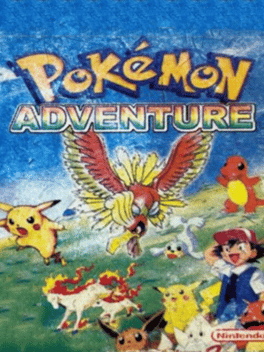
A bootleg Pokémon Game Boy Color game. Actually a hack of Sonic Adventure 7, which is a hack of Sonic 3D Blast 5.Lord of the Jungle
2000
Lord of the Jungle
2000
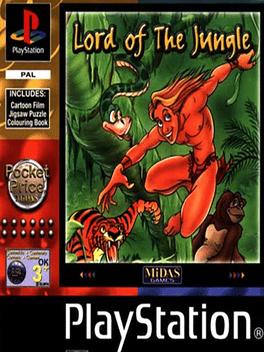
Lord was a tiny baby when he was taken into the care of the apes. Now, after 18 years in the jungle, Lord finally comes face-to-face with other people... As well as a great half-hour cartoon video, Lord of the Jungle features an easy-to-use virtual colouring book and a challenging puzzle game, letting you join Lord in his adventures. OTHER TITLES AVAILABLE: Anastasia Goldie Lion and the King Moses Prince of Egypt Nice Cats The Dalmatians The Sword of CamelotNorman's Escape
2000
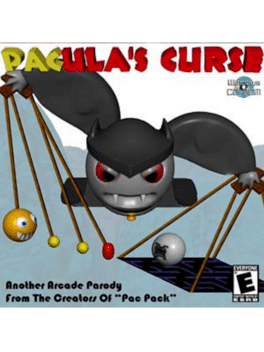
Pacula's Curse
2000
Pacula's Curse
2000
A Pac-man clone and Parody with elements of shooters. It is part of the pac-guy series, It can be seen as the second standalone disc in the series, but it is included in later editions of the first disc ''The pac-pack''. It is third ad final part in the Pac-Guy 2 sub series.Alice in Wonderland
2000
Crayon Shin-Chan for Nuon
2000
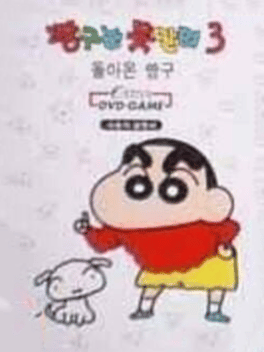
Crayon Shin-Chan 3 is an Action game, developed and published by Okiyasu Lab, which was released in Korea in 2000.Crystal Mines II: Buried Treasure Expansion Pack
2000
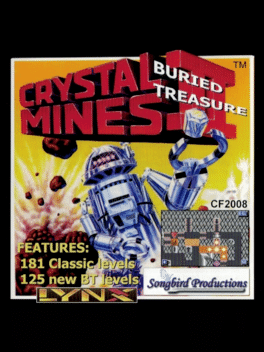
In 2000, Songbird Productions produced a sequel, Crystal Mines II: Buried Treasure on CD-ROM for Microsoft Windows. This CD-ROM required the original game and a Lynx to PC serial cable to run, allowing the editing and creation of all new levels. This was followed in 2003 by a cartridge release of Crystal Mines II: Buried Treasure with the original 181 levels and 125 new levels.Globetrotter
2000
Globetrotter
2000
Globetrotter plays similar to the Backpacker series. You start the game as a new member in the Globetrotter Club. Your objective is now to become the president. To do so you will have to complete various tasks that you are assigned by the club. Your job is to take pictures of famous sights all over the world. For these you will get money and experience which is used to reach more far away locations.Abenteuer Landtag 2
2000
Demon Hunter Mai
2000
Demon Hunter Mai
2000
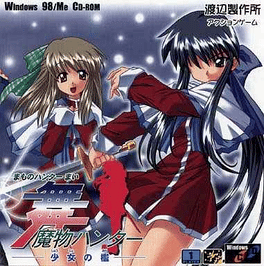
Demon Hunter Mai is a game action developed by Watanabe Seisakusho and published by Watanabe Seisakusho. in 2000.Areena 5
2000
Areena 5
2000
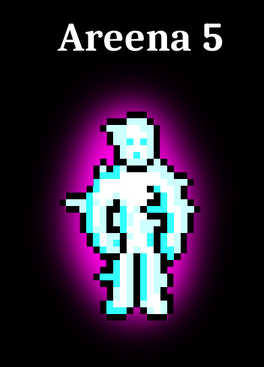
Areena 5 is by far the most popular game in the series to date, with which you can compete for the League Championship with your gladiator team. The team can include a maximum of nine gladiators who evolve along the way into unbeatable fighters. Or beaten many times.Mathosaurus II
2000