New Games - Page 12517

Babylon 5: Shadow Wars
1997
A simple 2D arcade shooter that accompanied the Babylon 5 Arcade Series Entertainment Utility multimedia collection.Test Drive 4
1997
Test Drive 4
1997
star 6.2Test Drive 4 is a racing game featuring ten different cars - five modern supercars such as the Jaguar XJ220 and TVR Cerbera, and five vintage muscle cars including three Chevrolet models. Each car has its own realistic physics, with challenging handling. There are five full circuits, plus a drag strip. You can contest a full world championship, plus single races and ghost-car time trials. The ability to find shortcuts which is featured in the third game in the series is not included here; you must stick to the pre-defined track layout.Sandwarriors
1997
Sandwarriors
1997
This is an arcade sci/fi flight game similar in style to "Inca" series, but with an ancient Egyptian setting (like Stargate). The story goes as such, in the year 6225 B.C. on the far flung, sand covered planet of Tawy, a high-tech civil war is taking place. Over many generations two opposing Houses have formed, House Horus and the evil House Set, both completely determined to annihilate the other. As an elite warrior of the Horus empire, you are commanded by God Horus to pilot the Sandships of the gods to destroy your evil enemies or die trying!Need for Speed: V-Rally
1997
star 6.8V-Rally is a rally racing game initially developed by Eden Studios for the PlayStation, published in North America by Electronic Arts under the title of Need for Speed: V-Rally. Later ported to PC, N64, Game Boy, and Game Boy Color. It features 11 official rally cars and more than 40 courses with dynamic weather, terrain, and time-of-day variations. Players can fine-tune vehicle settings such as suspension, gear ratios, and steering before competing across three main modes: Arcade, Championship, and Time Trial. In Arcade mode, players advance through competitions grouped by difficulty, each consisting of four stages. Championship mode presents an eight-race tournament with points awarded for top-three finishes, while Time Trial mode focuses on racing against the clock or another vehicle for the fastest time.D.A.: Pursuit of Justice - The Rat Tattoo Murder
1997
D.A.: Pursuit of Justice - The Rat Tattoo Murder is a law simulation game where players assume the role of an Assistant District Attorney in California. The case involves investigating the murder of Tommy Wu following a confrontation between rival gangs at a pool hall, determining whether his death was accidental or premeditated. Players gather evidence by visiting the police station to review witness statements, examining physical evidence, and ordering lab analyses at the crime lab. The game features a notebook computer interface that provides access to legal case studies and current legislation. Players use the Case Constructor tool to organize evidence and build their prosecution case for trial. Originally released separately on 3 CD-ROMs by Legacy Software, it was later bundled with two other cases before being re-released as a standalone title called Pursuit of Justice in 2001.Virus: The Game
1997
Virus: The Game
1997
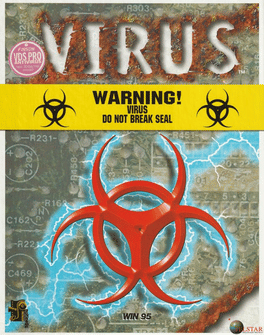
Virus: The Game is a game in which the player battles within the computer's directory structure and files. Traverse the directory tree in a 3D environment hunting down 'viruses', with the computer's own sound files being played in the background, while graphic files found on the hard drive are used to texture the walls.Car & Driver Presents: Grand Tour Racing '98
1997
"Car and Driver Presents: Grand Tour Racing '98" offers 40 vehicles in 5 classes, 6 tracks, and 36 course variations. Features include 8 official Car and Driver teams, Season mode, single-player, multiplayer (split-screen & linked), and save data to memory cards. Are you ready to become the ultimate Grand Tour champion? Despite being known in Europe as Total Drivin, France received a unique localisation, where it is known as M6 Turbo Racing.Shin Momotaro Densetsu
1997
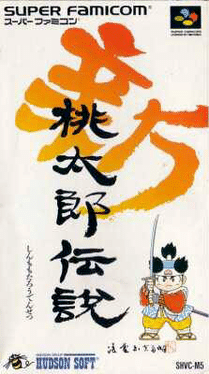
Shin Momotaro Densetsu is a Role-Playing game, published by Hudson, which was released in Japan in 1993.Maximum Force
1997
Maximum Force
1997
Maximum Force is a light gun shooter arcade game developed by Mesa Logic for Atari Games in 1997. In 1998, Atari Games re-released the game as part of one machine called Area 51/Maximum Force Duo that also included Area 51, and later ported the game to both the Sony PlayStation and Sega Saturn game consoles. Like its predecessor Area 51, Maximum Force is notable for its use of digitized video stored on an on-board hard disk, and the bizarrely contrasting unrealistic gibs into which every enemy blows apart when shot, in exactly the same way. While enemies, innocents, and explosions are 2D digitized video sprites, the levels and vehicles are pre-rendered in 3D.Chasm: The Rift
1997
Chasm: The Rift
1997
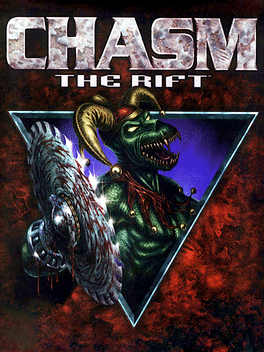
star 5Humankind, in the process of evolution, has encountered a mysterious phenomenon - the destruction of the normal flow of time. From the past to the future, time rifts are forming in Earth's atmosphere. These rifts lead to different periods of history. Through them the most aggressive creatures from the past, present, and the future, have begun to infiltrate our time. These mutants, known as Timestrikers, have begun a complete and systemic eradication of all human life. You are a specially trained commando who has been volunteered to investigate a recent attack by the Timestrikers. Utilizing an arsenal of devastating weapons and mysterious items from the past and the future, you have been authorized to terminate any mutant creatures that attempt to obstruct your investigation. Each assignment gets you closer to the heart of your goal. A mission briefing gets you moving in the right direction, but it's up to you to carry out your orders. Grab your weapon and report to the Commander immediately!Frogger
1997
Frogger
1997
star 6.8A remake and reimagining of Frogger. However, unlike the original game, most of the maps are more complex and require exploration. In each level, the player must collect five baby frogs within a certain amount of time. There are various obstacles, traps, and enemies which must be avoided and usually are unique to a certain zone. There are a total of 33 levels spread out across nine different zones.7th Legion
1997
7th Legion
1997
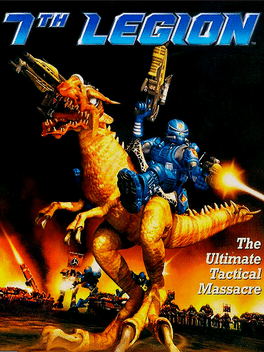
star 5There's no Salvation from this army! Can you survive this furiously fast, kill-for-money, real-time blood-fest? There's nowhere to hide as you smash your opponent in 'to-the-limit' conflict. And, while you've got a few nanoseconds to spare, you've got to build to survive, mechs, tanks, troops, mounted slavens - a host of murderous military units who will hone their killing skills with experience. Just what devastating effect does a 7th legion priest have in battle? what happens when you summon the dark legion? The landscape is isometric and you've got to be ice-cool to survive in the blazing heat of combat. And there's more! Random power ups and a massive selection of battle cards that can turn the tides of war in a flash. But be careful: you don't know what cards your opponent is holding and even when you've got his last trooper cornered he might play the battle card that wipes away your entire force! Salvation? They'll be lucky to find a stone to crawl under!Incubation: Time Is Running Out
1997
star 8Travel to the colonized planet of Scayra, and enter the dark and terrifying world of Incubation - the latest episode in the Battle Isle saga. Following a power plant accident, the vast energy shield that separates the Chromian colonists from the indigenous life-forms - the Scay'Ger - suffers a total shut down, allowing contact between the two races for the very first time. A human virus has not infected the Scay'Ger, mutating them into violent, blood-thirsty monsters. As commander of a squad of elite space marines, only you can stop the vicious attacks and evacuate the remaining colonists before all is lost. The battles in this turn-based tactical game are not waged in open fields, but fought within the dark and complex industrial buildings of the colony city; Scay Hallwa. You'll enjoy the unique challenge of leading your men through various alien scenarios, never knowing what's around the next corner or behind the next door. Incubation also features a real-time 3D environment and with detail and features nevChex Quest 2: Flemoids Take Chextropolis
1997
The Chex Warrior returns home only to discover that the Flemoid threat has reached his home-world too. Grabbing his zorcher, he races to the rescue of his beloved planet. He battles through a spaceport, a movie theatre, a museum, and the city of Chextropolis until he reaches the sewers, where he faces The Maximus.Take No Prisoners
1997
Take No Prisoners
1997
Take No Prisoners is a 1997 game set in a post-apocalyptic Texas; with the main character, Slade, given the mission to retrieve an object from the center of a small town. Slade, having to battle past the cities violent inhabitants, manages to retrive the object and escape the city alive.MageSlayer
1997
MageSlayer
1997
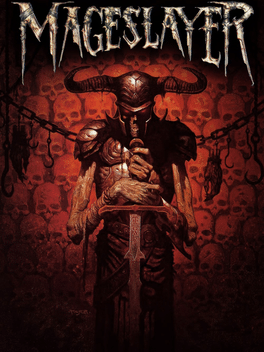
A millennium has passed since the stronger Mageslayer clans betrayed Lord Thane and the Clan of Knowledge. Now Lord Thane is ready to take revenge on the clans that refused to help him against the mages. He's gathered the relics of the StarStone and placed them under the protection of his minions. But his enemies have joined forces and sent the best warrior of each of the four remaining clans to fight back. In this top-down 3D action game you play the role of any of the warriors chosen among the remaining clans.G-Police
1997
G-Police
1997
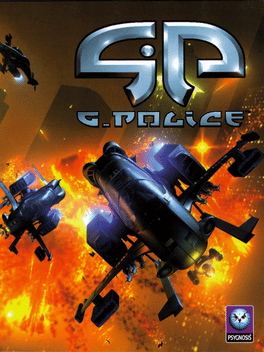
star 6.9G-Police is a 1997 combat flight simulator set in a hypothetical future where corporations lead space colonies. The player is Jeff Slater, a futuristic helicopter pilot who joins the G-Police to investigate his sister's death.Extreme-G
1997
Extreme-G
1997
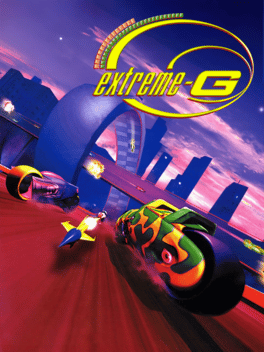
star 6Extreme-G is a futuristic racing game with an emphasis on speed. It also features many weapons and an F-Zero style energy shield and regeneration.