New Games - Page 12513

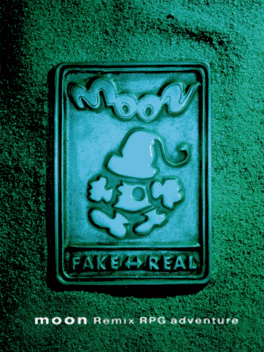
Moon: Remix RPG Adventure
1997
star 7.1In this "anti-RPG" adventure game notable for parodying and subverting common JRPG conventions, you level up by loving, not fighting. Revive dead animals and bond with everyone around you to obtain the most important thing in the universe — love.Daytona USA Deluxe
1997
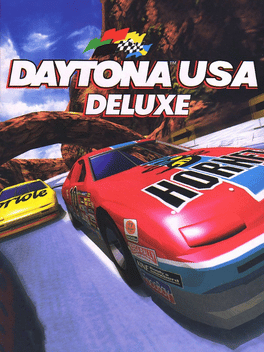
Daytona USA Deluxe
1997
Deluxe borrows most of its features from the US/PAL Championship Circuit Edition and the Japanese Circuit Edition, both Sega Saturn exclusives. However, it also adds eight-player network support and a brand new exclusive track; Silver Ocean Causeway. The original hornet from the arcade Daytona USA is also unlockable.Tactical Fighter
1997
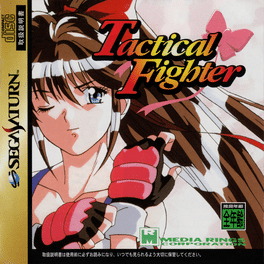
Tactical Fighter
1997
A raising sim where the player is tasked with training a teenage girl in order to get her ready for the S-Grand Prix martial arts tournament.Wizard's Harmony 2
1997
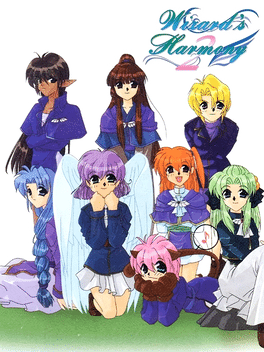
Wizard's Harmony 2
1997
An adventure and training simulation game set in a fantasy world of swords and magic.Cart World Series
1997
Cart World Series
1997
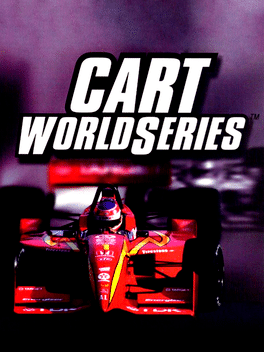
Cart World Series is a racing game based on the Championship Auto Racing Teams (CART) open-wheel racing series. This game is licensed and features many notable drivers from the late 1990's, such as Greg Moore, Al Unser Jr. and Paul Tracy. The game also features 10 authentic tracks as well as realistic handling and damage. Players can compete in a full year's worth of races competing for points in each race or in simple single races. There are two game modes: arcade and simulation. Arcade mode allows re-spawning of damaged vehicle parts. In Simulation mode, all damage is permanent for the race. The game supports the analog controller.PGA Tour '98
1997
PGA Tour '98
1997
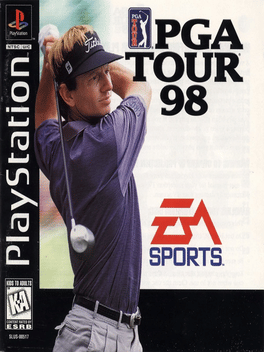
Go on the links with EA Sports' PGA TOUR '98. The game features five championship courses: the exclusively licensed Pebble Beach Golf Links, The Bay Hill Club, TPC of Scottsdale, Colonial Country Club, and TPC at Sawgrass. Each course has been designed using actual blueprints of the real courses, resulting in amazingly realistic graphics. Every hole features the real characteristics and surroundings of the real thing, including trees on the fairways, sloping hills, huge bunkers, and tricky greens. Compete as or against 14 PGA Tour pros, including Mark O'Meara, Lee Janzen, Davis Love III, and Brad Faxon. All 14 pros' swings and unique post-shot reactions were digitized into the game to give you the most realistic golf experience imaginable.Hard Boiled
1997
Hard Boiled
1997
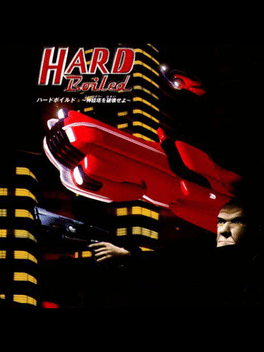
The game story is based on the same name comic book by Frank Miller and Geof Darrow that was published in the early 90s. Here you play as Nixon who thinks he's a regular tax collector in dystopian retro-futuristic Los Angeles, but actually a cyborg-assassin for one of the big corporations that gets his memory reformatted once in a while. The gameplay is centered around riding your hovercar and shooting your way through the various city locales destroying all sorts of vehicles, turrets, barriers and occasional boss in the process. There are five missions in total with their own sets of enemy units and level design.JumpStart Typing
1997
JumpStart Typing
1997
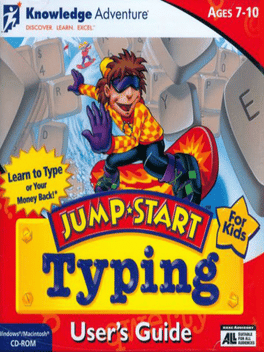
JumpStart Typing is a skills-based JumpStart game released by Knowledge Adventure in 1997. It focuses on teaching typing skills to kids ages 7-10.JumpStart Adventures 5th Grade: Jo Hammet, Kid Detective
1997
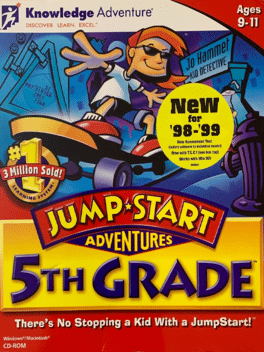
JumpStart Adventures 5th Grade tells about a kid named Jo Hammet, Kid Detective. When the city of Hoverville has electric problems from the evil Dr. X, Jo goes out to stop him. Go to several stores and places in Hoverville asking the owners for help. If you help them with puzzles, they'll give you something you may need to stop Dr. X. In the meantime try spying on three octopus-haired men!Wing Over
1997
Wing Over
1997
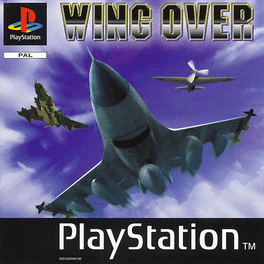
Wing Over is an arcade flight sim released for the PS1 in 1997. Featuring system link support for multi-player and a full single player tournament system, as well as a large roster of characters and planes to choose from, Wing Over has earned the title of a cult classic on the PS1.Blood: Plasma Pak
1997
Blood: Plasma Pak
1997
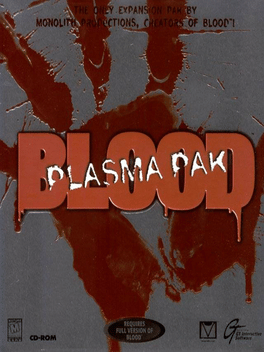
star 7Monolith Productions' official expansion pack to Blood, featuring one new episode, six new enemies, a variety of bug fixes and a bloodbath level modeled after Monolith's corporate office.Age of Empires
1997
Age of Empires
1997
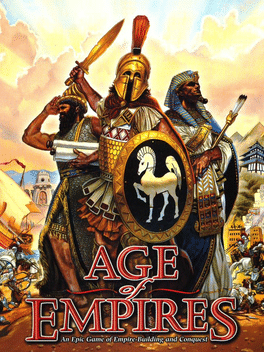
star 8.3Age of Empires (AoE) is a history-based real-time strategy video game developed by Ensemble Studios and published by Microsoft. The game uses the Genie, a 2D sprite-based game engine. The game allows the user to act as the leader of an ancient civilization by advancing it through four ages (the Stone, Tool, Bronze, and Iron Ages), gaining access to new and improved units with each advance.JumpStart Kindergarten
1997
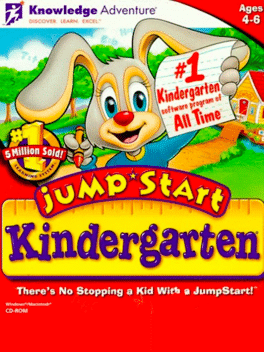
JumpStart Kindergarten is a grade-based JumpStart game released by Knowledge Adventure in 1997. It teaches a kindergarten curriculum. It is an updated version of JumpStart Kindergarten (1994), and in 2002 it was succeeded by JumpStart Advanced Kindergarten.Sid Meier's Gettysburg!
1997
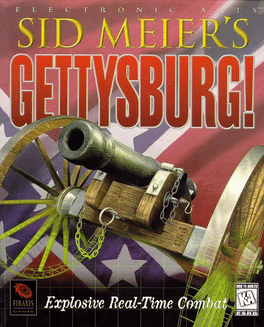
Sid Meier's Gettysburg! is a real-time tactical computer game designed by Sid Meier, the co-founder of Firaxis Games, that was released in 1997 by Electronic Arts. In 1998, Gettysburg won the Origins Award for Best Strategy Computer Game of 1997. It was followed by Sid Meier's Antietam! in 1998. The game allows the player to control either the Confederate or Union troops during the Battle of Gettysburg in the American Civil War. It can be played as single scenarios, or as a campaign of linked scenarios, either recounting the original history or exploring alternative possibilities. The engine was also used for the Napoleonic game Waterloo: Napoleon's Last Battle (as was a modified version for Austerlitz: Napoleon's Greatest Victory), both by BreakAway Games.Space Empires III
1997
Space Empires III
1997
The third game within the Space Empires series brings the dawn of a new age of exploration. Your race keeps running through the fabric of space and moves to other solar systems beyond your own.BS Fire Emblem: Archanea Senki-hen - Dai-3-wa: Seigi no Touzokudan
1997
The third part of BS Fire Emblem Archanea Senki-hen (BS Fire Emblem: Akaneia Senki-hen). It is a turn-based tactical RPG set in the fantasy world of the Fire Emblem universe. It is based on the engine for the January 1994 Super Famicom release, Fire Emblem: Monshou no Nazo, and the gameplay is largely the same. Gameplay involves the tactical movement of character units through a map grid in order to defeat the opposition militarily.Jubilee's Journey: A Jane Goodall Environmental Adventure
1997
In the first of three adventures - created in association with the Jane Goodall Institute - Jubilee, a bicycle-riding chimpanzee, leads children on a journey to learn about global concerns. Along the way, children search for hidden objects, meet characters called "Just-Me's", discover interesting facts and play games to restore six troubled environments to their natural state. Learn about the effects of acid rain and too much pollution. Snorkel to inspect a coral reef or sing in the swamp. Play "Truth or Siberia" with Boris the Bear and Syd the Tiger or "Stash the Trash" at a city dump where the garbage just keeps coming! A Things To Do List, experiments and web addresses for eco-friendly sites are included in a companion journal. With over 200 animated sequences and original music videos, Jubilee's Journey is a great way to introduce environmental issues while teaching children ages 6 and up, how to make a difference in the world around them.The Reap
1997
The Reap
1997
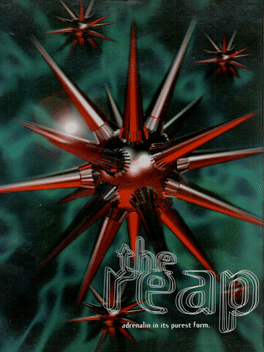
A PC gem boasting beautiful visual effects and four different worlds (Desert, Underwater City, Ice Caves and Futuristic Metropolis) comprised of massive, beautifully crafted 3D-modeled levels and rendered graphics.Actua Soccer 2
1997
Actua Soccer 2
1997
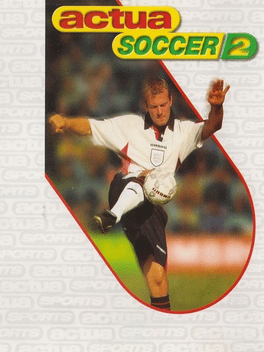
star 5.4Actua Soccer 2 or sometimes Actua Soccer 98 due to its capitalization on the 1998 FIFA World Cup was one of the many football titles released to capitalize on the 1998 World Cup, and once again included national teams, but a more polished engine (optimized in the PC version for 3D graphics cards), (in some versions) the full Italian Serie A league, and a new "scenario" mode assured good sales and mostly positive reviews. It also included a team creator mode, which enabled the player to make up to 128 custom teams. Barry Davies was joined by Trevor Brooking on the commentary, and the game featured England football team captain and striker Alan Shearer not only on the cover, but also providing interviews about the game in the press. Michael Owen and Simon Tracey provided motion capture for the players. The game also featured menu music and a cameo appearance from Welsh rockers, Super Furry Animals, which could only be activated after entering a cheat code. Actua Soccer 2 was also bundled with Creative Technology's Vo