New Games - Page 12512

ClayFighter 63 1/3
1997
ClayFighter 63 1/3
1997
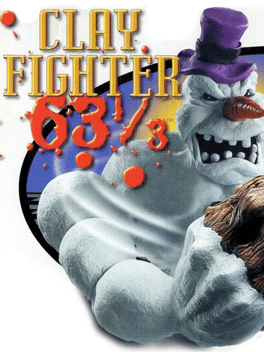
star 5.4Get ready to crumble! Once again, the clay fighters prove that when you play a state-of-the-art fighter, you might lose lives, you might lose limbs, but there's no reason to lose your sense of humor! Fight in and out of 3D backgrounds. Get tossed out of a window and resume fighting outside. Choose form 12 eccentric fighters including brand new combatants and old favorites like "Bad Mister Frosty" and "Bonker the Clown." Includes bonus "secret characters" who are so famous that a legal gag order prohibits us from revealing their identity. Move freely in over 12 highly detailed 3D environments.NCAA Football '98
1997
NCAA Football '98
1997
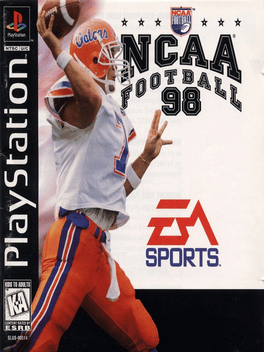
NCAA FOOTBALL '98 gives those of us who never attended Florida State or Michigan the complete college football experience. Play modes include Exhibition, Tournament, Great Games, Season, Practice, and Dynasty. You get 112 Division I-A teams and their stadiums, so you'll likely find your favorite major college team on the roster. The most exciting feature is a Dynasty mode that allows you to take a college team through multiple seasons. While the game does your recruiting for you, you can specify what types of players you need to bolster your team. If you're having a hard time finding a specific type of player, play, or team, you can take advantage of the Create-A-Player, Create-A-Play, or Create-A-School features. Now you can know the feeling of being in a bowl game playing in front of 10,000 fans, thanks to NCAA FOOTBALL '98.Big Thinkers 1st Grade
1997
star 7Big Thinkers 1st Grade is the perfect learning supplement to your child's classroom experience. Ben and Becky Brightly's contagious wonder and ability to transform themselves into a variety of shapes and forms engage kids in a fun world of learning and discovery!Grand Theft Auto
1997
Grand Theft Auto
1997
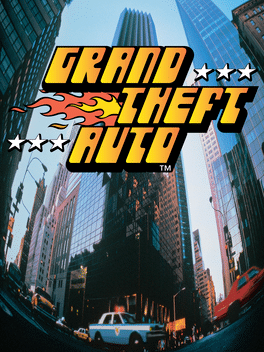
star 7.7Grand Theft Auto is the first game in the Grand Theft Auto series and a sandbox-crime game published by Rockstar Games. The original Grand Theft Auto is made up of a series of levels each set in one of the three cities in the game. In each level, the player has a target number of points to achieve, and five lives to attain the score. The score counter doubles as a money meter; the player can spend this money on paint jobs and various other things. However, any money spent is of course taken away from the score, making the goal that little bit further away. On obtaining the target number of points, the player must then drive to a certain location to complete the level, which allows progress to the next one.25th Century Duke
1997
25th Century Duke
1997
25th Century Duke is an add-on episode set in the 25th Century, a time where the global population is exceeding the 300 billion mark. The environment has been depleted so much so that the creation of oxygen now rests in the hands of big industries. The cities of the world reach higher and higher for the clouds. Scenarios not dis-similar to those found in the cult movies BladeRunner and The Fifth Element.Grant, Lee, Sherman: Civil War Generals 2
1997
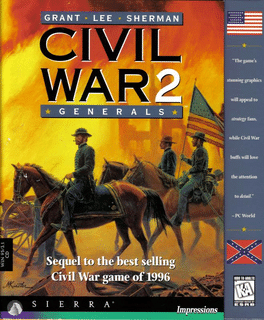
Civil War Generals is a hexagonal, turn based strategy game.Fucking Hostile
1997
BS Fire Emblem: Archanea Senki-hen - Dai-4-wa: Hajimari no Toki
1997
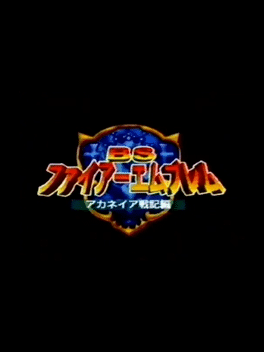
The fourth part of BS Fire Emblem Archanea Senki-hen (BS Fire Emblem: Akaneia Senki-hen). It is a turn-based tactical RPG set in the fantasy world of the Fire Emblem universe. It is based on the engine for the January 1994 Super Famicom release, Fire Emblem: Monshou no Nazo, and the gameplay is largely the same. Gameplay involves the tactical movement of character units through a map grid in order to defeat the opposition militarily.Street Fighter III 2nd Impact: Giant Attack
1997
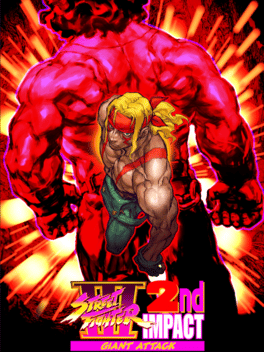
star 8.12nd Impact brought back all the characters from the first game and introduced two new ones: Hugo and Urien. Yang, who was an alternate version of Yun in the first game, became his own character with his own set of special moves and super arts. Akuma also returned as a secret computer-controlled challenger and selectable character. Thus the playable character roster increased to 14. In addition to the regular Akuma, a non-playable computer-controlled version named "Shin Akuma" also appears in the single-player mode.Sabre Ace: Conflict Over Korea
1997
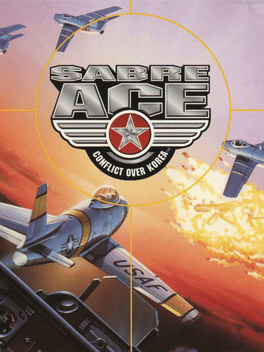
Sabre Ace: Conflict Over Korea is an air and ground-attack combat flight simulation game which takes place in the skies above Korea. The Korean War was fought between the Soviet Union and the United States using North & South Koreans and free world troops, using the country of Korea as a battleground. Choose to be a pilot for the USA in American aircraft, or on the side of the Koreans in Russian planes.Big Thinkers Kindergarten
1997
star 5Big Thinkers! Kindergarten is the perfect learning supplement to your child's classroom experience. Ben and Becky Brightly's contagious wonder and ability to transform themselves into a variety of shapes and forms engage kids in a fun world of learning and discovery!Uprising: Join or Die
1997
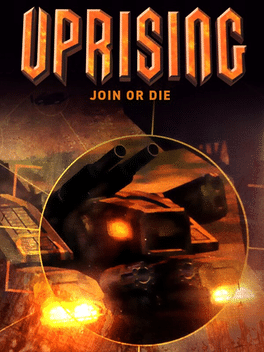
star 6Uprising offers more strategy than a military sim, and more action strategy than a shoot'em up. Using your hi-tech assault tank, loaded with powerful weapons, you need to establish tidal bases, mine for power, build factories and direct legions of allied units against the enemySpy Fox in "Dry Cereal"
1997
star 7.9The super-suave agent, SPY Fox, must find Mr. Udderly, rescue all the cows, and stop William the Kid from depleting the worlds supply of milk. Using ingenious SPY gadgets, keen wits, and daring moves, SPY Fox, jumps out on an udderly exhilarating adventure!Broken Sword: The Smoking Mirror
1997
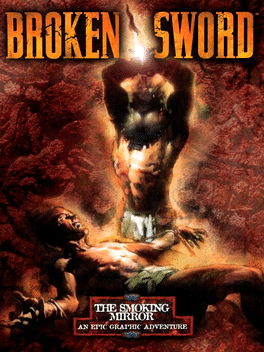
star 8.3Broken Sword: The Smoking Mirror is a 2D adventure game played from a third-person perspective. Via a point-and-click interface, the player guides protagonist George Stobbart through the game's world and interacts with the environment by selecting from multiple commands, while Nicole Collard is also a playable character in selected portions of the game. The player controls George's movements and can engage in dialogue with other characters through conversation trees to gain hints of what needs to be done to solve the puzzles or to progress the plot. He also have to collect objects that can be used with either other collectible objects, parts of the scenery or with other people in order to solve puzzles and progress in the game. By right-clicking on an object, the player gets a description and clues. The player character's death is possible if he makes a wrong decision.Sotsugyou Vacation
1997
Sotsugyou Vacation
1997
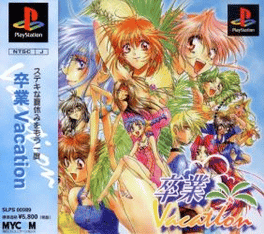
Sotsugyou Vacation is a love adventure game and part of the Graduation series. It is a sequel to Sotsugyō Crossworld, featuring the cast from that game plus three new characters. The player joins some of their classmates on an island summer vacation; the island turns out to be kind of boring, so after hearing a story about hidden treasure somewhere on the island, some of the girls decide to spend their time looking for that treasure.Sotsugyou Vacation
1997
Sotsugyou Vacation
1997
Sotsugyou Vacation is an adventure, and "gal get" (love simulation) game in the Sotugyou Graduation series of games. The goal of the game is to find a treasure on a southern island, and also become friends with the girls.My Teacher is an Alien
1997
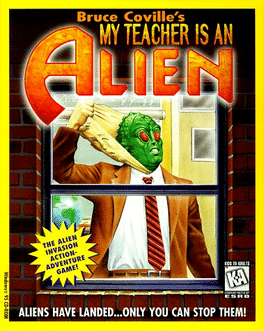
A computer game based on the “My Teacher is an Alien” book series was produced by 7th Level and Byron Preiss Multimedia Company. Players can take the perspective of the three main children in the series, Peter Thompson, Duncan Dougal or Susan Simmons.