New Games - Page 12508

Falcom Classics
1997
Falcom Classics
1997
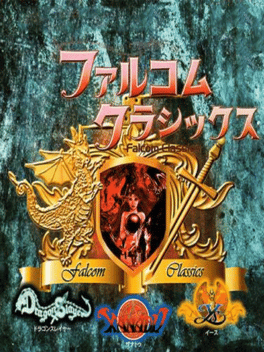
Falcom Classics (ファルコムクラシックス) is a compilation of three classic games by Falcom for the Sega Saturn. Each game has been enhanced to take advantage of the superior specifications of the Saturn console, though their non-enhanced counterparts can also be played.Bust-a-Move '99
1997
Bust-a-Move '99
1997
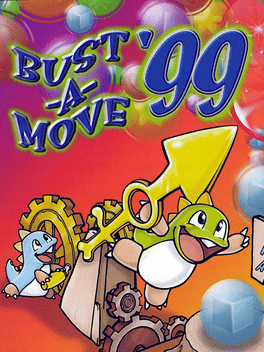
star 6.4In the tradition of the Bust-A-Move series, Taito's Bust-A-Move '99 is a traditional puzzle game. The main objective is to destroy or get rid of (by dropping) all the bubbles located within the stage. Once you do this, you'll graduate to the next level. While the premise may sound simple, the logic and execution is not. Using a "bubble shooter", you must aim and shoot your bubbles to the top of the screen so that you can bring three bubbles of the same color together. When you do this, the bubbles will pop. One way to earn points is to have the popping bubbles as well as the bubble that was shot fall off the screen (in multi-player, it puts these bubbles on your opponent's side). This also gives you a lot less bubbles to take care of. Bubbles are constantly falling down. Popping them all in a short amount of time is necessary because the longer it takes you to pop them all, the faster they will drop. If you fail to clear out all the bubbles and they reach the bottom of the screen, the game is over. Bust-A-Move 'The Granstream Saga
1997
The Granstream Saga
1997
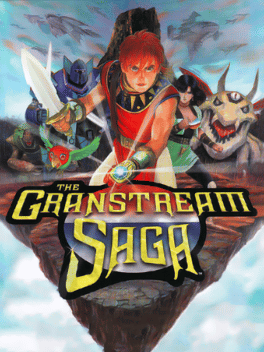
star 5The Granstream Saga is an action game with strong RPG elements, and a spiritual successor to Gaia games. The player controls Eon as he explores overworld and dungeon locations, which are presented in overhead-viewed 3D. Battles are one-on-one; whenever an enemy is encountered, the view is zoomed on the combat participants who must fight each other until one of them emerges victorious. Eon can use swords, daggers, or axes against his enemies. He has a variety of attack moves at his disposal, including combos, shield-breaking abilities, etc.; he can also actively guard and cast magic spells. Leveling up, which increases Eon's attributes, occurs at set intervals throughout the game rather than from accumulating experience points.Crash Bandicoot 2: Cortex Strikes Back
1997
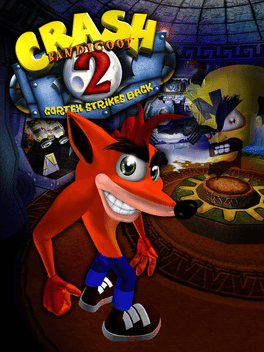
star 8.3Crash Bandicoot 2: Cortex Strikes Back is the second game in the Crash Bandicoot series, and the sequel to the original game. The gameplay is largely similar to that of the original, as players make their way through a limited environment whilst breaking crates that contains bonuses. The goal of the game is to gather 25 crystals for Crash's nemesis, Doctor Neo Cortex. The crystals are scattered between 25 different levels accessible via Warp Rooms, which are hub areas of the game. A level is cleared by collecting its respective crystal and reaching the end of its path, which returns Crash to the Warp Room.Excitebike: Bun-bun Mario Battle
1997
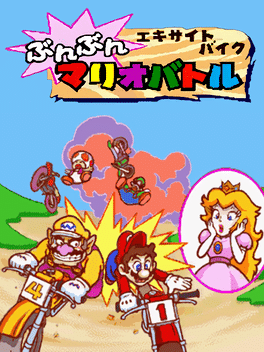
Excitebike: Bun Bun Mario Battle is a remake/adaptation of the NES title, Excitebike. In this game, all human motorcyclists were replaced with Mario characters. As a Satellaview title, Nintendo developed the video game and released four versions of it through the satellite download service operated by St.GIGA, each expanding on or replacing the features of the last. Audio broadcasting of the game is both advice on the game and voice drama told by characters. Voice actors are the same as that of "BS Super Mario USA", but Excitebike adds a new character, Wario (Chikao Ootsuka).Tennis Arena
1997
Tennis Arena
1997
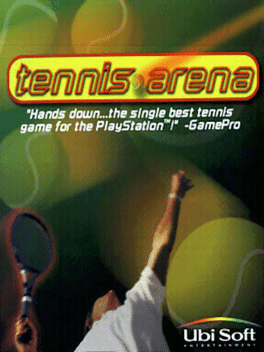
With no stat tweaking and no licenses, Tennis Arena is arcade-style tennis at its most fundamental. What you have here is single-match or tournament play for up to four players with wacky characters and a few different courts to play on. You can play an obese Chinese man, for example, and compete in a Roman coliseum whose clay surface seems to affect bounce marginally. That's about it for options though. No sim, Tennis Arena serves up roughly the same level of fun as Pong did 25 years ago, albeit now with prettier graphics and the occasional super smash. The game also features special shots, with visible trails, fighter-plane-like sound effects, and higher ball speed. These must be earned however. After successfully returning the ball over the net six consecutive times, a yellow star appears under the character. You may then attempt to use the special shot, which entails lining up with the ball just right - but a failed special shot doesn't erase the stored potential.Ichor: Blood of the Gods
1997
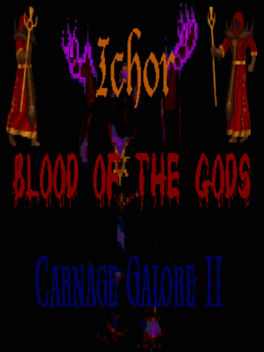
You thought carnage.wad was hard, well this new one makes it look easy. Not only is it much harder, but it is HUGE. It is nine levels covering the entire Dome of D'Sparil episode.NASCAR Grand National Series: Expansion Pack
1997
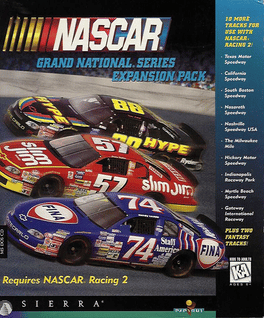
1997 Cars, Tracks and Drivers! Most of the biggest names in stock car racing got their start in the NASCAR Grand National Series. Tracks like Hickory Motor Speedway and South Boston Speedway were a breeding ground for today's most successful drivers. More than just an add-on, the NASCAR Grand National Series Expansion Pack is an extensive collection of drivers, tracks and teams based on the popular NASCAR Grand National Series. Drive real NASCAR Grand National cars, race against leading drivers and experience the strategy, challenge and high-speed thrills of the nation's most popular spectator sport!Excitebike: Bun-bun Mario Battle - Stadium 3
1997
The third episode (stadium) of Excitebike: Bun-bun Mario Battle. Excitebike: Bun Bun Mario Battle is a remake/adaptation of the NES title, Excitebike. In this game, all human motorcyclists were replaced with Mario characters. As a Satellaview title, Nintendo developed the video game and released four versions of it through the satellite download service operated by St.GIGA, each expanding on or replacing the features of the last. Audio broadcasting of the game is both advice on the game and voice drama told by characters. Voice actors are the same as that of "BS Super Mario USA", but Excitebike adds a new character, Wario (Chikao Ootsuka).Sutte Hakkun: Event Version
1997
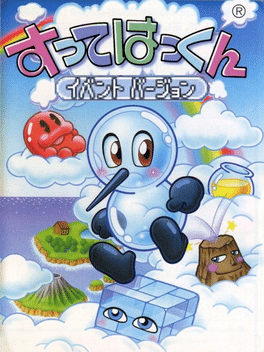
Sutte Hakkun Event Version is a special version of Sutte Hakkun released for the Satellaview. It contains the same levels as the first broadcast, but this version had a new rankings system.Sutte Hakkun
1997
Sutte Hakkun
1997
Sutte Hakkun is a puzzle action game in the shape of a platformer. The playing character is an abundant-beaked bird resembling a penguin, named Hakkun, that is able to walk and jump but not to fly. The Rainbow of Happiness shined in the sky above Peaceful Islands: one day it broke apart and now Hakkun has to track down, collect, and put together all rainbow crystals to relive it. The gameplay hinges upon two elements: blocks and potions, the latter of several colours. Hakku makes its way through levels by changing the position of blocks — that will be done by swallowing them to release them on an other place then — and sucking potions — that are to be injected to blocks by the beak, endowing them with new properties consequential to the colour of the fluid — from jars. A level is cleared when the rainbow shards in it are collected. Neither a time limit nor enemy characters are there impeding Hakkun's way. Equally distinctive is the score system: a set number of points is given at the beginning of each levelGBKiss Mini Games
1997
GBKiss Mini Games
1997
GBKiss Mini Games is a distribution cartridge containing the mini games released as a promotional gift via the GBKiss infrared technology. Not released for the public, but acting as a means of distributing each minigame to the players in stores, this cartridge contains all of the minigames from the start.Oryouri Pon!
1997
Duke It's Zero Hour
1997
Duke It's Zero Hour
1997
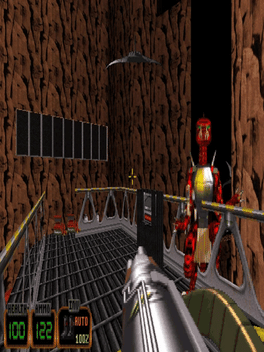
Duke It's Zero Hour is a total conversion for Duke Nukem 3D. The project was developed by ZeroHour Software and released on November 1, 1997. It features new levels, weapons, enemies, music, sound effects, and even an original boss. Duke It's Zero Hour is sometimes purported to have been an officially authorized expansion that was originally slated for retail sale via WizardWorks, but these claims are disputed.Derby Stallion 96: 97-nendo Ban
1997
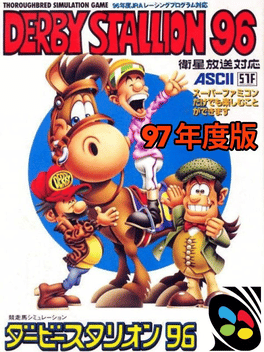
Derby Stallion 96 read data from 8M Memory Packs which included pre-made horse and race data for players to use in their games. The data which it loaded is categorized into this series of Derby Stallion 96 download data which was broadcast by St.GIGA for Satellaview subscribers.Genjintch Tamagotchi
1997
Genjintch Tamagotchi
1997
The Genjintch is a limited edition Tamagotchi released in Japan during November 1997 in theatres that were showing the film "Peking Man", which served as the base concept for the Genjintch Tamagotchi.Forgotten Saga
1997
Forgotten Saga
1997
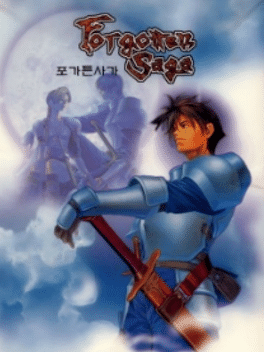
As kind of a side story, Forgotten Saga takes place in the same fictional universe as Astonishia Story, but the plots aren't interlinked and there aren't many shared characters save for Passman. While combat works similar as in Astonishia Story, there are a lot of surprising WRPG influences. In the beginning the main character's class is determined by a catalog of questions, just like in many Ultima games. Then three companions are picked from a variety of classes and typical fantasy races (Elves, Dwarves and Hobbits). Two more slots are available for more characters to join temporarily, or even replace some of the original companions for good. The game is much more nonlineal and open ended than most Far Eastern RPGs, every town holds a variety of sidequests, which often rely on character's classes or the party's reputation, which is raised by doing good deeds. On the other hand the game punishes what the writer deemed immoral behavious, taking inspiration once again from Ultima. For a good portion of the game theThe Mystery at Greveholm
1997
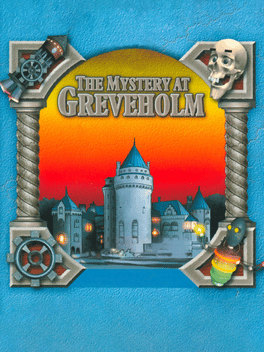
A point and click adventure game based on the Swedish Christmas Calendar TV-series of the same name.Star Warped
1997