New Games - Page 12655

Bang Bang Ball
1996
Bang Bang Ball
1996
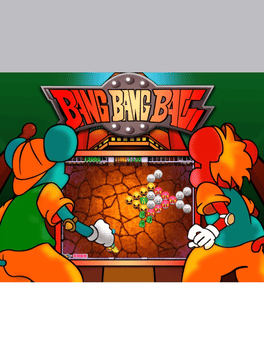
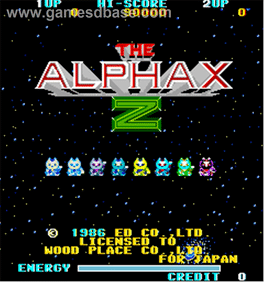
A mouse holds a ball on his belly and must shoot the other balls of the same color on the screen. You and the groups of balls can move around anywhere on the stationary screen.The Alphax Z
1996
Police Trainer
1996
Police Trainer
1996
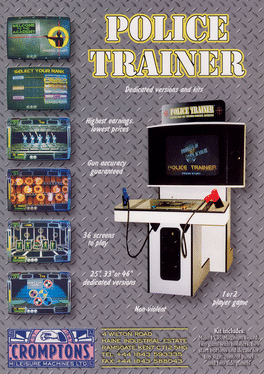
Police Trainer is a light gun arcade game released by P&P Marketing in 1996. A sequel, Police Trainer 2, was released in 2003. Players have only three lives to complete six exams in each difficulty. Players can lose lives by either failing to reach a quota, not defusing any C4 or letting the guards hit the player. In order to complete the competition mode, players must lose one life on player 1 and lose one life on the other. If the players fail each mode, they can either try the same mode again or select a different mode. If the players completed each mode, they can select another mode until a difficulty is completed. Each difficulty consists of six stages. Players can put initials after completing the Commissioner difficulty. Shooting the incorrect targets receives a –100 points penalty.Sega Touring Car Championship
1996
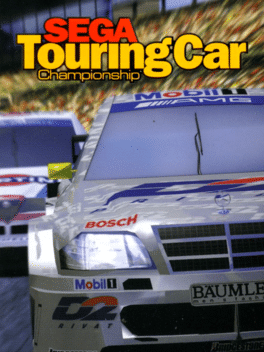
Sega Touring Car Championship is a Sega Model 2C CRX arcade racing game developed by Sega AM5 in 1996. It is similar to Sega Rally Championship in design, but uses touring cars instead of rally cars. Unlike Sega Rally Championship, Sega Touring Car Championship has never seen a sequel, and it considered a far less successful game for a variety of reasons, most notably the steep difficulty curve and often awkward car handing.Sonic Wings Limited
1996
Sonic Wings Limited
1996
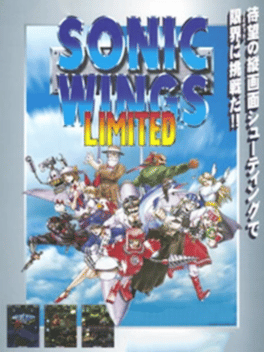
Sonic Wings Limited is an Action game, developed by MBA International and published by Video System, which was released in Japan in 1996. This is a Flying Vertical game.Purikura Daisakusen
1996
Purikura Daisakusen
1996
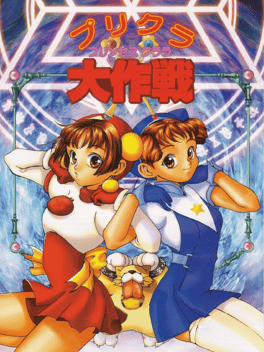
Peace in Miracle World, a kingdom ruled by the Queen Urara, was torn suddenly by the invasion of the “Scrap Empire” a realm of machines. The Scrap Empire's leader turned all the citizens of Miracle World in animals. Being defenseless, the Queen was kidnapped. Before being kidnapped, the Queen encommended Gray to find her little sisters and take care of the "Miracle Gem" a gem that is vital for the existence of Miracle World.Rail Chase 2
1996
Rail Chase 2
1996
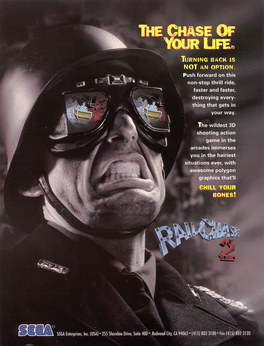
Rail Chase 2 is a 3D rail shooter played from a first-person perspective. It is the sequel to Rail Chase. An organization called the EKKL Empire has abducted the female scientist Mary Bates and forces her to develop weapons for them. Journalist Flint Rickman manages to infiltrate the organization to rescue her. The game starts with the two trying to escape in a rail cart. While following the rail tracks you have to gun down various enemies soldiers in rail carts, soldiers standing on the side of the track, vehicles and bosses. Occasionally you come across med packs on the side of the rails that can be shot to regain health. Different routes can be taken to escape. The game can be played solo or with a friend.Air Gallet
1996
Air Gallet
1996
Air Gallet, released in Japan as Akuu Gallet is a vertically scrolling shoot 'em up arcade game developed by Gazelle (one of the offshoots of Toaplan) and released by Banpresto in 1996. It runs on the Cave MK 1 hardware. It features the voice of narrator of Lenne Hardt and Jeff Manning.Captain Quazar
1996
Captain Quazar
1996
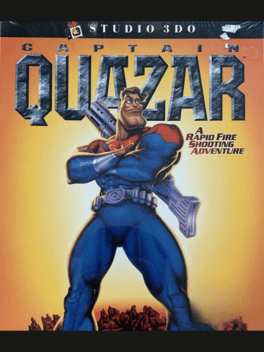
The idea behind Captain Quazar is simple, from a 3/4 overhead view control the Captain, kill the bad guys and save the day. Everything in this huge galaxy can be blown away, but be careful where you lay waste, because you have to manage your resources to survive.Sensible World of Soccer '96/'97
1996
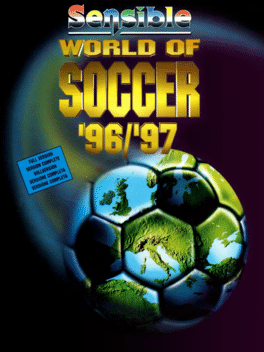
star 7Sensible World of Soccer '96/'97 is an updated version of Sensible World of Soccer: European Championship Edition. The only addition are the updated team rosters. SWOS is a top down football/management game, with either quick game or 20-year career player-manager options. The games are set to last 3 minutes, but the 20-year career can suck in your entire life for a few months. The graphics are kept very small so the player can orientate themselves on the pitch without need for a radar. The controls are simple, easy to get used to and very effective. In the full career mode you can jump from club-to-club buying any of the game's 29000+ players, as well as play around with team tactics. And you can choose from 1400 teams over the five continents. While the Linux/Macintosh/Windows are just the emulated DOS version, the Xbox 360 has some genuine changes: online multiplayer, updated graphics (the graphical style and the top-down perspective are kept) and dynamic advertisements. The team rosters are still based on seaQuarterback Attack with Mike Ditka
1996
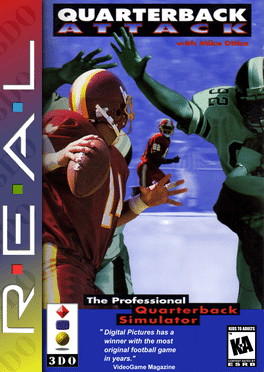
In this semi-fmv game you play a rookie facing his first game as starting quarterback on a fictional team, and this just happens to be The Big Game. The entire game consists of this confrontation, upon start of the game you watch a video of a kickoff and return, and then you get to select among 110 plays (100 passing and 10 running) and assing a snap count. The meat of the game is on the passing plays, were you are switched to a 3rd person behind-the-quarterback view from which you can see oncoming rushers as well as zoom in on any receiver and via a targeting cursor make passes, or scramble if you don't find any open man, etc.Miss World '96
1996
Miss World '96
1996
Miss World is 96 Puzzle arcade game Qix genre of erotica and adult themes developed by COMAD. The goal in the game is to reveal 80% of the silhouette of a beautiful girl on the screen, preventing the monster caze the player in the attempt. Emepzar before the game the player can choose from a selection of beautiful girls, who will be aiming to show in each game.Back Street Soccer
1996
Back Street Soccer
1996
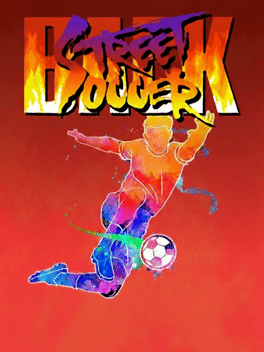
A Korean street soccer game. One of 14 international teams can be selected. The game is played on the street with a 'street fighter' element to the soccer.War 3010: The Revolution
1996
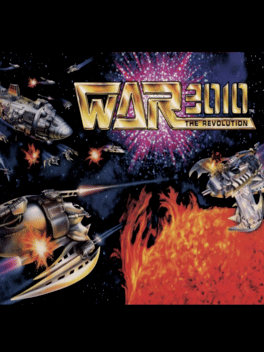
An alien race named Kyllen has enslaved humanity. On the planet Joyec, rebels managed to take the Kyllen by surprise and seize one of their battle fleets. The player must now guide their efforts in trying to throw over the Kyllen. War 3010 is a turn-based strategy game in which players move spaceships over a grid-map. There are different types of ships, such as Fighters, Marauders or Destroyers, that differ in movement range and weapon power. Weapon power is also divided into long and short range, i.e. a ship that is very good at long range combat may have poor close ranged weapons etc. During combat, the following actions can be chosen from a menu: Movement, Attacking, terrain information, unit information, a map of the battlefield, overview of all units, including those of the enemy; and an option to scout planets for technology. When an attacking unit is within range of an attacked unit, the attacked unit will always counter-attack (if it isn't destroyed first). In later missions it becomes possible to scout plPatriots III Ballistic Busters
1996
A one or two player shooter game published and developed by John Dondzila in 1996.Striker '96
1996
Striker '96
1996
star 4This game is the 1996's edition of the Striker football series from Rage Software and the first one in the Playstation One console. Graphics combine a 3D pitch with 2D player sprites. The game includes multiple camera angles as well as different weather effects. You can modify any team's roster, select basic formations, time limits, difficulty, etc. Select from 41 international teams and take part in either friendly games, league, or cup tournaments. Also included is a 6 on 6 indoor mode, and multiplayer support for up to 4 players using Gravis's GrIP system or through a network.Williams Arcade's Greatest Hits
1996
star 7Williams Arcade's Greatest Hits for Super Nintendo Entertainment System and Sega Mega Drive/Genesis is a compilation of the Arcade games: Robotron: 2084, Joust, Sinistar, Defender and Defender II. The Sega Mega Drive/Genesis release was retitled to Midway Presents Arcade's Greatest Hits in Europe. It was also released for PlayStation and Sega Saturn but includes the extra game Bubbles as well as video interviews with the original developers.Shellshock
1996
Shellshock
1996
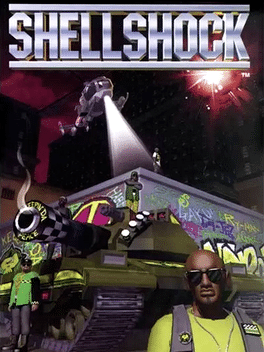
star 7Having served in combat for the United States, Da Wardenz are out for one thing -- justice. This anti-terrorist tank force was conceived after an ill-fated campaign at Mostvia Vatska in 1994. Coming under heavy fire, the troops sent a distress signal to the U.S. Intelligence requesting immediate backup. The government turned their backs on the Special Forces unit by making them expendable and refusing to send in backup. As a result, five men survived; those five men formed Da Wardenz. Here's where you come into play. Assuming the role of a rookie commando, your mission is simple: prove yourself to Da Wardenz by destroying terrorist forces and rectifying global corruption. Easy, huh? That's not all -- you'll be in command of an M-13 Predator battle tank; this thing can mow down forests and calm any terrorist dispute. Along the way, you can upgrade your tank in armaments and shielding. Shellshock is broken into two parts: The Pen and actual mission objectives. As Da Wardenz headquarters, The Pen has all sorts of loNFL Quarterback Club 97
1996
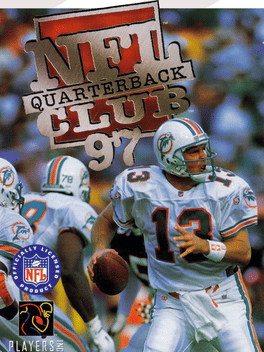
star 5NFL Quarterback Club 97 is an American football video game released in 1996. The game was released on the PlayStation, Sega Saturn, and DOS systems. The game was also released in Japan on the Saturn. The game's cover features former Miami Dolphins quarterback Dan Marino.