Most Popular Racing Games - Page 175

GT Racing
1996
GT Racing
1996
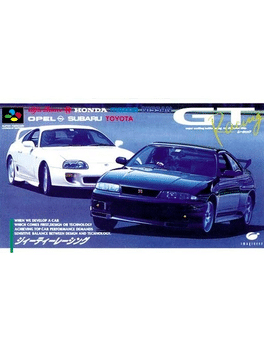
GT Racing is a Super Famicom racing video game where the player gets to drive a Gran Turismo car in either championship or practice mode. The game is based on the 1996 Super GT racing season using the horsepower standards and rules of the era. During championship mode, the player is asked enter a number, his or her driver's name, and the team name that he or she will use during the championship. The driver's name and team can be entered using either English or Japanese letters. When a player beats a record, he or she is asked to insert his or her number, name or initials (up to four characters and two digits for the number). Championship mode can last for multiple seasons. Playing ninety-nine seasons in a single racing career is theoretically possible due to the double-digit nature of the season information. There are eight different tracks, including the Suzuka Circuit that has been shown in video games since Pole Position II and Fuji Speedway (complete with a virtually photorealistic Mount Fuji in the backgroundZen-Nihon GT Senshuken
1995
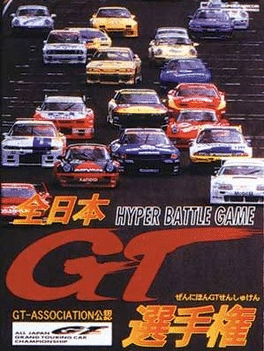
Zen-Nihon GT Senshuken is a racing game published by Banpresto and Kaneko, and is part of Kaneko's All-Japan Grand Touring Car Championship series based on the real-life circuit. The game rapidly switches angles depending on the direction the player is driving, often moving between horizontal, vertical and diagonal perspectives.F1 Dream
1989
F1 Dream
1989
F-1 Dream is an automobile racing game for the PC Engine released exclusively in Japan in 1988. The graphics are identical to the arcade game, even down to the pit crew and lane and fans in the stands. The controls are the same as well: The d-pad controls all eight ways, and the two buttons work as both gas-and-brake and as the transmission. Press the II button to launch the car, and once first gear tops out, quick switch to the I button. If your car is Turbo-equipped, once second gear tops out, hold down both buttons to kick in the afterburner. Letting go of the top gear button will brake the car, and hitting the button again will resume acceleration. The game includes back-markers as well. If you're leading the race or you and an opponent are well ahead of the pack, slower white cars will appear on the track to make things interesting for you, usually just as you're coming up to a particularly tough corner, or drifting across your lane on a straight and forcing you to make a course correction. They're a minor anFace Racers: Photo Finish
2011
"Developed by Renegade Kid, Face Kart: Photo Finish lets players tilt and turn the Nintendo 3DS to steer their photo customized speedsters through 20 unique race tracks, as they drift around corners, soar over chasms and speed past the competition. Players use the Nintendo 3DS camera to snap their own picture and then map it onto their avatar, the landscape or even a turbo boost so they can pick up their very own power-ups as they race. Each avatar offers up to one hundred choices in hair, clothing and eyewear, plus cars can also be customized by tuning and tweaking to create the ultimate personalized racer."XS Airboat Racing
2003
XS Airboat Racing
2003
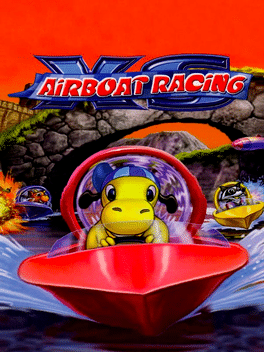
XS Airboat Racing is a racing game that let you test your racing skills through arcade tournament and time trial modes. Play as ten different characters. Three difficulty settings and various power-ups provide hours of gameplay and challenges. Up to nine different tracks that spread to five unique worlds.All Star Racing
2002
All Star Racing
2002
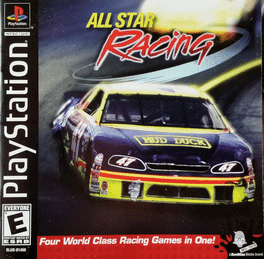
All Star Racing combines four distinct racing modes: GT Racer, Stockcar Frenzy, Classic Cars, and Supercar Challenge. Pre-race options include difficulty setting (easy, medium or hard), number of laps (3-lap sprints to 15-lap endurance races), Dualshock vibration, and sound volume adjustments. This budget title from Mud Duck Productions offers single races against five computer-controlled opponents and a choice of three cars per racing style. No multiplayer or career modes are available. Each race style includes three courses and three types of vehicles. The classic cars (Stalwort, Belling V2, and SK MK2) race on or through mountains, hillsides, and forests. GT cars (GSX, GT2R and CRX2) run at Iona, Boulder, and Hampton speedways, while Champ Team, File Team, and SPD Team stockcars race on runway, countryside, and urban tracks. The super cars (Pina 238, Fenzo 500, and Manelli 748) compete on hills, ridges, and a forest-valley track. All Star Racing includes GT, stockcar, super cars, and classics racing on a lAll Star Racing 2
2003
All Star Racing 2
2003
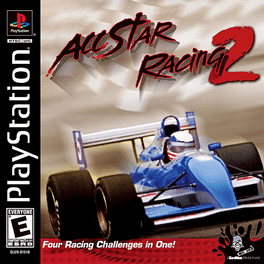
Mud Duck Productions' follow up title to 2002's All Star Racing changes focus from classic, stock and super cars to Truck, Kart, Grand Prix (open wheel) and Motorbike racing. Each type of vehicle in All Star Racing 2 features changeable color schemes and five tracks, and players can select from multiple viewpoints and three levels of difficulty. Five race lengths are offered (user's choice), beginning with three-lap sprints and increasing by increments of three, culminating in 15-lap endurance contests. All Star Racing 2 is Mud Duck Productions' follow up title to the 2002 title, All Star Racing. While the first game focuses on stock, classic and super cars, this title features open wheel, truck, sport bike, and kart racing.Dare Devil Derby 3D
1996
Dare Devil Derby 3D
1996
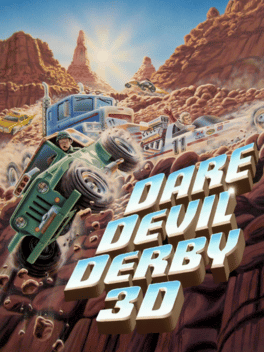
Dare Devil Derby 3D places you in a variety of races and includes 30 tracks through 10 different environments. There are a total of eight characters to play as, each with their own various traits. Single player modes of play are: grand prix, world series, championship, knockout, one-on-one, and speed trial. Each race has variations such as number of tracks, time limits, point systems, and number of computer opponents. Multi-player modes include: battle race, circuit race, battle comp, pro battle comp, circuit comp, and speed comp. Similar variations exist for multi-player modes as they do in the single player modes. One difference is that the view will zoom in and out in order to keep every player on the screen.Motor Toon Grand Prix
1996
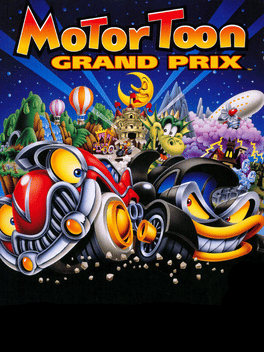
Motor Toon Grand Prix 2 is a racing game whose development is considered a lead-in to the Gran Turismo series. It was developed by a development group within SCE that later formed Polyphony Digital. It was released in the US as Motor Toon Grand Prix, since its predecessor never left Japan. In 2002, the game was re-released in Europe in a Twin Pack with Gran Turismo, Kazunori Yamauchi's following game. In 2010, the game was re-released on PlayStation Network. The game is compatible with Namco's neGcon analogue controller.Superbike Masters
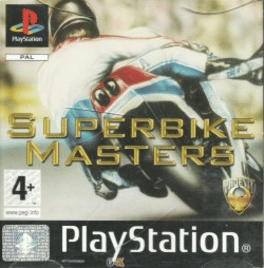
Superbike Masters is a Racing game, published by Phoenix Games, which was released in Europe in 2003Firebugs
2002
Firebugs
2002
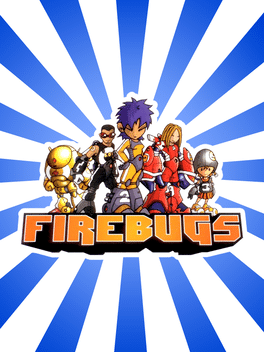
Welcome to the Firebugs racing season, where teams of different worlds send their best racer to compete for fame and glory. Play as Gismo, Karrie, Zero, BOW or Kami - each with a background story, unique special weapon, and alternate vehicle designs that can be unlocked. You race in five distinct worlds: a group of linked islands (Archipelago), a droid factory (Droid Gardens), a desert wasteland (Terrian Dunes), an industrial area (Sky Port) and a wealthy city (Aerial City). While racing, the personal weapon is stored in the left weapon bay. Random weapons that can be picked up by all racers are stored on the right.Initial D
1999
Initial D
1999
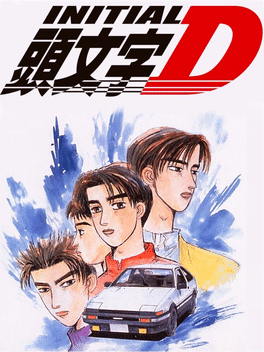
The Popular manga Initial D, appeared in the PS. Utilizing a digital comic movies and reproduce the world of the original. The pile driving, Ekusutorabatoru partners may change after ending, full of narrow elements appear to do courses such as cars and hidden hidden. Driving with the sea and became a high school student Takumi's amazing, let's break the notorious race shop.Simple Characters 2000 Series Vol. 03: Kamen Rider - The Bike Race
2001
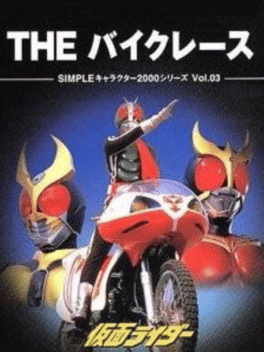
Kamen Rider will outrun the Shocker in this racing game aimed at the ultimate goal. Take on a circuit with a total of 13 authentic bikes from the Kamen Rider series. Grand Battle mode takes rival riders across the circuit. Or duke it out in Battle Royal mode!Rascal Racers
2004
Rascal Racers
2004
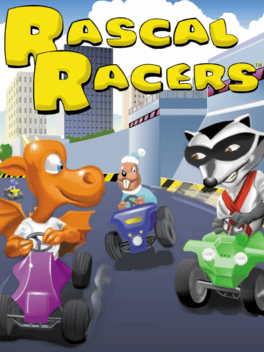
Eight wild animal characters are waiting for you to jump in the driver's seat. Choose to guide Argyle the Aardvark, Paulie the Beaver or one of their friends across nine treacherous courses split over three locations. Your goal? That's easy, to win all nine races in the RASCAL RACERS tournament of course ! Use missiles, force fields and grenades to put a stop to your opposition. Only the craziest drivers will have what it takes!Deadheat Road
1996
Deadheat Road
1996
Deadheat Road is a classic racing game in which the player compete in a racing againts a computer player car. The races usually starts in the night and ends with the daylight. The game features different cars for the player to choose and different circuits (west and east ones). The cars can also be customized.Sports Superbike
2000
Sports Superbike
2000
Open the throttle on awesome superbikes in this adrenaline packed racer. Enter races of up to 8 competitors over four varied and incredibly realistic tracks. Featuring fantastic graphics and sound, and super fast gameplay, Sports Superbike provides a heart-stopping race to the chequered flag.Miracle Space Race
2003
Miracle Space Race
2003
Miracle Space Race, Race 10 different characters with 6 different weapon types through space tracks with rocket propelled space karts!Running High
1997
Running High
1997
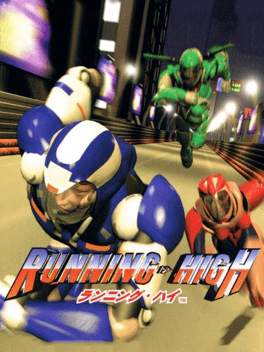
To race at speeds over 200km per hour! Full 3d polygon radical fighting super race. The runners' mechanical parts called "Component Muscle" creates exhilarating races. High jump between characters and use your punch and slide to create a dynamic race experience.Side by Side Special 2000
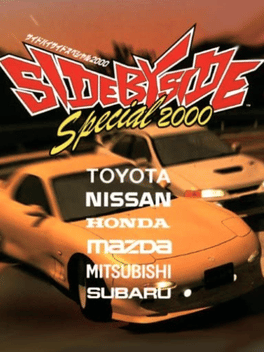
1999
Side By Side is an arcade racing game series from Taito that focuses on touge and drifting. The series started in 1996 in the arcades and was followed next year by a sequel. Also in 1997 a PS1 port was released, called Side By Side Special, a remix that combined the two arcade games into one. Side by Side Special 2000 features different cars, dual shock support and even more features.