Most Popular Racing Games - Page 178

Drag Racer USA
2006
Drag Racer USA
2006
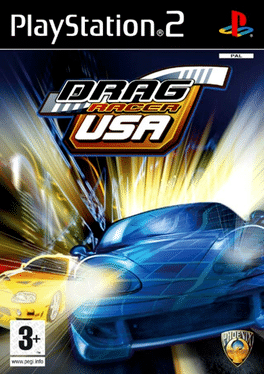
Drag Racer USA is a Racing game, developed and published by Phoenix Games, which was released in Europe in 2006.Crazy Frog Arcade Racer
2007
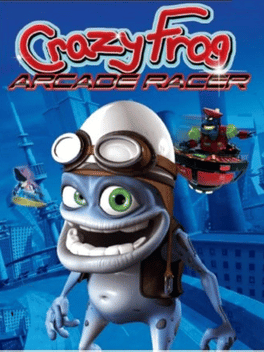
The Crazy Frog is cranking up the speed for his latest and greatest racing adventure! After winning the cup and escaping the Drone, the Crazy Frog is now ready to shift into the next gear for the craziest race ever! With more speed, zanier power-ups, new friends and even more insane tracks, there is no stopping the Crazy Frog this time! Race through the popular music videos of the Crazy Frog world and use even more zany power ups to ba-ding ding the competition.Supercar Street Challenge
2001
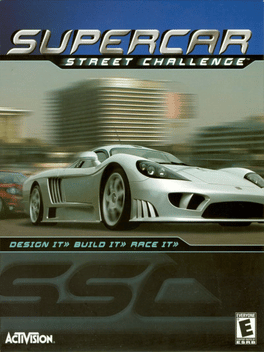
Climb in, get behind the wheel and buckle up for the ride of your life! Street Lethal is no ordinary racing game. Rampage through the streets of spectacular interactive city envrionments such as London and Paris. Hold on tight as you drive the hottest modern concept cars. If you've ever dreamed about driving high-class speedsters like the Callaway C12, the Pagani Zonda C12-S, and the Fiorvanti F100, you're in luck. Travel through the streets of the world's most prominent cities in a race of the ultimate driving machines. You'll hit speeds above 200 miles per hour as you dodge through street fairs, back alleys, and more in an attempt to win. Experience the power of driving these previously inaccessible vehicles, enjoying 3D graphics and an awesome soundtrack all the while.MotorStorm Complete
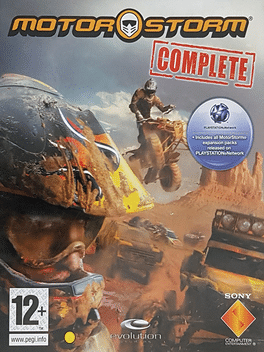
A Japanese re-release of the hit PS3 racer, MotorStorm Complete adds a number of features and content not included in the original Japanese release, most importantly online play as well as over 60 newly added elements from download packs (including new tracks, racers and more.) Developed by Evolution Studios, MotorStorm delivers visceral off-road racing, plunging players into a frenzied environment awash with grit, mud and petrol, in a game that leaves the standard rules of racing in the dust. Gone are the limits of power restrictions, limited classes, and qualifying rounds. Players simply choose their vehicle from a massive range – including dirt bikes, ATVs, sand rails, rally cars, monster trucks, and everything in between – then hit the track in a no-holds-barred sprint to the finish line. Carving a swathe of destruction through the ever-changing wilderness, players must compete in a gasoline-fuelled, horsepower spectacle where the only rule is to try and stay alive.Absolute Supercars
2012
Absolute Supercars
2012
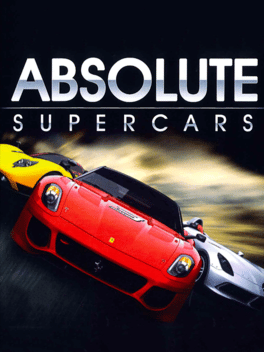
From the racing minds at Eutechnyx comes the definitive auto package for every hardcore driving fan's wildest dreams: Absolute Supercars! This racing game allows people of all ages and skill to get behind the wheels of some of the world's most powerful supercars. Take part in quick races, time trials, championships and even an epic Career mode in an attempt to earn the big bucks and fill your Showroom with a cavalcade of stunning motors! From Ferrari, to Pagani, to Aston Martin and McLaren, there's a car for everyone and a series of stunning tracks to race them on.WRC 5: Esports Edition
2015
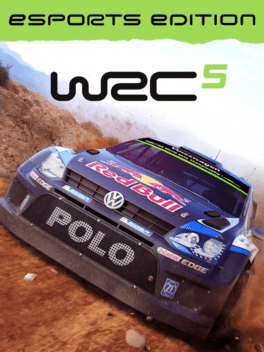
WRC 5, the official World Rally Championship video game 13 new stages allowing access to the online championship 3 new liveries created exclusively for the game. All WRC 5 patches since its initial release, bringing: steering wheel support, better performance, control customization, and many other improvements. Overall 78 special stages, 13 rallys, 54 liveries and drivers!Dirt Rally: Legend Edition
2016
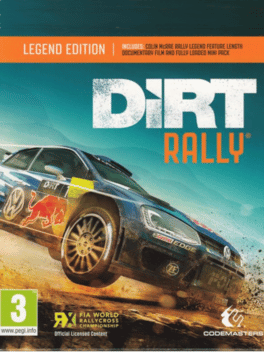
This edition of DiRT Rally includes a bonus Blu-ray disc featuring a full-length documentary on the late rally champion Colin McRae called 'Colin McRae Rally Legend'and tells the story of McRae through his own words.Touch Racing Nitro
2010
Aero Racer
2010
Aero Racer
2010
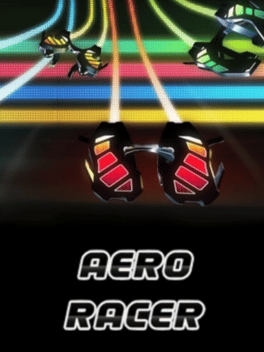
Take to the sky-high tracks with speed and precision in Rocket Racing, which challenges your reflexes and daring across 24 levels in Grand Prix, Challenge and Quick Race events. Drive like a true prodigy by mastering advanced drifting and wall-boosting techniques to get an edge over your opponents and achieve record times. Rocket Racing is intense action from the green light to the finish line!DT Carnage
2008
DT Carnage
2008
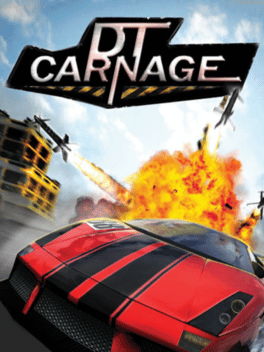
In DT Carnage, drivers must be prepared to bring everything they've got onto the tracks as they find themselves racing for their reputation, honor, and ultimately, their lives. Relying on speed alone is no longer enough as explosives and weapons are used on a regular basis making violence the ultimate means to an end in the underground racing world. Still think you have what it takes to be a DT racer?Dirt Racer
1995
Dirt Racer
1995
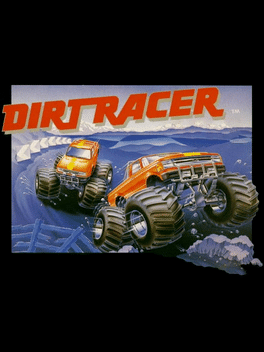
Players must drive their dirt track racing vehicle across a road rally. The car comes complete with a speedometer (in kilometres), a lap counter, and a lap time counter. There are a pre-determined number of chances to complete the game, like in Super Mario Kart and F-Zero. If the player is unable to defeat the game in those number of tries, then the player gets an automatic game over. A yellow smiley face shows up to track the performance of the driver. If it's smiling, then the player is winning. Otherwise, the player is losing the game.StateShift
2009
StateShift
2009
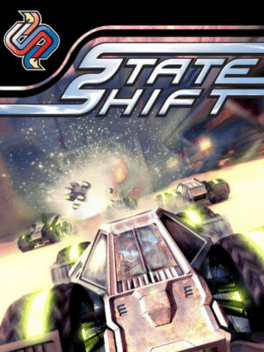
Strap yourself to your PSP and brace yourself for the high-octane headrush of StateShift! Take on 15 other fearless racers across 9 exhilarating tournaments to claim your title as the greatest driver in the world!Battle Grand Prix
1992
Battle Grand Prix
1992
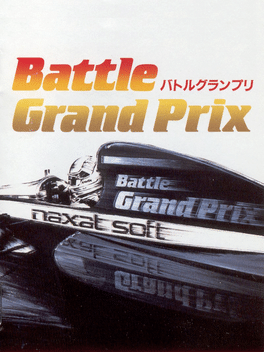
The players can pick from 40 fictional drivers and 24 teams to play with. The game is always shown in split-screen mode, even when the player is playing on his own, in this case the opponent directly behind or ahead of the player is shown in the other window. Car settings can be adjusted in the garage. Pit stops can be used to repair the car during a race. Crashing the car can also force the player to retire from the race early.Dirt Trax FX
1995
Dirt Trax FX
1995
The player can choose between eight different riders with unique characteristics and four bikes ranging from 50cc to 500cc. There are 22 tracks with four difficulty levels of gameplayHanna Barbera's Turbo Toons
1994
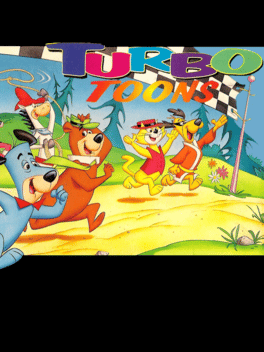
Hanna Barbera's Turbo Toons is a Party game, developed and published by Empire Interactive, which was released in Europe in 1994.Cyber Spin
1992
Cyber Spin
1992
Cyber Spin is a top down racing game. The player takes on the role of Chuck Davis, superstar teenage racer, driving in the Cyber Car. Chuck faces seven opponents in Grands Prix across ten nations. The main obstacle in Cyber Spin is the power supply. Power is depleted when turbo is used and also when damage is taken. When there is no power left, the race is over for Chuck. The game is a port of the Japanese game Shinseiki GPX Cyber Formula, removing based on the anime.Full Throttle Racing
1994
Full Throttle Racing
1994
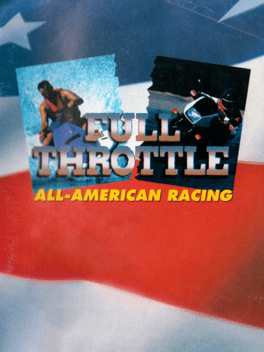
Full Throttle Racing takes in chaotic, violent and no-holds-barred racing across America. The racing takes place on both land and water, with motorbikes and boats featured. There are 6 racers in the game, each with their own short profile, including a guy newly out of jail, a token woman and a token African-American. You can race one or both disciplines, racing either an individual weekend or a full championship. As you play the game you can upgrade your vehicle, with faster engines, better tyres and more nitros. As in Road Rash, throwing your legs out at the other riders is potentially advantageous.GP-1 Part II
1994
GP-1 Part II
1994
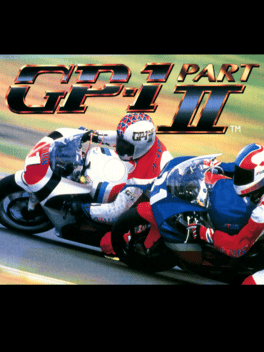
The sequel to GP-1, the player once again can race with motorcycles on 17 different tracks located across 14 different countries. The player also has six different bikes to choose from. Players can also upgrade their bikes by winning races and earn points, earning enough points will let the player obtain better parts for their bike. The season mode, otherwise known as the Grand Prix is present along with a Practice and Race mode, but there is also a Battle mode that allows two friends to duke it out head-to-head on the track of their choice. A password feature is also present to allow players to pick up and play at their leisure.F1 ROC II: Race of Champions
1993
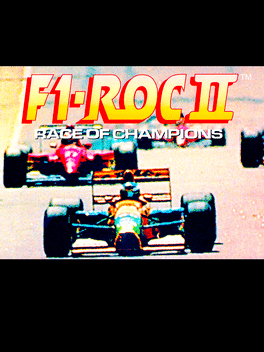
OK race fans, you've seen the rest, now here's the best' Seta's new super DSP chip separates the men from the boys in this high speed Formula One racing tour. Drive real cars, like the FW14B Williams, McLaren's MP4/7, the F92 Ferrari, the V8 Ford-powered Benettion B192, and other Formula One racing machines. You'll start out in a prototype Group C car and must win on all 8 tracks to move up. Next you race in F3000 cars to develop the lightning-fast reflexes needed to survive Formula One racing. Finally, you face the real 1992 Formula One season drivers and their cars. On the 16 international courses, it's a duel of nerves, skill, grit and nitro. This game blows the competition away. A new standard in racing simulation is born and F1-ROC II is it.F1 Pole Position 2
1994
F1 Pole Position 2
1994
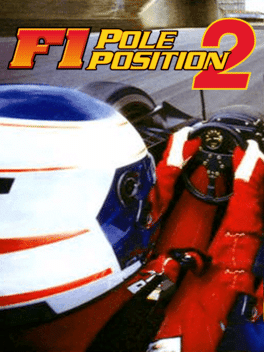
F1 Pole Position 2 - known in Japan as Human Grand Prix II - is the sequel to Human Grand Prix and the prequel to Human Grand Prix III: F1 Triple Battle.