New C64 Games - Page 198

Gangsters: Organized Crime
1998
star 8.4Gangsters is played by alternating between turn-based and real time gameplay. At the beginning you give orders to the gangsters (or 'hoods') under your control, which are then played out in front of you during the real-time aspect of the game (the working week). To have any chance of winning the game, you must begin expanding your territory by giving your hoods the order to extort businesses into paying protection money to you every week (which must be collected). You will also have to begin recruiting more hoods for your gang as soon as possible by giving your hoods the recruit order. Additional hoods can be recruited from gyms, pool halls, cafés, the docks and the unemployment office. The hoods have many different attributes such as intelligence, fists, knives, etc. which make them suitable for different missions. A hood with high knife skill and low fists skill may inadvertently kill someone he was merely sent to beat up, for instance. Hoods can be promoted to lieutenant, which gives them the ability to leadZeus: Carnage Heart Second
1998
The sequel to Carnage Heart, a mecha action-strategy game from Artdink. Design an unmanned mobile weapon overkill engine, direct the airframe designed by himself and lead the battle to victory. Addition of story part, numerous new aircraft, strengthening of graphics, improvement of operability and completely revamp the system of the previous work. The curtain of dramatic SF simulation set on Jupiter's satellite rises!Afraid Gear
1998
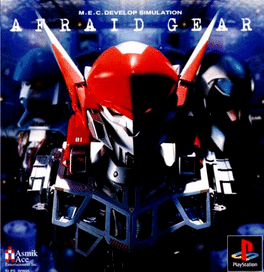
Afraid Gear
1998
An Office Create developed strategy game released exclusively for the PlayStation in JapanSpectral Force 2
1998
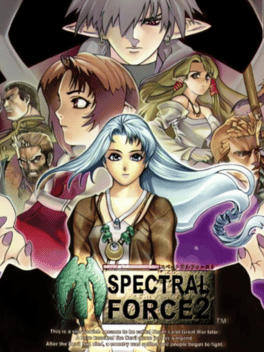
Spectral Force 2
1998
The sequel to Spectral Force is set in a fantasy world called Neverland. The ruler of Demon Kingdom was defeated by the hero Chiffon, leaving behind a son and a daughter, the children of his human wife. The two half-demons strive to regain the lost power. The sister Hiro re-builds the Demon Kingdom, while the brother Jadou finds a way to communicate with our world, and summons a Japanese schoolgirl who soon becomes a mighty warrior under his guidance.Sentinel Returns
1998
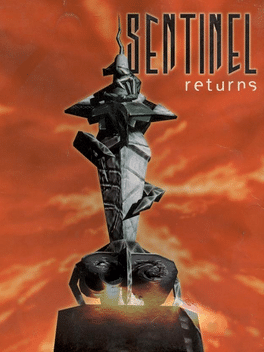
Sentinel Returns
1998
Prepare your mind, body and soul for a horrific game of hide and seek, where you are the hunted! From the people at Psygnosis comes this bone-chilling, mind-numbing strategy title that will make you dive into your brain and cringe with fear. The game is Sentinel Returns for the PlayStation. You are a scientist, exploring the mysteries of an unknown substance. When this mysterious substance is given to an equally unknown specimen, a world dominated by The Sentinel is revealed. In this unreal universe, the battle for life's very essence is in motion. Possibly, when you finish with the hundreds of specimens that you have, you will seek the answers to your questions. However, failing this task has unknown repercussions....101 Airborne: The Airborne Invasion of Normandy
1998
101 Airborne: The Airborne Invasion of Normandy is a Strategy game, developed and published by Empire Interactive, which was released in 1998.Return Fire 2
1998
Pocket Monsters Stadium
1998
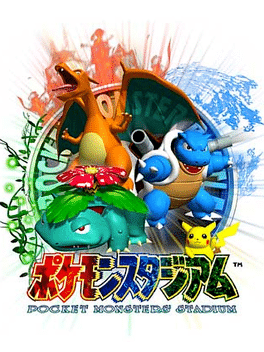
Pokémon Stadium is the first game of the Pokémon Stadium series. It was released exclusively in Japan. The game focuses mainly on battling. Upon start-up, the game asks if the player if they want to use the Pokémon in their Game Boy Game Pak. If not, only Battle Mode can be accessed.Total Annihilation: Battle Tactics
1998
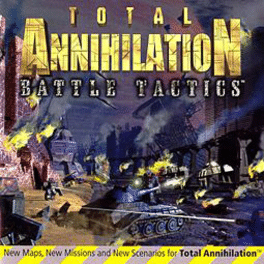
The second expansion pack to Cavedog's "Total Annihilation", and a follow-up to "The Core Contingency."M.A.X. 2: Mechanized Assault & Exploration
1998
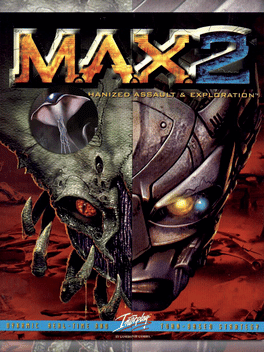
A level of complexity unseen in contemporary strategy gamesChoose either simultaneous or turn-based game mode to fit your personal preferencePlay as one of 8 human clans and use dozens upon dozens of land, sea and air unitsHaou no Tairiku
1998
Super Famicom Wars
1998
Super Famicom Wars
1998
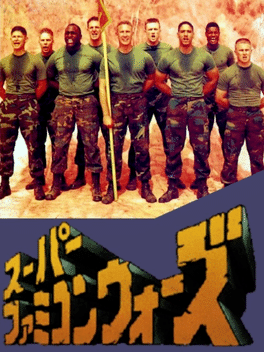
Super Famicom Wars is a war simulator produced by Nintendo for the Super Famicom. It was released via the Nintendo Power game service. It is the follow-up to the original Famicom Wars and a precursor to the Advance Wars series. Super Famicom Wars features all 15 stages from the original 2-Players mode from Famicom Wars, where the player can choose between the Red Star or Blue Moon armies, as well as a New 2-Players mode featuring 15 new stages where the player controls one of the two new armies (Green Earth or Yellow Comet). There's also a 4-Players Mode featuring 10 stages where all four armies fight each other as well as four new final stages for each side upon completing the first 15 stages in either 2-Player Mode, for a total of 42 stages. As in the original game, one can choose which army will be controlled by a player and which one will be controlled by the computer. A new feature in Super Famicom Wars allows the player to select the General for each army. There are seven Generals, each with his or her ownIncubation: The Wilderness Missions
1998
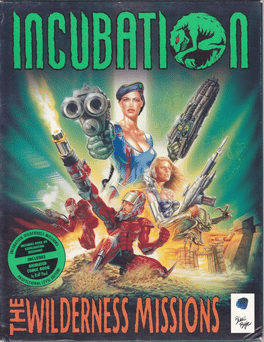
Incubation: The Wilderness Missions is Blue Byte Software's official expansion pack for Incubation: Time Is Running Out. It features a brand new campaign, new Scay'Ger and weapons, a map editor, and additional multiplayer options.Super Robot Wars F Final
1998
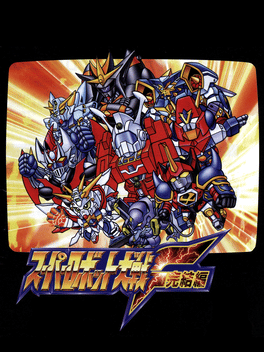
Super Robot Wars F Final (or "Super Robot Taisen F Kanketsuhen") picks up where Super Robot Wars F left, starting at stage 35. F and F Final were originally thought as an unique game, but production delays made the producers decide to split the game in two parts. This game features the first appearance of Mazinkaiser (created by contaminating the Mazinger Z with Getter rays). Gameplay mechanics are the same of Super Robot Wars 4 (and Super Robot Wars F, of course). It's a turn strategy game, when attacked the player can decide to counter, to dodge (halves the % of being hit) and to defend (it halves the damage eventually received).Möbius Link 3D
1998
Möbius Link 3D
1998
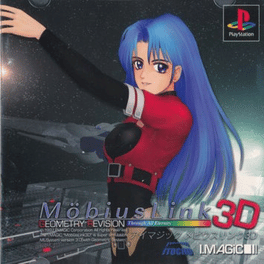
Möbius Link 3D is a turn-based space strategy game featuring 3D graphics. Players take on the role of Alice Schrödinger, commander of the Starfleet Möbius, an all-female fleet fighting its way through a series of missions against a rival imperial navy.SimSafari
1998
SimSafari
1998
SimSafari brings Africa to you. Imagine yourself in rugged bush country, peering through binoculars at vast herds of elephants, zebras and lions. Choose from exotic plants and wildlife to create your own safari park. Team with a neighboring village and build a flourishing safari camp. Even tackle wild missions! Subtle mix between SimCity and an African Safari. For ages 8+.Nobunaga no Yabou: Sengoku Gunyuuden
1998
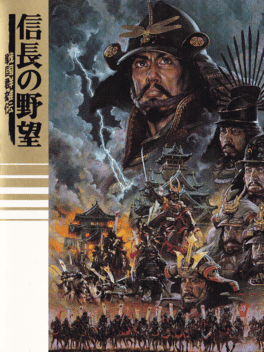
Nobunaga no Yabou - Sengouku Gunyuuden (Nobunaga's Ambition II) is the sequel to Nobunaga's Ambition. The setting is 16th century feudal Japan, a period when ruthless daimyo (feudal lords) contended with each other for dominance. Ultimately, the winner in this struggle will become Shogun and hold actual power over the islands, while being nominally subject to the Emperor. The game casts the player as one of the daimyo, allowing them freedom to decide the fate and future of feudal Japan, through diplomacy and ultimately war. The objective is to unify Japan under the player's rule. If the player fails through death on the battlefield, assassination at the hands of a ninja, or through natural causes, they can choose a successor and play on. Functionally, the first job is to let prosper the fief (province) under the player's control through agricultural development and town investment.Sorry!
1998
Sorry!
1998
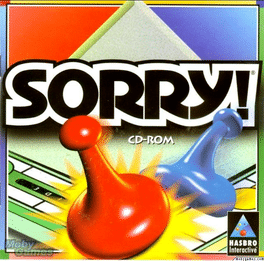
Sorry! (also unofficially referred to as Sorry! '98) is a 1998 video game based on the board game of the same name. It offers classic Sorry! and also a mode called Way Sorry!, where new cards are introduced, including Bully, Buddy, Punish, and Happy. The animated pawns talk, joke, and make amusing remarks during gameplay that relate with the colors' personalities. There are cutscenes as well, which show what happens afterward when a specific color wins. Rules are identical to normal play; however there are some options for "house rules", such as being allowed to bump teammates. Both the Classic (playing cards drawn) and Strategy (playing cards from hand) games are available.Nobunaga no Yabou: Zenkoku-ban
1998
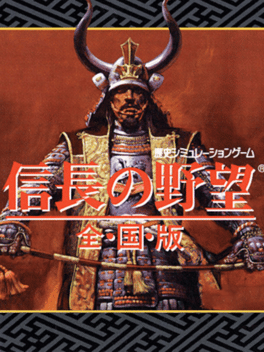
Nobunaga No Yabou Zengokuban (Nobunaga's Ambition - Whole Country Version) is the second title in the series. PlayStation revived in the "national version of Nobunaga's Ambition" timeless masterpiece of historical simulation. 5 of this book included the scenario of a mode for beginners in 17 countries and four mode 50 countries dealing with Japan. And dialects with the mode "Ninja", and give the message to become a regional dialect of damage to the enemy. Multiplayer can also be a maximum of eight people. Experience the Raging Gale Sengoku! The player may choose from four campaign scenarios including: "Battle for the East" (beginning in 1560), "Daimyo Power Struggles" (1560), "Ambition Untamed" (1571) and "Road Towards Unification" (1582). In each scenario, the player must allocate resources to raise a capable military force, provide a productive economy to support both military and civilian expansion and support the peasants in order to sustain their respect and loyalty. Gameplay is taken in turns, with each turnSolo Crisis
1998
Solo Crisis
1998
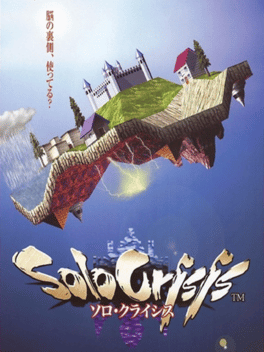
A turn-based strategy RPG with a heavy emphasis on terrain deformation and alternate worlds developed by Quintet for the Sega Saturn.