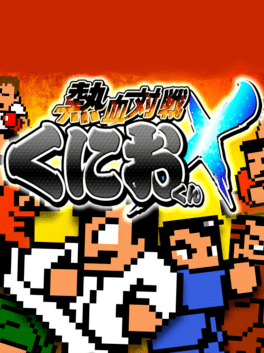
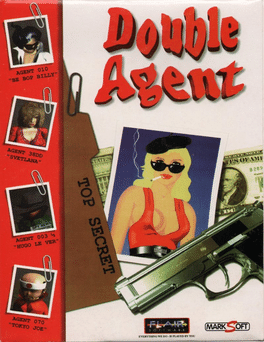
A strategy game released in Japan on December 18th, 1992.
Used in conjunction with the Barcode Battler II peripheral, Barcode World made a strategy game out of scanning a large number of Japanese consumer products.
A NES strategy game developed by Atlus and published by Namco. It was only released in Japan. The goal is to quickly conquer locations by producing a lot of units each turn and sending them against enemy forces. As with those games, there is also a little close-up graphic of the two units whenever they meet for battle, which shows how the two sides are faring in the conflict.
Cosmic Wars (コズミックウォーズ Kozumikku Wōzu?) is a turn-based strategy video game produced by Konami in 1989 which is based upon the characters and conflicts of the popular Gradius series. It was released only in Japan. The game received a sequel in 1997, with Paro Wars, which is the Parodius equivalent of this game.
The object of Cosmic Wars is to utilize an army composed of Gradius characters (Vic Vipers, and Big Cores) and battle enemies in various star systems. The player can be either the Bacterion Empire or the forces of Gradius. There are many different unit types, ranging from small fighters to large capital ships.
Dai-2-ji Super Robot Taisen was the first Super Robot Wars on a console, and the first entry to contain the traditional SRW gameplay that exists to this day.
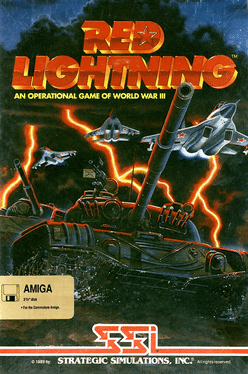
The game allows players to do combat strategies with tanks, airplanes, military bases, and non-nuclear missiles.
These advanced weapons allow players to stage a fictional World War III and to simulate modern warfare. Players can assume the persona of various clichéd Hollywood action film stars like Rambo, Chuck Norris, Eddie Murphy, Bruce Lee, and Arnold Schwarzenegger. Stages include a jungle, forest, the swamp, and urban terrain.
The player must choose a tank with his or her directional pad. Once there, the player must decide either to move a unit or destroy the enemy on sight. Destroyed units can be rebuilt for money and the first person to run out of cash loses the war. Both players can enjoying the fun and games with more $250 million of virtual game currency to spend on cool military toys to fire at each other.
GunHed: Aratanaru Tatakai is a 1990 strategy game for up to four players. It is the second game based on the 1989 sci-fi movie GunHed, the first being Blazing Lazers for the TurboGrafx-16. Aratanaru Tatakai is closer to the movie: the players re-activate GUNHED mech units to defeat the supercomputer Kyron-5 and its enforcer Aerobot. Each player chooses where on 8JO, the island base of Kyron-5, to deploy their GUNHED models, and then fights opponents in real-time combat while collecting robot pieces along the way to build stronger robotic armies. The game culminates with a fight against the powerful Aerobot.
Solar Wars is a tank combat game like Scorched Earth on the PC, Scorched Tanks on the Amiga, or Gorillas from QBasic. The game is two-player and pits you against a foe throughout our solar system. You can fight against a friend using two controllers, or the same controller, on ten different worlds, each with its own gravity, atmosphere, and climate.
Scientists discover a giant egg in the ocean, but before it can be studied a Giant Monster (Kaiju) erupts from the sea bent on destroying the egg. Can you battle the monster, limit your losses and ultimately rescue the egg? Tokyo is depending on it!
In Tiles Of Fate the object of the game is to clear the screen of all the tiles within the given time limit. This is done by selecting two tiles with matching symbols which will cause them to disappear due to the force of symmetry. However, the force of symmetry can only make two right angles at most, and can not pass through other tiles. To clear all the tiles, you will need to plan your moves carefully. To help out, you may discover one of three forces of fate under a tile which can be saved and used when you're stuck. The forces are The Flash of Chance (allows symmetry to affect any matching tiles on the board, even those surrounded by other tiles), The Force of Balance (will eliminate brick walls that block the path of symmetry) and The Flag of Knowledge (this will make your next move for you in case you can't spot what the best move is.) Also included is a level editor which lets you create your own tile challenges.
Conflict is a hex-based NES war game where the player is a three-star general who must accompany his troops to the ultimate victory. The player can earn or lose victory points by occupying cities and destroying units of the opponent's army. The player controls the Western Bloc while the computer (or second player) controls Eastern Bloc troops. A sequel was released for the Super NES entitled Super Conflict.
Win, Lose or Draw was a popular TV show requiring artistic skills and an ability to think laterally. A player on your team draws something on the big game board, and you must work out what it represents. They will be common expressions depicted literally, such as 'bright idea' showing a light bulb over somebody's head, and 'cabin fever' as a rickety building next to a man with a thermometer in his mouth.
Shingen Takeda was one of the most powerful warlords of medival Japan. You being with two small city states and attempt to conquer the country as Shingen did back in the 16th Century. Control all aspects of your territories from social, economic, and military in attempt to spread your influence. If you are good enough, you can do it faster than the real Shingen himself!