New Playstation 2 Games - Page 242

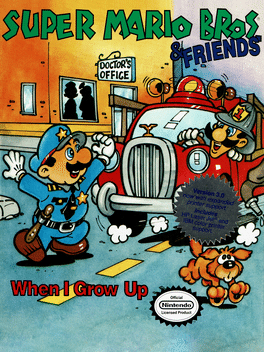
Super Mario Bros. & Friends: When I Grow Up
1992
Super Mario Bros. & Friends: When I Grow Up is an MS-DOS computer game featuring Mario and friends. The game is essentially a digital coloring book, containing illustrations by Rick Incrocci. A few pages have animated sequences. The pages are themed after common careers. Characters in the game include Mario, Luigi, Princess Toadstool, Toads, and Bowser. Super Mario Bros. & Friends: When I Grow Up features Bowser both as he appears in video games and as he does in the Super Mario cartoons. Link also makes cameo appearances on the Chef/Waiter and Travel guide pages.Mugen Senshi Valis: The Legend of a Fantasm Soldier
1992
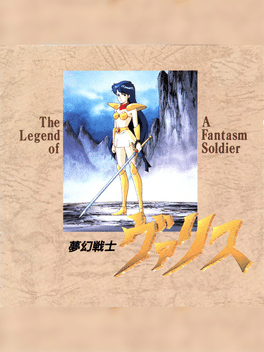
A remake of the original PC-8801 for the PC Engine's Super CD-ROM², featuring improvements to the gameplay system, voiced cutscenes and reworked stages.Utsurun Desu: Kawauso Hawaii he Iku!!!
1992
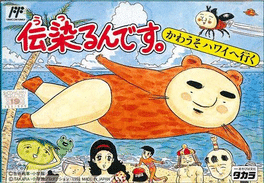
While ostensibly a traditional platform game in which the player controls Kawauso-kun, the game has gained renown for being one of the earliest titles to attempt to break away from the video game conventions of the time. Among other convention-flouting novelties that the game offers are a series of fake title screens that the player must pass through at the start, and the allowance of the main character to traverse the background at times to bypass pits of spikes that otherwise appear impossible to cross. In addition, the character's attack requires the player to hold down the attack button as the game cycles through the possible special moves with the more powerful attacks only highlighted for a short period of time.Don Doko Don 2
1992
Don Doko Don 2
1992
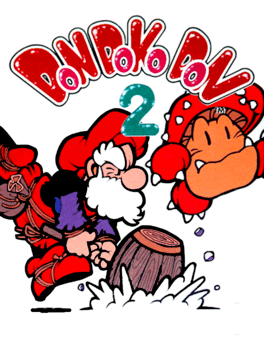
Similar to the original Don Doko Don, the player controls a bearded dwarf wielding a hammer to flatten enemies and throw them. But unlike the original, this version is a side-scroller. The game consists of five stages, plus the final boss battles. The player's goal is to reach the end of each stage, defeat a boss, and collect a bag,(antidote ingredient,) to advance to the next.Super Bros. 8
1992
Super Bros. 8
1992
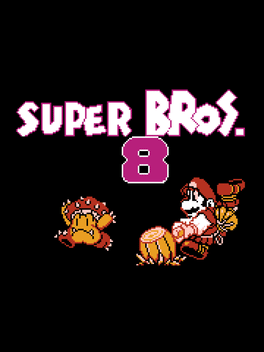
Super Bros. 8 is a hack of Don Doko Don 2, released sometime in the early 1990's (likely in March 1992, as implied by its manufacture code). It was likely developed by J.Y. Company, as its PCB has two PROMs suggesting this: one reads JY-A1 and another JY211.Dooly Bravo Land
1992
Captain Planet and the Planeteers
1992
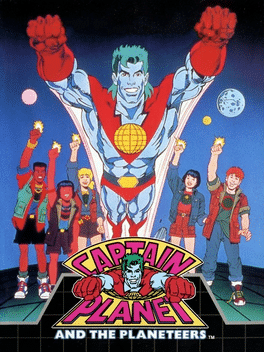
Fight real ecological threats through nine levels of deadly pollution. Five eco-heroes summon Earth, Fire, Wind, Water and Heart to defend our planet from destruction! With magic energy, they combine forces to summon Captain Planet, the champion crusader for Earth safety!Mizubaku Daibouken
1992
Mizubaku Daibouken
1992
This is a single player platform game that features Hipopo, a platypus (referred to as a hippo) who must fight his way through a large number of enemy-packed levels in search of his missing girlfriend - rescuing other platypuses along the way. Hipopo is armed with water bombs which can be thrown at enemies to soak and damage them. Once soaked, the enemies can then be kicked and destroyed completely. Enemies left unkicked however will dry out and recover after a short period of time. The level design presents moving platforms, collapsible floors, boats and water-wheels all making an appearance. Small plants also appear on certain levels which can be "watered", causing them to grow and creating new platforms. Appropriately enough for a game which features water as the main weapon, many of the enemies and the later levels have a fire thematic. He can also collect cakes and other items to gain more points.Syd of Valis
1992
Syd of Valis
1992
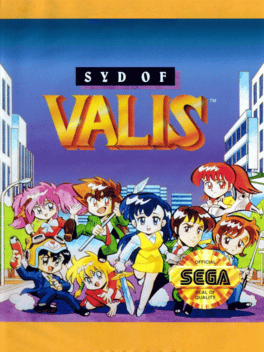
Yuko Ahso looks like an ordinary grammar school student, but she is actually the Valis Warrior. "I defeated King Rogles of the Dark World with the Valis sword which was given to me by Queen Valia, but my friend Reiko died in the process" Yuko went home by train after that terrible fight. She didn’t have the slightest idea that she would be summoned to fight again. "Yuko..." said a familiar voice. “Reiko," said Yuko, "is that you? But I thought you..." Reiko quickly admonished, “Go and see Queen Valia, Yuko. Emperor Megas has threatened Dream World and our friend Vecanti. When Yuko was told of Vecanti’s great danger, a burning desire moved Yuko to action. She has risen to crush Megas’ ambition!M.C Kids
1992
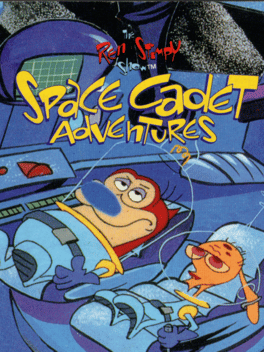
The Ren & Stimpy Show: Space Cadet Adventures
1992
star 4.7The Ren & Stimpy Show: Space Cadet Adventures is an Action game, developed by Imagineering Inc and published by THQ, which was released in 1992.Monster in My Pocket
1992
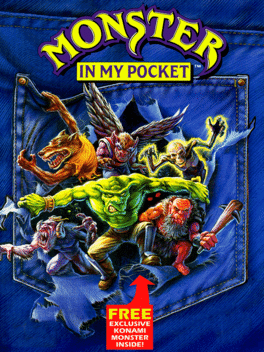
Monster in My Pocket
1992
star 7.4Thousands of history's famous monsters gather for the meeting of the century. But their volcanic convention center erupts, mysteriously turning them into terrors of pint-size proportions. They escape to the home of Jack, the teenage "Captain of Cool." There begins a battle between the good ghouls and The Warlock's band of evil beasts. You must become The Vampire or The Monster and lead the forces of right through a humongous, human-size world six levels deep, featuring Jack's house, a scummy sewer, a hazardous construction site, and an odd oriental palace. Don't get burned on the kitchen stove or crushed by runaway golf balls. Meanwhile you'll have to punch and zap at all your fiendishly favorite monsters including the head-rolling Skeleton, the rock candy throwing Goblin, the bone-crushing Cyclops, and dozens more! Every monster you mash is worth points. Score enough and you'll get an extra life. Something you'll really need when you finally face the powerful Warlock and his magic lightning jolts. So be a pocket-sBig Nose Freaks Out
1992
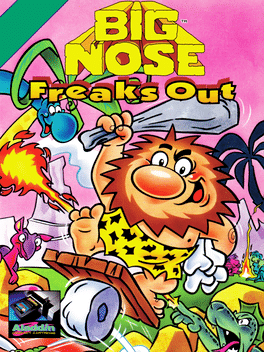
Big Nose Freaks Out
1992
Big Nose Freaks Out is a platform game for the NES, produced by Codemasters and published by Camerica. The player controls a cave man character who has had all his bones stolen from a prehistoric bank by a dinosaur. Bignose sets off on an adventure through numerous prehistoric settings. Bignose defeats enemies using a club, however he also has access to a primitive skate board device (stone-boarding), via his invention - the wheel. The game is essentially a platform game in which the player collects bones and other items, while travelling from left to right until reaching the goal. B.N.F.O also had a two player mode and the addition of numerous secret levels and bonuses. Big Nose Freaks Out has become popular as more people have access to the ROM file through emulation websites.Frantic
1992
Whirlo
1992
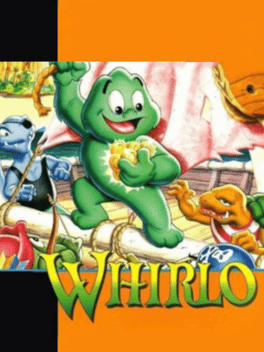
Whirlo
1992
A platformer title starring Valkyrie's lizard friend Xandra. In the game, which plays as a prequel of the Valkyrie games, you control Xandra as he leaves his enchanted forest in order to get help for his family. This will eventually lead him to meet up with our beloved Valkyrie and mark the beginning of their adventures. Xandra has all the abilities of a standard platformer character, which allow him to jump around and navigate the many obstacles found in the game. Additionally he's armed with a pitchfork which he can use to impale his enemies and stick to some surfaces. Collecting coins allow him to purchase extra lives, but there are no added weapons or spells as in the Valkyrie games.Putty
1992
Putty
1992
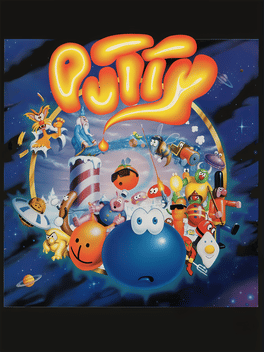
Putty is a game developed by System 3 and released in 1992 for the Amiga. In Putty, the player controls a blue blob with eyes. Putty has many moves that he could use to attack enemies or to navigate around the level. These abilities include being able to stretch out upwards, downwards, left and right to access far-off ledges. He also has the ability to inflate. This allows him to provide a cushioned landing for any falling bots. Over-inflation also acts as a "smart bomb", with Putty bursting, killing all of the enemies on the screen, whilst reducing his health in the process. The levels in Putty are laid out vertically, with the screen scrolling up and down. The levels contain regular platforms, as well as "solid" ledges that Putty can not move through, and other special tiles including electric platforms and bounce pads.Wani Wani World
1992
Wani Wani World
1992
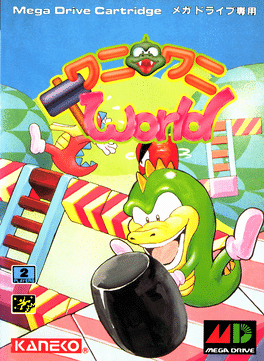
Wani Wani World is a reskinned Berlin no Kabe released by Kaneko in 1992 exclusively on the Sega Mega Drive. Charlie and Smiley, make their way through numerous screens of platforms and ladders filled with enemies. Their only method of attack is to bash a hole in the ground, wait for an enemy to fall into it, and then bash the enemy in the head, which causes the enemy to fall and transform into items and delicious food.Dragon's Lair
1992
Dragon's Lair
1992
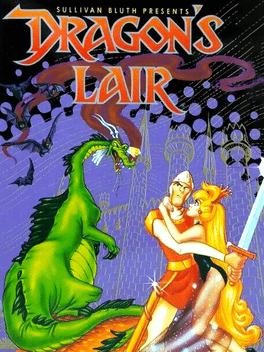
The PAL version of Dragon's Lair expands upon the Japanese version, still having a good speed, but adding new enemy types and cutscenes in-between levels. Contrary to other multiregional games at the time, the PAL version is a lot faster than the original NTSC version, despite the refresh rate being lower.Perman Part 2: Himitsu Kessha Madoodan wo Taose!
1992
"Paaman (or quite possibly Parman) is a comic in Japan which is done by the same guy who did Doraemon. Like that wasn’t already obvious just by looking at ‘em. All of the four characters that you have the choice of controlling have the amazing ability to fly in an amazingly awkward fashion. I don’t think there’s any difference in who you want to pick though. What’s awkward about flying is, if you’re flying Up and want to go Left, you don’t just automatically go Left when you hit the control pad… you go diagonally, then you go left. And you don’t sit still if you let go of the control pad, you have to hit A to stop. And then you have to hit A again to fall to the ground and walk around like normal. Which is all very weird. But you can jump REALLY high, so that’s cool. There’s a side view, where you can fly, like what I was just talking about, and there’s a top view, where you walk around inside of buildings and stuff. You can’t fly though, but you can jump, which is pretty useless. What’Tsurupika Hagemaru: Mezase! Tsuruseko no Akashi
1992
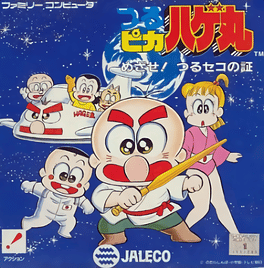
Tsurupika Hagemaru: Mezase! Tsuruseko no Akashi is 2D platforming game released for the Famicom (NES) in 1991. The game is based on a Japanese children's manga and 58-episode anime series called Tsurupika Hagemaru (Little Baldy Hagemaru), and features many of its characters including protagonist Hagemaru whom the player controls.