New Playstation 3 Games - Page 309

Tang Chi
1995
Tang Chi
1995
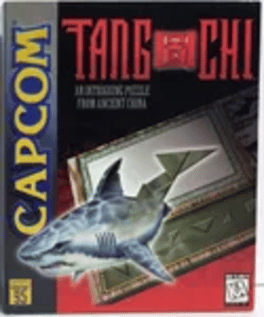
Reunite the Seven Pieces and Something Magical Happens Tang Chi Journey into a timeless realm where the power of the mind makes geometry take on form and substance--experience the mystical power of Tang Chi, the ancient Chinese puzzle that comes to life before your eyes. Master the power inherent in the pure simplicity of these seven classical forms. Follow the way of the shapes to ultimate mastery of the mystical puzzle known as Tang Chi. Tang Chi is a challenge for agile minds of all ages. Play it alone, or play it with your family and friends. Play it at home, or use it at work for an invigorating mental break that's completely caffeine-free. Tang Chi, the ideal challenge for the mind.Gecko Shuffle
1994
Gecko Shuffle
1994
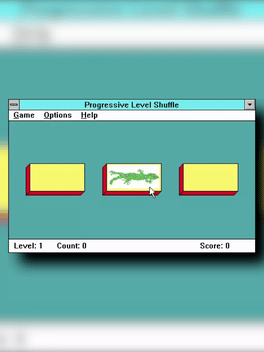
Gecko Shuffle is a simple game that tests one's reflexes. The player is presented with three tiles, two of which are empty and one of which has a gecko depicted on it. When the gecko is clicked, the three tiles are reversed and then re-arranged; the player then has to click on the tile which, in his opinion, is the one with the gecko. The tiles are then revealed again, and the player can see whether his guess was correct. A successful guess gives 10 points. The game can be played at one of the 10 levels - the higher the level, the faster the tiles move. There are two game modes: the "Single Level Shuffle", where the player chooses the level he wishes to play on, and has an opportunity to make 20 guesses (correct or not) before the game ends; and the "Progressive Level Shuffle", which is based on the same rules, but the level increases with each successful guess and decreases with each failure. After each guess, the player can see an instant replay of the tiles re-arranging, but in slow motion and with the tiles rVictor e o Jacaré
1994
Victor e o Jacaré
1994
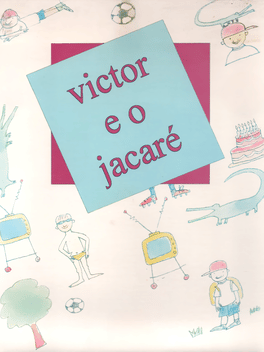
In Victor e o Jacaré, you'll meet a boy who gets a real alligator as a present. Through drawings and puzzles, you'll read the story of the beautiful and delicate friendship that grows between the two.Magical Error wo Sagase
1994
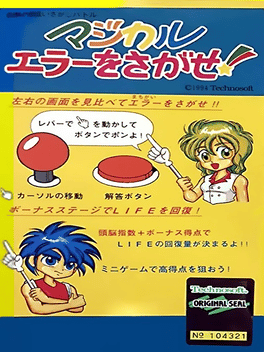
Magical Error wo Sagase is a two-player game where players go through a series of two pictures (some of them animated and scrolling) to spot the difference within a limited time. While waiting time slowly drains the player's health, making mistakes costs even more health. In between the multiple stages, the player does a bonus stage which restores health depending on how many points are acquired. As the game progresses more differences must be spotted to win each stage. Some pictures are based on fairy tales and notable stories.Man Parts
1994
Man Parts
1994
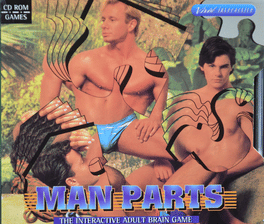
36 sexciting games that challenge you to find, remember and piece together various hunks. Once you win, you won't be puzzles, because whether you're female or all male, after completing each puzzle your personal dancer will dance just for you! If you're in it for the game, the game can be adjusted to varying degrees of difficulty. Man Parts is where your brain meets brawn!Man Overboard!
1994
Man Overboard!
1994
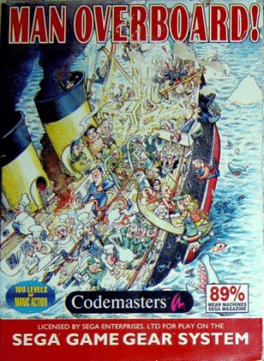
In 60 levels you have to rescue as many passengers (dubbed the Dim Passengers) as possible. At the beginning the passengers fall through a tube in the level. Similar to Lemmings you have to find a way for the passengers to the exit of the level. In order to do so, you must blast hindrances such as cargo boxes and bulkheads with bombs or, when no bombs are left, reposition the boxes with a crane. There are also conveyor belts in the levels. If the belt moves in the wrong way, the passengers either can't use it or may even be transported to their dooms, being dropped off into water, fire or steam jets. You can usually choose the direction of the belts by pulling a lever.Hieroglyph
1994
Hieroglyph
1994
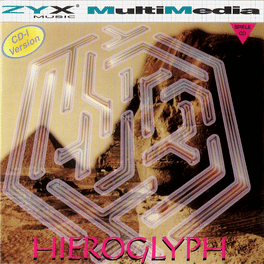
Puzzle game with an Egyptian theme. Similar to the board game Master Labyrinth, the player has control over the layout of a maze made out of different tiles, and has to help the character inside escape.BMP Puzzle
1994
BMP Puzzle
1994
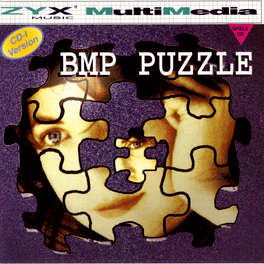
German jigsaw puzzle game with a variety of images and themes. Requires the Digital Video Cartridge to be installed into the Phillips CD-i.Miss Bingo
1994
Miss Bingo
1994
Miss Bingo is a clone of Min's previous game "Miss Puzzle" with updated graphics and a split screen for optional two player play. The player must slide three or more matching tiles together in horizontal, vertical, or diagonal chains to clear them from the screen. When tiles are removed from the screen surrounding tiles drop and slide around to fill the gaps. Additional tiles are added to the screen over time and The objective is to clear a set number of chains before the tiles stack up and reach the dead line at the top of the play area. Once the set number of tiles are removed, the play area is cleared and the photographic nude background image is revealed. Clearing tiles advances a bar at the bottom of the screen. Once the bar is filled the game is interrupted by a bonus game. Once the bonus game is completed the game returns to the exact spot where it had left off. If any tiles cross the dead line then the game is over. Upon continuing, the game removes the bottom few rows of tiles from the board so that gaHoliday Lemmings
1994
Holiday Lemmings
1994
Not to be confused with the 1993 release of the same name, this 1994 release comes with 32 new levels and updated music.PentaBlox
1994
PentaBlox
1994
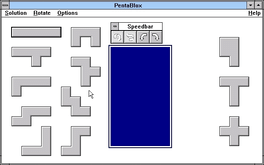
PentaBlox is a single player, shareware implementation of the traditional puzzle Pentominoes. Pentas are shapes made from five connected squares, this means that they all have the same area but a different shape. The player’s task is to fit the shapes into a box. There are twelve shapes in total which must be fitted into a box. The shareware game has just a 6x10 box but the registered game has three other box sizes 5 x 12, 4 x 15, and 3 x 20. Pieces may be rotated and/or flipped in order to position them in the box and there’s an optional grid setting to help with the planning.Chiral
1994
Treasure Galaxy!
1994
Treasure Galaxy!
1994
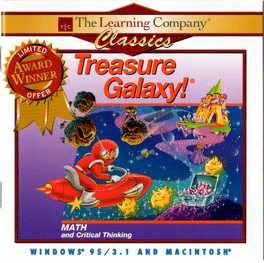
Treasure Galaxy! is an educational computer game published by The Learning Company in 1994 for both Windows and Macintosh PCs. It is aimed at children ages 5 to 9 and is intended to teach children reading, basic math, and logic skills.The Riddle of the Maze
1994
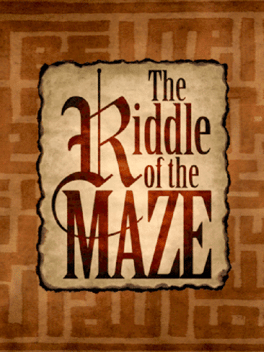
The Riddle of the Maze is a digital adaptation of the 1985 puzzle book "Maze: Solve the World's Most Challenging Puzzle" by Christopher Manson. The player begins outside a building. The building is a labyrinth that comprises of various rooms. Each room is connected with different rooms through various doors. The goal is to complete the maze with the shortest path and solve the Riddle.Street Shuffle
1994
Street Shuffle
1994
Street Shufflie is a sliding puzzle game where you need to guide your taxi to the other exit tile without crashing. After each round you need to spend your earned money to re-stock on fuel, pay for maintainance, and so on.Video Cube: Space
1994
Video Cube: Space
1994
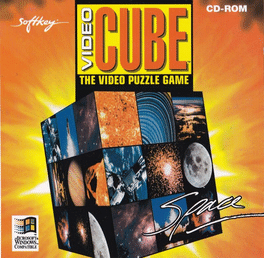
This is a form of jigsaw. The player is presented with a square representing one side of a cube. This square is broken into elements (smaller squares) each of which is one face of a smaller cube. The object is to rotate all the elements until they form a picture, at which point the still picture becomes a short animated/video clip, and to repeat the process for all six sides of the video cube. Completing all six sides completes a level in the game, there are eighteen levels and they are timed – run out of time and it’s game over.Super Qube Hopper
1994
Super Qube Hopper
1994
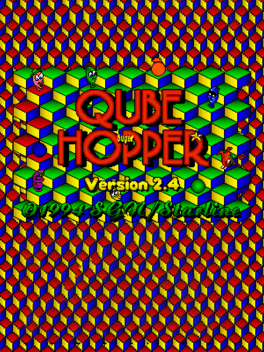
Super Qube Hopper is a single player, shareware, Q*bert style game in which the player has to bounce Qubey around the screen changing all the blocks to a target colour. Naturally there are baddies trying to stop Qubey in his quest and contact with these will cost a life, the player has two lives in the shareware version of the game but in the registered version they have four lives and gain another life for every five thousand points scored. The game is mouse or joystick controlled, has sound and voice effects and a high score table. It occupies a fixed sized window on-screen within which the game plays. The game also comes with a level construction set.Jigsaw Puzzle
1994
Shariki
1994
Shariki
1994
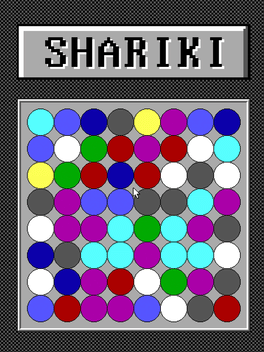
Shariki (Russian: Balloons) is the original match three game. It was developed by Russian programmer Eugene Alemzhinym for DOS in 1994. The goal of the game is to gain progressively higher scores by matching three or more balls of the same color in a line (vertical or horizontal), by swapping adjacent balls. Each swap must result in a match. Matched balls are then removed, and new ones drop from the top to fill the gaps. The game is over when no more matches are possible in the game field.