New Puzzle Games - Page 275

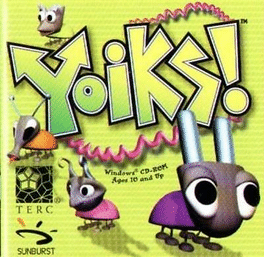
Yoiks!
2002
Yoiks!
2002
Humorously introducing computer programming and spatial reasoning skills, Yoiks! provides students with an off-beat learning environment where they explore 30 activities of increasing difficulty that typify core concepts of computer programming. Yoiks! engages students in the scientific process of observation, hypotheses formation, and experimentation to apply logical constructs as they solve problems. With Yoiks! in your mathematics and technology curriculum your students will: build logical reasoning and critical thinking skills, develop algebraic thinking skills, intuitively prepare for programming, develop strategies and solution plans, and collaborate to solve problems.Ed, Edd n Eddy's Candy Machine Deluxe
2002
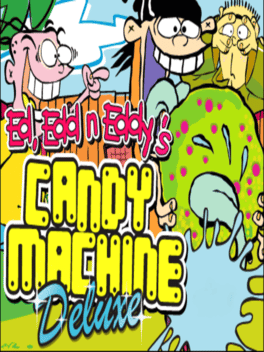
A flash game from Cartoon Network's main site for their popular show Ed Edd n' Eddy in which you create elaborate tubes to get a jawbreaker into a cup.Puzzle Inlay
2002
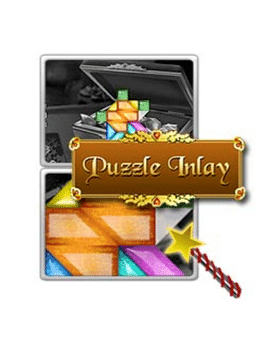
Puzzle Inlay
2002
Puzzle Inlay is a logical tiling puzzle game where the player has to fill in unique shapes with available blocksOreo O's Extreme Creme Control
2002
A Flash game from Postopia in which players must create pipes that transport creme bits to a box of Oreo O's.Atomica
2002
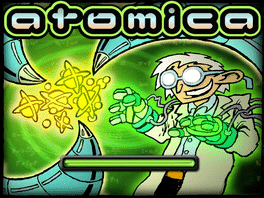
Atomica
2002
A puzzle game by PopCap released in 2004 in which you combine atoms in groups of four to form molecules.Snake EX
2002
Snake EX
2002
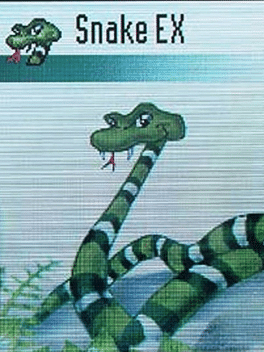
This is a Nokia Snake game included on colour phones. First introduced with the Nokia 9290 Communicator in 2002. It supports multiplayer through Bluetooth and Infra-Red.Bejeweled
2002
Bejeweled
2002
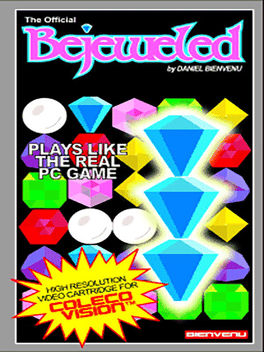
ColecoVision version of the popular game Bejeweled made by Daniel Bienvenu. The core game remains the same: matching up three or more of the same jewel by swapping their positions with neighboring jewels on a grid.Scally's world of problems
2002
Scally's world of problems is an educational puzzle game released for windows 95 by Topologika Software In the game you explore many pre-designed stages in an attempt to get to the end. There are many different styles to the stage, merely changing the tiles and music. These themes consist of: Atmosphere, Forests, Land, Oceans, Space, Underground, Waglings and Zoo The game also includes a level designer in which you can choose the tilesets, size and of course layout.Neo no Panepon
2002
Neo no Panepon
2002
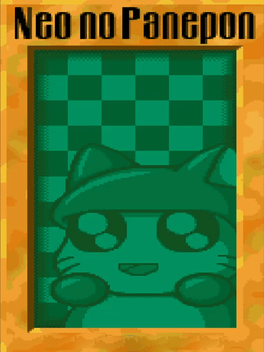
Neo no Panepon is a homebrew puzzle game similar to Tetris but swapping color blocks.Chromatron
2002
Barbie: Groovy Games
2002
Barbie: Groovy Games
2002
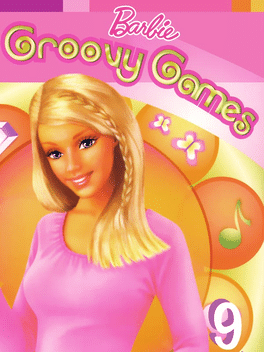
Enjoy nine fun and different games in nine cool locations. Compete against Barbie and her friends or against your own friends.Bomb Sweeper
2002
Bomb Sweeper
2002
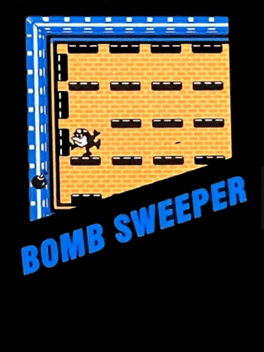
Bomb Sweeper is a clone of Nintendo's Game & Watch "BombSweeper" from 1987. It's a simple, addictive puzzler. You are John Solver, fearless bomb squad person, who has to save the city from Jack, a demented criminal who is trying to blow it all up with his bombs.Kogepan: Pan mo Game wo Yaru-rashii
2002
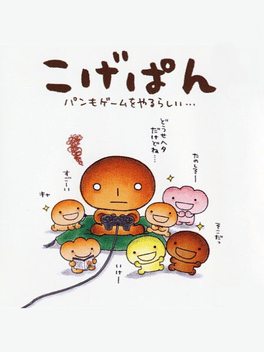
A collection of puzzles with some mini games features the characters of the Kogepan series.Saru! Get You! 2: Ukki Ukki Disc
2002
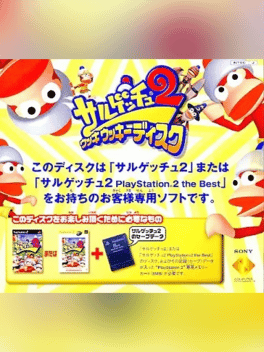
The disc contains three slide puzzles that, when completed, unlock the "Saru-Buster" gadget, which is basically just a land version of the Water net. Due to the "Ukki-Ukki" disc not being released outside of Japan, this gadget is not available for Jimmy/Hikaru to use in the international versions.Simple 2000 Hello Kitty Series Vol. 1: Starlight Puzzle
2002
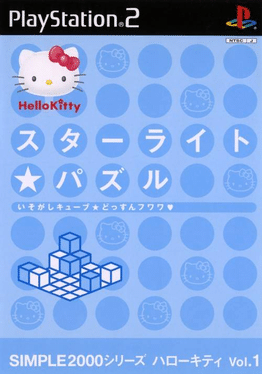
Simple 2000 Hello Kitty Series Vol. 1: Starlight Puzzle is the first in the Hello Kitty Simple series on the PlayStation 2.Gosaku ga Horu Mon 2: Yoru no Jugyou Sankan Hen
2002
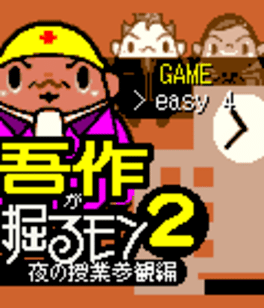
Mobile phone action puzzle game distributed for J-Sky 50KB devices through the Ulala no Channel J portal. Sequel to Waretsuku ga Horu Mon. The player grabs, throws, hits, and buries blocks in each level. Includes two difficulty options.Aqua Energizer
2002
Aqua Energizer
2002
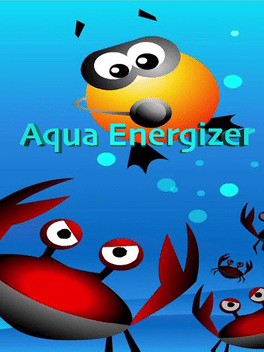
Help Nemo collect the red flashing balls into the energizer. Jump into it and get the code for the next level. Beware of enemies, but be wise; you may want to keep them alive. Nemo can't live without oxygen. So hurry up!SuperLite 1500 Series: Battle Qix
2002
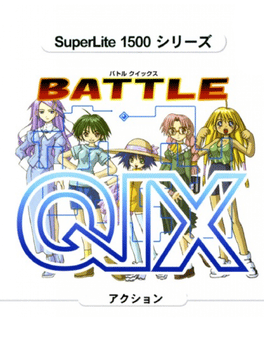
Qix was an arcade game, released by Taito America Corporation in 1981. The objective of Qix is to fence off, or “claim”, a supermajority of the playfield. At the start of each level, the playing field is a large, empty rectangle, containing the Qix — a sticklike entity that performs graceful, but unpredictable motions within the confines of the rectangle. The player controls a small diamond-shaped marker that can move around the edges of the rectangle, with the goal to claim as much of the screen as possible via drawing Stix. When the player completes a closed shape, the captured area becomes solid and points are awarded. To complete a level, the player must claim most of the playfield. (The game was shipped at 75 percent, but the arcade operator could adjust the requirement between 50 percent and 90 percent.) The player has a limited number of lives and can lose a life if the Qix touches a Stix line as it is being drawn, or by being touched by Sparx - enemies that traverse all playfield edges except uncomp