New Arcade Games - Page 123

Professor Pac-Man
1983
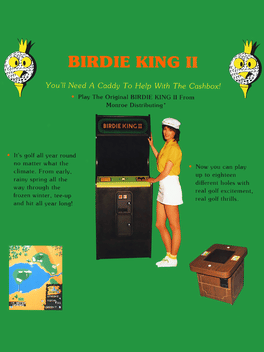
Birdie King 2
1983
Bio Attack
1983
Bio Attack
1983
Here, you control a ship through a human's body while shooting viruses. It was licensed by Fox Video Games, as it is based on the 20th Century Fox film, Fantastic Voyage.Harem
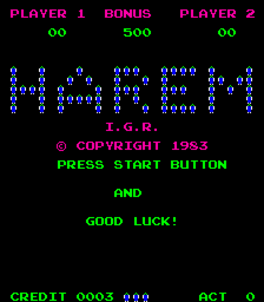
1983
Food Fight
1983
Food Fight
1983
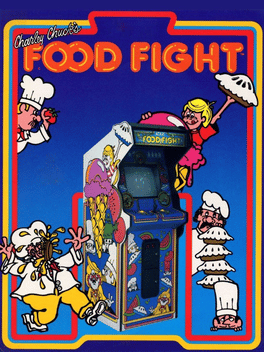
star 6.2Food Fight (also styled as Charley Chuck's Food Fight) is an arcade game released by Atari, Inc. in March 1983. The player guides Charley Chuck, who is trying to eat an ice cream cone before it melts, while avoiding four chefs bent on stopping him. The game sold 1,951 video game arcade cabinets.Scrambled Egg
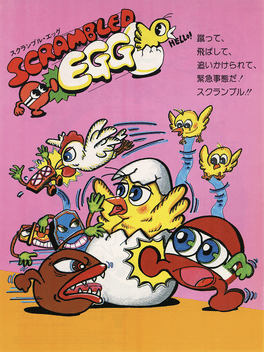
1983
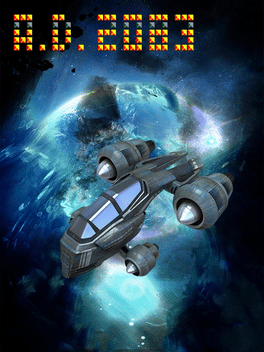
A.D. 2083
1983
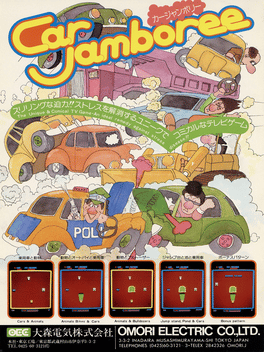
Car Jamboree
1983
Joinem
1983
High Way Race
1983
High Way Race
1983
You take control of a little car that must avoid the other cars, as they will try to take you out of the road. You must be careful with the slopes too, as they might be dangerous at a high speed. Additionally, the car can jump to avoid the cars and to finish the course, as the finish is after a roadless zone. If you manage to time your jump, press button two to free the parachute and land safely. After you finish the four courses, the game will start again with increased difficulty. The game is over when the player runs out of fuel, so be careful not to crash, as every time you go off road you'll lose a bit of fuel.Hopper Robo
1983
Hopper Robo
1983
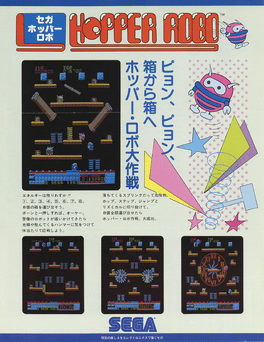
A Platform/Run 'N Jump game where a robot must jump between platforms carrying boxes that he must drop onto a conveyor belt.Jump Coaster
1983
Jump Coaster
1983
In this game, you maneuver a caped man along roller-coaster tracks, grabbing money bags and trying to save your girlfriend, all the while avoiding cops and gorillas (which either swing on the ropes and throw deadly bananas and apples at you, or ride in roller-coaster cars, intent on hitting you.) The game has four screens in each level. Each screen is completed in one of two ways: getting to your girlfriend, or grabbing all the money bags on the screen, then getting the large money bag which appears.Zodiack
1983
Zodiack
1983
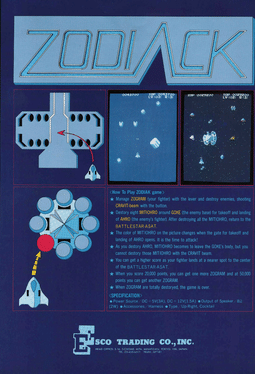
A challenging, vertical scrolling shooter. On deep space you must fly the 'Zogram' (your spaceship fighter) and destroy hordes of enemies, while dodge space objects. Destroy eight 'Mitiohro' around the 'Goke' (the enemy base) for takeoff and landing of 'Ahro' (the enemy's fighter). After destroying all the 'Mitiohro', return to the 'Battlestar-asat' base. The color of 'Mitiohro' on the picture changes when the gates for takeoff and landing of 'Ahro' opens. It is the time to attack! As you destroy 'Ahro', 'Mitiohro' becomes to leave the 'Goke's' body, but you cannot destroy those 'Mitiohro' with your laser beam. You can get a higher score depending of the precision landing of your spaceship at nearer spot to the center of the 'Battlestar-asat' base. When you score 20,000 points, you can get one more Zogram and at 50,000 points you can get another Zogram.Tropical Angel
1983
Tropical Angel
1983
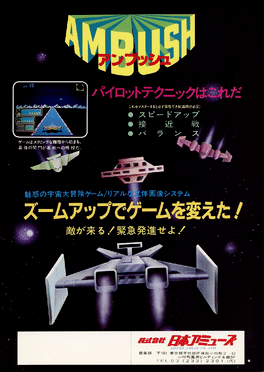
An abstract take on the 3d racing genre, Tropical Angel puts the player in control of a female water-skier who must dodge the many rocks that protrude from the water while attempting to steer through a set number of gates - in the form of a pair of flags - before the time limit expires. The acceleration button needs to be held down all the time while the 'trick' button makes the water-skiing girl spin through one-eighty degrees and proceed to ski backwards. The player cannot steer while traveling backwards, but will earn bonus points for the duration of the trick. As the game progresses, small ramps, buoys and sharks come into play. The small ramps can be jumped to add to the player's score, although they're always in difficult to reach locations. The buoys are usually very close together, but skiing between them earns bonus points. Finally, the shark will appear from time-to-time, running into it means game over, regardless of how much time the player has left.Ambush
1983
Major Havoc
1983
Major Havoc
1983
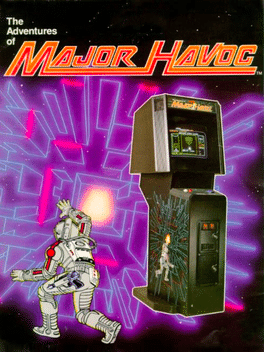
star 3.6Long ago the evil Vaxxian Empire overran the galaxy. Most of humanity was enslaved and abducted to the Vaxxian homeworld. A few humans, who were scientists, managed to escape. At the current moment (according to the timeline of the game), the Empire has since collapsed. However, numerous Vaxxian space stations, all blindly controlled and defended by robots, still remain in the galaxy, mindlessly pursuing their original orders. The small band of scientists who initially escaped managed to clone the great human hero Major Havoc, in order to fly his Catastrofighter through a wormhole in space, so that he may lead a clone army against the dreaded Vaxxian robots, and to liberate the remnants of humanity by destroying the enemy reactors. The player controls Major Havoc, the leader of this very band of clones.Aztarac
1983
Aztarac
1983
The actual game has you piloting a little space tank. The tank and its turret are controlled independently, which allows you to move in one direction while shooting in another. Your mission is to guard various space outposts from hordes of incoming enemy ships. Each level will have several outposts all clustered together in the center. If an enemy ship touches an outpost, then the outpost is destroyed. You can activate a long range scanner by using your second button. This allows you to locate enemies before they get close, that way you can fly off and get them before they even have a shot at the outposts.Black Widow
1983
Black Widow
1983
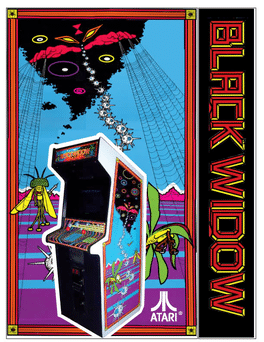
star 4.8Black Widow is a vector arcade game developed by Atari released in 1982. The player takes the role of a Black widow spider defending a web from invading bugs. The player must move the spider around the web while simultaneously shooting/avoiding various bugs and collecting the bonuses that appear after the enemies are eliminated. The spider is controlled through two joysticks: the left one is used to move the spider, and the right one to control the shot direction.Dark Planet
1983
Dark Planet
1983
Dark Planet is a very rare arcade game by Stern released in 1983 using a 3D perspective.Eggor
1983