New Arcade Games - Page 41

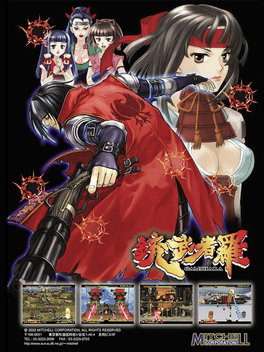
Gamshara
2002
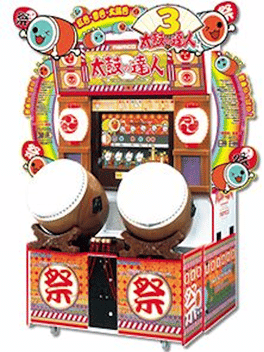
Taiko no Tatsujin 3
2002
Taiko no Tatsujin 3
2002
A sequel to Taiko no Tatsujin 2, featuring 19 new songs, the iconic Balloon notes, and a Battle Mode.The Maze of the Kings
2002
A 1 to 2 player shooting game where each player assumes the role of an archaeological treasure hunter armed with a magical cane who travels across rivers and deserts and explores the insides of pyramids searching for lost treasure while killing mummies and other evil creatures. Each player gets a choice of what kind of firepwoer to use for his or her character's magical cane: Light, Spark, or Fire.Initial D Arcade Stage
2002
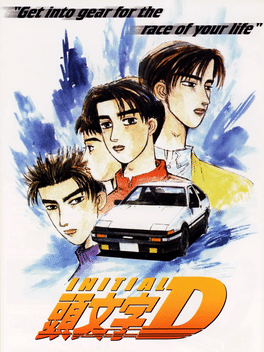
Initial D Arcade Stage is a 2002 arcade racing game based on the Initial D series. It is the first game in the Initial D Arcade Stage series.GuitarFreaks 7thMix
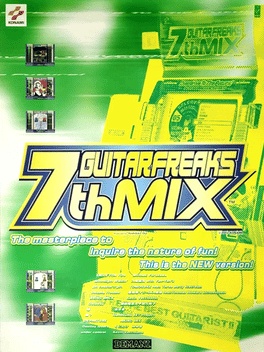
2002
Sega Yon-nin Uchi Mahjong MJ
2002
The first installment in Sega's MJ series of Riichi Mahjong arcade games. Although the game initially only supported local play with linked cabinets, it would later be updated in 2003 to support online play. Online service was discontinued on March 31, 2005.ATV Track
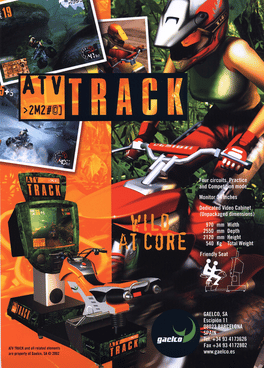
2002
Beatmania 7thMix: Keepin' Evolution
2002
beatmania 7thMIX is a rhythm game developed by Konami. It is the twelfth game in the beatmania series and is part of the BEMANI franchise. The game is played with a controller with one turn table and 5 keys, three white and two black. On the screen you will see bars moving from the top to bottom in columns representing each of the keys and the turntable. When the bars reach the judgement line it is time to scratch. 7thMIX allow the player to have separate lanes for the two black keys. Instead of in between the lanes of the white keys. This makes the lanes much closer to the beatmania IIDX series. 1-Turn scratches are introduces, where you need to turn the turntable exactly once to get the best score. MANIAC has been renamed back to ANOTHER again. All singles and double charts has been re-rated and for the first time in the series the rate for the single chart and the double chart are rated separately. The game has 27 songs returning from 6thMIX and introduced an additional 32 songs for a total of 59 songs.Beatmania III: Append 7thMix - keepin' Evolution
2002
Beatmania III: Append 7thMix - keepin' Evolution is a rhythm game developed by Konami. It is the fourth game in the beatmania III series, a spin-off of the beatmania series. It is part of the BEMANI franchise. The game is played with a controller with one turn table, one foot pedal and 5 keys, three white and two black. On the screen you will see bars moving from the top to bottom in columns representing each of the keys, foot pedal and the turntable. When the bars reach the judgement line it is time to hit the key or scratch. Introduces 1-Turn scratches to the beatmania III series. Unlike beatmania 7thMIX where the Single and Double charts have separate rating, here it remain the same. As with the other APPEND titles, the songlist is mainly focused on brining over songs from beatmania 7thMIX. 32 songs were brought over and 6 song got LONG versions. 188 songs return from the previous entry in the series. The song list has a total of 225 songs.Great Bishi Bashi Champ
2002
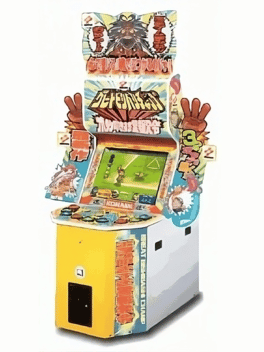
A game that features 142 mini-games that are generated at random when you choose between modes. It has an interactive difficulty system, in which the difficulty changes depending on how many games you passed/failed in a row. Because of that, the difficulty between stages becomes increasingly more challenging. Each stage ends with a "boss battle". After the game, a score table will show up, comparing your score to the target score. If it matches, or is better than the target score, you will get rise in rank, which is shown at the bottom of the screen, and will not lose a life. If it is worse, a crowd booing sound will be heard, and you will lose a life.Fire Hawk
2002
Fire Hawk
2002
A vertical scrolling jet shoot them up, featuring both single & co-operative gameplay as well as a myriad of power ups. The players get to choose from 5 different jets each with it's own unique attributes & weapons. By collecting varies power ups during the missions the player's jet with be transformed into a stronger, more powerful version.Dragon World 2001
2002
Dragon World Pretty Chance
2002
Mahjong matching series featuring sexy girl pictures in the background.Wartracks
2001
Silent Scope EX
2001
Mambo a Go Go
2001
Frenzy Express
2001
Frenzy Express
2001
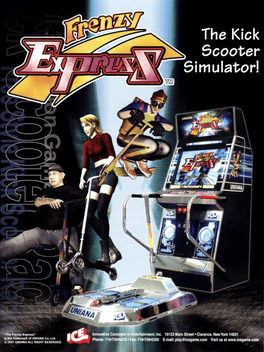
Frenzy Express is a fast-paced simulation game that builds on the worldwide fad "Scooters." The machine's biggest feature is the level of interaction the player gets. The machine contains a actual scooter which the player uses to travel around the stages. The handlebar enables the player to steer and the brake is locate at the back of the scooter. Acceleration is achieved by a wheel with grips, which is located on both sides of the scooter. The player push off the wheel much like he/she would push off the ground if you were riding a real scooter. Gameplay is similar to Crazy Taxi, except instead of picking up and dropping off passengers, the player is a courier and must pick up and drop off packages. The way you reach the drop off point is entirely up to the player, but there is a time limit and each second that ticks by means less money at the drop off point. To make the game more fun, there are many ramps and other objects suitable for jumping and performing aerial acrobatics which earns the player bonus pointsPainStation
2001
PainStation
2001
Painstation is an art object and arcade game based on Pong developed by the artists' group, "/////////fur//// art entertainment interfaces", with pain feedback.Inu no Osanpo
2001
Inu no Osanpo
2001
Players "walk" a virtual dog by walking on a treadmill and control the pet with a leash attached to a plastic dog in front of the player. Inu no Osanpo simulates the experience of walking a dog. Players first choose one of six breeds of dog to walk: Poodle, Pug, Pembroke Welsh Corgi, Shiba Inu, Labrador Retriever, or Siberian Husky. The difficulty of the game changes depending on the breed of dog chosen. After selecting a dog, the player selects one of three possible walking routes, each with a unique scenario. The goal of Inu no Osanpo is to maintain the dog's happiness long enough to complete the entire route.