Top Rated Arcade Games - Page 4

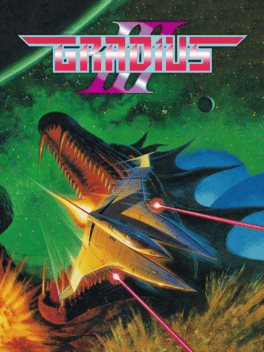
Gradius III
1989
Gradius III
1989
star 7In the darkest reaches of infinite space, pure evil lies in wait ... The Dark Forces led by the god of destruction, Bacterian, prepare to launch a massive onslaught against the planet Gradius. Possessing unstoppable power, the Dark Forces threaten to plunge the Universe into total war and complete annihilation. Their invasion force smashes the Gradius defenses, and the surrounding planets soon fall like dominoes. Now Bacterian's evil grasp reaches for the heart of the resistance...planet Gradius itself... To counter the oncoming threat the United Gradius World Forces gather all their fighter craft. Half of them form a defensive net - the other half a strike team. But they are badly outnumbered and The Dark Forces easily tear through their thin frontline. No fighters survive the slaughter.... In a last gasp move, the United Gradius World Forces send out two fighters, previously considered too dangerous for combat missions: The InterDimensional VIC VIPER fighters. The Fighters take off for the heart of darkness t19XX: The War Against Destiny
1996
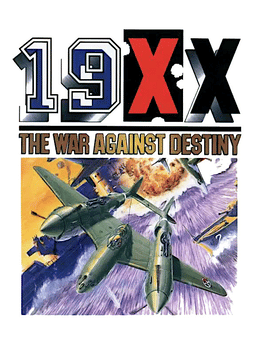
star 719XX: The War Against Destiny is a vertical scrolling shooter arcade game made by Capcom in 1995 (copyrighted in 1996). The game is the 4th of a series of World War II vertical shooters made by Capcom. The story takes place before a fictional war (Hence, the 19XX) as a lone pilot tries to defeat an entire army/evil organization from starting another World War, which soon escalates to a nuclear apocalypse.Section-Z
1985
Section-Z
1985
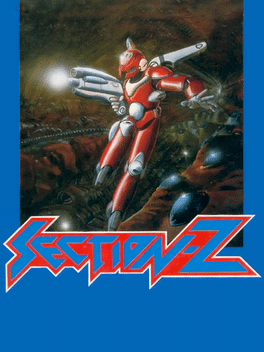
star 6.9Section-Z is a side-view shoot-'em-up by Capcom originally released as a coin-operated video game in 1985. A home version was released for the Nintendo Entertainment System in 1987. The original coin-op game is included in Capcom Classics Collection Vol. 1 for PlayStation 2 and Xbox.Battle Circuit
1997
Battle Circuit
1997
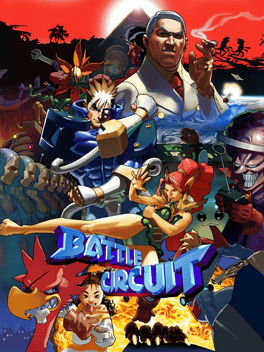
star 6.8Battle Circuit is a 2D side scrolling beat'em up drawn in a comic (manga) style in a futuristic science fiction setting. A group of bounty hunters must capture the mad scientist Dr. Saturn with a giant head. The roster of heroes has 5 characters for the player to choose from: Cyber Blue, a human bounty hunter with cybernetic attachments to his body; Captain Silver, a humanoid shape-shifting hunter who has ability to project ice particles from his body; Pink Ostrich, a large, sentient, pink ostrich, who is always accompanied by its owner, a young girl named Pola Abdul; Yellow Iris, a part-time fashion model with claws and Alien Green, a space creature looking like a giant, moving plant. Gameplay is quite typical for the genre, like in Final Fight, Streets of Rage, or Cadillacs and Dinosaurs - players go right, beat the enemies (player has access to various attacks), collect bonuses and money, and fight against bosses, for example Dr. Saturn and his robots. Players' abilities can be expanded by purchasing special "P.O.W.: Prisoners of War
1988
star 6.8The arcade version of Prisoners of War can be played by up to two players simultaneously, In La Havana, Cuba Player 1 controls a prisoner dressed in blue named Snake, while Player 2 controls one in red named Bart. The objective is to escape from the enemy's base by fighting their way through four stages filled with numerous soldiers trying to impede the player's escape. The stages consist of a POW camp, a warehouse, a jungle, and the enemy's base. Enemies includes foot soldiers, commandos, and green berets. The controls consists of an eight-way joystick for moving the character and three action buttons for punching, kicking, and jumping. here are also three special attacks performed by pressing two buttons in combination: a jump kick (jump, and then kick), a back punch (jump and punch simultaneously), and a headbutt (punch and kick simultaneously). The player can also pick up one of two weapons dropped by defeated enemies: a throwing knife and a machine gun. When wielding the machine gun, the player can fire it bHang-On
1985
Hang-On
1985
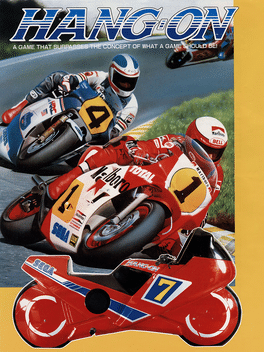
star 6.8Hang-On is an arcade game designed by Yu Suzuki and released by Sega in 1985. In the game, the player controls a motorcycle against time and other computer-controlled bikes. It was one of the first arcade games to use 16-bit graphics and Sega's "Super Scaler" technology that allowed pseudo-3D sprite-scaling at high frame rates. It also introduced a motion-controlled arcade cabinet, where the player's body movement on a large motorbike-shaped cabinet corresponds with the player character's movements on screen, inspiring arcade games that followed and anticipating the modern motion control trend.RoboCop
1988
Frogger
1981
Cruis'n USA
1994
Cruis'n USA
1994
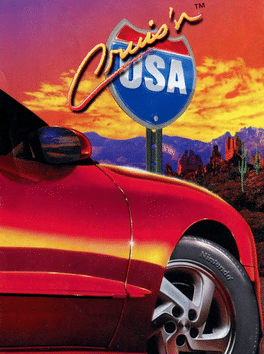
star 6.6Cruis'n USA is an arcade racing game originally released in 1994. It was developed by Midway Games and published and distributed by Nintendo. It is the first game in the Cruis'n series and features locations around the United States.Mega Man: The Power Battle
1995
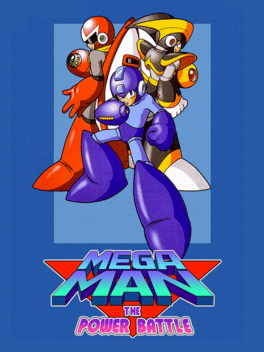
star 6.5Mega Man: The Power Battle, known in Japan as Rockman: The Power Battle, is an arcade video game and a spin-off title for the Mega Man series. It was released in Japan in 1995 and was followed by a sequel, Mega Man 2: The Power Fighters, the following year.Super Breakout
1978
Super Breakout
1978
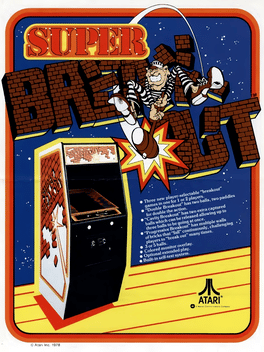
star 6.5Super Breakout is an arcade game released by Atari in 1978. It utilizes a Motorola M6502 (running up at 375 KHz) and, as the name suggests, is the sequel to Breakout, which was released two years earlier. There are three different modes to choose from: Double Breakout, the playfield for which contains in fifty-two orange blocks (5-14 points), fifty-two green blocks (1-6 points), two paddles and two balls, Cavity Breakout, which contains in forty-four orange blocks (7-21 points), and fifty-two green blocks (1-9 points), one paddle, and three balls (the second and third of which have to be freed before they come into play) and Progressive Breakout which contains fifty-two blue blocks (7 points) and fifty-two green blocks (5 points), one paddle, and one ball - and the blocks shall be lowered down towards the paddle, at a rate determined by the number of times the ball lands on your paddle, but as the ball destroys them, additional rows of blocks shall appear at the top of the screen and be lowered down towards the padContra
1987
Contra
1987
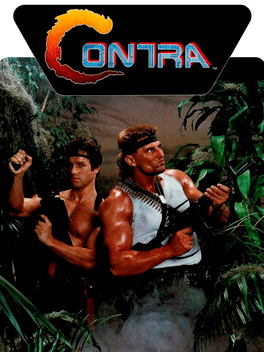
star 6.5Contra (also known as Gryzor in Oceania and Europe), is a 1987 run and gun action game developed and published by Konami originally released as a coin-operated arcade game on February 20, 1987. The game had multiple ports, including for various computer formats. Several Contra sequels were produced following the original game.Wonder Boy
1986
Wonder Boy
1986
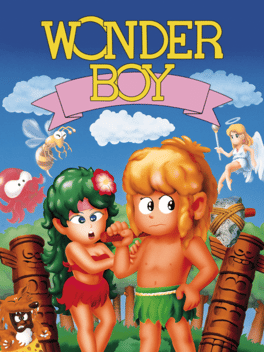
star 6.4Wonder Boy is a 1986 platformer video game published by Sega and developed by Escape (now known as Westone Bit Entertainment). It was the first in the long-running Wonder Boy series of games and was followed up by five sequels, Wonder Boy in Monster Land, Wonder Boy III: Monster Lair, Wonder Boy III: The Dragon's Trap, Wonder Boy in Monster World and Monster World IV. It was also the basis for the Adventure Island series.Virtua Racing
1992
Virtua Racing
1992
star 6.3This game was the first game released for the Sega Model 1 arcade platform, and also the first to use the name "Virtua" in its title (something which would be followed by numerous Sega arcade games, including Virtua Fighter, Virtua Cop and Virtua Tennis. It is considered a milestone in 3D graphics and the racing genre, and acts as a foundation for most modern racing games.Spartan X
1984
Spartan X
1984
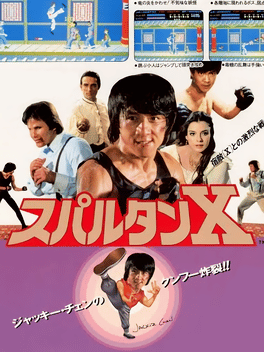
star 6.2Spartan X, known in North America by the Kung-Fu Master port, is a 1984 beat 'em up arcade game developed and published in Japan by Irem. It was later published in North America by Data East, without the movie license. The Japanese version was based on the Jackie Chan movie Wheels on Meals, known as Spartan X in Japan, and credited "Paragon Films Ltd., Towa Promotion", who produced the film upon which it was based. The game is considered by many to be the first beat 'em up video game, and contains elements of Bruce Lee's Game of Death.Popeye
1982
Popeye
1982
star 6.2Popeye is a 1982 arcade game developed and released by Nintendo based on the Popeye cartoon characters licensed from King Features Syndicate. In Popeye, two players can alternate playing or one player can play alone. The top five highest scores are kept along with the player's three initials. Popeye was available in standard and cocktail configurations.After Burner
1987
After Burner
1987
star 6.2Muster up all the skill, reflexes and guts you've got. Because inside your F-14 Thunder Cat, you're going to need all that - and more. Blast laser-directed, anti-aircraft fire at enemy planes. Dodge heat-seeking missiles with fancy flywork, like dips, turns and barrel rolls. Come head to head with the infamous Flying Fortresses (the toughest of all enemies) and dogfight your way through, to a nanosecond of safety. And if you make it far enough, a fuel tanker will be waiting for you. Dock successfully and you'll replenish valuable energy and ammunition. So get your adrenaline pumping and grab your joystick. Then take to the skies. You're not going to believe what's up there!Mega Man 2: The Power Fighters
1996
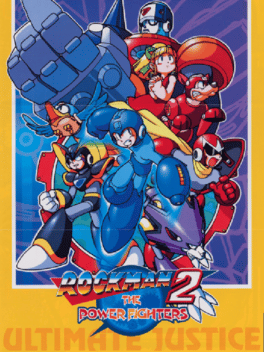
star 6.1It's a disaster: Doctor Light's lab has been attacked by Doctor Wily, and stolen some crucial parts for robots. And, if it weren't bad enough already, he has taken Roll as a hostage! Mega Man and Proto Man go to stop Wily and stumble upon Duo, the big alien robot, who is willing to help. And Bass, still angry that Wily has revived more Robot Masters, again teams up with the good side to destroy the enemies...1943 Kai: Midway Kaisen
1988
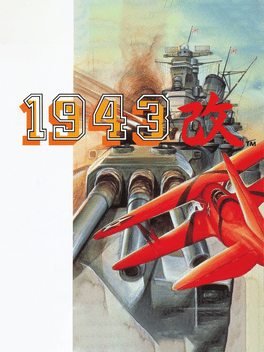
star 6This updated version was released exactly one year after the original game's debut. 1943 Kai is an enhanced, "wild" version of 1943 that was made only available in Japan under the name 1943 Kai: Midway Kaisen (or 1943改: ミッドウェイ海戦). Most of the graphics and sounds have been reworked, the weapons have been made more extreme and some fairly strange things (laser-firing WWII planes and ships that run on ground) have been added. The trademark P-38 has been replaced with a biplane, the Boeing-Stearman Model 75.After Burner II
1987
After Burner II
1987
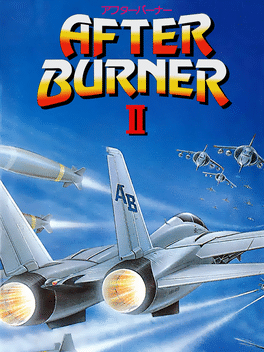
star 6After Burner II is an arcade-style flight game released by Sega in 1987. It is the second game in the After Burner series. In the game, players fly a F-14 Tomcat jet fighter, gunning down enemies while avoiding incoming fire. Like OutRun, another Sega arcade game, After Burner II came in several versions, the most famous being a large, servo actuated, sit-down cabinet which resembled a cockpit and moved according to the motion of the plane onscreen. The cockpit would bank in the same direction the on-screen aircraft was banking. There was also a more basic upright cabinet version.